

This article first appeared in The Edge Malaysia Weekly on November 3, 2025 - November 9, 2025
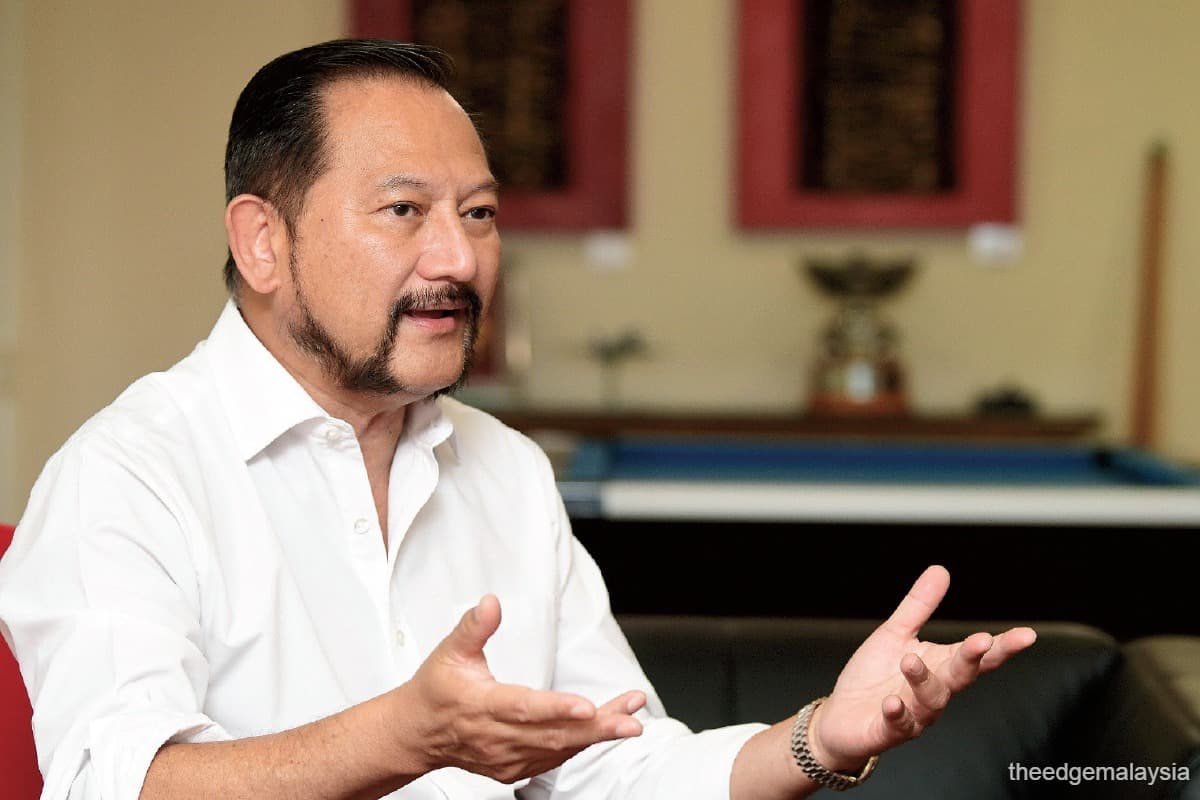
KNM Group Bhd’s (KL:KNM) non-independent, non-executive chairman Tunku Datuk Yaacob Khyra was his usual affable self, but he did look tired when we met at his office last Friday afternoon. Yaacob, who has a 41.81% stake in MAA Group Bhd (KL:MAA), which in turn holds 19.37% of KNM, has been in the spotlight thanks to a standoff with regulator Bursa Malaysia Securities on the planned sale of Borsig GmbH for €270 million, which is expected to revive KNM.
In an exclusive interview, Yaacob tells The Edge what transpired between KNM and the frontline regulator of the local bourse and what lies ahead for the oil and gas engineering services provider if his plans pan out.
The Edge: Did you see this coming — Bursa Malaysia blocking the sale of Borsig?
Tunku Datuk Yaacob Khyra: Yeah, it’s very strange … I got creditors to agree to a haircut, found the buyer, shareholders want to vote in favour, then the custodian Bursa [Malaysia Securities] comes in, and [they] don’t want to approve.
Usually, when you are undertaking a proposal, do you get Bursa to buy in, talk to them, make sure things are alright, progressing well, get their blessing …
It [the offer from Japan-based NGK Insulators Ltd for €270 million] is the best offer we’ve had. So far, the highest we ever had. I would have liked to sign the S&P (sales and purchase agreement) with the Japanese in February this year. We asked Bursa, ‘Can we sign?’ They said, ‘Go ahead, sign [but it is] subject to Bursa [approval].’ Okay fine, it means they were agreeable. So we signed. From February until now, October, eight months, they still haven’t even said okay.
You did engage with them earlier, in February?
Yeah, and they did say sign, subject to Bursa [approval]. Okay, fine, because we didn’t want to lose the deal … RM1.3 billion, not easy to find, right? So we did, but then the deadline came, the close of the transaction must be completed by Nov 15. Of course, the condition was that you will submit all your documents, get all your approvals by Sept 30. [We] begged the Japanese, okay, [they said and nudged] it to Oct 31.
Dragged until we got to the stage where [it looked like they were] not going to approve the regularisation plan, which means the deal’s over … they don’t like the regularisation plan because — they hinted — you’re not buying anything new. You’re just going back to core activity. I believe [KNM’s] core activity is good.
Bursa should de-link the two transactions (the sale of Borsig and the regularisation plan). Our regularisation plan has been basically to divest of all our non-core assets, which is everything bought overseas just to get rid of everything overseas and restart the Malaysian engineering operation, which is a very good operation, but it kind of stopped because when Bursa put us in the Practice Note 17 category, all the banks said, ‘Oh I don’t want to support your BG (bank guarantee) facilities.’
You see, in engineering what happens is, say you get a contract, normally they [clients] pay up front. They’ll give you 15% up front, then you can start the project. And as you go along, they progress [and] pay you. So you don’t actually need any money to do the business. Any contract, let’s say RM100 million ringgit, they’ll give RM15 million up front, but there has to be a back-to-back [arrangement] with the BG and we use the RM15 million, you start to buy materials, start building and then as you get to the next stage, another 10%. So you slowly build.
So the engineering business in theory doesn’t need any money other than the fact that when you are given a RM15 million facility, they want some BG to say you can finish, and usually in the past, banks would give you. But with this PN17 status, the banks say no to BGs. The PN17 basically kills businesses, instead of PN17 helping listed companies. If your company is in trouble, trying to get out of trouble, PN17 actually puts a nail in your coffin. So a lot of companies in Malaysia basically collapse because of PN17. Not because they’re going to collapse, they collapse because of PN17.
So what happened was, after the Sept 30 deadline passed, we appealed to the Japanese. They agreed to give us until the end of October to get our EGM done. But you have to give 14 to 21 days’ notice for an EGM, and there was still nothing coming from Bursa. So even if KNM wanted to call for an EGM, we’re not allowed to, because to do that, you must comply with Bursa’s rules that you must issue a circular. And Bursa won’t approve a circular because they don’t agree with your regularisation plan.
They [Bursa] didn’t engage with you?
Who, Bursa? We’ve been trying to engage with them nonstop. From February to October, eight months, no approval. So on the very last day, since KNM cannot call for an EGM, the Companies Act actually allows a shareholder to call for an EGM, the shareholders have the right to meet and Bursa cannot use the technicality to prevent shareholders from meeting. It’s a shareholders’ right to meet. So that’s why the shareholders met yesterday (Oct 27). It’s a legally convened meeting. However, we didn’t want to upset Bursa, so we adjourned the meeting until Nov 6 because we will be delisted by Nov 5. So by Nov 6, we won’t have to follow Bursa’s very strict regulations and therefore the shareholders can meet to agree to sell [Borsig].
The danger here now is that we are in an exposed period because we have not met the Oct 31 deadline with NGK — we’ll be six days late. We’ve asked them, ‘Can you entertain us?’ They have kept quiet. So we don’t know whether the deal is on or off … But I believe it’s still on because if the Japanese didn’t want to do the deal, they would not have given the extension from end-September to end-October. So I believe that unless some other trick comes up between now and Thursday, everything will go as planned.
Is MAA shareholders’ approval required for the sale? It’s a material asset, right?
No, no, no. Nothing like that. I mean, we only own 17% of KNM. Actually, it’s all fully provided for. I cannot imagine the [KNM] shareholders saying no even if I and MAA didn’t vote. I’m sure the other shareholders will say yes because, think of it logically, if the sale does not go through then the creditors will probably put KNM into liquidation. When it goes into liquidation, NGK may probably come along and say, ‘Okay, I want to buy Borsig, but now not at €270 million. I want €100 million less … at €170 million.
The creditors will say, ah, in the scheme of arrangement, we agreed to a haircut. We’ll only take the principal and waive all the interest. Now, if it goes into liquidation, the creditors will say, no, no, no, no, no haircut. I’m taking everything. So there’ll be nothing left for the shareholder. If you go through the scheme of arrangement, the creditors have agreed, at least they take a haircut. There is this essence left behind for the shareholders to rebuild the business.
I cannot imagine a shareholder saying no to the deal and I don’t want the company to go into liquidation, I don’t want to lose everything. At least give the management a chance to revive the business. Perhaps relist it one day because the core business of KNM is actually very good.
What took so long to get the regularisation plan done?
So my strategy, why I got involved [in KNM], was I saw Borsig as a jewel. We could list Borsig and then pay off the creditors and maybe keep 20% of Borsig and at least something for the shareholders and sell off some of the non-core assets. But the creditors were very hard to deal with. They said, ‘You want to list? Where’s the underwriter? We want to see hard cash, we don’t want shares.’
And then it was also very hard to get underwriters at the time, so we were basically forced to find a buyer. So we ran in parallel: we always looked for a buyer and worked on a listing. KNM found NGK — they started at €180 million, we got it up to €230 million and eventually agreed on €270 million. Actually, that’s probably the best you could ever get. So we said yes, subject to Bursa’s approval. But they say, ‘We cannot separate the disposal of core assets from the regularisation plan. They must go hand in hand’, which is not practical. The disposal would settle the debts, with RM100 million cash to restart the business. Once we have our RM100 million cash, I’ll put the RM100 million cash to get a BG so we can start again … You have to give us a chance.
Most regulators like Bursa, they always consider a regularisation plan as ‘Go and buy something new’. They want to see that because the core business is lousy. [But] I’m saying no, our core business is very good. The problem was that our [KNM’s] foreign assets dragged us down. So, what we plan to do is to get rid of the foreign assets and go back to the core business. Give me one year to prove to you we can turn it around.
In your negotiations with them, you brought it up?
Yeah, but their response was, ‘Not good enough.’
Do you think there could be repercussions on MAA and your other listed company [Mycron Steel Bhd (KL:MYCRON)]?
I’m following the rules. Please, MAA is just a shareholder. There’s nothing wrong with calling for an EGM. Every shareholder has the right to call for an EGM. This rule [separating the regularisation plan from the disposal of assets] just came in. They only introduced this rule about a year ago. They just created a rule that you cannot dispose of a major asset without their approval. It only came out last year. We say, yes, usually major asset sales and the regularisation plan come together. But there are occasions when you need to. There are two different decisions and you have to untie the two decisions. But in this case, they didn’t seem to want to untie the two decisions.
I’m not fighting Bursa. I’m just saying, Bursa needs to be more flexible. You need to be flexible with new rules that you create because nobody creates a rule and can foresee all the potential pitfalls that new rules create. No rule is perfect.
There were a number of changes. One moment, you wanted to sell Borsig. Then, you wanted to list it. There was also [KNM subsidiary] FBM Hudson that you wanted to list in Singapore.
My original plan was to list Borsig. But we already signed the S&P when I came into KNM, so I thought, fine, a bird in hand is better than two in the bush. My listing of Borsig would be two in the bush, whereas the sale of Borsig is a bird in hand.
At the same time, when we engaged the creditors, they also said, ‘Yeah, a bird in hand is better than two in the bush.’ So, we said fine, let Borsig go, then we’ll focus on FBM Hudson and try to grow that and list that. Then the Borsig deal did not go through. The purchaser pulled out because of the Russia-Ukraine war. The buyers just chickened out because the whole world went into a shock.
Then we went back to the original plan, which was to list Borsig. But at the same time, the creditors said the bird in the hand is better than two birds in the bush. You must work to sell Borsig running in parallel with the listing … This was the creditors’ idea.
So we went that way until we finally found NGK. I dropped the listing route because the creditors also insisted this time that they wanted the cash. That’s why we went on the selling route. So we signed in February this year and until now, it has been difficult to get the creditors to approve all because although the major creditors with more than 70% to 80% agreed in principle to go for the scheme of arrangement, there were a few small creditors, for some reason, created an injunction along the way, delaying the creditors’ meeting. So it was delayed, until in September and the majority of the creditors said, ‘We’ll go with the scheme.’ Then the work for getting Bursa approval started, but that’s when everything started slowing down.
The scheme of arrangement that the creditors basically agreed to is that the Borsig sale will go through, then the cash that comes from Borsig will be split according to the formula that was agreed. RM100 million will be left for KNM to use as working capital to build the business. At the same time, we will also work to sell the other foreign assets. The Borsig sale alone will actually pay all creditors, then like I said, whatever I sell from the other two assets comes to KNM.
How do the KNM shareholders feel?
Yesterday, at the EGM, quite a lot of shareholders were there. You can see they’re all very, very positive. They all say they want the deal to go through. You can see every single shareholder wants the deal to go through, so it would be a pity if for some reason the deal doesn’t go through because of a technicality. The deal must go through because we’re not talking kacang putih here and this, it affects all the creditors, affects all the shareholders.
Unfortunately, I had to delist KNM just to get Borsig sold, which is a pity, okay, but that affects the minorities, and it affects all shareholders. It’s unnecessary, but it’s okay. As I told the shareholders yesterday, it’s all right to be delisted.
We get Borsig sold, we rebuild the company and we relist again. Not everything’s lost, right? You can relist again later. Maybe not on Bursa Malaysia, maybe Singapore, maybe somewhere else.
Do you see any issue with shareholders in Mycron or MAA? Because you have an issue with Bursa now …
I don’t have any issue with Bursa. Bursa seems to have an issue with me. Only because I’m a shareholder exercising my right to ask for an EGM. That’s a shareholder’s right. Is that a problem? I don’t see that as a problem.
Do you think NGK will back out?
I can see their strategy. It’s a very, very good strategy, which is why I believe they’re not going to back out. After all, I will give you the shareholders’ approval on Nov 6. I believe that if they are prepared to give us 30 days [extension], what’s another seven days?
How do you feel about letting Borsig go?
It’s a pity to let it go. It’s okay. But we were actually fighting to get a decent price. We got a decent price to settle our debts … The creditors also agreed. Because of that, they will take the principal in full, no interest — they agreed — and they will let KNM keep at least RM100 million to rebuild its business.
Under the regularisation plan, I need to restart my business. Since I don’t have BGs, because I’m PN17, I need to have at least RM100 million in cash to restart my business.
Save by subscribing to us for your print and/or digital copy.
P/S: The Edge is also available on Apple's App Store and Android's Google Play.