

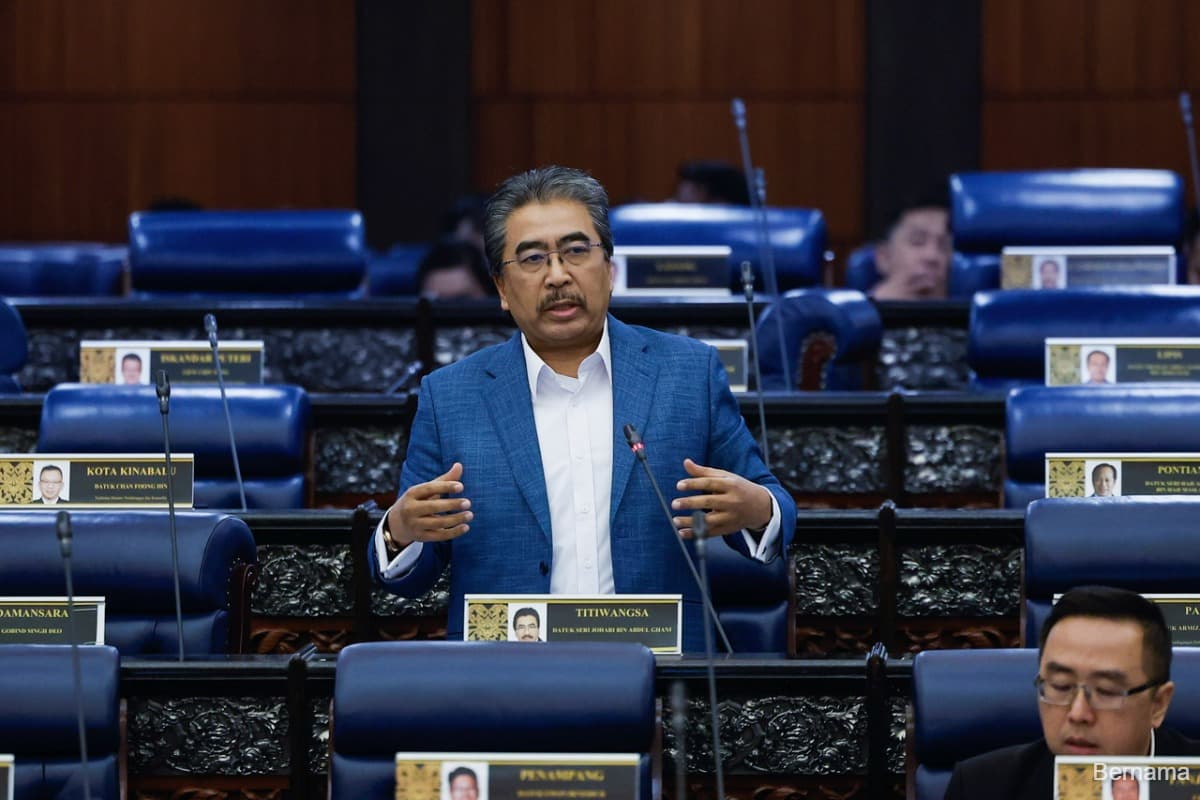
KUALA LUMPUR (Nov 4): The long-awaited Climate Change Bill, a long-anticipated piece of legislation that will provide a legal framework for Malaysia’s shift towards a low-carbon economy, is scheduled to be tabled during the first meeting of the 2026 parliamentary session.
Acting Natural Resources and Environmental Sustainability Minister Datuk Seri Johari Abdul Ghani made the announcement during his winding-up speech on Budget 2026 in Parliament on Tuesday. The Bill is currently being reviewed by the Attorney General's Chambers.
Johari said the proposed law will serve as a comprehensive legal instrument to guide national mitigation and adaptation efforts, strengthen climate governance, and ensure sustainable and resilient development.
Under the Bill, an independent regulatory body will be established to oversee compliance, data governance, and carbon reduction mechanisms, said Johari, who is also the minister of plantation and commodities.
This regulator will also be responsible for developing a carbon quota system to allocate carbon credits and emission allowances across industries, he noted.
Currently, energy producers — including independent power producers, and oil and gas companies — together with the transport sector, account for 79.2% of national emissions. Heavy industries such as cement, iron, and steel add another 11.3%, bringing the total to over 90%, according to Johari.
“This body will be tasked with closely monitoring emissions and setting specific quotas for each sector. Industry players will have to comply with these limits or face a carbon tax to be administered by the Finance Ministry. The tax revenue will then be channelled towards green technology development,” he said.
Johari added that his ministry, together with the Finance Ministry, is finalising the carbon tax mechanism, which is slated to be implemented in 2026 using the monitoring, reporting and verification framework provided under the Bill.
He stressed that these initiatives are critical for Malaysia to achieve its net-zero carbon emissions target by 2050.
“If we fail to act, it could hurt the country’s export competitiveness, as international markets are increasingly imposing green tariffs on products with high carbon footprints,” he warned.
For more Parliament stories, click here.