

PUTRAJAYA (Oct 30): Former prime minister Datuk Seri Najib Razak cannot hide behind the "veil of ignorance" over the source of funds in his personal accounts, the court heard on Thursday.
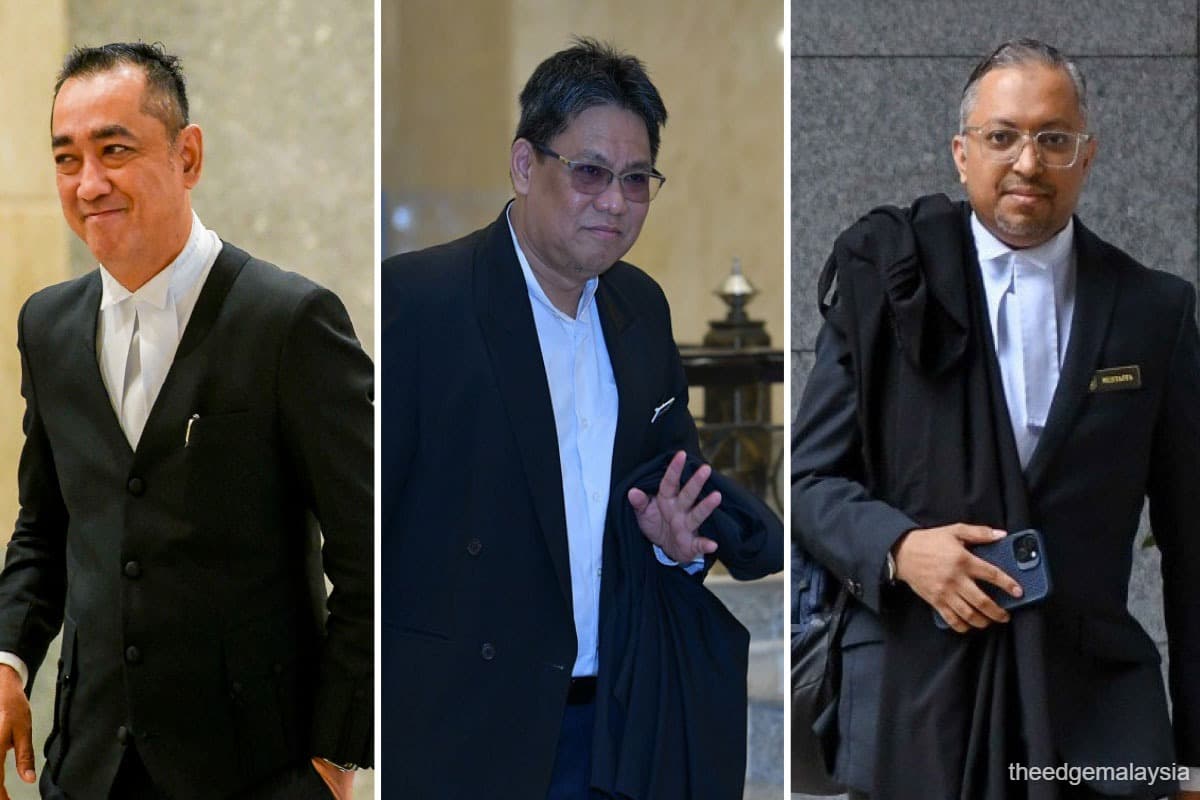
Wrapping up the prosecution's case in the ongoing 1Malaysia Development Bhd (1MDB)-Tanore trial, deputy public prosecutor (DPP) Datuk Kamal Baharin Omar argued that Najib's failure to verify the source of funds in his personal bank accounts was sufficient to show that he had the intention of committing a wrongdoing.
"[Najib] cannot hide behind a veil of ignorance. [The anti-money laundering Act] criminalises dealings with proceeds of unlawful activity, where a person knows or has reason to believe that the property is derived from crime.
"The doctrine of wilful blindness applies here. [Najib] repeatedly claims he believed the funds were ‘Saudi donations’. Yet, he made no effort to verify the authenticity of the letters, the intermediaries, or the unusual routes of transfer. Instead, he chose to rely on (fugitive businessman Low Taek Jho) Jho Low — a private businessman — and AmBank officers. This is not innocence; this is conscious avoidance," he argued.
Kamal went on to add that the significant sums which flowed into Najib's account demanded scrutiny. As a person in the position of power, Kamal argued that the then-PM had a duty to verify, but chose not to.
"The scale, offshore layering and lack of credible donation evidence, prove conscious avoidance, which in law amounts to knowledge. By deliberately shutting his eyes, the accused has satisfied the test of ‘reason to believe’ under (the anti-money laundering Act). The law is clear: wilful blindness is equivalent to knowledge.
"The evidence shows that [Najib] was not an unwitting victim, but a deliberate beneficiary who avoided asking questions because the answers would implicate him," the DPP said.
Kamal also said that Najib's claim that he had used the funds for Corporate Social Responsibility (CSR) projects is irrelevant as "good faith use cannot cleanse tainted money".
Najib, who is on trial for 25 charges for allegedly misappropriating about RM2.2 billion from the state strategic development firm, has always maintained that the monies in question were donations promised to him by the late King Abdullah of Saudi Arabia.
Witnesses’ testimonies show flow of Najib's instructions, not isolated instances
During their submissions, the defence had also raised the issue of "double-hearsay", arguing that the prosecution's case was reliant on layers of hearsay evidence which cannot stand in the court of law.
Addressing this earlier on Thursday, DPP Datuk Ahmad Akram Gharib argued that the issue of hearsay does not arise, and evidence by prosecution witnesses were admissible.
He said that the then-company personnel, who were witnesses in the trial, had acted on the belief that whatever instructions relayed was the will of the then-PM. Najib himself, Akram contends, never dispelled this assertion.
"This repeated, consistent conduct over time establishes that these were not isolated hearsay statements, but communications forming part of the ordinary course of business within the organisational hierarchy influenced by the accused.
"It is trite law that a statement is not hearsay when it is not adduced for the truth of its contents but to show that it was made, and that it affected the state of mind of the person who heard it," he said.
‘Despite warnings, what action taken against Jho Low? None.’
DPP Mohamad Mustafa P Kunyalam argued that Jho Low was indeed acting on Najib's behalf, despite the ex-PM's claims that the fugitive colluded with 1MDB’s management to orchestrate the multi-billion dollar scandal.
The DPP then highlighted the many instances of 'red flags' raised over the fugitive's actions — like former company board chairman Tan Sri Bakke Salleh’s resignation in 2009 and The Edge's chairman Tan Sri Tong Kooi Ong warning about Jho Low in early 2015 — which all went unheeded.
"The cumulative evidence in this trial is overwhelming. Jho Low arranged the accused’s private holidays while simultaneously managing 1MDB’s financial dealings. This was no coincidence; it reflects the accused’s reliance, sanction and trust in Jho Low.
"Now we can ask, what action has been taken against Jho Low since 2009? None. It goes on and on until 2018, when he (Najib) loses power. Not a single action was taken against Jho Low. But, the attorney general (AG) was removed in 2015 at the height of this fiasco," the DPP said in reference to the removal of then-AG Tan Sri Abdul Gani Patail in mid-2015.
"So, can the accused now claim he was duped by Jho Low? The answer is no," he said.
Mustafa also said that this was a bizarre case, where a corporate body was intentionally run like a regular "coffee shop", to facilitate the misappropriation of its funds.
The prosecution has wrapped up its submissions. The defence is in the midst of their reply.
They are scheduled to be done on Friday, bringing the seven-year trial to a close. Presiding judge Datuk Collin Lawrence Sequerah will then set a date to deliver his decision.