

This article first appeared in Wealth, The Edge Malaysia Weekly on October 27, 2025 - November 2, 2025
In August, a group of Malaysian start-up founders and investors gathered at The Vertical in Bangsar South, Kuala Lumpur, to attend sharing sessions featuring Jeffrey Tiong, founder of unicorn start-up PatSnap, and Kelvin Teo, CEO of peer-to-peer financing platform Funding Societies. Some may not be aware that both Tiong and Teo are Malaysian-born entrepreneurs.
The attendees learnt that event organiser Qualgro is a Singapore-based venture capital firm that invested in both start-ups, with a solid track record to boot. It was the firm’s first event in Malaysia, setting the stage for its official entry into the local market.
According to capital markets data provider PitchBook, Qualgro was founded in 2015 and has US$150 million (RM634 million) in assets under management (AUM) today. As at Oct 22, its total investments spanned 51 companies, 20 active portfolios and 11 exits.
The firm, which invests in early- and later-stage companies, won the VC Exit of the Year Award from the Singapore Venture Capital and Private Equity Association (SVCA) in 2019 for its exit from cloud-based communication service provider Wavecell Pte Ltd.
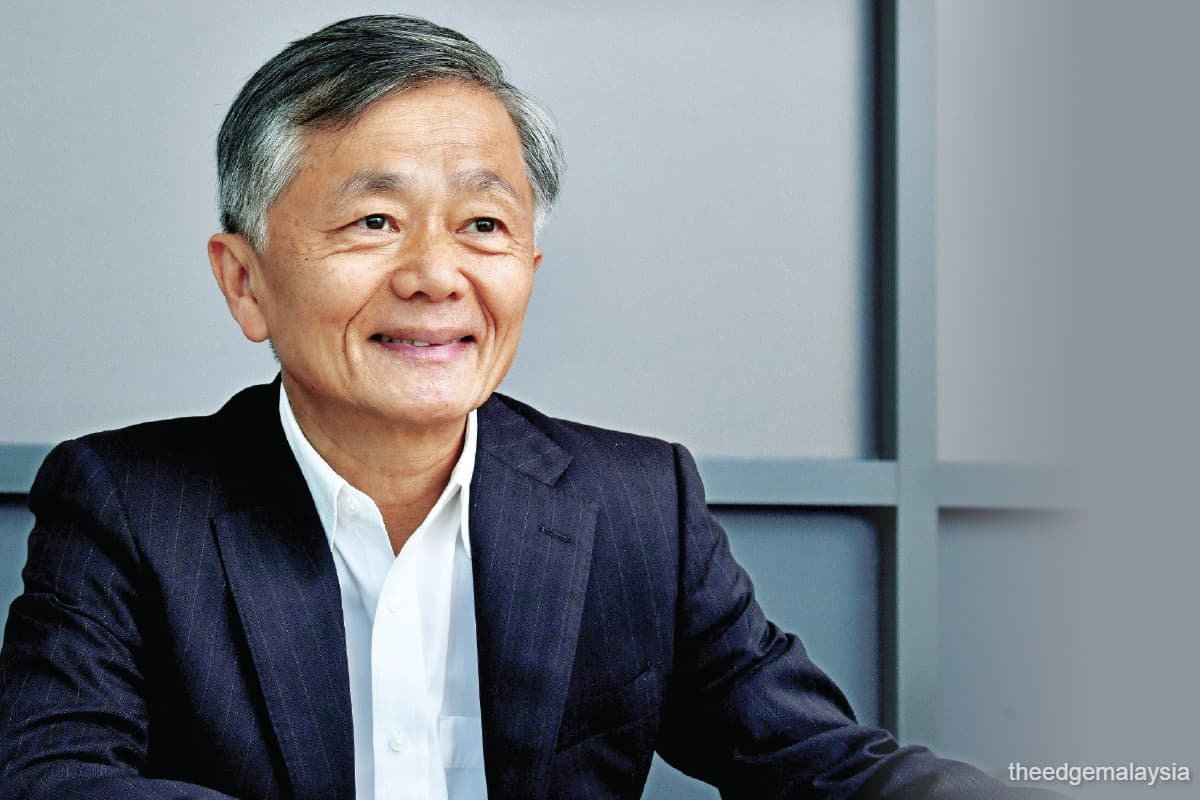
At the helm of Qualgro is its founder and managing partner Heang Chorr. He is a former senior partner at management consulting firm McKinsey & Co and a member of its global board, having spent 26 years there before plunging into the world of venture capital.
In an interview with Wealth, Heang says Qualgro has been keeping an eye on the Malaysian market for seven years now and is ready to make its maiden investment, and more.
“This time around, we really believe in the potential of Malaysian start-ups. We have been scouting the market for a few years. But in the past two years, we have seen real momentum and opportunities in the market due to the AI [artificial intelligence] tailwind,” he adds.
Opportunities in semiconductor and data centre space
It is not just a figure of speech when Heang mentions the potential of Malaysian start-ups. He sees promising private companies emerging in the semiconductor and data centre space, and backs up this observation with examples. Among them is a start-up that develops software for quality control in the production of semiconductor chips.
“We see companies in the software sector that enable machines to better control the quality of chip production. On the production line, the computer vision software is combined with data to provide very accurate quality control for those chips,” he says.
There are also companies that provide services for semiconductor chip design, he adds, which places them in the upstream of the value chain, and possess relatively advanced technology capability.
While the hype surrounding data centres may have fizzled out somewhat amid the global tariff war unleashed by US President Donald Trump, attractive opportunities remain in the private market. Software aside, Heang sees specific hardware equipment being increasingly used for the cooling of data centres, which guzzle vast amounts of energy.
“This equipment can be quite sophisticated, especially when data centres are looking for energy efficiency to lower electricity costs and to not have the chips burnt. Such a cooling system is something that we believe Malaysia is quite good at in terms of equipment and know-how,” he says.
Heang is keeping a close eye on the renewable energy sector. This is key as the world is transitioning towards a more sustainable future, yet is consuming much more energy for computing power and AI solutions.
“Malaysia has great sources of energy, and it is investing in renewable energy. With this comes demand for relevant equipment and software to manage and optimise the output of renewable energy. A very simple example is solar panels. You need to have software to manage the output and distribute that energy effectively,” he points out.
Heang acknowledges that there are concerns about competition from China regarding technology capability and pricing, but these local start-ups are still very promising with ample space to grow.
“They are good enough for us to invest in. We believe these companies can reach a scale of US$50 million, even US$100 million at some point in time [in revenue]. For us, it is very attractive to invest in these companies when they are still at US$4 million to US$5 million in revenue or incurring some losses.”
Heang says these companies are all at different funding stages, from pre-seed and seed to Series B or later. “Not all are invested in by venture capital firms. Perhaps venture capitalists (VCs) have not spotted these opportunities. That’s why we try to be ahead of the game.
“We are super excited about this. We believe that if we pick the right founder and company, they can scale up to a certain size and valuation.”

Specialist in B2B, AI and data
Spotting investment opportunities is just part of the equation for a successful venture capital firm. It is critical for the firm to provide value to its investee companies by helping them grow, then exiting those deals to generate returns for its investors.
Qualgro has achieved a number of exits, including AI marketing and advertising solution provider Appier, which was listed on the Tokyo Stock Exchange in 2021 and is valued at about US$1 billion, as at Oct 16. The investment was made in 2016, four years after Appier was founded.
When asked about investment returns, Heang says the firm emphasises distributions to paid-in capital (DPI) which, put simply, measures the performance of a venture capital fund through the cash return it generates for investors.
According to data provided by Qualgro, its first fund launched in 2015 made 18 investments with six full exits. It generated a DPI of one time in the sixth year, meaning it has fully paid back investors their principal. Other notable companies in the first fund’s portfolio include PatSnap, Funding Societies and e-commerce and loyalty platform ShopBack.
Qualgro’s second fund, launched in 2019, has achieved two exits through acquisitions, involving AI for ultrasound company Medo.ai and cloud-based point-of-sale solution provider Vend. It has generated a DPI of 0.2 times for investors, having returned 20% of their principal at the time of writing.
The key to Qualgro’s success thus far lies in Heang’s stint with McKinsey, which allows him to understand challenges organisations face when growing their business, while knowing what multinational corporations are looking for in their acquisition strategies.
“My experience with McKinsey helped me understand the importance of building the right organisation for growth, a critical aspect of a successful start-up. It is also my ability to understand global trends and the needs of large corporations that start-ups can address when they grow globally,” he says.
Heang’s core strength lies in the business-to-business (B2B) segment, instead of business-to-consumer (B2C). This is critical for Qualgro, resulting in its relatively high exit number in a fragmented market like Southeast Asia.
Why? He says consumption trends and patterns vary with each country, especially in a region like Asean where people speak different languages, with different cultures and religions. But business needs and wants are a lot more similar. A start-up that provides human resource software to banks in Singapore can, by and large, provide the same product to banks in other countries like Malaysia and Indonesia, or even Japan.
Yet, not many VCs are good at playing the B2B game as the B2C market, while complex, is more relatable.
“When it comes to B2B, you need to really understand the technology behind the product, its potential to create value for customers and the needs of those customers, which are typically SMEs (small and medium enterprises) and large corporations. It’s not common for VCs in the region to have such a background,” says Heang.
As a rule of thumb, Southeast Asian companies looking for a successful exit would usually need US$50 million in revenue and are profitable, he says. Their business needs to be operating in multiple countries in the region, which explains why regional expansion for Malaysian start-ups and companies is important.
“This is something we urge Malaysian start-ups to really think hard about. Your business needs to attain a certain scale to be successful. You need a competitive advantage for your products to serve the top companies in the world. This is the big message I like to convey to Malaysian start-ups and companies. Please help your start-ups go regional and global,” says Heang.
Using a bit of science to judge entrepreneurs
Instead of spreading its bets on a broad range of start-ups and hoping for one wildly successful payoff, Qualgro cherry-picks the companies it invests in.
“We don’t ‘spray and pray’. We invest in only three to four companies a year. And it takes an ability to identify those three or four entrepreneurs whom we can support to scale their business internationally,” says Heang.
He adds that the criteria Qualgro uses to pick start-ups and companies are not very different from those of its peers. What sets the firm apart is its methodology, which helps the team better understand a founder and its company and to avoid biases.
“We meet four or five times with an entrepreneur before we move on to the due diligence stage. If he has the one thing that impresses the VCs, like us, then we’d be suspicious about it. When I’m very certain that he is going to succeed, there is bias. It is the most damaging aspect in an investment process.”
Qualgro reduces bias through its founder profile benchmarking database which, according to Heang, contains the key ingredients of successful founders whom he and his team have met. They then use it to benchmark against other entrepreneurs whom they are considering investing in.
He and his team have met more than 800 founders in total, 10% of whom secured a second chance with them. They ranked these entrepreneurs according to several criteria — such as courage, resilience, problem-solving skills and ability to build a team — on a scale of one to 10.
“The way we do it isn’t just based on my feedback. It includes those from our team members, from junior to middle and senior levels. Whenever we meet a new entrepreneur, we try to calibrate him or her versus those who performed very well. Of course, we also calibrate them against those not as fortunate. When we backtest our benchmarking database, I would say we are 80% correct,” says Heang.
He and his team also ask entrepreneurs about their company and business during the due diligence process and extrapolate the potential of their company. If things go well, how do exits happen? Through mergers and acquisitions or an initial public offering (IPO)? Who are the potential buyers and what potential value does the company fetch?
“We really try to, basically, put a bit of science into the art of judging people. We are absolutely unconventional in our belief that judging people can only be done with the intuition and experience of the senior people. You can support [the process] with methodologies. It’s a combination of art and science to make a judgement that isn’t biased,” says Heang.
PatSnap in process of preparing for IPO
Qualgro places its bets on fewer than five entrepreneurs in a given year. Jeffery Tiong, founder and CEO of the lesser-known unicorn start-up PatSnap, was one of them in 2016.
PatSnap is a provider of research and development (R&D) analytics, helping researchers and businesses make sense of vast troves of information on patents, technology and innovation trends.
Founded in 2007, its investors include prominent names such as Sequoia Capital, one of the world’s most influential venture capital firms, and Tencent Holdings, the Shenzhen-based multinational technology conglomerate.
According to PitchBook, Qualgro invested in PatSnap in the same funding round as Sequoia, which was during its Series C funding round.
Tiong, who hails from Sabah, recalls his early engagement with Qualgro. Unbeknown to him, its founder and managing partner Heang Chorr and his team were evaluating and profiling him through their conversations.

“I didn’t know there was a profile benchmarking thing going on. It was actually like a normal conversation,” says Tiong.
While he was being evaluated by the Qualgro team, Tiong was also assessing Heang as a potential investor in his company. He liked that Heang is an independent thinker.
“The first few interactions with Heang, he was full of energy. And I always learnt something from him. Several investors I have met, I would say they tend to follow the herd. To have someone with contrarian views, I found it refreshing. That was important to me as a start-up founder,” says Tiong.
It was a good time for Tiong as venture capitalists (VCs) were lining up to park their money with PatSnap. But he made a mental note to reserve a slot for Qualgro and later accepted the firm as an investor.
That proved to be the right decision years later when Tiong and PatSnap faced huge challenges in 2018 and 2019. The company expanded rapidly by setting up offices in London, China and Singapore. What followed was what the founder called a “culture breakdown crisis”.
“We were ramping up so fast, hiring so many people and didn’t manage it well. We didn’t build the right team. What I wanted and the local management team wanted turned out to be very different. We didn’t have trust and it quickly cascaded down. Our people were confused. I didn’t really know what was happening when all this unfolded,” Tiong recalls.
“The result was that company sales fell off a cliff that year. I had to fly to London to fix the problems myself, spending one week in Asia and another in London, back and forth like this in 2019 while my family was in Singapore.”
It was a very tough time for Tiong, which was when Heang jumped in to lend an ear and provide him with much-needed help.
“It was very difficult when everyone in the company doubted you. At the same time, we had our quarterly meeting with the management team and I needed to boost their morale. Heang flew in a few times to join the meeting and helped me rally the team. Because everyone was so negative, it was really helpful to have him, an experienced professional who isn’t part of the management team, to provide us with perspective,” he says.
Heang saw the big picture back then. “It was one of those typical challenges that not only start-ups but also large companies face, which is about aligning the aspiration and operating modes of different teams around the world. You’re based in Asia, how do you explain to your European team that your products have to be targeted at a different segment of customers, while they believe they have a different set of knowledge and decide differently? How do you reach an agreement?
“Another more specific challenge to start-ups is that when you grow so rapidly, your confidence grows. But you’re still unsure about the necessary skill sets and experience to expand the organisation further, especially when entering new markets. Therefore, you hire people from large tech companies who are supposed to know all this, right? They might have the experience, but not the right start-up agile mindset. This kind of agility is not always widespread in large corporations.
“So, these are the challenges that start-ups like PatSnap can encounter. Having someone with experience in building organisations on a global scale proves valuable to help patch the differences.”
Fast-forward to June 2024. PatSnap had achieved US$100 million in annual recurring revenue with clients across 50 countries.
“Yes, we are in the process of preparing for an IPO,” Tiong smiles.
Save by subscribing to us for your print and/or digital copy.
P/S: The Edge is also available on Apple's App Store and Android's Google Play.