

This article first appeared in The Edge Malaysia Weekly on October 27, 2025 - November 2, 2025
SINCE the Covid-19 pandemic, Malaysia’s consumer habits have undergone a quiet revolution. A new wave of Chinese and homegrown brands has hit the local food and beverage (F&B) retail scene, shaking up a market once dominated by familiar Western names.
Today, one is unlikely to walk through an office lobby or university campus and not come across the local population grabbing a cuppa during the morning rush, at lunch break or after dinner when the craving kicks in.
F&B retail is undoubtedly a lucrative space, which is why competition is heating up fast. The quick-service restaurants and beverage retail markets have never been more crowded.
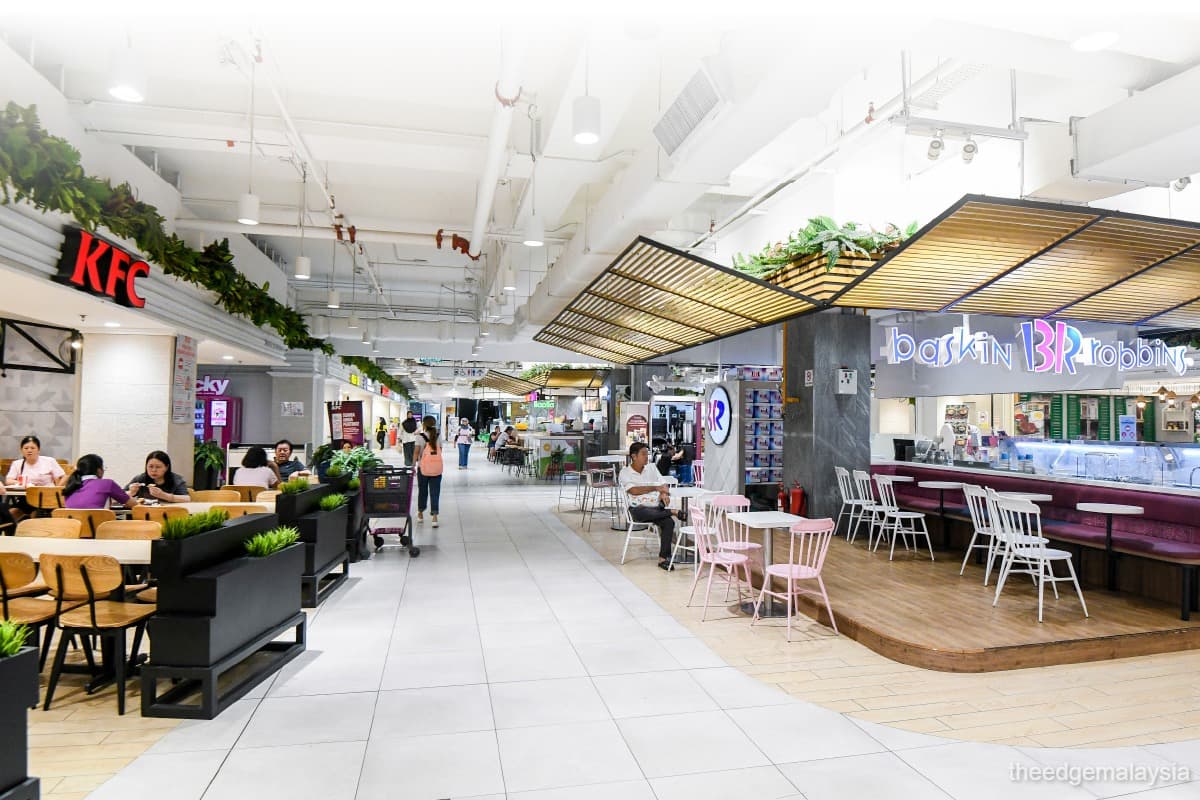
On the well-established side are the fast-food chains — McDonald’s, KFC, Pizza Hut, Domino’s Pizza and A&W — which still command large portions of the market.
They have not been immune, however, to consumer fatigue or the ongoing boycott of Western brands in the wake of the escalation of the Israel-Palestine conflict in Gaza since October 2023.
Local players and newcomers from China, drawn by Malaysia’s youthful, consumption-driven demographic, have also muscled into the scene.
Every corner of a shopping mall or commercial district seems to host a new entrant — from artisanal coffee bars to modern tea houses, or ice-cream kiosks to fusion dessert cafés.
Players say that in the brewing battle, many factors will determine success, including operational efficiency and excellence, consistency, product differentiation, the clever adoption of technology as well as authentic, localised experiences.

Chinese wave and local heroes
In recent years, foreign brands, especially from mainland China, have mounted a major offensive on the local food scene, coming in waves.
Brands such as Chagee, Mixue and Luckin Coffee are expanding aggressively, armed with highly efficient business models. Their appeal lies in affordability and speed — a reflection of China’s cut-throat retail efficiency and data-driven consumer targeting.
Take Mixue Group, the Hong Kong-listed ice-cream-and-tea chain operator known for its crowned snowman mascot and affordable price points. In Malaysia, Mixue’s volume-driven business model has proven disruptive, at a time when brands such as Inside Scoop, Baskin-Robbins and Häagen-Dazs are focusing on the premium segment.
Nasdaq-listed Chagee Holdings Ltd, with its polished store design and luxury-Oriental packaging — complete with takeaway bags reminiscent of Christian Dior — has set new standards for modern Chinese tea houses here, inspiring a wave of local imitations and collaborations.
Not to be outdone, Malaysia’s local coffee and tea chains have ridden a wave of patriotic consumer support over the past two years. The ongoing boycott of Western brands, particularly those perceived to be linked to the US, gave room for homegrown players to thrive.
With their hundreds of outlets, local brands such as ZUS Coffee, Gigi Coffee, Richiamo Coffee, Tealive and Bask Bear Coffee & Toasties have been eating into the market share of foreign brands such as Starbucks and The Coffee Bean & Tea Leaf.
Yet, it is not just about who brews the best coffee or shakes the freshest boba. Strategies adopted by these players blend affordability with national pride, marketing gimmick and social media.
Last week, ZUS Coffee, for instance, marked a major milestone — the opening of its 1,000th outlet across Malaysia and overseas — by taking a one-day break on Oct 23, a gesture that immediately went viral online.
Tealive has been collaborating with Unilever-owned Wall’s to sell its special-edition boba ice-cream, whereas Oriental Kopi recently embarked on a cross-promotional tie-up by introducing its limited-edition Uniqlo T-shirt.
Meanwhile, Luckin Coffee last week announced a limited-time RM3.99 promotion on Oct 30 and 31 across most of its outlets to mark its obtaining of the official halal certification from the Department of Islamic Development Malaysia (Jakim).
On Oct 8, McDonald’s Malaysia gave away free mushroom burgers to anyone with “Wan” in their name — although the promotion was limited to the first 100 customers who showed up with their IC as proof.
Last year, Chagee marked its seventh anniversary with a giveaway campaign, where customers peeled off stickers on their cups to reveal prizes, turning a simple tea run into a playful, lottery-like experience.
Competitive, but still growing
Eng Food Holdings Pte Ltd founder and CEO George Ang Choon Yan, who owns the A&W and Subway franchise brands in Malaysia, concedes that the industry is “always very competitive” and, therefore, there will be winners and losers.
“Nonetheless, it is still a growing industry as more and more people eat out more often and households are smaller, where cooking at home is now ‘occasional’ rather than the norm. Fundamentally, strong operators that offer good consistent products and service will thrive,” he tells The Edge.
Ang observes that the 1980s saw a wave of American brands arriving on Malaysian shores, including Kenny Rogers Roasters, Texas Chicken, Burger King, Carl’s Jr, Grandy’s and Wendy’s.
“That lasted for quite a while and some survived while others have closed down. Texas Chicken reopened and is now doing well, whereas Wendy’s came back but again closed down.
“I reckon the same will happen for some foreign brands — whether from China, the Philippines, Indonesia or Thailand — that come into Malaysia aggressively but may find the local market different from their home country,” the F&B veteran predicts.
He notes that Malaysia is not a large market, yet there are fundamental differences in purchasing power and dining habits across the country. For example, consumer behaviour varies significantly between urban Klang Valley, East Coast states such as Pahang, and East Malaysia.
Ang admits the boycott has affected some major US brands but benefited local and other foreign brands. Nevertheless, he believes the boycott has tapered down and that, over time, local consumers will buy into quality, taste and consistency.
“We have seen Philippine brand Jollibee, Indonesian brand Richeese Factory and homegrown brand Marrybrown probably taking some market share from the US brands that were boycotted. But over the long run, brands, whether local or foreign, need to get the fundamentals right.
“People dine out because of a craving for a certain kind of food and if that craving is fulfilled, they will come back more often. More often than not, we see a new brand do well when they first open but consumers will fall off as the quality and consistency drop. This happens to big brands, too,” he warns.
To Ang, some of the best places to eat are operated by small, independent operators.
“Many thrive because they have the right product, coupled with a good price strategy. My favourite nasi lemak place called Village Park is one such operator.
“They thrive with only one store but maintain their strong menu consistency, product and pricing. Although there are some economies of scale in the restaurant business, big operators do not always win solely on price,” he remarks.
Currently, there are more than 90 A&W outlets and more than 300 Subway stores in Malaysia. In total, both chains employ close to 3,000 people, nearly 100% being locals.
Local players must ‘work harder and be smarter’
Zuspresso (M) Sdn Bhd group chief operating officer Venon Tian Jerng Hui describes ZUS Coffee as a “tech-driven coffee disruptor”.
“Our strengths lie in our innovation, which is driven by data and consumer preferences — our proprietary tech stack is built for speed-to-market, allowing us to stay ahead of current offerings and respond swiftly to evolving tastes,” Tian tells The Edge.
He points out that the wave of new entrants is proof of the wide space of growth and opportunities for brands within the coffee chain, tea house and dessert segments in the region.
“For homegrown brands like us, this simply means we must work harder and be smarter. The market will always be competitive, especially in a region experiencing rapid growth,” he says.
“The key lies in ensuring our talent evolves in tandem with industry demands — across language proficiency, skill sets and operational finesse. Fortunately, Malaysia’s multicultural fabric gives us a unique edge.”
Tian says this cultural agility has enabled ZUS Coffee to collaborate effectively with local teams to deliver products that resonate deeply with diverse audiences across markets in which the company operates, including Malaysia, Singapore, the Philippines, Brunei and Thailand.
“Internally, we have a saying: ‘If you’re not growing, you’re dying.’ In a market as dynamic as Southeast Asia, growth isn’t optional; it’s essential.
“We believe both scale and cost efficiency, as well as product differentiation and consumer taste, play equally critical roles in determining who thrives. It’s not a one-size-fits-all environment. The region is rich with nuance — just consider the sheer diversity of dialects and cultural preferences across borders.”
Tian believes that, as the market evolves, those that can balance operational excellence with authentic, localised experiences will be the ones that lead.
As at September, Zuspresso operated 800 self-owned ZUS Coffee outlets across Malaysia and employed more than 7,000 Malaysians — including baristas — who are paid competitive wages above the national average.
Interestingly, besides its physical cafés, ZUS Coffee is also expanding its footprint in the fast-moving consumer goods (FMCG) space, by launching Ngupi, a ready-to-drink instant coffee.
Palaterium Sdn Bhd, a joint venture between CUCKOO International (MAL) Bhd (KL:CKI) CEO Hoe Kian Choon and HWC Coffee Taiwan, operates the HWC Coffee chain in Malaysia.
Palaterium CEO Zenda Ng points out that HWC Coffee offers premium, high-quality products. As a result, even in a fiercely competitive market, many customers are willing to pay more for something unique and exceptional.
“Operational margins are under a lot of pressure, especially with rising costs of raw materials, staff, rent and logistics. Nowadays, business is about growing smart — it’s not just about how fast you can grow, but also about how long your business can sustain itself,” she says.
Given that large global brands benefit from economies of scale and massive funding, Ng urges homegrown brands to prioritise customer experience and product quality. She observes that these brands are “like a big giant — good to see but hard to move”, noting they often lack flexibility and the human touch.
She expects some consolidation in the F&B sector and emphasises that, although scale and cost efficiency are important, “consumers today are looking for something more than affordability, as their experience and trust in a brand are equally important, too”.
HWC Coffee is set to have about 80 stores in Malaysia by the end of this year and plans to open 100 more in 2026. Almost its entire workforce is Malaysian.
Luckin Coffee Malaysia CEO Dr Jeff Lim Chee Lip acknowledges that the local F&B market is becoming more crowded, but he puts it down to how dynamic Malaysia is. “Competition isn’t something we fear, as it raises the standard for everyone. With the right scale, lean operations and continuous product innovation, this is still a very healthy and profitable business. For us, technology and efficiency are big advantages, and we see plenty of room to grow.”
According to Jeff, while international players enter the market with cost and scale advantages, Malaysia is not just about who can offer the lowest price. Local consumers also want quality, convenience and brands that feel like part of their daily lives.
Jeff adds that Luckin leverages its global strengths in technology and supply chain but adapts everything — from drinks to campaigns — to local preferences. “That’s where real differentiation comes in,” he says, noting that the brand is dedicated to driving growth, agility and resilience.
Luckin Coffee has more than 40 outlets in Malaysia and is opening more every month. Its entire workforce is Malaysian.
Cold treats, hot demand
From comforting cups of tea to indulgent scoops of ice cream, Malaysia’s evolving taste for sweet and soothing treats is also reshaping the tea beverage and dessert chains scene.
Bryan Loo, CEO of Loob Holding Sdn Bhd, which operates Tealive and Bask Bear, sees this as proof of the F&B retail sector’s vibrancy and resilience.
He acknowledges that rising costs and slimmer margins are part of the landscape, but demand remains for convenience, quality and culturally resonant brands. “With the right scale and focus, plus customer support, we will continue to be a viable and sustainable business,” he tells The Edge.
Loo sees the entry of regional and international players as part of the natural evolution of Malaysia’s dynamic beverage market. “Consumers here are adventurous and open to new concepts, which creates space for a variety of brands to co-exist. Tealive and Bask Bear are homegrown brands built on understanding Malaysian tastes, creating culturally relevant experiences, and building trust over time,” he says.
Loo contends that more players ultimately help grow the market by introducing more Malaysians to tea-based beverages and the modern café lifestyle. As the sector develops, different players will pursue different strategies, from scaling up to targeting niche segments.
“Both efficiency and differentiation have roles to play, and consumer choice will ultimately shape the landscape. For Loob, the priority is to remain relevant by investing in innovation, digitalisation and expanding new verticals, such as FMCG, so that our brands continue to have a meaningful place in Malaysians’ daily lives,” he asserts.

Loob operates more than 950 Tealive outlets and 140 Bask Bear outlets, with a workforce of about 4,500.
Jom Chá general manager Eddie Lim notes that because consumers today have more options, brands can no longer compete on price alone — quality, experience and values matter, too.
“Jom Chá by Farm Fresh’s strength is being a true Malaysian brand, using the best fresh milk in all our products. The business is still profitable, but growth depends on sharpening our identity, innovating and building loyalty beyond price,” he says.
Lim acknowledges that foreign players, especially Mixue, have strong economies of scale and often compete aggressively on price, but he stresses that “competing purely on price is not our model. Our strength lies in healthier options”.
He adds that consumer preference will decide the winners, with brands offering real differentiation, healthier choices, consistent quality and value-for-money set to endure despite eventual market consolidation.
Jom Chá operates 55 outlets, supported by 150 Malaysian employees, and plans to add five to eight outlets in 2026, focusing on non-mall locations.
The Inside Scoop Sdn Bhd, also backed by Farm Fresh Bhd (KL:FFB), operates about 60 stores in Peninsular Malaysia. The company plans to open eight to 10 stores over the next 12 months as opportunities arise. It has around 200 full-time staff, more than 90% of whom are Malaysian.
Inside Scoop co-founder Edmund Tan Jun Hua notes that large Mainland Chinese brands enjoy a cost advantage on raw materials. “Similar to David versus Goliath, we believe local players can compete by finding their niche and meeting consumer needs better — not just on cost. For example, they can do so by localising flavours and moving faster to market,” he tells The Edge, adding that the industry always has room for both large and small operators.
“Consumers are not always just focused on cost and efficiency. Food and beverage isn’t just about filling your stomach but also nourishing the soul and creating experiences,” he says.
“Small operators, particularly owner-run brands, can serve niche segments better than large chains. Having said that, the ‘middle’ market segment will face increasing pressure as it is squeezed on all fronts.”
Datuk Tony Ong Leong Chiou, executive director of Daruma Capital Sdn Bhd, which runs Chizu Café, attributes rising competition to the growth of quick-service formats and speciality beverages.
“For Chizu Café, this competition has accelerated innovation and sharpened our focus on delivering exceptional value,” he says.
Since opening its first outlet at Sunway Pyramid in March 2017, Chizu Café has grown from crafting Japanese-inspired foamy cheese drinks to becoming Malaysia’s only lifestyle café serving cheese drinks and croissants.
In 2018, he says, Chizu Café introduced freshly baked croissants made with imported flour at its outlet in 1 Utama Shopping Centre, reinforcing its commitment to premium quality at an accessible price.
Ong acknowledges that margin pressure is real, given rising input costs and rentals, but says the market will remain profitable if brands maintain strong differentiation and operational discipline. He believes international entrants such as Luckin Coffee, Mixue and Chagee have brought vibrancy to Malaysia and raised consumer expectations.
“It is true that many enjoy scale and supply chain advantages that allow for aggressive pricing. However, Chizu Café does not compete solely on price,” he says. “Our strength is in originality, quality and experience. Our cheese tea and fresh croissants set us apart, positioning us as a lifestyle café rather than just a beverage chain. This differentiation lets us connect with consumers seeking premium, yet affordable, indulgence.”
Today, Chizu Café operates eight outlets in the Klang Valley, mostly in malls. Daruma Capital aims to steadily grow its network over the next few years by opening multiple outlets in high-traffic locations.
From fast food to handcrafted lattes, from bubble tea to soft-serve cones, Malaysia’s F&B landscape is in the midst of a turf war driven by affordability, speed, design and digital clout.
The next phase is likely to be defined not just by outlet numbers but by who can keep Malaysians returning, in a market where loyalty is fleeting and tastes constantly evolving.
As new players enter and established names reinvent themselves, one thing is certain: The battle for Malaysia’s next cuppa or slushie is only just beginning.
Save by subscribing to us for your print and/or digital copy.
P/S: The Edge is also available on Apple's App Store and Android's Google Play.