

This article first appeared in The Edge Malaysia Weekly on October 27, 2025 - November 2, 2025
WHEN the Covid-19 lockdowns forced many physical stores in Malaysia to close, consumers didn’t stop shopping — they simply went online. What began as a survival pivot during the pandemic has since evolved into one of the fastest-growing segments of the consumer economy: live commerce.
Emerging from this structural shift is Oasis Home Holding Bhd (KL:OHM), the country’s first live-commerce company to be listed on Bursa Malaysia, proving that content-driven selling and home-grown brands can power the next phase of digital retail growth.
Founded in 2011, Oasis Home began as a supplier of home and living products used primarily as corporate gifts. In 2014, the company expanded its reach by placing its products on consignment in major department stores such as Aeon.
Recognising a shift in consumer behaviour towards online engagement, Oasis Home launched its first Facebook live commerce channel in 2019 to promote its in-house products, pivoting away from conventional retail. This move positioned the company ahead of its competitors, just before the pandemic accelerated digital consumption.
“In 2020, [retailers] called to ask if we could sell their products via live streaming. We started with four live hosts and it was then, during the height of the pandemic, that revenue growth peaked at about RM1 million to RM2 million monthly. Margins were good as the new operations did away with the heavy charges for consigned goods and other middleman costs to sell in physical stores, deepening our business margins,” Oasis Home CEO Datuk Jaden Teoh Yee Seang tells The Edge in an exclusive interview. Teoh is the company’s single largest shareholder with a 35.05% stake.

While many online businesses struggled as physical retail resumed post-pandemic, Oasis Home entrenched its digital footprint by eliminating platform dependency and building brand loyalty through content.
“In 2022, we realised that relying solely on platforms such as Lazada, Facebook and Shopee was risky. We didn’t own these platforms, and if they shut down, our business would be vulnerable. That pushed us to build our own app and migrate our operations,” recalls Teoh.
Today, Oasis Home’s proprietary application has approximately 30,000 active users. These customers are repeat buyers “who prioritise quality and are willing to spend on value-driven products”, he adds.
Teoh notes that while many pandemic-era live sellers made quick profits, few managed to sustain their operations. “Many young entrepreneurs who conducted live sessions experienced quick gains, but some faced challenges in sustaining their businesses after the Covid-19 pandemic. In contrast, we adopted a more measured approach, reinvesting our earnings in warehouse expansion to support long-term growth.”
Oasis Home operates two main business segments: direct-to-consumer (D2C) and business-to-business (B2B).
Within the D2C segment, live commerce contributed 66.3% to group revenue for the financial year ended June 30, 2025 (FY2025), followed by third-party e-commerce marketplaces and digital marketing (21.4%), the mobile app and website (8%), and offline sales (2.5%).
The B2B segment, consisting mainly of corporate orders, accounted for 1.6% of group revenue. Teoh intends to maintain it at that level while prioritising retail, which offers higher margins and stronger brand visibility.

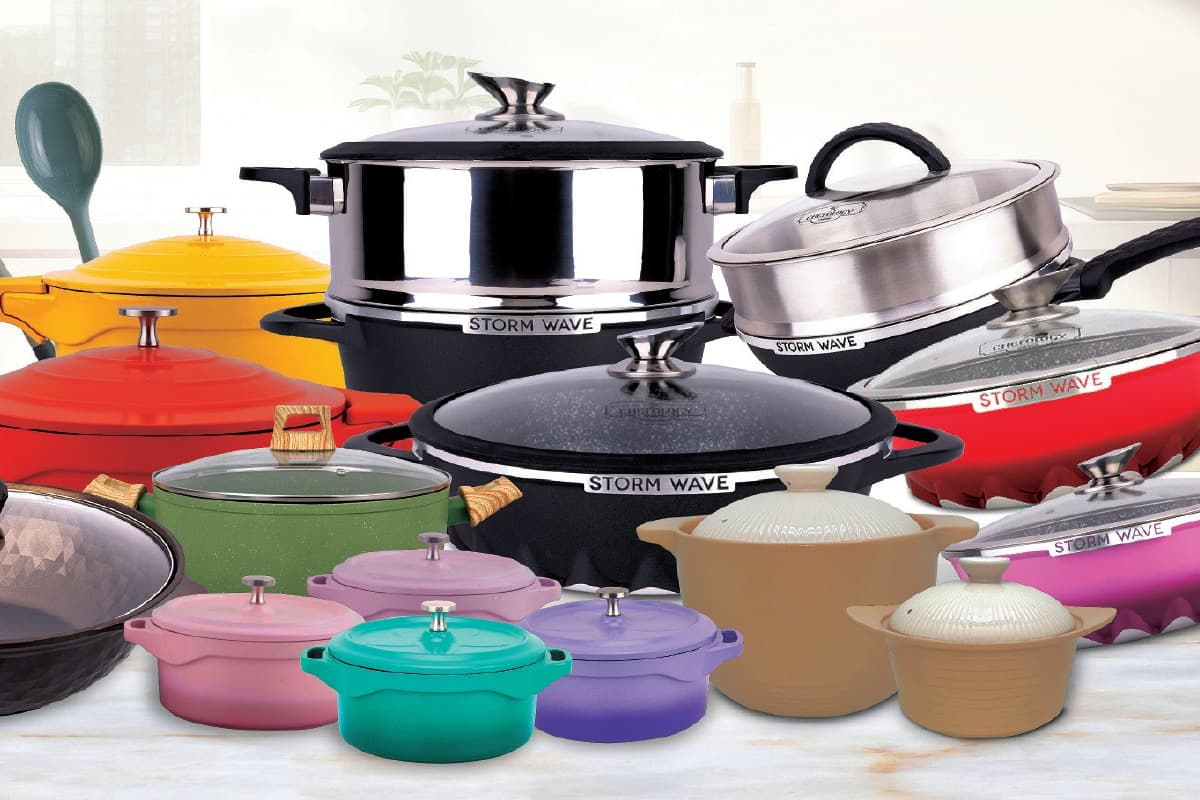
Today, the company markets over 2,200 stock keeping units (SKUs) across categories including home and living, wellness and personal care, skincare, and travel accessories. Its in-house cookware lines, Chefology and Doshio, for instance, are produced by either local or international original equipment manufacturers (OEMs).
The exception is its skincare line, which comprises third-party products not readily available in the Malaysian market.
The company is currently widening its offerings to include bedding and is planning to introduce goods for pets, mothers and babies.
Teoh notes that health supplements offer the highest margins among its product categories, though he did not disclose specifics.
Revenue growth ambitions
Oasis Home made its debut on the ACE Market of Bursa Malaysia at an offer price of 28 sen on May 28. The live-commerce company was valued at RM150 million with a price-earnings ratio (PER) of 17.39 times.
Notably, the first six-month moratorium on sale of shares will expire next month. Currently, some 321.26 million shares are under moratorium. This figure will drop to 225 million after Nov 28. Oasis Home’s management team will be allowed to trim their stake of roughly 76.26 million shares upon expiry of the first moratorium.
There is currently no analyst coverage of the stock on Bloomberg.
It is worth noting that the broader Bursa Malaysia Consumer Products and Services Index, which had fallen to 457.26 points on April 9 amid US tariff tensions, rebounded 18% to 538.2 points last Wednesday, putting it closer to the 550.24-point level at the start of the year.
This suggests a more favourable consumer backdrop that may benefit discretionary spending and consumer counters like Oasis Home.
Revenue — which, according to Teoh, stood at the RM20 million level in FY2018 — doubled to RM40.9 million in FY2022, growing a further 77% to RM72.39 million in FY2025. Net profit grew to RM7.8 million, or 1.56 sen per share, in FY2025 from RM5.3 million in FY2022, while net profit margin dipped to 10.77% from 12.96% in that period.
“There was a lull in sales for May and June as consumers tightened their purse strings amid economic uncertainties, but the company saw year-on-year growth during the fourth quarter,” says Teoh.
According to its prospectus, Oasis Home targets a dividend payout ratio of at least 30% of its net profit each financial year.
In August, Oasis Home’s wholly-owned unit Oasis Wellness International Sdn Bhd formed a 51:49 joint venture (JV) with GIMCare (M) Sdn Bhd to expand into the wellness segment. A month later, it signed a similar deal with CTG JV Malaysia Sdn Bhd, a collaboration between CTG Asia Holdings Sdn Bhd and AM Found Group Sdn Bhd, which is a product incubation platform with more than 50 healthcare and beauty brands with cumulative sales exceeding RM200 million over the past three years.
“Our goal is to surpass the RM100 million revenue mark through strategic JVs, including those established with GIMCare and CTG Group,” says Teoh.
Both partners are strong e-commerce players that align well with Oasis Home’s content-driven and live-commerce expertise.
He says GIMCare, a subsidiary of live-stream and KOL marketing firm GIM Media Sdn Bhd, focuses on the Malay market and serves major fast-moving consumer goods brands.
“We will bring our health supplements to its platform. GIMCare has 60 to 80 live hosts from 8am to midnight daily,” he explains.
Using a back-of-the-envelope calculation and assuming a net profit margin of 12%, the RM100 million revenue ambition will bring in a net profit of RM12 million, or 2.4 sen per share. At last Thursday’s closing price of 32 sen and based on an earnings per share of 2.4 sen, the stock will trade at a future PER of 13.3 times. However, Teoh did not reveal the timeline for achieving its goal.
The stock is currently trading at a PER of 20.5 times based on the FY2025 earnings per share of 1.56 sen.
Looking ahead, Oasis Home plans to expand into the Middle East next year, leveraging its halal-certified products, while also strengthening its presence in Hong Kong and Singapore.
“In terms of product expansion, we are also developing our home and living range, which remains our core business, with an estimated gross profit margin of about 40% to 45%. We must maintain this level of profitability while competing with the influx of China brands on features, functionality and design,” says Teoh.
When asked about competition from low-priced Chinese imports, Teoh says: “We build brands with value — strong features, unique selling points and quality materials. These are what customers look for in the long run. Many China-based sellers adopt a strategy of pricing at a loss to corner the market, but when they eventually raise prices, they risk losing customers.”
He adds that one of the toughest challenges of running a live-commerce business is adapting to the constantly changing rules of digital platforms, which evolve rapidly with artificial intelligence advancements.
As a relatively small-cap counter with an IPO market capitalisation of RM150 million, Oasis Home’s success hinges on maintaining its innovative edge and ability to monetise content in a competitive e-commerce environment.
“This year has not been easy with the tariff tensions and local government announcing the expanded sales and service tax, indirectly inflating the cost of living. But then again, entrepreneurs never hear of good market conditions,” Teoh says.
Save by subscribing to us for your print and/or digital copy.
P/S: The Edge is also available on Apple's App Store and Android's Google Play.