

This article first appeared in The Edge Malaysia Weekly on October 27, 2025 - November 2, 2025
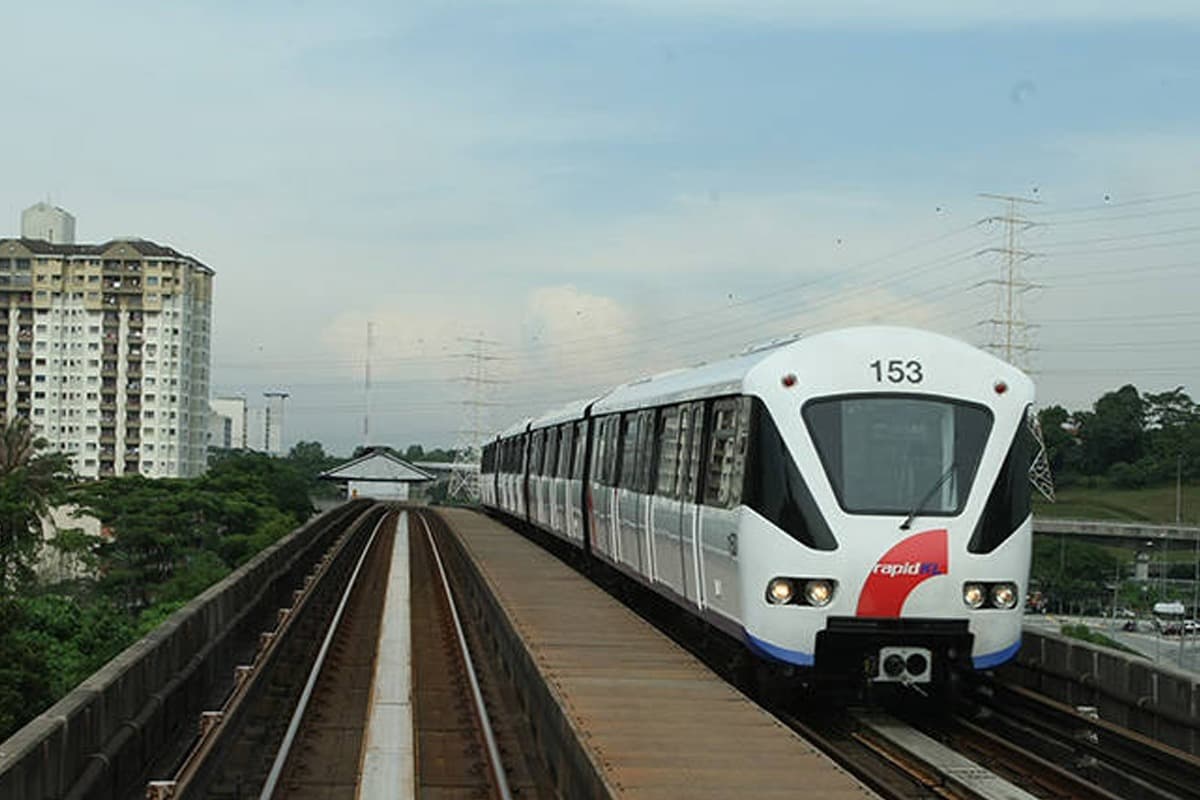
A consortium made up of CRRC ZELC, CRRC Rolling Stock Centre (M) Sdn Bhd and CKM Landas MRO Sdn Bhd has surfaced as the front runner for a lucrative RM1.1 billion contract to manufacture, supply, deliver, test and commission 26 sets of four train cars for Prasarana Malaysia Bhd to be used for the Kelana Jaya light rail transit (LRT) line, sources tell The Edge.
The CRRC ZELC consortium appears to be ahead of the only other shortlisted candidate, the Alstom-Hartasuma consortium, a joint venture between local rail players Hartasuma Sdn Bhd and French-based Alstom SA.
The award to the CRRC ZELC consortium could be expected soon, the sources add.
“The Chinese [CRRC ZELC consortium] are likely to get it, [as] their price is more competitive. Unless something drastic happens, the CRRC ZELC consortium seems almost certain to bag it [the RM1.1 billion contract] ... lately most of the rail contracts have been going to Chinese players as it is hard for the rest to compete with their low pricing,” says a source.
According to another source, CRRC ZELC’s bid was some 20% lower than its competitors’. “The pricing offered by CRCC ZELC was so much lower … but that is their strategy. The Chinese rail players do not look at making money from the sale of coaches but play the long game — make money from the maintenance contracts for the coaches. Essentially, they [Chinese rail players] take a long-term view of the business and shut out the competition slowly,” he says.
“For Prasarana, which is wholly owned by the government and manages rail assets such as the MRT (Mass Rapid Transit), LRT, monorail and feeder bus systems, cost of asset is a priority considering its financial challenges. So, of course, CRRC ZELC’s low bid is more attractive for Prasarana, even though it is likely to adversely impact the local rail players.”
CRRC ZELC, a state-owned enterprise, is a core subsidiary of CRRC Corp Ltd, the world’s largest supplier of rail transit equipment. CRRC Corp set up CRRC Rolling Stock Center (M), which has an assembly plant in Batu Gajah, Perak, with a total investment of RM400 million.
At present, talks are ongoing, at the preliminary stage, for a government agency, possibly UEM Group, to buy a 51% stake in CRRC Rolling Stock Center (M).
Like many public transport companies worldwide, Prasarana does not register profits. For the financial year ended Dec 31, 2024 (FY2024), it suffered an after-tax loss of RM1.54 billion on revenue of RM839.56 million. Prasarana has suffered in the last five financial years, with the worst being FY2020, in which it incurred losses of RM4.46 billion with revenue of RM530.3 million.
As at end-2024, Prasarana had total assets of RM4.5 billion and total liabilities amounting to RM89.55 billion, while its accumulated losses had swelled to RM55.32 billion.
However, the stream of contracts from Prasarana has been a lifeline for local rail-related companies. To recap, Hartasuma and Canadian outfit Bombardier Transportation were the initial suppliers of coaches for the Kelana Jaya LRT in the 1990s and Keretapi Tanah Melayu Bhd, another wholly-owned government entity.
Alstom acquired Bombardier Transportation in January 2021, giving rise to the new joint venture.
For the Alstom-Hartasuma consortium, the loss of this large contract to the CRRC ZELC consortium could have far-reaching effects.
To diversify its earnings as things get challenging on the local front, Hartasuma has ventured into the cable car space and will build and operate the Penang Hill cable car project, partnering with Doppelmayr Seilbahnen GmbH, and made inroads into the Philippines’ rail market.
In 2017, Alstom-Hartasuma secured a multi-billion contract for the supply of 108 LRT cars, and upgrading of wayside and other related works for the Kelana Jaya LRT line. The question that arises now is what will become of those coaches should the CRRC ZELC consortium win the bid? Who will maintain the train sets?
Alstom, which has been in operation in Malaysia for more than 20 years, could face challenges going forward with most rail jobs being awarded to China-based companies that offer more competitive pricing.
Save by subscribing to us for your print and/or digital copy.
P/S: The Edge is also available on Apple's App Store and Android's Google Play.