

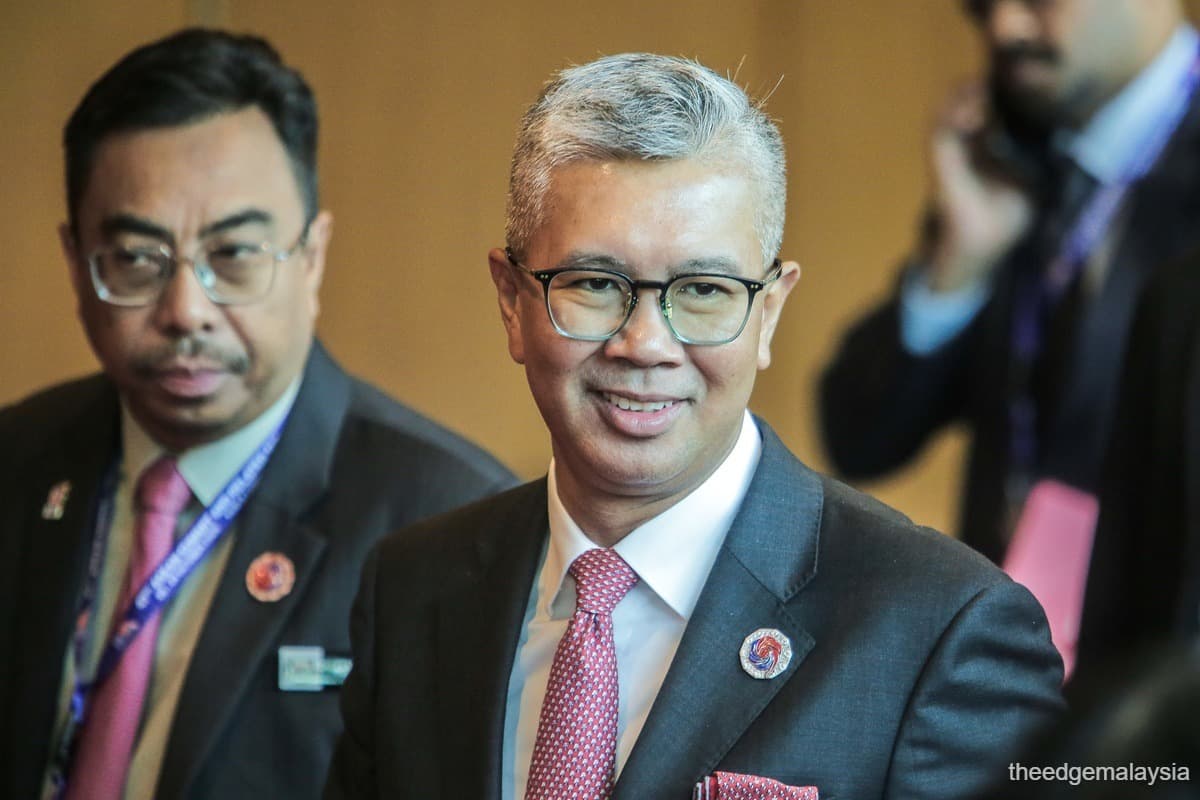
KUALA LUMPUR (Oct 27): Malaysia will maintain its ban on the export of raw rare earth elements, while inviting foreign investors to participate in downstream processing and value-added activities.
The country’s rare earth policy prohibits the export of upstream or unprocessed minerals, a stance Investment, Trade and Industry Minister Tengku Datuk Seri Zafrul Abdul Aziz said is designed to encourage investors to locate higher-value activities within the country.
“So what we’ve done is we’ve invited many companies who are interested to come join us,” he said in an interview with CNBC’s Squawk Box Asia on the sidelines of the 47th Asean Summit and Related Summits on Monday. “The spillover will be there, to the industries, jobs, and exports.”
Zafrul’s remarks came as Kuala Lumpur and Washington signed a reciprocal trade agreement to deepen bilateral economic ties and strengthen supply chain resilience, including cooperation in critical minerals development.
Under the deal, Malaysia commits to refraining from banning or imposing quotas on exports of critical minerals or rare earth elements to the US, while ensuring no restrictions on the sale of rare earth magnets to US companies.
The pact also includes commitments to expedite development of the sector in partnership with American firms, with extended operating licences to provide regulatory certainty.
Zafrul also said that the government has yet to quantify the potential economic value from developing the rare earth sector, but noted that validation work is ongoing, following a Budget 2026 allocation for geological studies.
“It’s important that we also get the private sector involved to validate,” he said.
Consistent and non-exclusive policy
Further, Zafrul stressed that Malaysia’s policy on rare earth exports applies universally and is not targeted at any particular country, including the US or China.
“You can consider it initially as a non-tariff barrier, but when you look at the context, this is something that is important for Malaysia,” he said in response to questions about the export ban on raw rare earth minerals. “And we’re not restricting it just to the US. We are restricting it to everyone, including China, Japan, and Korea. So we are consistent in that approach.”
He said Malaysia’s position is to remain open and non-aligned as major economies compete to secure access to critical minerals and semiconductor supply chains.
Discussions with both the US and China are ongoing at government and business levels, including talks with Chinese companies interested in establishing rare earth processing facilities in Malaysia.
Zafrul said Malaysia’s neutrality and consistency in industrial policy will allow it to attract investment from multiple partners, while maintaining control over its strategic resources.
Separately, Prime Minister Datuk Seri Anwar Ibrahim said on Monday that Malaysia is also ready to deepen its cooperation with Japan in the development of rare earth elements, critical minerals, and other mineral-related sectors.
Anwar said Malaysia welcomes Japan’s participation and investment across the entire value chain, from upstream exploration and sustainable mining utilising Japanese technology, to midstream refining and downstream manufacturing of high-value products.