

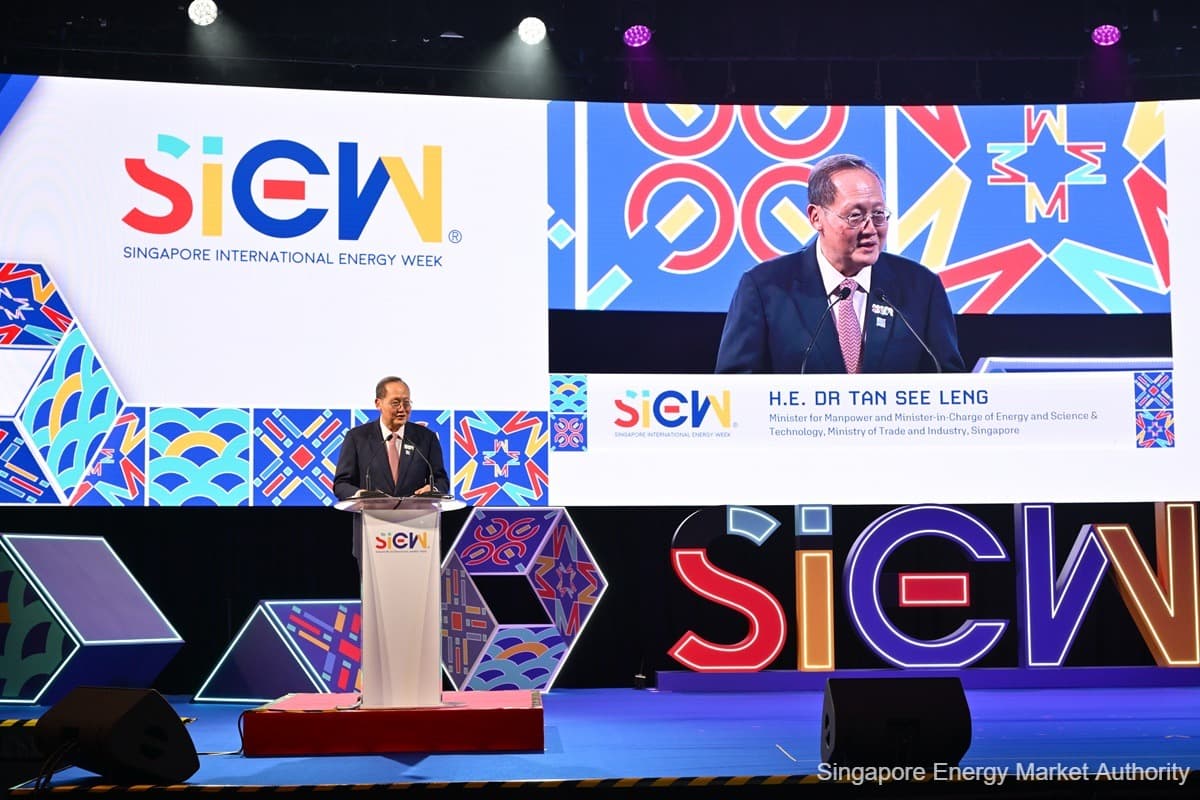
SINGAPORE (Oct 27): Singapore's push to decarbonise its electricity sector and secure its supply capacity will be balanced against cost competitiveness, said its Minister-in-charge of Energy and Science & Technology Tan See Leng.
The island state, which has been exploring renewable energy (RE) imports from Malaysia and other regional neighbours, has to be "clear about the trade-offs" between the energy trilemma as it continues to pursue low-carbon electricity as part of supply diversification, said the minister.
"Decarbonisation will come with costs. But let me reiterate, it cannot and it will not come at all costs," Tan, who is also minister of manpower, said during his keynote address at the Singapore International Energy Week.
"We will continue to strike the right balance between sustainability, security and cost competitiveness," he said.
One of Singapore's diversification strategies is to import 6GW of low carbon energy capacity by 10 years' time, which will make up to one-third of its demand come 2035.
The preparation for imports comes amid heightened discussions on the Asean Power Grid, aimed at connecting electricity supply in one country and consumers in another.
Malaysia, with sizeable RE capacity potential, has opened RE bidding exercises to Singapore in an effort to turn RE into one of the economic growth enablers. It is also looking into expanding its transmission capacity between the two countries.
However, pricing and costs have been key challenges in spurring regional power trade. This includes the price tag to utilise the grid and tariff rates for RE-generated electricity, as well as billions of dollars in funding to develop some of the interconnections.
At this stage, Singapore has provided conditional approvals for its companies to facilitate imports from Malaysia, Indonesia, Australia, Cambodia and Vietnam.
"I am optimistic that the first wave of electricity import projects will reach financial close very soon. And we can see the commencement of flow within this decade.
"Singapore cannot build this grid alone. We must partner with other countries," Tan said.