

KUALA LUMPUR (Oct 24): Digital literacy (50%) and human–artificial intelligence (AI) collaboration (50%) topped the list as the most urgent skills to build, according to Cognizant’s white paper titled “Unleashing the power of Malaysia’s human capital in the AI age”. Data interpretation and workflow redesign followed closely behind at 40%.
This aligned with the finding that Malaysia’s AI journey is challenged by fragmented adoption and talent readiness, presenting critical barriers to scaling AI and maintaining economic competitiveness.
This has also resulted in a confidence gap in local talent among Malaysian leaders who acknowledge that many workers lack the deeper skills to integrate AI into workflows and decision-making. A third of surveyed leaders (33%) expressed low confidence in their worker’s capabilities in using AI, while only 11% of leaders feel secure in this regard.
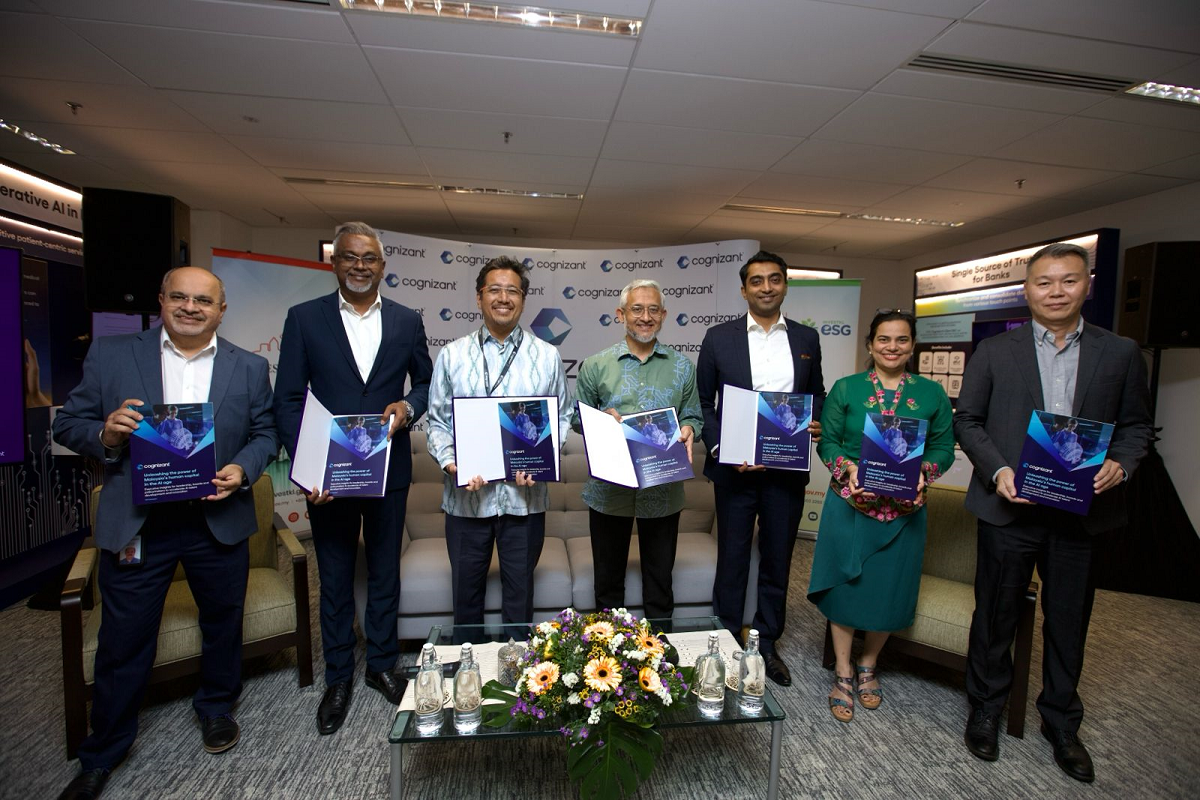
“Talent is the area we chose to focus on in the Malaysian [edition of the white paper]. Globally, we focus on ethical AI and decision systems, but locally, we felt like talent was the most important thing that everyone is grappling with. This is what we’ve heard from our clients and partners,” said Thomas Mathew, vice-president of Cognizant Asean and Greater China, during the white paper launch on Thursday.
Although upskilling is recognised as the next step to improve the AI capabilities of the workforce, 32% found that low employee readiness or engagement, as well as the lack of clarity on where to start pose as two of the biggest challenges to facilitate this change. Difficulties in scaling followed at 24%, and budget constraints lie at 11%.
AI adoption is also the highest in transaction-heavy functions that provide immediate returns on investment, but less applied in strategic or creative functions that enable transformation. For instance, operations and customer service are the roles with the most common AI adopters at 60%, followed by finance and human resources functions at 50%.
The key recommendations set out by the white paper to close the talent gap is to embrace a producer mindset when it comes to AI, and this includes developing local large language models (LLM), sector-specific AI specialisations (such as the palm oil and Islamic finance sectors) and developing local AI intellectual properties.
The white paper is the result of Cognizant’s integrated insights from a prior C-suite roundtable, peer exchanges, survey data and global research, offering a view of Malaysia’s AI talent and adoption landscape.
Talent to support Malaysia as a leading AI nation
For Malaysia to become an AI nation and adapt with the rapid developments of technology, it will be crucial for the future talent pipeline to be secured and equipped with the relevant skills surrounding AI.
Shamsul Izhan Abdul Majid, head of the National AI Office (NAIO), said that moving forward with the 13th Malaysia Plan, Malaysia can transform into an AI nation through three principles of raising the ceiling for the talent pool, raising the ground to upskill the majority and to have proper governance across all sectors.
The recent budget announcement also emphasised the country’s commitment in allocating funds into areas that further AI innovation, such as research and development.
“It's about [specific] areas of research that we should be focusing on, and that's the amount of money that the government is putting in, scattered across public universities and also other institutions,” Shamsul said during the panel discussion of the white paper launch.
On a talent management perspective, Sivakumeren A Narayanan, group chief operating officer of TalentCorp, highlighted a finding from the white paper which said that leaders understand that upskilling is the next course of action to enhance the workforce, but many lack the proper guidance on where to start.
Moreover, the usage of AI differs from sector to sector, as well as the scale of the business, making it difficult for companies to properly gauge their organisational needs.
To address the issue, Sivakumeren shared that TalentCorp is working on an AI Readiness Index to give businesses a baseline reference on the matter to find the right solutions.
“Individuals need to know where they are in terms of AI readiness; organisations need to know their organisational readiness. Then from a country perspective, this yardstick becomes a measurement tool, which then helps us boost certain markers that we have, whether we are AI [ready], whether we are at ease of doing business and so forth.” he said.
Datuk Muhammad Azmi Zulkifli, CEO of InvestKL, cited information from the Khazanah Megatrends Forum 2025, and relayed that Malaysia must embrace the technology it has on hand now, rather than looking at innovations of the future.
He added that for the current talent pool to stay afloat, the workforce must be inculcated with two basic principles of critical thinking and empathy to prepare for developments in AI.
“The prime minister mentioned in Parliament that we need to apply values with AI [usage], otherwise we will lose our way in regards to its application. Technology will come and overtake us, but to embrace technology, we cannot forget the values and fundamentals that exist in relevant industries,” said Azmi on the sidelines.