

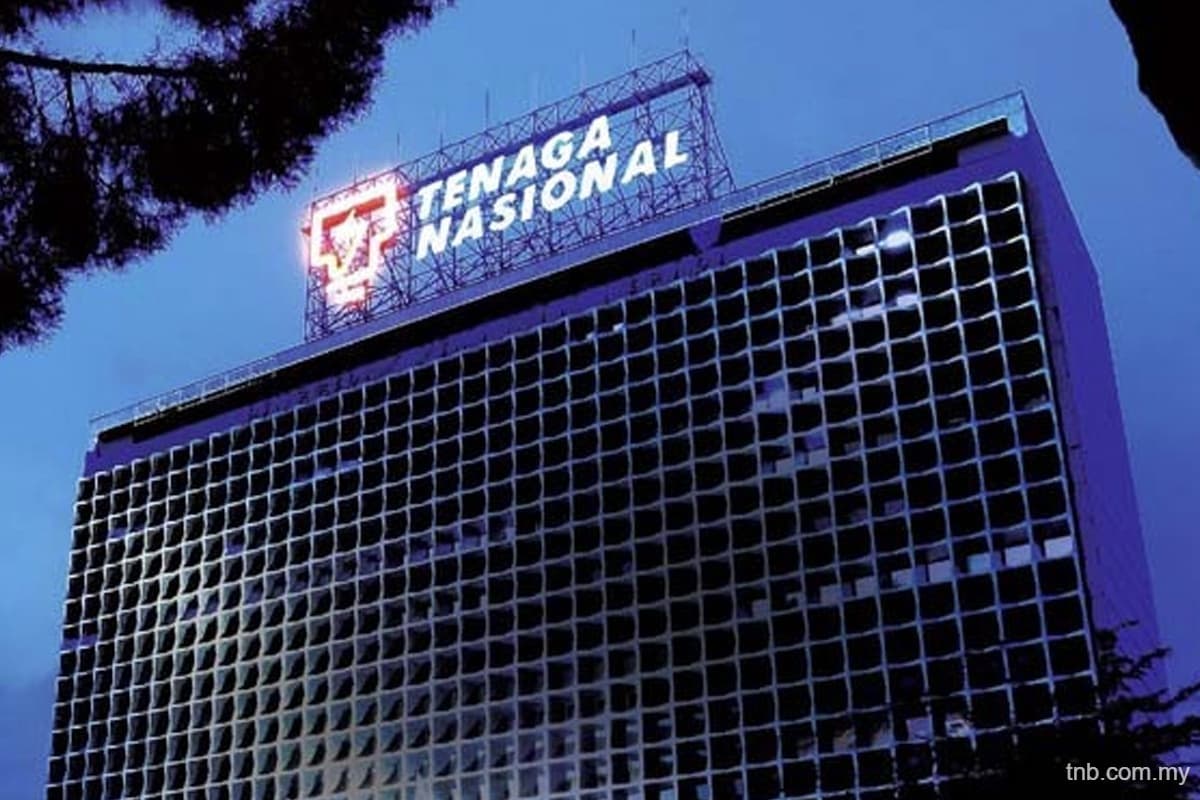
KUALA LUMPUR (Oct 24): Tenaga Nasional Bhd (KL:TENAGA) is expected to have a steadier cash flow from the implementation of the automatic fuel adjustment (AFA) mechanism, introduced in July this year, said S&P Global Ratings.
According to a credit rating report, S&P expects the AFA mechanism to allow TNB to recover changes in fuel and power generation costs more quickly through monthly tariff adjustments. Previously, under the Imbalance Cost Pass-Through (ICPT) system, changes were only adjusted every six months.
“We expect monthly adjustments to further stabilise the company's cash flow and receivables, especially during periods of volatile fuel and generation costs,” said the credit rating agency.
S&P noted that the AFA mechanism will strengthen TNB’s ability to recover actual generation costs, including fuel and foreign exchange movements.
Following the improved outlook, the rating agency revised TNB’s stand-alone credit profile (SACP) upward to ‘bbb+’ from ‘bbb’ to reflect its stronger financial standing, while affirming its long-term issuer credit rating at ‘A-’ with a stable outlook.
"We upgraded TNB because we believe it can maintain its long record of passing-though costs when needed to alleviate periods of volatility."
It also affirmed its ‘A-’ long-term issue credit rating for the company’s US dollar-denominated senior unsecured medium-term note programme.
According to S&P, the stable outlook reflects its expectations that TNB will be able to continue passing on changes in generation costs to consumers through tariff adjustments over the next 12 to 24 months.
“We still anticipate a high likelihood of timely support from the Malaysian government when needed. The company plays an important role as the sole operator of the electricity transmission network in Peninsular Malaysia,” said S&P, highlighting that TNB continues to benefit from strong government and Khazanah Nasional Bhd.
The agency also took a more positive outlook on TNB’s power purchase agreement (PPA) liabilities.
It reduced the risk factor applied to the PPA lease to 0% from 100% when calculating adjusted debt, effectively lowering the utility company’s reported debt by about RM30 million and improving its overall financial risk profile.
Despite the higher capital expenditure, S&P expects TNB’s ratio of funds from operations to debt — a metric used to measure how easily the company can pay off its debts using its yearly cash flow — to stay above 23% from 2026 onwards.
The rating agency also estimates that TNB will spend between RM14 billion and RM15 billion from 2025 to 2027 to meet growing electricity demand and ensure supply reliability, compared with RM8 billion to RM11 billion spent between 2022 and 2024.