

This article first appeared in The Edge Malaysia Weekly on October 20, 2025 - October 26, 2025
USERS of the Damansara-Puchong Expressway (LDP), Western KL Traffic Dispersal System (SPRINT), Shah Alam Expressway (Kesas) and the Stormwater Management and Road Tunnel (SMART tunnel) may not realise that the toll rates on these highways have remained the same for many years.
As a matter of fact, these highways are unlikely to see any toll hikes for the next 10 years. That is because Amanat Lebuhraya Rakyat Bhd (ALR), which took over the four highways in 2022, operates under a unique mandate of maintaining the toll rates until the end of their concessions.
To do so, ALR has positioned itself as a not-for-profit entity focusing solely on maintaining the roads from its toll collections while paying off its RM5.5 billion debt. It should be noted that the RM5.5 billion debt was raised in 2022 to finance the acquisition of the four highways from Gamuda Bhd (KL:GAMUDA), Lingkaran Trans Kota Holdings Bhd (Litrak) and Kumpulan Perangsang Selangor Bhd (KL:KPS).
ALR made the offer to acquire the highways in April 2022 based on an enterprise value (EV) of RM1.24 billion for Kesas, RM2.12 billion for LDP, RM1.81 billion for SPRINT and RM313 million for the SMART tunnel. This brought the total EV of the four highways to RM5.48 billion, including RM2.06 billion worth of debt.
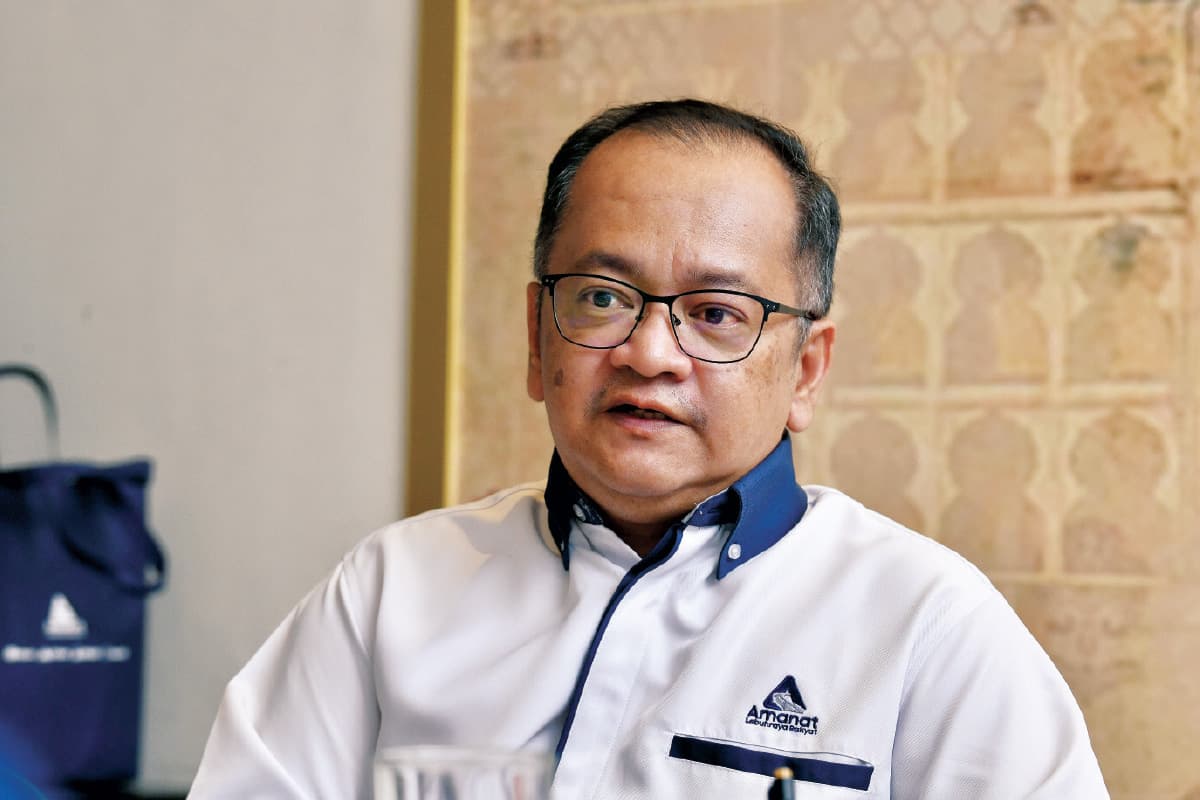
“ALR does not distribute dividends. All revenues are directed towards financing obligations and operating costs only,” ALR CEO Muhammad Nizam Alias tells The Edge in an interview.
Under its agreement with the government, ALR will not receive compensation for maintaining the toll rates, he says, a move that has already saved the government about RM490 million in 2024 alone.
“We promised the government that there will be no compensation [for not raising the toll rates]. From that, we calculate that the savings of the government are more than RM4.98 billion throughout our tenure,” he adds.
The savings are based on the compensation agreed upon for not raising the toll rates, forgoing the agreed triennial hikes under which the concessions were signed prior to their construction.
“Before ALR, the government had to pay around RM400 million every year in compensation. Now, that money can be used for other priorities such as healthcare and education,” says Muhammad Nizam.
Targets handover as early as 2033
Perhaps most importantly, once ALR settles its sukuk repayments, targeted by as early as 2033, the highways will be handed back to the government.
“We are focused on handing over the four highways to the government by as early as 2033, which is our target. Handing over the highways is part of our mandate,” says Muhammad Nizam, adding that the surplus funds will be used for the early redemption of the sukuk.
Interestingly, although the first call date for the sukuk is at end-2033, three of the four highway concessions have been extended beyond that (see Table 1).
Muhammad Nizam explains that the concession extension serves as a backstop in case of a crisis, such as another pandemic.
“The concessions were extended beyond the sukuk’s life span because we need to have a safeguard. If something happens, like another pandemic, we have some buffer. Otherwise, if there’s no extension and something goes wrong, our cash flow will be impacted and the debt cannot be repaid. The sukuk holders will also have some comfort that the concessions are able to still continue,” he says.
ALR’s total repayment is estimated at RM7.94 billion, comprising repayment of RM5.5 billion and a sukuk profit of RM2.44 billion.
According to Muhammad Nizam, ALR has paid a total of RM1.5 billion of its principal and profit since 2023. This includes the RM491 million paid on Oct 13. “The moment we fully repay our sukuk, we will need to return all the highways to the government,” he says.
In essence, although ALR is profitable on paper, it is not allowed to declare dividends to its shareholders as all revenue is channelled towards debt repayment and road maintenance. Its operations are purpose-driven, focusing on public benefit rather than shareholder returns, ensuring that toll concessions eventually revert to public ownership.
At the same time, users of the four highways benefit from not having to pay higher toll rates until the end of their respective concessions. However, it should be noted that these concession periods could have ended earlier had there been compensation from the government or increases in toll rates, instead of extending the concession periods.
ALR has more than 850 employees, mainly from the four highway concessionaires acquired — Sistem Penyuraian Trafik KL Barat Sdn Bhd (SPRINT), Syarikat Mengurus Air Banjir & Terowong Sdn Bhd (SMART tunnel), Lingkaran Trans Kota Holdings Sdn Bhd (Litrak) and Kesas Sdn Bhd.


Strong cash flow
ALR’s filing with the Companies Commission of Malaysia (SSM) shows that it recorded a profit after tax of RM172.9 million for the financial year ended March 31, 2025 (FY2025) and RM186.17 million for FY2024, on the back of RM836.61 million and RM819.35 million in revenue respectively.
Muhammad Nizam points out that ALR’s toll collection amounts to RM800 million to RM850 million annually, of which about RM200 million is spent on operations. The group will also need to keep a cash reserve of about RM1.2 billion to maintain its AAA sukuk rating.
As there is no avenue to raise toll rates, ALR must manage its operational costs efficiently. At about RM200 million and with a portfolio of 110.7km under its management, its cost per kilometre works out to about RM1.8 million. Put another way, 23% of its revenue goes to covering the cost of managing the four highways. “That’s quite comparable (23%) and even slightly lower than many other operators,” he notes.
“The maintenance cost differs from one highway to another, depending on the complexity of the infrastructure. For instance, SMART has a higher cost per kilometre due to its tunnel system, while Kesas, SPRINT and LDP each have a different cost structure.”
ALR’s debt is AAA-rated despite not having any government guarantee, which makes its business unique compared with other infrastructure projects.
In terms of traffic volume across the four highways, Muhammad Nizam says the numbers have surpassed pre-pandemic levels. “We’re confident that the cash flows are sufficient for the repayment,” he adds, referring to the ring-fenced structure under which all toll collections are channelled directly to sukuk holders.
He explains that ALR’s model prioritises long-term financial stability rather than profit maximisation. “There’s no dividend, no profit element. All collections go towards the sukuk redemption and operational needs.”
In FY2025, the average daily traffic (ADT) grew 2.7% to more than one million vehicles. Thanks to the maturity of the highways, the traffic volume is expected to remain stable.
According to a report by rating agency Malaysian Rating Corp Bhd (MARC), ALR had a strong financial service coverage ratio (FSCR) of 4.76 times in FY2024, which was well above the minimum of 1.5 times.
“The 14-year (FY2025-2038) average and minimum FSCR in MARC’s sensitised case, which assumes no traffic growth and [a] 5% y-o-y increase to operating expenses from the base case, is 3.80 times and 2.94 times. An additional sensitivity scenario that applies a 30% haircut to LDP’s traffic volume in FY2029 — considering a potential threat from a proposed new expressway which, if it materialises, would run parallel to LDP — still provides comfortable coverage. The forecast average and minimum FSCR [are] 3.08 times and 2.46 times under this scenario,” it said in a Nov 13, 2024, report.
By taking over brownfield concessions, ALR eliminates the need for additional public spending or toll hikes while ensuring predictable, long-term cash flow from assets that are already self-sustaining. The brownfield nature also means minimal construction risk, established traffic patterns and manageable maintenance costs, allowing it to focus on efficient operations and debt repayment rather than expansion.
When asked if ALR will expand its scope such as going into the development of or acquiring any new highways, Muhammad Nizam says there is no such plan for now. “We’re not developing new highways. We only take over existing ones that are already operating.”
“Our mandate is very clear — no toll hike, no government compensation and no dividend distribution. Every sen collected is used to repay the sukuk.”
Asked if these four highways will be toll-free when returned back to the government, he says it will depend on what the government’s plan is for them.
“That is not our call. The government [as the asset owner] will decide what to do with the highways. We are focused on handing over the four highways to the government,” he says, adding that it has been highlighted in the past that zero toll is quite impossible due to the need to maintain the highways.
ALR is a private, special purpose, not-for-profit entity established in 2021 to hasten the shortening of the toll concessions and the return of the four highways to the government. According to its filings with SSM, its shareholders are Datuk Dr Nirmala Menon, Datuk Soam Heng Choon, Mohamed Sharil Mohamed Tarmizi, Datuk Idrose Mohamed and Chew Liong Kim, all of whom sit on ALR’s board of directors.
Save by subscribing to us for your print and/or digital copy.
P/S: The Edge is also available on Apple's App Store and Android's Google Play.