

This article first appeared in The Edge Malaysia Weekly on October 20, 2025 - October 26, 2025
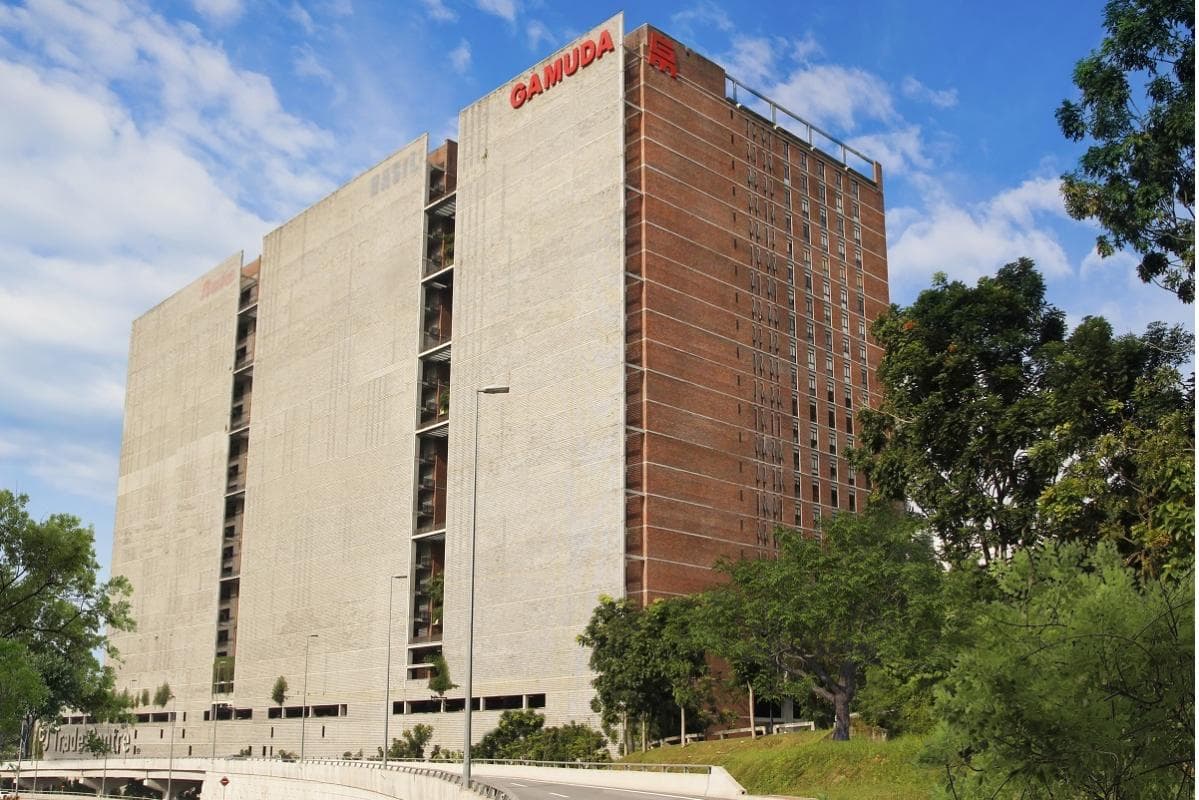
GAMUDA Bhd (KL:GAMUDA) is expected to stay out of the race for the multibillion-ringgit tender to build a sea-crossing viaduct for the Penang Light Rail Transit (LRT) Mutiara Line as it focuses on its existing RM38 billion order book, according to sources.
Even without Gamuda, the tender is expected to be highly competitive, with at least three major construction groups expressing interest in bidding for the contract, estimated at RM5 billion to RM8 billion.
Malaysian Resources Corp Bhd (KL:MRCB), YTL Corp Bhd (KL:YTL) and Sunway Construction Group Bhd (KL:SUNCON) are among the local major construction groups that have signalled their readiness to bid. There is also a possibility of participation by foreign contractors, especially from China.
When contacted by The Edge, a Gamuda representative declined to comment on the group’s potential participation in the tender.
On Oct 13, MRT Corp launched the tender for the construction of the sea-crossing viaduct for the Mutiara Line, connecting Macallum on Penang Island to Penang Sentral in Butterworth.
The tender is open not only to Malaysian contractors but also to foreign firms through joint ventures (JVs) or consortiums with local partners, provided the Malaysian party holds an equity stake of at least 50%.
Eligible bidders must have proven experience in large-scale civil infrastructure and bridge projects, including at least one cable-stayed viaduct with a main span exceeding 300m, civil infrastructure projects with a cumulative contract value of at least RM500 million, as well as railway infrastructure experience.
Financially, contractors must show shareholders’ funds of at least RM100 million, a positive cumulative earnings before interest, taxes, depreciation and amortisation (Ebitda) over the past five years, and unutilised credit facilities of at least RM150 million.
Gamuda a major beneficiary of PTMP
Gamuda has been a major beneficiary of the RM16.8 billion LRT project ever since the Penang government contracted its 60%-owned subsidiary SRS Consortium Sdn Bhd as the project delivery partner (PDP) of the Penang Transport Master Plan (PTMP).
The original master plan, which was adopted by the state government in 2016, includes the reclamation of three artificial islands off the south coast of Penang Island, measuring a total of 4,100 acres.
The plan was to use the proceeds from the sale of the reclaimed land to fund PTMP, which was originally estimated to cost RM27 billion, but has since ballooned to around RM46 billion.
Besides the Penang LRT, PTMP includes the construction of two highways — the Penang Island Link 1 and 2A — the North Coastal Paired Road, two bypasses, the upgrading of two interchanges as well as the construction of two “missing link” roads in Seberang Perai.
Following opposition from non-governmental organisations over the reclamation project’s potential impact on the marine ecosystem of Penang Island’s south channel, the federal government has stepped in to fund the Penang LRT.
The reclamation project has since been reduced to a single 2,300-acre island — Silicon Island — with an estimated cost of RM6 billion. The project is being developed by a JV between SRS Consortium and Penang Infrastructure Corp.
Although SRS Consortium lost its PDP role of the PTMP because of the federal government’s intervention, it was awarded the contract for the construction of the Mutiara Line between Silicon Island and Komtar in George Town, valued at a contract ceiling price of RM8.31 billion.
After a value management exercise conducted by MRT Corp in April, the contract value was reduced to RM7.93 billion.
MRT Corp has also called for a tender for the railway system, of which Gamuda is a participant.
Other known bidders include YTL Group; MMC Engineering, together with MMC Corp Bhd; a JV between Lion Pacific Sdn Bhd and WCT Holdings Bhd (KL:WCT); Dhaya Maju Infrastructure (Asia) Sdn Bhd; Berjaya Rail Sdn Bhd; and MRCB.
Sources say the Lion Pacific-WCT JV has submitted the lowest bid of about RM2.7 billion. Commercial proposals comprise only 30% of the evaluation exercise, however, with larger emphasis placed on the technical aspects.
According to sources, Gamuda’s bid was the second-lowest for the railway system. Besides the RM2.7 billion bid put in by the Lion Pacific-WCT JV, other bids were between RM3 billion and RM3.3 billion, the sources say.
The contract had yet to be awarded at the time of writing.
Concern over Gamuda’s monopoly on Penang LRT project
An industry observer contacted by The Edge notes concern among railway construction players that Gamuda could secure all contracts for the Penang LRT project if it decides to participate in the sea viaduct tender.
This is because having already set up its team and machinery for the Silicon Island reclamation project, as well as for the construction of the main line, Gamuda would have a significant cost advantage and be able to put in competitive bids.
“If all of the contracts are awarded to Gamuda, it could jeopardise the entire railway construction industry, as the other players would not have enough jobs in hand to sustain their operations,” says the industry observer.
It must be noted, however, that the other players are part of large construction groups themselves, many of which are parts of conglomerates with businesses such as property development, independent power generation, data centres and infrastructure.
The observer also urges the government to require localisation of railway system contracts to boost the capabilities of local railway system players.
“Despite years of investment in rail-based public transport projects in the Klang Valley, Johor Bahru and Penang, there has been little progress in developing Malaysia’s rail system industrial capabilities,” the observer says.
In response to The Edge’s queries in early September regarding localisation of the system packages, MRT Corp had stated that it was working to better understand the cost drivers behind bidders’ commitment to localisation to ensure these costs are not passed back to the government through higher contract prices.
While there are companies that conduct testing and local assembly of railway systems, the multibillion-ringgit investments made since 2012 have yet to develop a strong and sustainable railway industry in Malaysia, the observer says.
In fact, the government has decided to lease outright 62 electric multiple units (EMU) from China at a cost of RM10.7 billion for 30 years for Keretapi Tanah Melayu Bhd (KTMB). The leasing arrangement includes maintenance, repair and overhaul works.
The government is also planning to secure a controlling stake in the local unit of Chinese rolling stock assembler as part of its proposal to lease the 62 train sets. The move is aimed at ensuring majority control as well as technology transfer to local players.
CRRC Rolling Stock Center (Malaysia), which operates an assembly plant in Batu Gajah, Perak, is currently 70%-owned by CRRC Zhuzhou Locomotive Co Ltd, with the remaining 30% held by CRRC (Hong Kong) Co Ltd.
Save by subscribing to us for your print and/or digital copy.
P/S: The Edge is also available on Apple's App Store and Android's Google Play.