

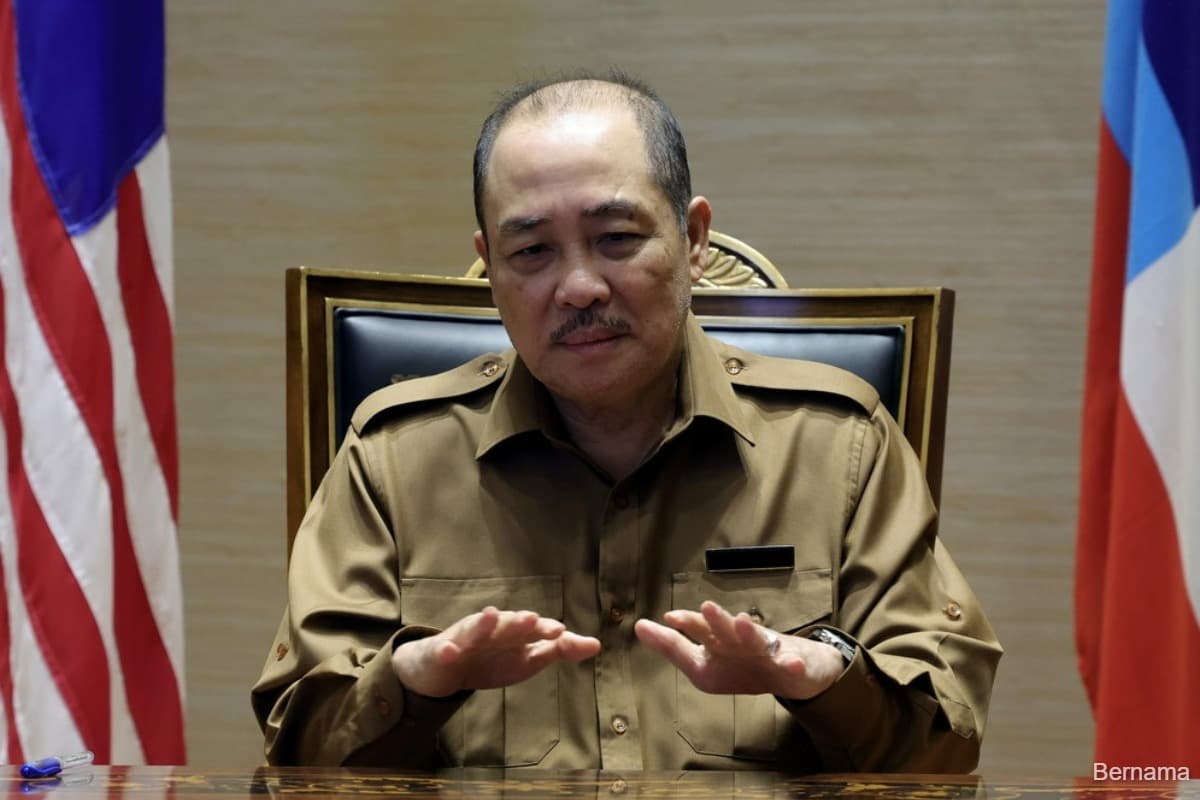
KUALA LUMPUR (Oct 17): The caretaker Sabah state government announced it will immediately engage with the federal government to enforce the High Court’s ruling that affirmed the state’s constitutional right to a 40% share of federal revenue entitlement.
Caretaker Chief Minister Datuk Seri Hajiji Noor said the engagement would be carried out in the spirit of cooperation and mutual respect to ensure that Sabah’s constitutional rights are fully realised.
“We hope that the federal government will fulfil its responsibilities as agreed upon during the formation of Malaysia,” he said in a statement.
The announcement follows the Kota Kinabalu High Court's decision to rule in favour of the Sabah Law Society’s (SLS) judicial review, which challenged the federal government's failure to adhere to the constitutional financial provisions.
The SLS case contested the federal government’s Special Grant (Amendment) Order 2022, arguing that Putrajaya had failed to conduct the mandatory revenue review for decades and that the order made no provisions for the “lost years” of 1974 to 2021.
In her ruling, judge Datuk Celestina Stuel Galid declared that the special grant review orders jointly issued by the federal and state governments were “unlawful, ultra vires, and irrational”, and had breached the Federal Constitution.
The judge also issued a mandamus order directing the federal government to conduct a new revenue review with the Sabah government and to agree on the state’s 40% entitlement for each financial year from 1974 to 2021. The review must begin within 90 days and conclude within 180 days.
Hajiji said the ruling reaffirmed Sabah’s rights under the Federal Constitution, particularly Articles 112C and 112D.
Article 112C mandates that the federal government provide special grants and assign specific revenues to Sabah and Sarawak, including Sabah’s right to two-fifths (40%) of the excess net revenue derived from the state. Article 112D establishes the mechanism for periodic reviews of these special grants.
Hajiji said the decision also validated the state government’s role in upholding and asserting Sabah’s constitutional rights.
He added that Sabah’s efforts in clarifying historical records, including the share of federal revenue derived from the state between 1964 and 1968, have reaffirmed that the intent and effect of Articles 112C and 112D remain unchanged.
“We have fought for this issue relentlessly through every formal channel, every MA63 meeting chaired by the prime minister, and through countless official letters sent to Putrajaya. Not once have we allowed this matter to pause,” he said.
Hajiji also reiterated that the state’s acceptance of interim payments was made without prejudice to its constitutional rights.
Sabah will go to the polls on Nov 29, with about 1.79 million voters set to elect a new state government for a five-year term.