

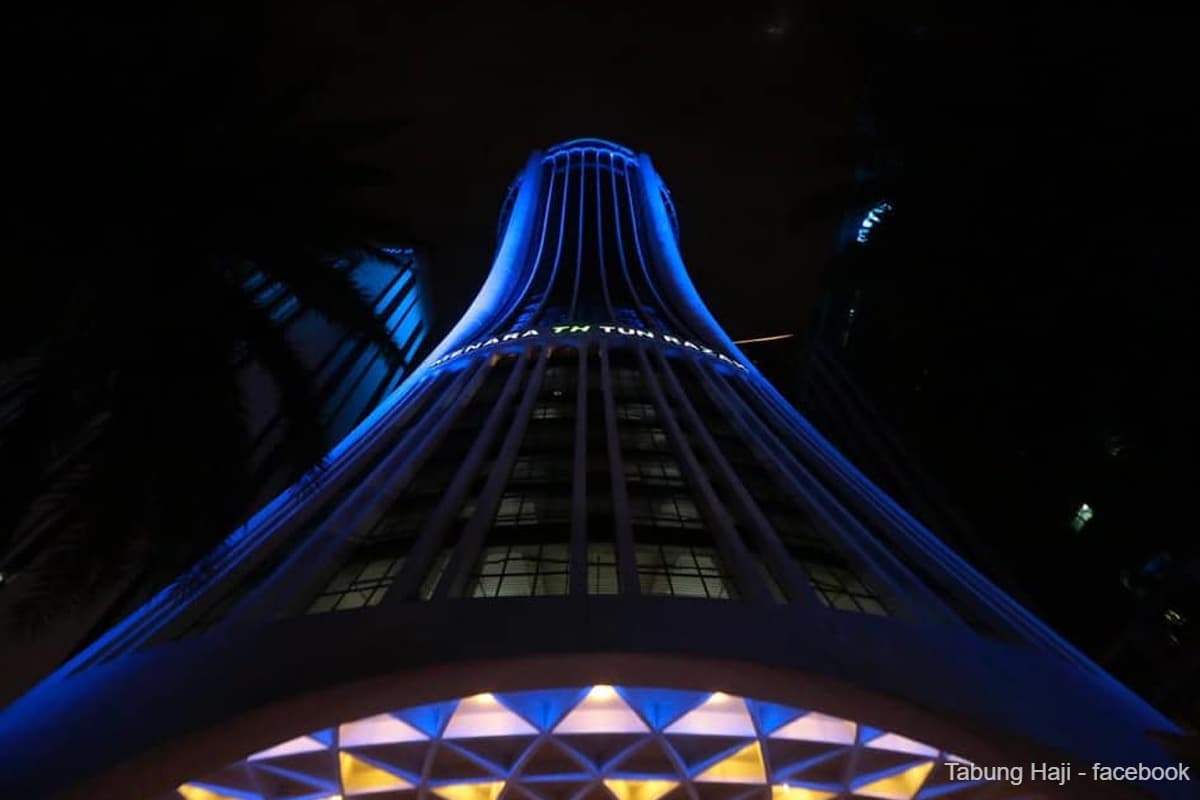
THE recent rebranding of Tabung Haji (TH) has sparked widespread debate, especially after the issue was raised in the Dewan Rakyat.
Many may wonder whether a brand refresh is necessary. Has TH not already proven its value over more than half a century as a trusted manager of pilgrimage savings for Malaysian Muslims?
In response to the public discourse and concerns circulating on social media, TH issued two statements dated Aug 16 and 28, 2025. In these, TH revealed it currently has nearly 10 million depositors (9.6 million), representing only 50% of Malaysia’s Muslim population, based on an estimated total Malaysian population of 34 million.
This means that over half of Malaysian Muslims who should be saving for hajj have not yet opened a TH account. That figure is cause for concern and raises questions about why this long-established institution is not the top choice for many.
TH also disclosed that more than 53% of existing depositors have not yet reached the minimum savings threshold of RM1,300, the amount required to register for hajj.
This statistic means that over five million depositors are not yet eligible to register for hajj. If they cannot meet this basic requirement, saving enough to cover the full cost of the pilgrimage (estimated to be more than RM30,000) becomes even more unlikely. The question remains: what are the true barriers they face?
In addition, TH noted that half of those who were offered the opportunity to perform hajj had to decline what may have been a once-in-a-lifetime opportunity due to insufficient savings.
In other words, from the approximately 30,000 hajj slots offered each year, around 15,000 depositors are forced to forgo the opportunity because of financial limitations. This is especially significant given that, as of 2023, the waiting time after registering for hajj can be as long as 148 years. Such a rare and hard-earned opportunity is not easily replaced once missed.
This situation underscores a broader structural concern. The overall depositor growth has also been relatively modest. In 2019, TH recorded 8.75 million depositors. By 2024, this had increased to only 9.55 million: a gain of just 800,000 over half a decade.
This already limited growth was further disrupted during the Covid-19 pandemic. In 2020, depositor numbers stood at 8.97 million but dropped sharply to 8.41 million in 2021. Although the figure recovered to 8.77 million in 2022, it still fell short of pre-pandemic levels, highlighting the fragility of depositor confidence in the face of economic shocks.
The value of deposits also shows a similar pattern. In 2024, TH managed RM91.7 billion in deposits, up from RM89 billion in 2023. This RM2.7 billion increase reflects a growth rate of about 3%.
However, this growth was still lower than the 3.25% dividend distributed to depositors that year, equivalent to RM2.92 billion. In other words, new deposits failed to match the amount TH paid out in profit, raising serious questions about the long-term sustainability of its deposit inflows.
This is not an isolated case. From 2022 to 2023, deposits grew by only 1.6% (RM1.4 billion), while TH distributed 3.1% (RM2.72 billion) in dividends.
The nearly RM1.3 billion gap confirms a worrying trend. New deposits have consistently fallen short of the profit distributions TH is required to make each year.
From a corporate perspective, this is an alarming signal. The current pattern shows that growth in deposits is increasingly reliant on annual profit distributions rather than new savings. Without intervention, TH may face a future where its growth is not driven by fresh deposits.
Adding to the challenge is the fact that depositors can withdraw funds at any time. Over the past three years, total withdrawals have reached about RM2 billion.
Over the past three years, net outflows have reached RM2 billion, and in the current year alone, nearly RM1 billion has been withdrawn, according to TH chairman Tan Sri Abdul Rashid Hussain. In several instances, withdrawals have exceeded the number of new deposits received, further straining TH’s efforts to maintain a stable and sustainable deposit base.
It is also important to note that the annual hajj subsidy of about RM200 million for B40 and M40 pilgrims comes from the same collective savings pool.
In the Aug 28, 2025, statement, TH group managing director and CEO Mustakim Mohamad acknowledged these mounting challenges. He explained that many affluent depositors prefer to save in financial institutions offering more competitive returns, often with the added benefit of tax relief, a feature TH currently does not provide.
As a result, they only transfer funds to TH when their hajj application is successful or, in some cases, bypass TH entirely by choosing private pilgrimage packages worth six figures.
The sustainability of TH deposits is further affected by capable pilgrims who can afford the RM33,300 cost. Once they perform hajj, many treat their TH account as a one-off platform — used solely to complete the pilgrimage, with no plans to continue saving thereafter.
For these individuals, the account serves merely as a "temporary vehicle" to fulfil their religious obligation. They often withdraw the remaining balance and redirect their funds to other, more competitive investment instruments. As a result, the bulk of TH’s depositor base consists of individuals still striving to reach the minimum RM1,300 savings threshold, many of whom are still far from achieving it.
The numbers are telling. The warning signs are clear. Without swift action, TH may not be able to sustain healthy deposit growth or generate enough profits to provide competitive returns. This could undermine financial support for B40 and M40 pilgrims.
The rebranding exercise is not the end goal. It is merely a means to an end: to give TH a new image that encourages more Muslims in Malaysia to save for hajj.
With rising costs of living and tightening household budgets, many have begun to deprioritise hajj savings. A renewed and collective commitment is urgently needed to support TH and safeguard its financial sustainability.
Building lasting awareness must begin early. Ideally, this should start from childhood so that saving for hajj becomes not just a financial habit but a lifelong aspiration for every Malaysian Muslim.
Dr Mohamed Hadi Abd Hamid is a Certified Shariah Advisor (CSA) and Islamic Financial Planner (IFP). Dr Mohd Zaidi Md Zabri is Interim Director of the Centre of Excellence for Research and Innovation in Islamic Economics (i-RISE), ISRA Institute, INCEIF University.