

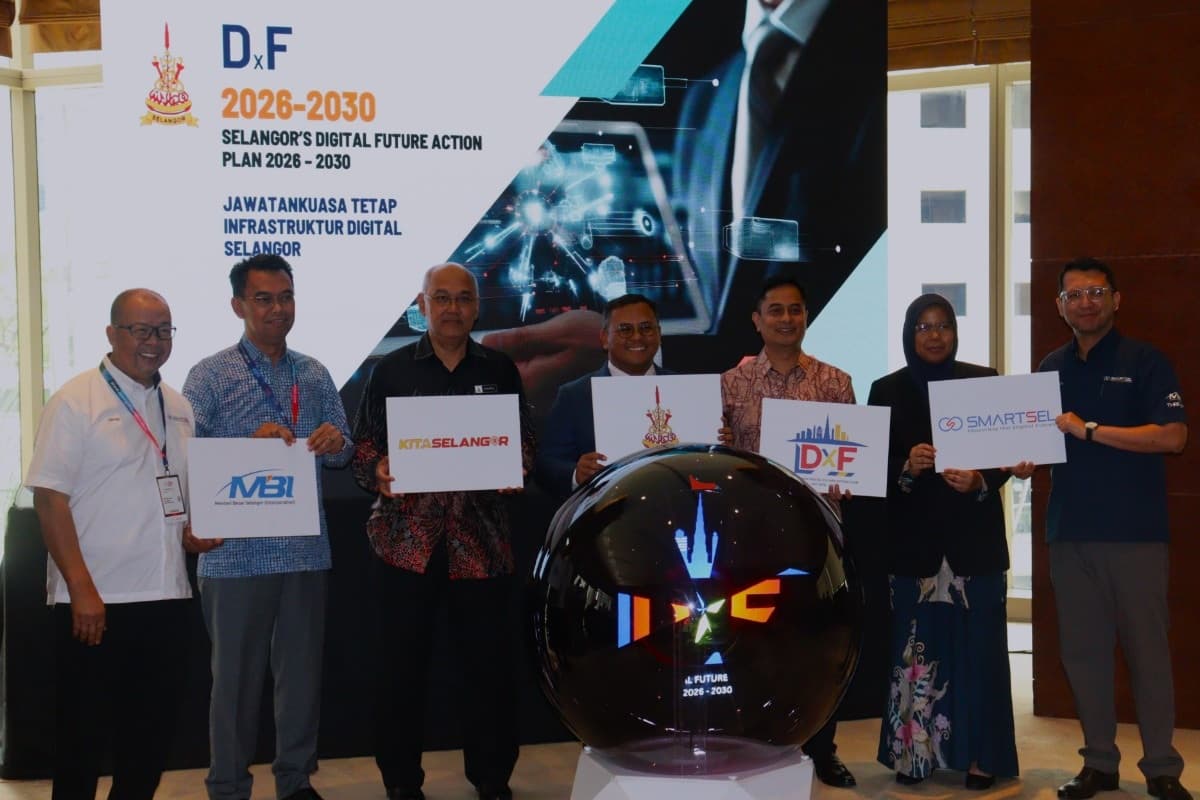
KUALA LUMPUR (Oct 14): The Selangor State government has big ambitions to become the hub of digital innovation in Malaysia. In the age of new technologies and interconnectivity, the state recently launched its Digital Future Blueprint (DxF) 2026-2030, building on top of the lessons of past roadmaps and covering gaps such as data security and sovereignty in the wake of new technologies like artificial intelligence (AI).
Selangor State Executive Councillor Mohammad Fahmi Ngah described DxF as a digital transformation programme that sets the right foundations in the state to enable more digital innovations, which he believes is the path forward to guarantee increased productivity in industries, civil servants and the people.
Speaking exclusively to DigitalEdge, Fahmi said that what makes DxF stand out from past roadmaps and action plans is that it benefits from the experiences of all the roadmaps that came before it.
He highlighted that a strong focus of the DxF compared to past roadmaps is the need to remain flexible and adaptable in the wake of the fast-moving technological advancements while enforcing data sovereignty so that Malaysian data is not reliant on foreign servers.
“If we talk about the plans to build a smart state and smart cities that use digital technologies for city management, this launch is our third iteration… There were lessons in [previous iterations], particularly things involving jurisdiction of powers between federal and state governments,” said Fahmi.
An example of this, Fahmi highlighted, was aspirations to become more energy efficient in Selangor’s first iteration of a digital future blueprint. Despite state goals, control of energy is under federal jurisdiction.
With these limitations in mind, the second iteration under the Smart Selangor Action Plan (SSAP) 2025 focused on the unique powers given to the state, areas that the state government has full control over.
“The second phase of this programme pointed out a few important characteristics, namely the importance of sharing data. This was never addressed previously, because we assumed that it was going to be easy, we assumed that everybody would want to use one infrastructure.
“But now, with the advent of AI into city systems, the use of a single digital infrastructure is more justified, and people are beginning to realise that,” said Fahmi.
A major lesson learned from the SSAP was that most smart city projects had an issue of sharing data that allowed users to understand problems and improve existing services or even create new digital solutions.
Fahmi attributed this to a lack of a central shared infrastructure that would facilitate this data sharing, which he believes is vital to retain a strong sense of technology and data sovereignty, especially when AI is brought to the mix. This is what the DxF is aimed at addressing.
“We know that a central digital infrastructure will be key, and the use of sovereign technology and AI is important. The second facet that we understood is how to implement this effectively. Who should be the problem owner of this?
“Traditionally, governments form agencies to handle this, but I think now we understand that it is not the role of one state minister, it involves various because digital is something that transcends different domains, different state ministries. I think formal structures are already being formed, and we can drive it better from the top,” said Fahmi.
He added that this is not to downplay the SSAP’s performance. He said that, according to independent auditors, of the 60 initiatives under the SSAP, around 79% of them achieved their goals over the span of five years.
Fahmi explained that DxF is building on top of this success, addressing gaps the SSAP had, such as collaborating more closely with the private sector so that more initiatives under the DxF reach their targets by 2030.
“We're still on this experimenting path, but I think we have greater clarity now. We are all in on this [together], so we implore and invite the private sectors and academia to come and collaborate with us to build a smart state for Selangor,” said Fahmi.
Positioning Selangor as the digital economy hub
The DxF roadmap was launched on Oct 9 at the Grand Hyatt hotel in Kuala Lumpur, led by Fahmi, who said that with DxF, now is the time to build the digital infrastructure that will define the next generation of progress in Selangor.
This five-year plan can accomplish this by setting strategic guidelines for Selangor to become a digitally viable state, driven by innovation and focused on four key objectives.
The first is to enable economic development in new areas through the expansion of digital infrastructure, with the second objective being to reduce the costs of digital infrastructure development by optimising existing assets.
The third key objective is accelerating the adoption of digitalisation in both private and public sectors through existing infrastructure.
And the final goal is to identify potential areas of implementation of 5G technology for selected state government operations, improving service delivery and efficiency.
This plan will involve the construction of more physical 5G towers, fibre and cable networks, in addition to creating digital bridges that connect people to opportunities and communities to further nurture innovation in Selangor.
As part of this five-year plan, Fahmi said that 30 initiatives and other projects are in place, including the development of consolidated citizenship applications, centralised private cloud systems and sovereign digital infrastructure for the development of sovereign AI.
A couple of examples of these future projects under DxF that Fahmi highlighted are broader free public WiFi and a unified citizen application.
He added that stronger free public WiFi will help the government understand user behaviour and better curate services that meet local needs.
The unified citizen app is too early in development for Fahmi to share, just that it seeks to not be a separate application so that it could be more accessible to users while also being able to extract relevant feedback information from connected services to better serve citizens.
Fahmi noted that building these initiatives will involve some financing, with “RM160 million to be spent over five years, either fully by the government or through collaborations with the private sector to build these digital systems”.
“I urge all of our partners in the tech ecosystem, investors, innovators and entrepreneurs to view the DxF as more than just a state plan but a shared opportunity to co-create Malaysia's digital future.”