

This article first appeared in The Edge Malaysia Weekly on October 13, 2025 - October 19, 2025
Income Tax/ incentives for individuals

• RM1,000 tax relief for expenses covering entrance fees to local tourist attractions and cultural programmes to encourage domestic travel.
• RM1,000 tax relief for vaccination expenses to include all types of vaccines registered and approved by the Ministry of Health (MoH).
• RM2,500 tax relief for expenses on EV chargers, food waste composting machines and CCTV cameras for household use.
Tax incentives for Parents

• RM3,000 tax relief for childcare or kindergarten fees for children aged up to six years, to now include registered day care or transit centres for children aged up to 12 years.
• Tax relief for expenses related to early intervention and rehabilitation for children with learning disabilities will be increased from RM6,000 to RM10,000.
•RM3,000 tax relief for life insurance premiums or takaful contributions for self and spouse will be expanded to include children.
Tax incentives for businesses

• Tax deduction of up to RM1.5 million on listing expenses will be expanded to include technology, energy and utilities-based companies for five years.
• Tax exemption for social enterprises will be extended for three years.
• 100% exemption on excise duty and sales tax will continue for the purchase of Proton and Perodua cars by taxi drivers and private hire car operators.
• 100% income tax exemption for new companies involved in food production for 10 years, while existing companies expanding their projects will get five years.
• Additional 50% tax deduction for small and medium enterprises (SMEs) on expenses for certified training related to artificial intelligence (AI) and cybersecurity.
• Venture capital tax incentives strengthened for next 10 years via special tax and dividend exemptions.
• Companies and individuals contributing to government community programmes eligible for income tax deductions.
New taxes

• Introduction of carbon tax focusing on iron, steel and energy sector in 2026.
• Effective Nov 1, 2025, excise duties on tobacco products will increase by two sen per cigarette stick, RM40/kg for cigars/cheroots/cigarillos and RM20/kg for heated tobacco products.
• Excise duties on alcoholic beverages will be increased by 10%, effective Nov 1.
• Vehicle tax exemption in Langkawi, Labuan to be limited to vehicles valued at no more than RM300,000.
Infrastructure & connectivity projects

• RM2 billion for Madani Submarine Cable Connection or Salam. This 3,190km network will connect Sedili in Johor to key areas in Sarawak (Kuching and Sibu) and Sabah (Tuaran, Kudat, Pulau Banggi, Sandakan and Tawau).
• Malaysian Communications and Multimedia Commission (MCMC) to invest RM2 billion to build sovereign AI cloud.
• RM765 million for Southern Link Transmission Line project.
• Pengurusan Aset Air Bhd to invest up to RM13 billion over the next five years in several water treatment plants, including the Langat 2 Water Treatment Plant (Selangor), LRA Machang (Kelantan) and Sungai Karangan and Sidam Kiri plants (Kedah).
• RM3 billion to replace over 820km of ageing pipes across Johor, Melaka, Negeri Sembilan, Kelantan, Pahang and Selangor.
• RM2.5 billion for the maintenance of federal roads.
• RM3.3 billion for basic rural infrastructure projects, including RM2.5 billion for rural and village roads, RM700 million for supply of clean water and electricity, and RM90 million for streetlights.
• RM5.6 billion in Malaysian Road Records Information System grants for the maintenance of state roads nationwide.
• RM1.28 billion for Jeniang Water Transfer Project.
• Implementation of the inter-terminal transfer project between KLIA Terminal 1 and Terminal 2.
• RM2.3 billion airport upgrades in Penang, Sabah and Sarawak.
• Broadband coverage will expand to 2,700 new locations under the Jendela 2 project with RM780 million.
Energy & Utilities

• Tenaga Nasional Bhd and Petronas are collaborating with Asean partners to accelerate the Vietnam–Malaysia–Singapore Project, which will transmit renewable energy from southern Vietnam to Malaysia and Singapore.
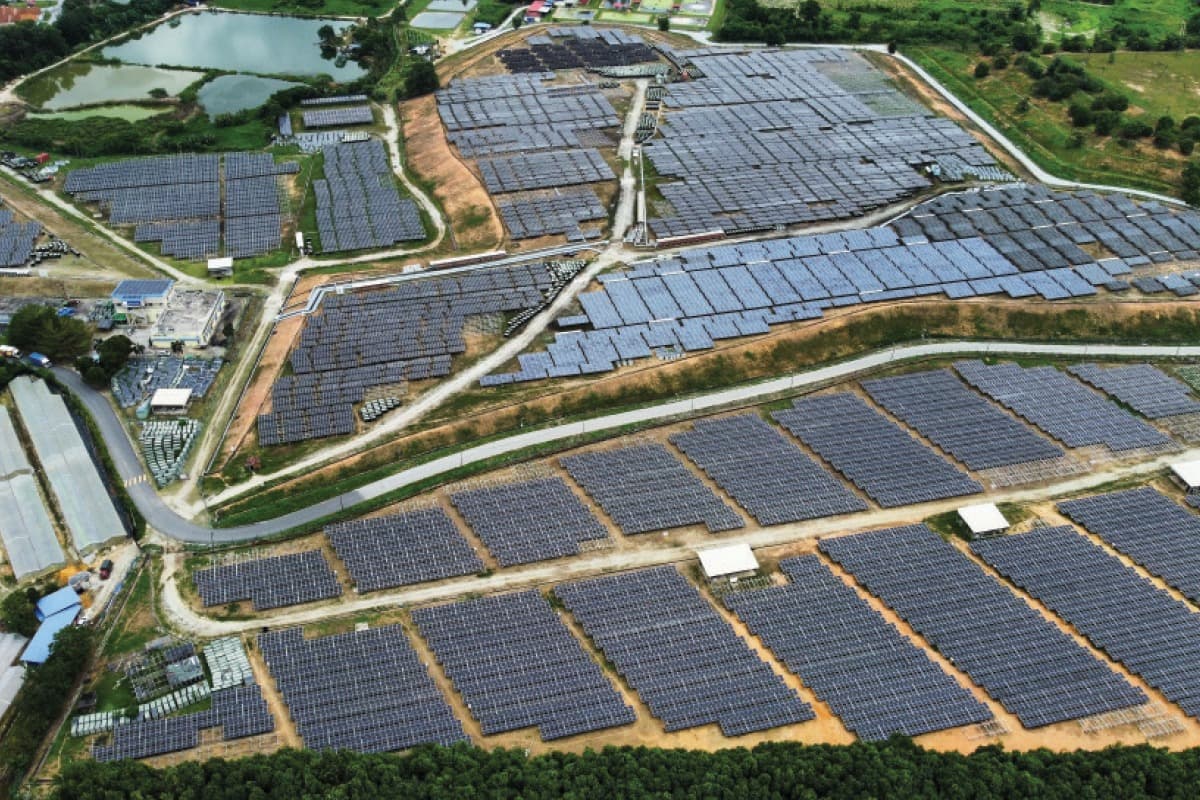
• The large-scale solar projects under the LSS 6 programme with a capacity of 2gw are estimated to see private investment of RM6 billion.
• GLICs and GLCs are mobilising investments valued at RM16.5 billion for 2026 for energy transition.
• UEM Lestra is developing solar farms in Segamat, Melaka and Selangor and is collaborating with PLUS to expand EV charging facilities.
• An additional 300mw renewable energy quota allocated under the Feed-In Tariff programme, with expected operation to start as early as 2028.
Property

• Stamp duty exemption for first homes priced up to RM500,000, which has been extended until Dec 31, 2027.
• Stamp duty of 4%-8% to be imposed on property transfers involving non-citizens and foreign companies, except permanent residents.
• 10% tax deduction (capped at RM10 million) for expenses related to converting commercial buildings into residences.
• Government to add 50 acres of Malay Reserve Land in Bandar Malaysia.
Tourism

• Tax deductions of up to RM500,000 for renovation and refurbishment of business premises by tourism project operators.
• Visit Malaysia Year 2026 aims to attract 47 million visitors and generate RM329 billion in tourism revenue.
• RM700 million allocated to boost the tourism sector.
• DBKL is allocating RM500 million for urban improvements: RM200 million to redevelop old hawker facilities and RM300 million for maintenance of buildings, wiring and road facilities within People’s Housing Programme (PPR).
• RM76.6 million to upgrade urban transformation centre facilities.
• Khazanah Nasional Bhd is investing RM600 million to restore Carcosa Seri Negara.
• RM60 million to build stalls and repair public markets across all local authorities.
Education

• RM120 million annually for PTPTN’s free education scheme, benefiting 5,800 children from poor families in public universities.
• PTPTN loan repayments for first-class honours graduates from low- and middle-income families will be exempted. This benefits about 6,000 borrowers and costs RM90 million annually.
• Travel restrictions to be imposed on PTPTN borrowers working overseas who are able to pay but fail to make loan repayments.
• RM7.9 billion set aside for technical and vocational education and training or TVET, up from RM7.5 billion.
Healthcare

• Government hospitals and clinics will undergo maintenance and repairs with an allocation of RM1.2 billion.
• Private hospitals will be allowed to establish tax-exempt Hospital Welfare Funds to aid underprivileged patients; contributors will receive tax deductions.
• Consultation fee rates for general medical practitioners revised to RM10-RM80 from RM10-RM35. On-call allowance raised by about 40% from Oct 1, 2025, with an additional allocation of RM120 million annually.
• A total of 4,500 contract doctors have been approved and will be offered permanent positions next year.
Other Measures

• E-invoice initiative to be fully implemented in 2026, along with the self-assessment system for stamp duty to foster tax compliance; refunds of overpaid taxes will be expedited.
• Owners scrapping a vehicle over 20 years old for a new national car purchase will receive a government/automaker matching grant of up to RM4,000.
• 30% increase in judges’ salaries; the last salary hike was in 2015.
• RM2.4 billion allocation for Felda, Risda, and Felcra.
Ministerial Allocations

• RM46.5 billion allocated to MoH and RM18.6 billion for the Ministry of Higher Education.
• The Ministry of Education to get RM66.2 billion, compared with RM64.2 billion in 2025.
• The Ministry of Defence will receive RM21.7 billion, while the Ministry of Home Affairs will get RM21.2 billion.
Government Agencies and Departments

• Parliament to receive RM220 million, with RM5 million earmarked to enhance Dewan Rakyat’s check-and-balance function over government policies.
• RM120 million to protect the welfare of smallholders, including to subsidise the cost of replanting.
• The MyDigital ID initiative will be expanded to the financial, telecommunications, e-commerce and healthcare sectors.
Sabah & Sarawak

• Sabah and Sarawak to receive the highest development allocations in Budget 2026, amounting to RM6.9 billion and RM6 billion respectively.
• New road from Kalabakan to Simanggaris.

Disaster Management

• RM2.2 billion is set for 43 flood mitigation projects, including 12 new ones next year.
• RM460 million by the National Disaster Management Agency to build 10 toilet complexes with clean water at evacuation centres.
• Over RM260 million for slope maintenance and repairs nationwide, including federal roads.
• RM210 million by MCMC to develop an Early Warning System for better disaster preparedness.
• The GLC and GLIC Disaster Response Network to provide RM20 million in matching grants to help disaster victims.
• RM55 million to clean and upgrade drains in all local authorities.
Business and Investment

• Government loan facilities and guarantees for local entrepreneurs raised to RM50 billion from RM40 billion.
• Ekuiti Nasional Bhd to grow its investee companies until they can be listed and taken over by Permodalan Nasional Bhd.
• RM100 million to be spent to rehabilitate problematic paddy fields, upgrade infrastructure and encourage adoption of modern rice field technologies.
• The Outcome-Based Incentive Framework, which focuses on high-growth activities, will be fully implemented in the manufacturing sector in the first quarter of 2026, followed by the services sector in the second quarter.
• The Matrade Market Development Grant to provide RM60 million to facilitate SMEs in exporting Malaysian-made products to existing and new markets, including Africa, Latin America and Central Asia.
• EXIM Bank to offer RM500 million in soft loans to assist companies affected by global trade tariff tensions.
• To boost R&D commercialisation, public university lecturers who found spin-off companies can take a one-year research/sabbatical leave.
• RM10 million to be set aside for seed funding to establish a National Spin-off Fund.
• NIMP Industrial Development Fund to allocate RM180 million to finance industrial development programmes in high-impact sectors, including pharmaceuticals, semiconductors, AI, digital and sustainability.
• Khazanah and KWAP to invest RM550 million in the semiconductor ecosystem to enhance joint ventures between local firms and multinational companies.
• Through the GEAR-uP initiative, GLICs will increase domestic investment to RM30 billion, compared to RM25 billion this year.
• RM40 million to be spent to help high-potential bumiputera companies scale up.
• The salary threshold for employment contracts exempted from stamp duty will increase from RM300 to RM3,000 per month to reduce the cost of doing business.
Save by subscribing to us for your print and/or digital copy.
P/S: The Edge is also available on Apple's App Store and Android's Google Play.