

TRANSLATED FROM THE ORIGINAL SPEECH IN BAHASA MALAYSIA (BM).
IN CASE OF DISCREPANCY, THE BM VERSION WILL PREVAIL.
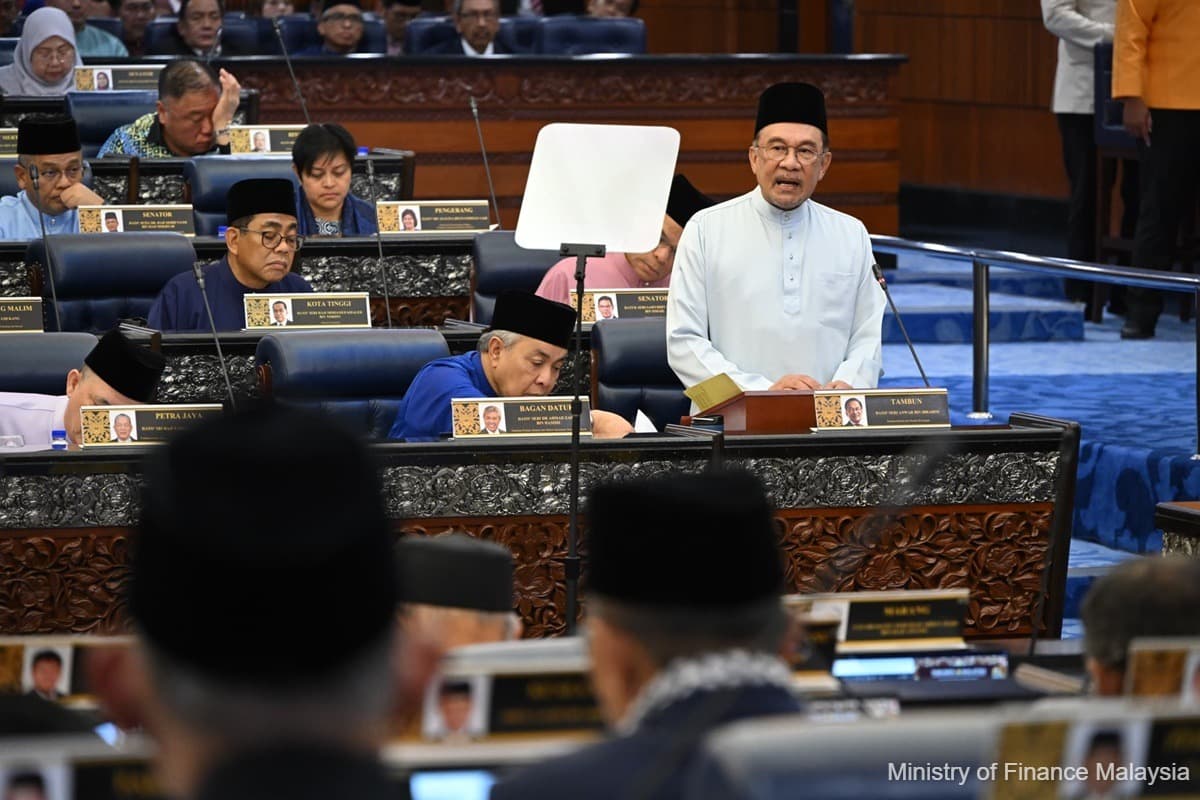
FOURTH MADANI BUDGET 2026 SPEECH
BY YAB DATO’ SERI ANWAR BIN IBRAHIM
PRIME MINISTER AND MINISTER OF FINANCE
INTRODUCING THE SUPPLY BILL (2026)
IN DEWAN RAKYAT
FRIDAY, 10 OCTOBER 2025
“THE FOURTH MADANI BUDGET: THE RAKYAT’S BUDGET”
PREAMBLE
Tan Sri Speaker Sir,
I beg to move the Bill intituled “An Act to apply a sum from the Consolidated Fund for the service of the year 2026 and to appropriate that sum for the service of that year” be read a second time.
Bismillahirrahmanirrahim
Assalamualaikum Warahmatullahi Wabarakatuh,
Salam Sejahtera.
Tan Sri Speaker, Honourable Members of this House
and Malaysians whom we serve and cherish,
1. We raise our deepest gratitude to Allah SWT, for it is by His grace that we gather today to fulfil a solemn trust: to present a Budget for the coming year. Yet, let it be said clearly – a budget is not merely a ledger of allocations nor a stack of fiscal tables. It is not a sterile technical document concerned only with deficits and balance sheets. A budget is a moral testament, a pledge of history and an honest covenant between a government and its people.
2. As revealed in the Quran:
وَءَاتِ ذَا ٱلْقُرْبَىٰ حَقَّهُ وَٱلْمِسْكِينَ وَٱبْنَ ٱلسَّبِيلِ وَلََ تُبَذِ رْ تَبْذِيرًا إِنَّ ٱلْمُبَذِ رِينَ كَانُوٓا۟ إِخْوَٰ ن
ٱلشَّيَٰطِينِ وَكَانَ ٱلشَّيْطَٰنُ لِرَب هِ كَفُورًًۭا
“And give the relative his right, and [also] the poor and the traveller, and do not spend wastefully. Indeed, the wasteful are brothers of the devils, and ever has Satan been to his Lord ungrateful.” (Surah al-Isra’ 17:26-27)
3. The Fourth Madani Budget rises to meet the demands and disquiet of our times — grappling with present economic headwinds while charting a course that averts excess and error. We condemn the gluttony of those who gorge on debt as though tomorrow did not exist. We stand firm against leakages and decay. And we refuse the decadence of an entitled elite whose comforts are financed by the hardship of ordinary citizens. Instead, we choose the steeper, lonelier road — one of reform, of uncompromising fiscal discipline and of institutional fortification — for only such a path charts the nation on a sustainable course.
“Politics should be a noble mirror of our humanity — never merely calculation or a contest of power.” Vaclav Havel (poet, thinker and former President of the Republic of Czech)
4. The world is rattled by tariff wars. The geopolitical order is coming apart at the seams. The climate is unravelling. And the furious pace of technological change is upending lives and livelihoods. In these times, Malaysia can ill afford silence or complacency. We must dare to shoulder our moment in history, as once did the Malaccan empire: cosmopolitan in its laws, respected for its maritime strength and commerce and admired for its fidelity to justice. Now it falls on us to prove that a nation modest in geography can nevertheless be formidable in influence – not through military might, but through moral authority, social equity and the strength of a just economy.
5. This Budget also opens the first chapter of the Thirteenth Malaysia Plan (Thirteenth Plan). It is not merely an annual financial exercise, but a historical compass by which we navigate the era to come.
6. The Fourth Madani Budget stands as witness to our choice: the path of national rejuvenation and awakening.
“Honour is not measured by wealth, but by the courage and resolve with which one fulfils duty to the homeland.” – Pericles (Athens statesman, as recorded by the ancient historian Thucydides)
MADANI REFORMS FOR THE RAKYAT’S WELL-BEING
7. In the three years since the Madani administration began, we have more often than not chosen the harder road over the familiar one. These efforts are now beginning to yield results, charting a new course in raising the ceiling of our nation’s growth and raising the floor of the rakyat’s living standards.
8. Yes, I keep stressing governance. And why is that?
Because when we pass laws, including the Government Procurement Bill 2025, the Public Finance and Fiscal Responsibility Act 2023 (FRA) and the amended Audit Act 1957, the impact is real, and the results speak for themselves. Investor confidence rises. Malaysia climbs 11 places in the World Competitiveness Index. The ringgit stabilises. And most importantly, new jobs are created, bringing unemployment down to 3%, the lowest in a decade.
9. But we are also walking the talk. Why is enforcement so central to this administration?
Because corruption, mismanagement and leakages have cost this nation dearly. When enforcement is carried out without fear or favour, what was lost can be recovered. Billions of ringgit have been returned to public coffers, which are now being utilised to finance and accelerate the implementation of high-impact projects, such as the Flood Mitigation Plan and the Pan Borneo Sabah Highway.
10. And why is the Government steadfast in moving towards targeted subsidies?
Because for years, blanket subsidies bled out to foreign nationals and large corporations. Subsidies are meant as a privilege for Malaysians. The savings achieved through diesel subsidy rationalisation have been translated into meaningful assistance for the rakyat, including the Sumbangan Asas Rahmah (Sara) Untuk Semua initiative launched in August.
11. At the heart of it, the reforms under Ekonomi Madani are shaped around the rakyat (people). They were designed to guide the Government in bettering public service delivery, creating jobs, opening income opportunities and easing the cost of living.
12. After daring to go where others dared not, it is now time to return the fruits of the nation to the rakyat. Ergo, the Fourth Madani Budget bears the theme “The Rakyat’s Budget”. As the maiden budget under the Thirteenth Plan, Budget 2026 sets out nine Core Measures anchored in the three pillars of Ekonomi Madani.
MEASURE ONE: HONING EXCELLENCE IN GOVERNANCE
Tan Sri Speaker Sir,
13. The Madani Government remains steadfast in building fiscal resilience, eliminating inefficiencies and leakages, and fortifying national institutions in raising the ceiling of the nation’s growth potential and the floor of the rakyat’s living standards.
ALLOCATION UNDER BUDGET 2026
14. For the first half of 2025, Malaysia recorded a robust growth of 4.4%. Even as the economy faces headwinds from the US tariff war, the revised GDP (gross domestic product) projection for 2025, ranging between 4.0% and 4.8%, underscores the continued resilience of Malaysia’s economy.
15. For 2026, Malaysia’s economy is projected to grow at a moderate pace of between 4.0% and 4.5%, weighed down by prevailing global uncertainties due to ongoing geopolitical and geoeconomic tensions.
16. While upholding the commitment under the FRA, growth momentum remains supported by an expansionary fiscal stance. In this regard, Budget 2026 will consolidate and optimise national resources, including funds from government-linked investment companies (GLICs), Federal Statutory Bodies, as well as Minister of Finance (Incorporated) [MOF Inc] companies, through public expenditure amounting to RM470 billion, compared with RM452 billion in the previous year.
This allocation comprises:
● RM338.2 billion for Federal Operating Expenditure (OE);
● RM81 billion for Federal Development Expenditure (DE);
● RM30 billion in investments by GLICs;
● RM10 billion in public-private investments; and
● RM10.8 billion in investments by Federal Statutory Bodies and MOF Inc companies.
FISCAL RESPONSIBILITY AND PUBLIC FINANCE
17. Reflecting the Madani Government’s strong commitment to governance reform, FRA was enacted. This commitment is now further reinforced through the Government Procurement Bill 2025, which effectively limits the powers of the Minister of Finance, who remains subject to both prosecution and oversight by the Tribunal.
18. Under the Madani Government, the fiscal consolidation path remains on track, with deficit reduced from 5.5% of GDP in 2022 to 5.0% in 2023, and 4.1% in 2024, before narrowing further to 3.8% in 2025. Insya-Allah, the deficit is projected to continue declining to 3.5% in 2026.
19. The narrowing fiscal deficit reflects a steady moderation in new borrowings, which have been contained at prudent levels, decreasing from RM100 billion (2022); RM92 billion (2023); RM77 billion (2024); and projected to maintain at around RM77 billion in 2025, though expectations remain that the figure will be lower this year.
With continued fiscal discipline, the Government is on track to achieve a fiscal deficit of 3% in the medium term.
20. In 2026, Federal Government revenue is projected to increase to RM343.1 billion, compared to the RM334.1 billion estimated for 2025.
21. Typically, additional fiscal needs for infrastructure and social programmes are met through revenue-enhancing measures. The Government, however, has prioritised strengthening governance frameworks, particularly through targeted subsidy measures, while ensuring that the rakyat are not further burdened. This approach has effectively advanced anti-corruption efforts, curbed smuggling activities and dismantled established cartel operations.
22. Under the Madani Government, enforcement agencies including the Malaysian Anti-Corruption Commission (MACC), Royal Malaysian Police (RMP), Ministry of Domestic Trade and Cost of Living (KPDN), Royal Malaysian Customs Department (RMCD) and Malaysia Competition Commission (MyCC) have collectively secured 12 confiscations and penalty collections, amounting to nearly RM15.5 billion. Most recently, the RMP successfully dismantled a major organised criminal network operating in Penang and Port Klang. This reflects what we mean by upholding governance in public administration. Consider the scale of what was once siphoned and stolen. In merely two years, RM15.5 billion has already been recovered.
23. Undeniably, these leakages have been allowed to persist for far too long, rooted in the absence of strong political will and ineffective enforcement.
“Power without accountability is the beginning of tyranny.” — Montesquieu (French judge and philosopher of the Enlightenment era)
24. For 2026, the enforcement capacity of key agencies, namely the MACC, RMP, KPDN, RMCD and MyCC, will be further strengthened through enhanced training programmes and acquisition of new assets, with an allocation of RM700 million.
25. The RMCD will also introduce digital tax stamps with enhanced security features to curb counterfeiting, while addressing leakages at the nation’s entry points through the implementation of a Centralised Screening Complex with integrated CCTV systems.
26. To enhance tax compliance, the e-Invoicing initiative will be fully implemented beginning 2026, together with the self-assessment system for stamp duty to foster greater tax compliance. At the same time, refunds for excess tax paid will be expedited.
27. Certain luxury vehicle owners have continued to exploit the vehicle tax exemption in Langkawi and Labuan. To curb such leakage, the Government proposes to cap the exemption for vehicles valued up to RM300,000, effective 1 January 2026.
28. The Government proposes that anti-corruption programmes organised by civil society organisations, recognised by the MACC, be accorded tax deduction status as national interest projects. Likewise, those who contribute cash donations to these approved initiatives will also enjoy income tax deductions.
EFFICIENT PUBLIC SERVICE DELIVERY
29. The Special Task Force on Agency Reform (STAR) proved that governance reforms can be executed swiftly without engaging external consultants. The reform initiatives successfully streamlined over 1,000 projects, generating savings of RM1.1 billion in compliance costs and propelling Malaysia 11 places higher in the World Competitiveness Index.
30. An allocation of RM25 million will be to STAR to drive comprehensive digitalisation initiatives across public services, as well as accelerate infrastructure and innovation development.
31. MyDigital ID initiative aims to reach 15 million users by the end of 2025. The initiative will be extended to key sectors, including finance, telecommunications, e-commerce and healthcare.
32. Leveraging internal expertise, the GovTech Malaysia Unit is being empowered to develop more government digital applications to enhance the efficiency of public service delivery. The Kiosk
MADANI initiative facilitates public access to government services beyond regular office hours. Three kiosks have been established in the Klang Valley, with two more to be set up in Penang and Johor. Kiosk Madani will be progressively expanded to all states.
33. The 24th Urban Transformation Centre (UTC) will be launched in Seberang Perai in November, with RM76.6 million allocated to enhance UTC facilities, ensuring greater accessibility and convenience for the rakyat.
34. Recognising the significant role of Malaysia’s foreign service in elevating Malaysia’s international stature, the Government is ensuring that diplomatic missions are provided with secure, functional and conducive facilities. A total of RM31.5 million has been allocated for the maintenance and replacement of damaged embassy assets, including at Malaysia’s missions in Wellington and Singapore.
STRENGTHENING THE THREE INSTITUTIONAL PILLARS
35. The institutional pillars of our nation — the Executive, Legislative and Judiciary — must stand firm with integrity and independence, carrying out their entrusted mandate, free from narrow or vested interests.
36. The role of Parliament will continue to be strengthened:
● For 2026, Parliament will receive an allocation of about RM220 million, including RM5 million specifically to enhance the functions of the Special Select Committees of the Senate and House of Representatives in ensuring effective oversight of government policies.
● Rakyat in 143 parliamentary constituencies have benefitted from programmes initiated under the All-Party Parliamentary Group Malaysia (APPGM). A total of RM15 million has been allocated to expand coverage to more parliamentary constituencies.
37. The separation of the roles of the Attorney General and the Public Prosecutor is currently at the engagement stage with all relevant stakeholders.
38. The Legal Reform Team established by the Government is currently reviewing comprehensive reforms to criminal and contract laws, including the drafting of new Admiralty Jurisdiction and Coroner Bills.
39. Subsequent to the enactment of the Consumer Credit Act 2025, the Government will introduce amendments to the Consumer Protection Act to include Lemon Law elements, to ensure protection for consumers.
MEASURE TWO: SERVING THE RAKYAT’S PRIORITIES
TARGETED SUBSIDIES
40. All previous administrations recognised the need to target subsidies. Yet, bereft of political will, they abdicated the responsibility entirely. Targeted subsidies are fundamental to good governance; they ensure that national funds go back into the hands of ordinary Malaysians. The Madani Government is clear that subsidies are a privilege for Malaysians — not for foreign nationals and not for large corporations. Among the outcomes:
● Floating chicken prices have saved RM1 billion, while prices remain under control.
● Floating egg prices have saved another RM1 billion.
● On average, targeting subsidies and restructuring electricity tariffs has generated RM6 billion in savings — and yet 85% of consumers faced no increase, with some even paying less.
● The targeted diesel subsidy has curbed leakages and smuggling, saving RM5 billion. Public transport operators, fishermen and selected logistics sectors continue to receive subsidised diesel. Eligible individuals, farmers and smallholders receive RM200 a month.
● Targeting RON95 subsidies has the potential to save at least RM2.5 billion — while Malaysians continue to enjoy a lower pump price of RM1.99 per litre.
● The rollout of Budi95 has proceeded smoothly, with more than 10 million people enjoying RON95 at RM1.99 per litre. The database of 16.5 million eligible citizens is being updated to provide additional quotas for 23 thousand registered boat owners and over 52 thousand active e-hailing drivers.
41. In total, targeted subsidies have freed up an estimated RM15.5 billion in annual public funds. Every ringgit saved is a ringgit more that can go into social protection, managing the cost of living and building quality public infrastructure.
IKTHIAR MADANI FOR THE RAKYAT
42. The savings we generated have given us the fiscal room to deliver Ikthiar Madani for the rakyat. SejaTi Madani, where village committees run income-generating projects of their own choosing, is supported with funding of up to RM100,000. Since 2024, more than 9,500 initiatives have taken off, including:
● In Kampung Sungai Protan, Perak, a recreational fishing pond now generates up to RM90,000 a month.
● In Kampung Sungai Gulang-Gulang, Selangor, a seedling venture for the Sungai Gulang-Gulang (SGG CN16) coconut variety earns RM25,000 monthly.
● In Kampung Hiliran Jejawi, Terengganu, villagers producing grated coconut, coconut milk and kerisik now bring in RM40,000 a month.
● In Kampung Abi, Perlis, local entrepreneurs earn RM15,000 a month selling ketupat palas and frozen food products.
43. Next year, RM1 billion will be set aside to further strengthen Ikthiar Madani Untuk Rakyat. Among the key expansions:
● SejaTi Madani will be expanded to include youth-driven income projects, such as vending machines and fertigation programmes.
● The country’s leaders and senior officials (YAB Prime Minister and Chief Secretary to the Government) have gone down to the grassroots, rolling up their sleeves to directly tackle the problems faced by villages and schools. Next year, Kampung Angkat Madani will be increased to 500 villages, while Sekolah Angkat Madani will be expanded to 1,500 schools with the private sector’s support.
● The success of Solar Madani in installing four thousand solar streetlights in Sabah will be extended to villages across the country.
● Sejahtera Madani represents the private sector’s contribution towards eradicating hardcore poverty, with RM120 million in funds raised to date.
● I extend my appreciation to everyone involved, especially the corporate partners who have contributed to Ikthiar Madani Untuk Rakyat.
● Companies and individuals with business income who contribute to Kampung Angkat Madani, Sekolah Angkat Madani or Sejahtera Madani will be eligible for income tax deductions.
MOBILE SERVICES
44. Over RM110 million will be allocated for Ikhtiar Perkhidmatan Bergerak Madani, an initiative aimed at delivering government services directly to rural and remote communities. Among them:
● Public university students in fields such as science, engineering, medicine and nursing will be deployed to villages to provide support services to the rakyat — including repairs, health screenings and cultivating Science, Technology, Engineering and Mathematics (STEM) interest in schools.
● Perkhidmatan Komuniti Bergerak Sabah dan Sarawak is being expanded to 19 new locations, including Kampung Karamuak in Sabah and Telang Usan in Sarawak.
● Bank Simpanan Nasional (BSN) has added four new mobile banking units, bringing the total to 20, to serve rural communities in Sabah, Sarawak, Pahang and Perlis — particularly more than one million STR recipients.
● The Mobile Court is being expanded to include Mobile Labour Court and Mobile Children’s Court, equipped with child-friendly witness rooms and modified vehicles functioning as full hearing facilities.
STATE DEVELOPMENT
45. I have personally met with the leadership of every state to understand their development priorities. As such, the Thirteenth Plan has taken into account the proposals put forward by all states, including:
Penang
● North-South Expressway (PLUS) Traffic Dispersal Project from Juru Toll to Sungai Dua Toll
● Kubang Semang Health Clinic and Central Seberang Perai Integrated Healthcare Complex
● Upgrade of the water intake facilities at Titi Kerawang and Teluk Awak, and installation of raw water pipes from the intake point to the Teluk Bahang Dam
● Upgrade of the Bertam Sports Complex in Kepala Batas, Seberang Perai Utara
● Construction of an underpass to connect Mount Erskine Road to Burma Road at the intersection of Mount Erksine Road/Gottlieb Road/Burma Road/Bagan Jermal Road, Section A: Underpass;
Johor
● Upgrade of Senai-Desaru Expressway Phase 2A: Cahaya Baru to Sungai Johor for JS-SEZ
● Construction of a road from Jalan Kluang-Renggam-Layang-Layang J25 at Taman Muhibbah to Jalan Kota Tinggi-Kluang, Kluang
● TWG: Replacement of lifts and escalators at Bangunan Sultan Iskandar and Johor Bahru Sentral
● Upgrade of the Section 16.0 intersection at Jalan Johor Bahru – Kulai and Jalan Gelang Patah, Johor Bahru
● Upgrade of Jalan Pt. Panjang from Pekan Ayer Baloi to the Sedenak Toll Interchange, Pontian;
Perak
● Upgrade of the Federal Road in Pengkalan Hulu
● Construction of a new PLUS interchange in Kerian
● Construction of a Health Clinic (Type 2) in Tanjung Rambutan
● Development of basic infrastructure works for the Perak Halal Industrial Park (PHIP), Manjung
● Upgrade of Route FT100 (Section 10.4) to Route FT3145 leading to Lumut Port (Section 5.4), Manjung, Perak Phase 5: Tanjong Malim to Lumut Port;
Kedah
● Sungai Karangan Riverbank Water Reservoir, Kulim
● Construction of a Health Clinic in Sik
● Eco-Friendly Drainage Project in Taman Selasih, Kulim
● Development of Tourism Facilities at the Kuala Kedah Waterfront, Bandar Kuala Kedah, Kota Setar
● Coastal Erosion Mitigation Project at Pantai Leman, Kota Setar;
Kelantan
● Urban Drainage System for Bandar Baru Tunjong, Kota Bharu
● Upgrade of the Kubang Kerian-Bachok Road
● Regional Sewage Treatment Plant for Mukim Tiong and Mukim Jelutong, including the construction of sewerage pipe networks and rationalisation works in parts of the sub-catchment area of the Bandar Baru Tunjong Zone, Kota Bharu
● Upgrade of the Kubang Kerian-Bachok Road from the Kubang Kerian Junction to the Binjai Junction, Kota Bharu
● Upgrade of the Pasir Mas-Salor Road at the Pasir Hor/Sultan Ismail Petra Junction, Kota Bharu
● Rural Water Supply System for Pasir Mas;
Melaka
● New road from Jalan Masjid Tanah Kuala Linggi to Telok Gong, Alor Gajah
● Upgrade of the road from Sungai Udang to Masjid Tanah, Alor Gajah
● Reconstruction of dilapidated buildings with additional facilities at Sekolah Menengah Kebangsaan Ghafar Baba, Alor Gajah
● Construction of new buildings and upgrade of hostel facilities at Sekolah Menengah Kebangsaan Tinggi Perempuan, Melaka Tengah
● Upgrade of the Samudera Museum (Phase 1), Jalan Quayside, Melaka;
Sabah
● Upgrade of the Inanam Oxidation Pond into a Regional Sewage Treatment Plant
● Construction of a new road from Kalabakan to Simanggaris (Malaysia-Indonesia border), Kalabakan
● Integrated River Basin Development for Sungai Moyog — construction of flood bunds
● Installation of main transmission and distribution pipes, including storage tanks, in parts of Tawau
● Replacement of old pipes and upgrading of transmission and distribution pipelines in Kota Kinabalu, Penampang and Putatan;
Sarawak
● Construction of the main road in Kapit Division from Nanga Serau to Nanga Seranau, Kapit Division
● Construction of a Health Clinic with quarters in Mukah, along with the Integrated Health Complex in Mukah Division
● Programme to Enhance Beef Cattle Production
● Programme to Empower the Paddy and Rice Industry
● Program Residensi Rakyat (PRR), Samariang, Kuching;
Negeri Sembilan
● Construction of a PLUS interchange to support the development of Malaysia Vision Valley
● Construction of a riverbank barrage and water retention structure at Sungai Pedas, Rembau
● Upgrade of Jalan Utama Palong and improvements to the Palong 7 and 8 junctions, Jempol
● Coastal conservation works at Teluk Kemang, Port Dickson
● Construction of a new road from Kampung Barisan to Jalan Kampung Tampin Linggi, Port Dickson;
Pahang
● Upgrade of the Kuantan-Segamat Highway, Rompin
● Concrete bridge from Jalan Serengkam to Jalan Kuala Wau, Maran
● Development of the Kampung Bongsu area, Temerloh
● Upgrade of Jalan Sungai Lembing from Kampung Padang to the LPT1 traffic light junction, Kuantan
● Health Clinic with staff quarters at Pos Lenjang, Lipis;
Perlis
● Upgrade of Kampung Batu Dua to Beseri Road
● Upgrade of the Chuping Flood Retention Pond
● Scanning machines at the Perlis Inland Port
● Acquisition of a building to be converted into staff quarters for Hospital Tuanku Fauziah
● Full replacement construction of Sekolah Kebangsaan Chuping;
Terengganu
● Coastal Erosion Control for Pantai Rusila, Marang
● Upgrade of the Federal Road in Setiu
● Drainage system works in Kampung Mak Chili Paya, Chukai, Kemaman
● Construction of a new road from the Kuala Terengganu Bypass at Kampung Bukit Bayas to the junction road at Kampung Kubang Tangga, Kuala Terengganu
● Upgrade of infrastructure and sports facilities at the Kuala Terengganu Hockey Stadium;
Selangor
● Sungai Buloh Flood Mitigation Project, Phase 2
● Additional block for Banting Hospital, Selangor
● New development of mechanical and electrical infrastructure for flood control in the state
● Upgrade of the Federal Road from the Batu 9 junction to the Jalan Dato Alias junction, including the construction of a flyover at the Batu 9 Intersection, Cheras, Hulu Langat
● Health Clinic (Type 2) in Kinrara, Petaling;
Federal Territories
● Conservation works along Sungai Gombak from Kampung Sungai Mulia to the Puah Flood Retention Pond, Federal Territory of Kuala Lumpur
● River conservation works to reduce flood risk in the Federal Territory of Kuala Lumpur
● River conservation works to reduce flood risk in the Federal Territory of Labuan
● Construction of the Labuan Waterfront – Phase 1
● Redevelopment of the Kuala Lumpur Swimming Complex.
46. In the spirit of honouring the Malaysia Agreement 1963, the Madani Government is committed to accelerating development in Sabah and Sarawak. This is not merely rhetoric, but concrete action to narrow the development gap — particularly in basic infrastructure.
● Sabah and Sarawak each receive the highest allocations from the Federal Government.
o Development allocations for Sabah have increased to RM6.9 billion compared to RM4.4 billion in 2022. Sarawak has also continued to increase, reaching RM6 billion compared to RM2.9 billion in 2022.
● Beginning this year, the Pemberian Khas Sabah dan Sarawak have been increased to RM600 million, compared to RM300 million in 2023.
● Although regulatory authority over electricity supply was fully transferred to Sabah in January last year, the Federal Government continues to provide RM1.2 billion in subsidies to ensure supply stability.
● A landslide in Penampang severed two main high-voltage transmission lines, disrupting electricity supply to 230 thousand users in Sabah’s east coast. Immediate action was taken to restore supply. For long-term sustainability, the Federal Government is providing RM765 million in financing for the Southern Link Transmission Project.
● Since 2024, the Federal Government has allocated RM1 billion in financing for water projects in Sabah, including the installation of new pipelines in Tawau and the upgrading of old pipes in Kota Kinabalu, Penampang and Putatan. These projects are currently in the implementation phase and are expected to be completed next year.
● On highway projects in Sabah and Sarawak:
o Nine Pan Borneo Sarawak packages have been fully completed and opened for public use.
o Four Pan Borneo Sabah Phase 1A packages have been completed. In 2026, RM1.67 billion will be to ensure Pan Borneo Sabah proceeds on schedule.
o Sarawak-Sabah Link Road (SSLR) Phase 1 is expected to be completed in November 2026, while SSLR Phase 2 is under construction and scheduled for completion by mid-2029.
o The Trans Borneo Highway (LTB) will complete the road network between Sabah and Sarawak. The Letter of Acceptance (LOA) will be issued as early as the first quarter of 2026.
o The Federal Government will upgrade the existing road pavement structure along the red line section in Durin and Salim, Sibu, Sarawak at a cost of RM350 million.
o In total, these public infrastructure projects involve costs amounting to RM48 billion.
● To ensure Sabah, Sarawak and Peninsular Malaysia enjoy equitable digital access, a new 3,190-kilometre Madani Subsea Cable Link (Salam) will be developed by the Malaysian Communications and Multimedia Commission (MCMC) at a cost of RM2 billion. This will connect Sedili in Johor to Kuching and Sibu in Sarawak, and subsequently to Tuaran, Kudat, Pulau Banggi, Sandakan and Tawau in Sabah.
● RM20 million will be set aside to add business spaces, equipped with basic facilities, for small traders at Tamu Desa in Sabah and Sarawak.
MEASURE THREE: CHAMPIONING HIGH-VALUE ECONOMY
47. Malaysia continues its ascent to the forefront of the high-value economy. As global competition grows fiercer, we are directing strategic high-growth investments into sectors such as semiconductor, energy transition and digital.
STRATEGIC SECTOR INVESTMENT
48. Despite the greater challenges anticipated next year, Malaysia is poised to attract more investments through strategic approaches.
49. First: To enhance investors’ ease of doing business
● The Government will introduce the Asean Business Entity (ABE) Status, and to be coordinated by the Securities Commission Malaysia (SC). This is given to public-listed companies with extensive market presence in Asean and to mid-sized companies with strong potential to expand operations. ABE facilitates the movement of skilled talent, thereby supporting the regional expansion of Malaysian companies within Asean.
● The Single-Family Office Incentive Scheme gazetted for the Forest City Special Financial Zone has achieved remarkable success: Six Family Offices with assets under management (AUM) of almost RM400 million were approved in less than a year. Another 30 Family Offices have expressed interest. Malaysia is on track to achieve RM2 billion AUM by the end of 2026.
● The Investor Pass spearheaded by Mida (the Malaysian Investment Development Authority) offers Multiple Entry Visa of up to 12 months to foreign investors. Mida will adopt more proactive approaches, not merely processing applications, but also offering Investor Pass to multinational companies and potential investors in key sectors such as E&E (electrical and electronics).
● The Residence Pass-Talent Fast Track is continued to ensure talents brought in by strategic investors are managed efficiently and in an orderly manner, including exemption to the pre-requisite condition of three years of Employment Pass.
● Under Budget 2025, the Government offered tax incentives through the Outcome-Based Incentive Framework, in line with the New Industrial Master Plan (NIMP), which focuses on high-growth activities. This framework prioritises investments that generate high-value employment opportunities. The pilot phase is currently underway and will continue until the end of 2025.
Starting from the first quarter of 2026, the framework will be fully implemented for the manufacturing sector, followed by the services sector in the second quarter.
50. Second: To intensify support for high-value sectors
● A total of 200 million ringgit under the Strategic Co-Investment Fund (CoSIF) will provide matching grants to SMEs(small and medium-sized enterprises) and mid-tier companies that strengthen the supply chains of key sectors, through Equity Crowdfunding (ECF) and Peer-to-Peer (P2P) financing platforms.
● An allocation of RM180 million under the NIMP Industry Development Fund (NIDF) to finance industry development programmes in high-impact sectors such as pharmaceutical, semiconductor, artificial intelligence (AI), digital and sustainability.
● Khazanah and KWAP are investing RM550 million in the semiconductor ecosystem to increase collaboration between local firms and multinational companies.
● Under the National Semiconductor Strategy (NSS), Bank Pembangunan Malaysia Bhd (BPMB) will provide RM500 million in soft loans to support high-value-added activities such as R&D (research and development), especially by local companies that support the E&E ecosystem.
● Semiconductor start-ups often face barriers to entry due to the substantial prototype costs. To address this, Malaysia will launch SemiconStart, an incubator programme by Malaysian Technology Development Corporation (MTDC) in collaboration with global incubators. This initiative will help early-stage startups gain mentorship, access to global financing, prototype creations at discounted rates, and a wider customer network.
51. Third: GLICs continue to catalyse domestic investment
● Under GEAR-uP, GLICs will increase their domestic investment to RM30 billion, up from RM25 billion this year.
● To drive the expansion of strategic sectors, GLIC investments will support local companies or markets in their growth stage.
o For example, KWAP will provide RM1.2 billion under Dana Pemacu to undertake co-investments with private fund managers (co-GP) to finance emerging companies or markets in sectors such as energy transition, food security and the digital economy.
o Under Khazanah’s Mid-Tier Company Programme, RM250 million is provided to strengthen the capacity of mid-tier companies.
52. Fourth: Strengthening the startup ecosystem
● Startups have contributed RM1 billion to GDP and generated 82 thousand job opportunities. In line with the aspirations of the Malaysia Venture Capital Roadmap, KWAPs’ Dana Perintis and Khazanah’s Jelawang Capital have increased their investments to RM750 million from RM550 million.
● With an allocation of RM55 million, Cradle Fund will implement the Equity Investment Programme, as well as the Bengkel Inovasi GLC (BIG), which is extended to the private sector.
● The Government proposes to improve the existing Venture Capital Tax Incentive through special tax rates and dividend tax rates for 10 years.
53. Since introduction, MyCIF has attracted over RM6 billion in ECF and P2P capital into MSMEs, nurturing local companies to expand their footprint globally. Thirty million ringgit will be provided, among others, for expansion purposes, including support to the food, agritech, agetech and high impact care-economy sector.
54. Fifth: Enhancing the efficiency of the logistics sector to ensure economic activities move at a faster pace and achieve greater cost efficiency that benefits investors, industry and the rakyat.
● A strengthened Malaysia Airports Holdings Bhd (MAHB) has now opened the door to greater investment opportunities that raises the efficiency of the country’s airports management.
o MAHB has successfully completed the expansion of the Sultan Azlan Shah Airport, Perak and is in the process of expanding the Sultan Ismail Petra Airport, Kota Bharu, Kelantan.
o A total of RM2.3 billion is invested for the development of airports in Penang, Kota Kinabalu, Tawau and Miri, which is expected to complete in 2028. In addition, the Short Take Off and Landing Port (STOLport) in Marudi and Redang will be upgraded and is expected to complete in 2027.
o The Inter-Terminal Transfer Project between KLIA Terminal 1 and Terminal 2 will be implemented as a comprehensive international airport to improve passenger connectivity.
o The Selangor State Government and MAHB will develop the 600-acre Selangor Aero Park (SAP) in Sepang as a logistic and cargo regional hub.
55. Rare earth resource mapping activities will continue with an allocation of RM10 million. The Government will focus on developing downstream activities, including international joint ventures led by Khazanah.
CROSS-BORDER ECONOMIC CHAMPION
56. Malaysia must emerge as the cross-border economic leader, and we will do so by leveraging our strategic position in the region. Through joint development of border regions and regional infrastructure networks, we will not only be opening up new markets, but also linking Malaysia to neighbouring economic growth centres.
57. Malaysia is also focusing on the development of the Asean Power Grid to connect cross-border electricity grids and strengthen regional energy trade.
58. Tenaga Nasional Bhd (TNB) and Petronas (Petroliam Nasional Bhd) are collaborating with Asean partners to accelerate the Vietnam-Malaysia-Singapore project, which will transmit renewable energy from southern Vietnam to Malaysia and Singapore.
59. The Federal Government’s initiative to develop the Johor-Singapore Special Economic Zone (JS-SEZ) has strengthened investor confidence in Johor as Malaysia’s strategic gateway. For the first half of 2025, the JS-SEZ recorded RM37.1 billion in approved investments, representing 66% of Johor’s total investments. The JS-SEZ has also attracted a further RM29 billion in new investment commitments.
60. Various efforts are being intensified to bolster the investment ecosystem in the JS-SEZ, including:
● The Iskandar Malaysia Facilitation Centre Johor serves to expedite investment process with the support of Johor Super Lane, effectively reducing the local authority approval timeframe.
● The Johor Talent Development Council is connecting the higher education institutions (HEIs) with the industry player to expand talent development programmes, upskilling and premium-wage career placement.
61. The Government supports the development of economic activities in the northern area such as Delapan in the Bukit Kayu Hitam Special Border Economic Zone, that has emerged as a modern growth hub, connecting Asean’s supply chain and digital ecosystem with an investment of RM2.7 billion.
62. The Government supports economic activities at the country’s borders by improving basic infrastructure, including:
● construction of a new 28-kilometre road from Kalabakan, Sabah to Simanggaris, Indonesia;
● upgrade of the Pasir Mas-Rantau Panjang railway line;
● expansion of the existing road to a four-lane dual carriageway in Rantau Panjang, Kelantan; and
● the RTS Link project will be fully operationalised by 1 January 2027, capable of transporting 10 thousand passengers per hour in each direction during peak hours.
LOCAL TALENT DEVELOPMENT
63. As high-growth industries gain ground, the demand for local talent in TVET (technical and vocational education and training) intensifies. To that end, the National TVET Council will strengthen the TVET ecosystem in a more holistic manner, including the possible introduction of a dedicated TVET Bill.
64. Next year, the allocation for TVET will increase to RM7.9 billion, up from RM7.5 billion.
65. Opportunities for TVET education and training are widened, particularly those that support high-priority sectors.
● The National TVET Council will receive RM45 million, among others, to impart digital technology and AI knowledge to 10 thousand tahfiz and pondok students through Program IPT@Komuniti.
● The MOE (Ministry of Education) TVET institutions will receive RM1.3 billion for the purpose of educating 79 thousand TVET students.
● With a fund of RM3 billion, HRD Corp will offer three million training opportunities, especially in the high-tech, digital and energy transition sectors.
● PTPK (Skills Development Fund Corporation) will provide financing of RM650 million to benefit 25 thousand trainees, especially in NIMP fields such as AI, EV (electric vehicle) and semiconductor.
● With an allocation of RM34 million, the Department of Skills Development will train and provide career opportunities through its Akademi Dalam Industri programme. This is aimed at reducing the number of low-skilled foreign workers.
● GiatMARA will offer training to 13 thousand individuals from target groups including gig workers.
● Community colleges will provide lifelong learning programmes for vulnerable communities such as PWDs (persons with disabilities), the elderly, single mothers and Orang Asli.
66. The facilities at TVET institutions will also be upgraded. Some of these include the construction of a new hangar in ADTEC Shah Alam for aircraft maintenance technology and the TVET Marine Teaching Shipyard Complex at UMT for the maritime field, in support of the blue economy. In addition, a new vocational college will be established in Sabah.
LEADER IN THE ISLAMIC ECONOMY
67. The Islamic financial system must not be allowed to calcify around anachronistic norms. It needs to evolve, meet today's demands and provide powerful solutions for the well-being of the ummah.
● The Government has pioneered financing models based on risk-sharing such as musyarakah and mudharabah, in addition to expanding blended finance methods.
● Labuan IBFC aims to emerge as a Digital Islamic Finance Hub. The introduction of the Global Sukuk Tokenisation initiative enhances transparency in sukuk issuance and enables retail trading through digital exchanges in Labuan IBFC. The Climate Sukuk finances green projects and provides financial dividends in the form of carbon credits.
● iTEKAD, with a matching fund of RM35 million, will be expanded to provide matching grants to recipients who wish to improve their skills to enhance employability, thereby obtaining career opportunities with more stable income.
68. The Madani Government seeks to uphold and promote the true essence of waqf for the welfare of the ummah.
● UDA Holdings Bhd leads the development of waqf land in Penang through the Taman Wakaf Seetee Aisah Phase 2 and Phase 3 projects, as well as Taman Sultan Sallehuddin Phase 1B and 2B projects, with an investment value of nearly RM250 million.
● An innovative, tokenised cash waqf sukuk will be introduced to finance critical social needs including special education, autism centres and palliative care facilities in Malaysia. This initiative enables individual contributors to participate in sustainable financing for social development.
69. The halal industry ecosystem continues to be strengthened.
● Jakim (Department of Islamic Development Malaysia) will continue to expedite the issuance of halal certificates, while the Halal Development Corporation (Bhd)(HDC) remains steadfast in its mission to encourage halal compliance among companies.
● SME Bank will offer special financing to halal-compliant MSMEs (micro-, SMEs) with funds totalling RM100 million.
● Syarikat Jaminan Pembiayaan Perniagaan Bhd (SJPP) will increase the Government guarantee amount for halal-compliant SMEs financing from RM1 billion to RM2 billion.
● The Government will develop the Perak Halal Industrial Park in the Manjung district at a cost of RM124 million.
VISIT MALAYSIA 2026
70. My sincere appreciation goes to the Melaka State Government and Motac (Ministry of Tourism, Arts and Culture) for the successful launch of Visit Malaysia 2026 in Melaka last month. Next year will be a momentous one for Malaysia as we roll out the carpet to the world. It is high time for travellers across the globe to rediscover this country — from our breathtaking landscapes and rich biodiversity, to the depth and diversity of our cultural heritage and gastronomy, and the unmistakable warmth of Malaysian hospitality.
71. Our sights are set high: attract 47 million visitors and generate RM329 billion in tourism revenue — an uplift that promises economic spillover for small traders, tourism entrepreneurs, rural communities, craft makers and the rakyat as a whole.
72. To realise this ambition, more than RM700 million will be allocated to elevate the tourism sector.
● RM500 million to ensure the success of Visit Malaysia 2026.
● RM60 million to incentivise the promotion, marketing and organisation of tourism and cultural events.
● RM50 million to support art and heritage entrepreneurs, such as craft, batik and weaving practitioners, in generating income.
● A matching grant of RM50 million to encourage international flights and charters to Malaysia. MAHB successfully attracted 10 international companies to Malaysia, such as British Airways, Hong Kong Express and Jiangxi Air.
● RM25 million to upgrade tourism facilities, including the restoration of Unesco sites such as Taman Negara Gunung Mulu, Sarawak; Lembah Lenggong, Perak; and FRIM Forest Park, Selangor, which were newly declared this year.
● RM20 million to boost health tourism programmes by the Malaysia Healthcare Travel Council (MHTC).
73. Langkawi Island remains a popular tourist destination. Geotourism attractions will be developed, namely the Kilim Geoforest Park, Selat Panchor Cave adventure trail and hiking geotrails in Langkawi Unesco Global Geopark.
74. In conjunction with Visit Malaysia 2026, the Government plans to provide tax incentives for the tourism and cultural sectors, such as:
First: Tourism project operators who renovate and upgrade their business premises to be given a tax deduction on eligible expenses incurred, limited to RM500,000;
Second: Tourism operators to be given a 100% income tax exemption on the incremental income from tourism packages to Malaysia;
Third: Companies, associations and organisations that organise international-level conferences, trade exhibitions or incentives to be given a 100% income tax exemption on statutory income; and
Fourth: Companies organising international-level activities in the arts, cultural, tourism, as well as sports and recreational competitions involving foreign participants to be given a 50% income tax exemption on statutory income.
75. To encourage the rakyat to travel domestically in conjunction with Visit Malaysia 2026, a special individual income tax relief of up to RM1,000 is given for expenses incurred on admission fees to local tourist attractions and cultural programmes.
76. To all taxi drivers:
● Full exemptions on excise duty and sales tax will continue on the purchase of new national Proton and Perodua cars by taxi and hired car owners.
● To improve operational efficiency and safety, HRD Corp has allocated RM10 million to cover the cost of courses and allowances for contributing licensed taxi drivers undergoing capacity-building training.
77. Warisan KL marks a bold effort to rejuvenate the capital. More than restoring heritage buildings, it seeks to revive the city’s cultural soul while catalysing the economy and enriching the rakyat’s spirit.
78. In his book “The Reluctant Politician: Tun Dr Ismail and His Time,” Kee Beng Ooi summarised the speech of the former deputy prime minister of Malaysia Tun Dr Ismail Abdul Rahman, as saying: Kita tidak hanya membina semula dinding dan bumbung, tetapi membangkitkan semangat agar kota ini kembali berbicara tentang siapa kita, dari mana asal kita dan ke mana kita menuju.
79. Almost four decades ago, the Government negotiated the return of Carcosa Seri Negara from the British — a historic building that now stands as a symbol of the nation’s sovereignty and pride. The Bangunan Sultan Abdul Samad complex, a historic landmark — honouring the legacy of the Malay Rulers and where the Union Jack was lowered. Khazanah is investing RM600 million for conservation works at Carcosa Seri Negara, as well as six blocks at the Bangunan Sultan Abdul Samad complex in Kuala Lumpur.
80. Warisan KL efforts have been expanded to include conservation works of Kuala Lumpur Railway Station and the Dayabumi Complex. The Merdeka 118 development by Permodalan Nasional Bhd (PNB) is also complemented by the opening of the Textile Museum next year that aims to showcase Malay world textiles, in addition to restoring Merdeka Stadium and the National Stadium.
81. Sincere appreciation to Khazanah, PNB, Petronas and Railway Assets Corporation (RAC) for their commitment to preserving Kuala Lumpur.
82. The Government will provide an initial fund of RM5 million as a matching grant to encourage the corporate sector, philanthropists and heritage experts to rejuvenate the National Museum. Cash donations by individuals and corporate entities to the Department of Museums Malaysia Trust Account are eligible for income tax deduction equivalent to the amount of the donation.
83. Kuala Lumpur is not only known for its magnificent buildings and skyscrapers, but also for its well-equipped, clean and comfortable hawker centres and food stalls.
● Dewan Bandaraya Kuala Lumpur (DBKL) is proactively ready to deploy an internal fund of RM500 million to upgrade hawker facilities and public housing. A total of RM200 million will be used to redevelop dilapidated hawker centres, markets and food courts, while RM300 million will be allocated for the maintenance of buildings, wiring systems and roads in Projek Perumahan Rakyat (PPR) areas.
● I had the opportunity to go down to Pantai Dalam to inspect the condition of public housing which often experiences lift breakdowns. I have instructed DBKL to immediately start repair works on all the damages to the lifts in public housing before the end of this year.
● At the same time, the Government will allocate RM60 million to build stalls and renovate public markets in all local authorities. Meanwhile, Majlis Amanah Rakyat (Mara) will upgrade 363 Mara business premises nationwide for the benefit of 7,300 entrepreneurs with an allocation of nearly RM50 million.
MEASURE FOUR: DRIVING ‘MADE BY MALAYSIA’ PRODUCTS
84. Malaysia cannot afford to remain as end-consumers. We must become creators — producing our own goods and services, and leading in technology and digitalisation. The Fourth Madani Budget drives the creation of homegrown innovations and positions “Made by Malaysia” products for export. What must we do to realise this ambition?
ARTIFICIAL INTELLIGENCE AND R&D&C&I
85. First: Prioritise the field of AI and innovation activities. The nation’s future rests on our ability to master the AI field. Under the Madani administration, the importance of AI is repeatedly emphasised, and we have already achieved several milestones on this end.
● In empowering AI, we established the National Artificial Intelligence Office (NAIO) and the nation’s first Faculty of Artificial Intelligence at Universiti Teknologi Malaysia (UTM).
● Research universities will continue to explore AI in critical disciplines such as semiconductor (USM), medicine (UM), cryptology (UPM) and including MMU.
● Intelek Luhur Malaysia Untukmu (ILMU) was launched as the nation’s first AI Language Model, as a result of the collaboration between UM and YTL AI Labs.
86. We have also secured investments in the fields of AI and data centres from global technology giants such as Microsoft, Google and Amazon Web Service (AWS).
● A total of US$2.2 billion was invested by Microsoft to develop the Western Malaysia Cloud Region, and a total of US$2 billion was invested by Google to build a data centre and a new Google Cloud region in Selangor.
● Microsoft is training 800 thousand Malaysians through the AI for Malaysia’s Future programme and establishing the Microsoft National AI Innovation Centre. Google is conducting AI@Work 2.0 for civil servants. Meanwhile, AWS is supporting SMEs’ digitalisation through machine learning and big data analytics.
87. Moving towards AI Nation status by 2030, Malaysia will continue to spearhead the field of AI and nurture research, development, commercialisation and innovation (R&D&C&I) activities.
● The allocation for cross-ministerial R&D&C&I activities will be nearly RM5.9 billion.
● The NAIO agency will receive almost RM20 million to develop high-skilled talent, strengthen digital infrastructure and create an efficient AI ecosystem.
● The Government proposes AI Training certified by NAIO qualifies for an additional tax deduction of 50% for SMEs on expenditure related to AI and cyber security training endorsed by the MyMahir National Council for Industry (NAICI) and jointly led by TalentCorp and MyDigital.
● Sovereign AI Cloud will be established by MCMC with an investment of RM2 billion.
● MCMC establishes an AI Transformation Centre in collaboration with MMU and the Centre of Excellence in Ethics for Emerging Technologies as a culture-centric AI and R&D centre.
● A total of RM53 million will be provided for Malaysia Digital Acceleration Grant to accelerate the growth and adoption of technologies such as blockchain, AI and quantum computing. Meanwhile, Mimos will develop blockchain technology and deepfake detection.
● To nurture science, technology and creativity among youth, RM15 million will be allocated for programmes such as the Malaysia Techlympics, National Science Week, Rehlah Sains and Science on Wheels.
BUY MADE-IN-MALAYSIA PRODUCTS
88. Second: We will drive the initiative to support the purchase of Made-in-Malaysia products. This step is taken to ensure that the research and innovation products by local talent is not halted in the laboratory, but actually commercialised.
89. Based on data, public universities have established nearly 450 spin-off companies, but the commercialisation rate remains low — around 5%. To encourage the commercialisation of R&D products:
● public university lecturers who are founders of spin-off companies are allowed to take a one-year research or sabbatical leave for R&D commercialisation purposes.
● The Government agrees to channel RM10 million in seed funding through the establishment of the Dana Nasional Syarikat Terbitan.
● This provides an opportunity for 50 lecturers to focus entirely on developing university spin-off companies, as well as attracting private investment of at least RM30 million with a threefold multiplier effect.
90. USM produces portable kidney dialysis machines and tongue cancer treatment, while UM provides fertility treatment and biological therapy for knee osteoarthritis. RM12 million will be allocated to selected University Teaching Hospitals (HPUs) to apply the research creations for patient rehabilitation in a targeted manner.
91. Currently, more than 550 products and services have been approved with the MySTI logo. To increase the commercialisation of local R&D results, the Government will give priority to MySTI products in government procurement, including the opportunity to conduct commercial trials.
92. The Government proposes that a 100% Green Investment Tax Allowance (Gita) assets for own consumption be granted to companies that utilise green technology products within the local supply chain that are certified under the MyHIJAU Mark.
93. The labelling of the Made-in-Malaysia logo and the Buy Made-in-Malaysia Products Campaign will continue to be strengthened. With an allocation of RM20 million, this is envisioned to increase the exposure of Malaysian products in local and global markets.
94. The Government will organise the Putrajaya Festival of Ideas as a platform to popularise the research and innovation results of HEIs for commercialisation and community benefit.
SUPPORTING EXPORT AMBITIONS
95. Third: We support local entrepreneurs to venture into international markets.
96. Malaysia must be bold in expanding its horizons. The creativity of our people must not be limited by borders. Budget 2026 will therefore support the exploration of new markets and reinforce the export ecosystem.
● SJPP is prepared to guarantee up to 70% of financing for export-oriented mid-tier companies, including those expanding into new markets, with a guarantee value of up to RM5 billion.
● The Matrade Market Development Grant will provide RM60 million to facilitate SMEs in exporting Made-in-Malaysia products to existing and new markets including Africa, Latin America and Central Asia.
● EXIM Bank will provide soft loans totalling RM500 million to support companies affected by global trade tariff tensions.
● Following the rationalisation of government offices abroad, the Strategic Economic, Trade and Investment Network Programme is set in motion with an allocation of RM10 million, primarily focusing on high-potential new markets.
EMPOWERING LOCAL ENTREPRENEURS
97. Fourth: The primary initiative is to strengthen the capability of local entrepreneurs. Every year, the local business sector benefits through the loan and guarantee schemes provided by the Government.
● Since the establishment of the SJPP, more than RM100 billion of business financing has been guaranteed by the Government, benefitting over 84 thousand SMEs across various sectors. The demand from companies seeking government-guaranteed financing has increased recently, signalling a great success of the SJPP in assisting local businesses, including Chinese entrepreneurs.
● For this year alone, BSN has approved RM250 million in micro-financing to benefit more than 7,200 Bumiputera, Chinese, Indian, Sabah, Sarawak, women, youth, hawkers and vulnerable groups entrepreneurs.
98. Next year, the total amount of government loan and guarantee facilities available for the benefit of local entrepreneurs will be RM50 billion, an increase compared to RM40 billion this year.
● More than RM2.5 billion of micro-financing will be provided, primarily under BSN and Tekun.
● Total government guarantees under the SJPP will be increased to RM30 billion, up from the existing RM20 billion. In addition to guaranteeing companies in high-value sectors, the scope of the SJPP will be expanded to guarantee micro-entrepreneurs.
● Allocation of RM50 million for the Malaysia Co-operative Societies Commission is for the purpose of financing funds to support cooperative enterprises nationwide.
99. Since the outbreak of the Covid-19 pandemic, Bank Negara Malaysia (BNM) has channelled over RM29 billion to more than 86 thousand SMEs under the BNM Fund. More than RM32 billion will be to support SMEs’ financing. To broaden the outreach, the BNM Fund will shift towards guarantee-based support, focusing on segments of the society with limited access to financing, as well as high-impact activities, such as digitalisation, automation, innovation and green transition.
100. MSMEs are encouraged to adapt to technology and digitalisation.
● Development Financial Institutions (DFIs) are providing nearly RM1 billion in financing and grants to support the automation of processes and digitalisation of business operations.
● MCMC will provide RM350 million to empower Nadi Centres, including mentoring rural entrepreneurs to increase their income through online business.
101. To reduce the cost of doing business, the Government proposes the salary threshold of the stamp duty exemption on employment contracts be increased from RM300 to RM3,000 per month, effective from 1 January 2026.
PLANTATION AND COMMODITIES
102. The agri-commodities contributed nearly RM90 billion to GDP and made up more than 12% of the nation’s exports last year. The palm oil industry, for instance, dominates exports, contributing a quarter of the global production. The success must be intensified by increasing the use of automation and venturing into new markets.
● Felda, Risda, Felcra will continue to protect more than 720 thousand settlers, smallholders and their families with an allocation of nearly RM2.4 billion.
● The successful delisting of FGV and its return to Felda demonstrates the Madani Government’s commitment to address the deep-seated concerns of the settlers, with the goal of enabling Felda to continue elevating the settlers’ interest to a higher level of success.
● Thanks to scientific breakthroughs, we have successfully countered Western accusations against palm oil. This is proven by the increase in exports, particularly to China and India. A total of RM63 million will be allocated to counter the anti-palm oil campaign and encourage sustainable certification, particularly for private smallholders.
● To reduce reliance on foreign labour and promote local innovation, RM20 million will be to support start-up companies in producing mechanisation and automation products in collaboration with the Malaysian Palm Oil Board (MPOB) and major palm oil companies.
● The Government defends the fate of smallholders who toil tirelessly and work hard to earn a living on the plantations with an allocation of nearly RM120 million. This is, among others, for:
o covering partial cost of replanting for palm oil smallholders to replace ageing trees;
o encouraging rubber smallholders to produce rubber and revive abandoned private rubber estates;
o supplying cocoa smallholders with 1.1 million quality cocoa seedlings, as well as training assistance by industry players;
o reducing the burden on pepper smallholders following the increase in input costs such as fertilisers and pesticides; and
o supporting kenaf smallholders to increase kenaf yields as one of the new drivers of growth of the agri-commodity sector.
● Fifty million ringgit will also be allocated to develop and maintain plantation roads nationwide.
● The Malaysian Rubber Board (LGM) will develop a Research Centre of Excellence at a cost of RM600 million for the sustainability of the industry. LGM will implement the latex production incentive programme and revitalise abandoned rubber estates.
MEASURE FIVE: STRENGTHENING NATIONAL RESILIENCE
103. The world is evolving at breakneck speed and we endanger our future by not keeping pace. Geopolitical tensions, the energy transition and threats to food security demand call for resilience built on policies that are agile, bold and forward-looking.
ENERGY TRANSITION AGENDA
104. The NETR has set a target of 70% of electricity generation capacity from renewable energy (RE) sources by 2050.
● The NETR continues to be driven by industry players with the support of the National Energy Transition Fund of RM150 million.
● The large-scale solar (LSS) generation project is being implemented with a capacity of almost two gigawatts under the LSS 6 Programme, involving an estimated private investment of RM6 billion.
● GLICs and government-linked companies (GLCs) are mobilising investments worth RM16.5 billion for 2026. For example, UEM Lestra is developing solar farms in Segamat (Johor), Melaka and Selangor, as well as collaborating with PLUS to expand EV charging facilities.
● RE sources from biogas, biomass and small hydropower will be increased through an additional quota of 300 megawatts under the Feed-In Tariff programme with operations expected to commence as early as 2028.
● In addition, the Corporate Renewable Energy Scheme (CRESS) is expected to generate investments amounting to RM3.5 billion through the registration of companies, that will generate 500 megawatts of energy.
● To date, the installation of solar photovoltaic systems at the Parliament of Malaysia, Ministry of Home Affairs (Moha) and Ministry of Defence (Mindef) buildings, as well as several Armed Forces camps has generated a combined capacity of nearly 7.8 megawatts, reducing electricity bills by up to 42%, with the Parliament of Malaysia alone achieving savings of 22%.
● The Solar Accelerated Transition Action Programme (Solar ATAP) allows consumers to generate energy for their own use, as well as sell surplus energy to utility companies as offset in electricity bills. This opens up opportunities for consumers to contribute to increasing RE generation through solar installations with a capacity of up to 500 megawatts.
● The Green Technology Financing Scheme, GTFS 5.0 is open until 31 December 2026 with a government guarantee incentive of up to 80% for green technology in the waste sector, and a guarantee of up to 60% for other sectors such as energy, water, transport and manufacturing with a financing value of RM1 billion.
● The Carbon Tax will be introduced starting next year, with an initial focus on the iron, steel and energy sectors. To ensure efficient implementation of the Carbon Tax, its mechanism will be aligned with the National Carbon Market Policy and the upcoming Climate Change Bill.
105. To support a sustainable lifestyle:
● Rebates will continue to be provided for purchase of energy-efficient equipment by consumers and businesses with an allocation of RM20 million.
● The Government plans to expand individual income tax relief of RM2,500 to include the purchase of household food waste grinders to promote a sustainable lifestyle.
AGRICULTURE AND FOOD SECURITY
106. To strengthen the nation’s paddy industry:
● Phase 1 of the Tersier Irrigation System for the Program Penanaman Padi Lima Musim Dua Tahun in the Muda Agricultural Development Authority (Mada) areas in Kedah and Perlis is completed. The next phase will be completed in stages until the second half of 2030.
● The Jeniang Water Transfer Project will start next year with a cost of RM1.28 billion. This is to create a new river for irrigation that supports the Program Penanaman Padi Lima Musim Dua Tahun.
● Degraded paddy fields will be rehabilitated, infrastructure will be upgraded and the modern technology paddy field model will be adopted with a fund of RM100 million.
● To increase harvest yields, 6,400 paddy farmers will be supplied with foliar fertiliser for paddy nutrients and fertility materials for paddy fields with an allocation of RM20 million.
107. Since 2024, the Madani Government has been cooperating with all state governments to maximise land use for agricultural projects. More than 360 projects were implemented, covering crops, livestock, fisheries and agricultural automation projects. For example:
o Onion in Perak and Kelantan;
o Rock melon, shellfish and lobster in Melaka;
o Cattle in Pahang; and
o Sheep in Johor.
● Next year, collaboration efforts will continue to be strengthened with an allocation of RM300 million, including to support grain maize cultivation, aquaculture, as well as rice farming activities in Sabah and Sarawak.
108. For agri-entrepreneurs:
● Agrobank provides RM1.1 billion in financing for entrepreneurs to grow their businesses and support automation and mechanisation in agricultural projects.
● KPKM NextGen Agropreneur Programme provides startup grants and agricultural project development grants with a fund of RM20 million.
● The Government proposes companies engaging in new food production activities be given a 100% income tax exemption on statutory income for a period of ten years. Existing companies undertaking food expansion projects to be given a 100% income tax exemption on statutory income for a period of five years. The application period for tax incentives will be extended until 31 December 2030.
● To encourage automation for higher crop productivity, the Government proposes the Agricultural Sector Automation Incentive for crops, livestock, apiculture, aquaculture and deep-sea fishing to include selected livestock through closed-house farming.
109. Toiling under the scorching heat and roar of the waves, paddy farmers, farmers and fishermen have ensured that we have enough rice on our plates, side dishes on the dining table, and continuous food supplies.
110. For paddy farmers:
● The Madani Government defends paddy farmers’ livelihoods by providing the largest agricultural subsidies in history. Next year, RM2.62 billion will be provided in various forms of subsidies and support measures for paddy farmers, including subsidies on paddy prices, cultivation, fertiliser, seeds and production incentives.
● Beginning this year, the Madani Government increased the rates of ploughing and pesticide incentives to RM160 and RM300 per hectare for each season, respectively. The Government has also introduced a new incentive, namely the Insentif Penuaian Padi at RM50 per hectare for each season to cover the use of diesel for combine harvesters.
● It is estimated that each paddy farmer will receive about RM4,300 per hectare, compared to RM3,790 for each season.
111. For fishermen:
● A subsistence allowance for fishermen of up to RM300 a month and catch incentive provided with an allocation of RM160 million.
● The Government will maintain the subsidised diesel at RM1.65 per litre, specifically for fishermen.
● A total of RM20 million will be provided for fishermen to upgrade vessels to reduce dependence on foreign vessels and crews, and replace Zone B trawl nets and kenka two-boat to reduce unsustainable vessels.
112. RM55 million will be set aside to support local fruit producers such as farming incentives and infrastructure for pineapple plantation, including in Sarawak, in addition to other fruit crops such as soursop, water apple (jambu air) and pomelo.
PUBLIC ORDER AND NATIONAL DEFENCE
113. Mindef will receive an allocation of RM21.7 billion, while Moha (the Ministry of Home Affairs Malaysia) will receive RM21.2 billion. The priority is to raise the country’s level of preparedness in several key efforts.
114. As expressed in the classic wisdom of ancient Chinese civilisatio, 居安思危,思则有备,有备无患 —《左传·襄公十一年》or in pinyin: Jū ān sī wēi, sī zé yǒu bèi, yǒu bèi wú huàn, which means: “While in peace, we ought to be vigilant against threats and dangers.”
This philosophy, drawn from the great historical work of the Spring and Autumn Annals, the Zuo Zhuan, reminds us that the wisdom of governance demands preparedness, not negligence and that stability is only firm when accompanied by the realisation of how fragile the nation’s destiny becomes if we are complacent and unwary.
115. First: Maintain and procure defence assets — RM6 billion. This includes new procurements of:
● Medium-, Short- and Very Short-Range Air Defence;
● two Multi-Role Support Ships; and
● ten MALBATT vehicles.
116. Second: Maintain and procure assets for RMP and uniformed bodies under Moha – RM1 billion. This includes new procurements of:
● one hundred units of 4x4 pickup trucks for RMP intelligence and operational use;
● four Fast Patrol Vessels for the Marine Police Force; and
● one Maritime Surveillance Aircraft for the Malaysian Maritime Enforcement Agency (MMEA).
117. Third: Construct and upgrade new facilities for uniformed bodies at a cost of more than RM1.5 ringgit, including:
● State MMEA Complex in Tok Bali, Kelantan;
● Sarawak Contingent Police Headquarters (IPK) and Lawin Police Station in Gerik, Perak;
● Renovation of the MMEA Integrated Complex and Marine Police Force in Labuan;
● Kudat Maritime Zone Complex, Sabah;
● Artillery Training Centre at Syed Sirajuddin Camp in Gemas, Negeri Sembilan;
● Upgrading of the Immigration, Customs, Quarantine and Security Complex (ICQS) Sungai Tujoh, Miri, Sarawak;
● Additional blocks for the 23rd Battalion, General Operations Force (PGA) Sri Aman, Sarawak; and
● Three new PGA posts in Sungai Nibong, Sungai Banting and Sekinchan, Selangor.
118. To enhance the level of security in the East Coast of Sabah, the Tun Sharifah Rodziah Offshore Platform, which is scheduled to cease operations in June 2026, will be replaced with a new Multi-Purpose Command Platform.
119. Companies awarded contracts for procurement by Mindef (Ministry of Defence Malaysia) under the PROTÉGÉ scheme will provide employment opportunities for veterans, while also offering certificate and diploma training to Armed Forces personnel before retirement. This includes funding for Work-Based Learning (WBL) and Readiness to Work programmes.
120. Since establishment, the Malaysian Border Control and Protection Agency (AKPS) has denied entry to more than 10 thousand foreign nationals and seized goods being brought in illegally. Almost RM45 million will be for the AKPS to continue safeguarding the country’s borders. In meeting the manpower requirements of the AKPS, priority is given to the recruitment of Armed Forces veterans for total preparedness.
121. Bullying is a silent crime that must be stopped. Whether in schools, universities, workplaces or even in the virtual world, this scourge destroys potential, inflicts lasting trauma, and even claims lives. We must systematically break this chain of cruelty by teaching empathy and uncompromising enforcement.
● The Government has agreed to table the Anti-Bullying Bill 2025 in this meeting session.
● All resources and efforts across ministries are being mobilised to curb the problem of bullying.
o The Ministry of Education (MOE) to develop the School Antibullying Framework for Empowerment (SAFE) as a comprehensive framework for bullying prevention in schools. This includes empowering the role of teachers and students through Program Amalan Sekolah Penyayang.
o The Ministry of Higher Education (MOHE) to enhance student safety in campus by adding CCTV units and organising character-building and leadership programmes as a preventive measure against bullying and ragging.
o The Ministry of Women, Family and Community Development (KPWKM) provides psychosocial support through group counselling sessions.
o The Ministry of Communications to implement the Safe Internet Campaign to raise the level of cyber awareness among school students.
o Rakan Muda is spearheading the “Fight Bullying” initiative among youth at the grassroots level.
122. With regard to scams and cyber threats, the Cyber Crime Bill will be formulated to tackle cybercrime in a more comprehensive manner.
● The National Cyber Security Agency (Nacsa) will set up the Centre for Cryptology Development to strengthen the country’s digital sovereignty and cybersecurity.
● The National Scam Response Centre (NSRC) is now directly led by the RMP to ensure faster and more efficient handling of financial fraud cases. The allocation for NSRC is proposed to be RM12 million.
● The role of the D11 Division of the RMP is being strengthened to combat online sexual crimes that exploit children. An allocation of RM20 million to modernise systems and digital forensic expertise, as well as establish a Behavioural Science Unit to analyse behavioural patterns and criminal profiling.
DISASTER MANAGEMENT
123. We appreciate the National Disaster Management Agency’s (Nadma) prompt action in managing disasters, including floods and landslides that have claimed lives in Sabah.
124. Immediate steps are taken to rebuild damaged and dilapidated facilities at the Gaya Campus Teacher Education Institute (IPG) with an allocation of RM220 million. In addition, I have approved RM39 million for the second phase of the flood mitigation project and for the immediate rebuilding of a flood-affected school block in Inanam, Sabah.
125. For next year, Nadma will be allocated with RM460 million to enhance disaster preparedness, among others, 10 additional toilet complexes equipped with clean water supply at the Temporary Evacuation Centres. These facilities will also be accessible for use by students at any time.
126. The Federal Government allows all state governments to utilise MARRIS funds to procure Modular Steel Panel Bridges (Bailey Bridges), as well as carry out drains and ditches expansion works for damaged, undersized and unsafe state roads.
127. The MCMC allocates RM210 million to develop an Early Warning System (EWS) aimed at strengthening disaster and crisis preparedness, thereby reducing risks to lives and properties.
128. Meanwhile, the GDRN (GLC/GLIC Disaster Response Network) will continue to support the welfare of disaster-affected victims through a matching grant of RM20 million.
129. As a long-term flood prevention measure, RM2.2 billion ringgit is allocated to continue the implementation of 43 high-priority Flood Mitigation Plan (RTB) projects as scheduled. These include 12 new RTB projects commencing next year:
• RTB Sungai Mengkibol, Kluang, Johor
• RTB Sungai Chaah, Segamat, Johor
• RTB Sungai Temin/Bata, Kubang Pasu, Kedah
• RTB Sungai Lenggeng, Seremban, Negeri Sembilan
• RTB Sungai Gemencheh, Tampin, Negeri Sembilan
• RTB Sungai Jimah Phase 2, Port Dickson, Negeri Sembilan
• RTB Sungai Si Rusa, Port Dickson, Negeri Sembilan
• RTB Sungai Nyiur, Seberang Perai Utara, Penang
• RTB Sungai Trong, Larut, Matang & Selama, Perak
• RTB Sungai Buloh Phase 2, Selangor
• RTB Sungai Buaya, Kuala Nerus, Terengganu
• RTB Anak Sungai Ibai, Kuala Terengganu, Terengganu.
130. At the same time, other preventive measures are also being carried out to mitigate the risk of disasters.
● More than RM260 million to prevent, maintain and repair slopes throughout the country including Federal Roads.
● RM55 million to clean and upgrade drains and ditches in all local authorities.
131. With regard to risk management, Labuan IBFC will introduce the Madani Captive Insurance Programme as a new national risk management instrument. This initiative will help reduce reliance on public funds by channelling risk financing through a more efficient and cost-effective captive insurance and takaful platform.
PROTECTING NATURAL TREASURES
132. Efforts to safeguard the nation’s rich flora and fauna treasures will be continued.
● RM250 million under the Ecological Fiscal Transfer (EFT) fund has been allocated to support the states’ role in conserving natural heritage. The Government has agreed for RM50 million in EFT funds to be channelled as revenue to the respective state governments.
● RM80 million for 2,500 community rangers to safeguard our forests. The expertise of over 1,000 Orang Asli and nearly 700 veterans will be leveraged and they will be equipped with patrol gear to strengthen efforts in protecting endangered habitats such as the Malayan tiger, orangutan and banteng.
● RM300 million will be for river treatment, maintenance and cleaning, including RM10 million for the National River Trail (Denai Sungai Kebangsaan) initiative to develop recreational pathways and foster community accountability in safeguarding river sustainability.
MEASURE SIX: BRIDGING THE GAP, CREATING OPPORTUNITIES
133. The Madani Government remains steadfast in its commitment to advance equitable development in every state and guarantee equal opportunity for all — regardless of region, race or gender, from the most remote villages to the capital, from Sabah and Sarawak to the Peninsular.
BASIC INFRASTRUCTURE
134. Equal access to basic infrastructure is the right of every Malaysian — a matter of justice that cannot be put off. A total of RM3.3 billion will be allocated for rural infrastructure projects, including:
● A total of 2.5 billion ringgit for the construction and repair of village roads and rural connectivity roads, such as:
o Pos Lenjang to Koa Jernang Pos Titom, Lipis, Pahang;
o Jalan Mangkapon, Pitas, Sabah;
o Kampung Pong, Pengkalan Hulu, Perak; and
o Kampung Tok Adis to Kampung Banggol, Terengganu.
● More than RM700 million to provide clean water and electricity, including the installation of hybrid solar panels in small villages in Sabah and Sarawak, benefitting 3,200 homes.
● Nearly RM90 million for bridge projects and village street lighting, including the installation of energy-efficient and solar lights.
● Special focus is given to completing basic infrastructure, including roads and clinic facilities, on Pulau Banggi.
135. Regarding the coverage of clean water supply nationwide:
● Pengurusan Aset Air Bhd pledges investments of up to RM13 billion for five years. The Langat 2 Water Treatment Plant (WTP) with a capacity to treat up to 760 million litres per day for the benefit of 1.5 million people in Selangor, Kuala Lumpur and Putrajaya. Meanwhile, the Machang, Sungai Karangan and Sidam Kiri, Kedah WTP have a combined plant capacity of up to 200 million litres per day.
● The Government will continue the National Non-Revenue Water (NRW) programme with a cost of RM3 billion. The focus for 2026 is on replacing over 820 kilometres of old pipes in Johor, Melaka, Negeri Sembilan, Kelantan, Pahang and Selangor. The Government is also continuing the construction of underground dams, tube wells and retention structures in Padang Matsirat, Langkawi, costing over RM400 million.
136. In order to increase internet connectivity:
● The Government has allocated RM770 million to implement the remaining Phase 2 of the Point of Presence (PoP) near industrial areas and selected schools in rural and remote areas.
● Expansion of broadband coverage through Jendela 2 to 2,700 new locations, with an allocation of RM780 million.
● Following the transition to the dual-network 5G model, the Government is committed to ensuring both networks achieve 80% coverage by 2026, as well as offering high-speed and affordable internet to the rakyat and businesses.
BUMIPUTERA ECONOMY
137. The Bumiputera economic agenda is being driven with a more inclusive approach through PuTERA35. Priority is given to financing, talent development and strategic ownership so that more Bumiputera entrepreneurs can advance into high value-added sectors.
138. The GLICs and GLCs continue to invest in Bumiputera economic development while driving inclusive growth for all.
● RM40 million will be allocated to accelerate the process of scaling up high-potential Bumiputera companies.
● Following the consolidation of Ekuinas and Pelaburan Hartanah Bhd (PHB) under Yayasan Pelaburan Bumiputra (YPB), Ekuinas will develop investment companies until they are listed and subsequently acquired by PNB. Meanwhile, PHB strengthens Bumiputera strategic ownership in real estate and core businesses.
● The Government will take an unprecedented step to add 50 acres of Malay Reserve land in Bandar Malaysia. Petronas, as the land owner of Bandar Malaysia, is currently planning the development and is expected to commence development by the end of 2026.
● The Government mandates that the expansion project for the Subang Airport and its surrounding areas, which are strategic for the aerospace industry, must be led by the Government and GLCs. This is to ensure that national interests and Bumiputera participation are prioritised.
● At the same time, KWAP will provide RM20 million for a micro financing programme for pensioners, empowering entrepreneurship at the community level.
139. Educational opportunities for Bumiputera are prioritised with a total allocation of RM6 billion for Mara, Yayasan Peneraju and UiTM.
140. To also support the sustainability of Bumiputera entrepreneurs:
● A total of RM2.4 billion for Bumiputera G1-G4 contractors.
● Out of the RM30 billion in government guarantees under the SJPP, RM10 billion is specifically to support Bumiputera entrepreneurs.
● SME Bank’s Jaguh Serantau programme provides RM200 million in financing to Bumiputera SMEs to penetrate export markets.
● The Mara Penskalaan Usahawan Bumiputera programme provides RM100 million to support the growth of startup companies in high-value strategic sectors.
● The Construction Industry Development Board (CIDB) provides RM10 million to enhance the competitiveness of Bumiputera entrepreneurs, especially young contractors in the construction industry.
141. VentureTECH has invested in 31 Bumiputera technology companies, and nine companies have penetrated over 30 countries in the global market. In this regard, RM105 million will be for VentureTECH to increase Bumiputera equity ownership in high-technology sectors.
WOMEN AND YOUTH
142. The future of the nation rests on the shoulders of women. They make unsung sacrifices — nurturing generations, driving the economy, and forming the backbone of exemplary families. From the smallest touch of a mother’s hand nurturing her child to those who break the glass ceiling; the empowerment of women is never seen as charity, but as an act of justice that must be fulfilled.
● The representation of women in corporate leadership shows encouraging progress. As at 1 October, 45% of public-listed companies have met the target of 30% women representation on their boards of directors. However, there are still eight companies with no female board members. The SC (Securities Commission Malaysia) will increase efforts to boost women’s participation in corporate governance leadership.
● The Government proposes to expand the individual income tax relief of up to RM3,000 for registered Child Care Centres (taska) or Kindergartens (tadika) for children up to six years old, to also include registered daycare centres or transit centres for children up to 12 years old, effective from the year of assessment 2026.
● The repayment performance of Amanah Ikhtiar Malaysia (AIM) is excellent at 99.97%. In this regard, AIM will be allocated with RM230 million to continue offering financing, bringing the total available funding to RM2.9 billion benefitting over 300 thousand sahabat usahawan.
● Meanwhile, Bank Rakyat, BSN, Mara and SME Bank are providing RM270 million in financing to support women MSME entrepreneurs.
● The Government will safeguard the interests of 5,000 poor single mothers who require legal aid for the resolution of court cases, such as divorce and child custody.
143. The nation that builds its youth today is the nation that guarantees its future tomorrow. Therefore, youth cannot be left as spectators on the side lines; they must be given space, opportunities and trust to lead, create and contribute.
● Starting next year, the youth age limit will be set at 15 to 30 years, so that their participation and contribution to national progress are more focused and truly effective.
● National Service Training Programme (PLKN) 2026 will be implemented for youth to build identity, patriotism and volunteerism. A total of RM250 million will be allocated, including commencing a pilot implementation of PLKN at the tertiary education level before full implementation in 2027.
● In order to improve graduate employability:
○ Khazanah is allocating RM200 million for the K-Youth Programme to provide on-the-job training to 11 thousand non-graduate youth in strategic sectors such as semiconductor, machinery; maintenance, repair and overhaul (MRO); digital, and technology.
○ Mara’s Industrial Boot Camp (IBC) has successfully trained almost 5,000 participants with guaranteed employment. Almost RM30 million is provided to continue the benefits of the IBC.
● Rakan Muda is given a new lease of life, so that it is not focused on leisure activities, but rather a platform to shape identity and shield youth from destructive social ills. RM40 million for Rakan Muda, including programmes to reach out to rural youth who are marginalised and excluded from education and employment.
● The Government encourages youth to venture into business:
o BSN is providing RM150 million in financing to youth entrepreneurs aged 30 and below.
o SME Corp’s Tunas Usahawan Belia Bumiputera (TUBE) Programme is allocating RM12 million for training and business assistance.
o The Government will continue to subsidise the fee for obtaining the B2 class motorcycle licence to support underprivileged youth involved in delivery services.
WELFARE FOR TARGETED GROUPS
144. The Madani commitment ensures that the Orang Asli community is not marginalised, in line with the principle of “Leave No One Behind” under SDG (Sustainable Development Goals) 2030. The allocation is increased to RM412 million to comprehensively empower the Orang Asli, not including the allocation under Bumiputera.
145. The Government will table amendments to the Aboriginal Peoples Act 1954 to strengthen the rights and interests of the Orang Asli on land and welfare.
146. Roads in Orang Asli villages will be upgraded at a cost of RM155 million. This includes new roads in:
● Kampung Orang Asli Batu Peti and Panchor, Jempol, Negeri Sembilan; and
● Kampung Orang Asli Sungai Mai, Jerantut, Pahang.
147. Tabika premises will be upgraded in all Orang Asli villages at a cost of nearly RM13 million. This includes four new Orang Asli Tabikas in:
● Kampung Kuala Terbol, Temerloh, Pahang;
● Kampung Tanjung Tuan, Mersing, Johor;
● Kampung Uli Kuang, Gombak; and
● Kampung Taman Desa Kemandol, Kuala Langat, Selangor.
148. The Government will expand the Chup Badui Sikulah Programme, floating school in Hulu Perak to educate over 350 Orang Asli children to address the issue of student dropouts.
149. Persons with disabilities (PWDs) are a part of us — possessing their own unique strengths, resilience and talents.
● Nearly RM1.4 billion will be allocated for chronically bedridden PWD, PWD Unable to Work, and PWD Worker Allowance.
● This year, we established the Pusat Perkhidmatan Autisme (PPA) in Peninsular Malaysia. PPA operations will be expanded to Labuan, Sabah and Sarawak, to enable 13 thousand PWDs with autism and their families to receive integrated support.
● Prasarana is committed to providing 100 special mobility vans to facilitate the movement of the PWD community. These vans are capable of transporting up to three wheelchair-bound persons and are equipped with a wheelchair lift system.
● The Government to increase the individual income tax relief for expenses related to assessment and diagnosis, early intervention programmes and continuous rehabilitation treatment for children with disabilities, aged 18 years and below, from RM6,000 to RM10,000.
150. Madani will ensure every citizen is provided with a second chance to pursue a better life.
● Since March 2023, 200 thousand citizens have been freed from the burden of bankruptcy. To help single parents with dependents, micro-entrepreneurs affected by crises, victims of scams and victims of abandoned projects, the Fast Track Second Chance Policy has been introduced. This policy accelerates the process through a simpler and targeted approach.
● A total of RM15 million is allocated to empower the Second Chance Programme for the benefit of 1,700 individuals, including former inmates at the Narcotic Addiction Rehabilitation Centres; and Second Chance to three thousand former female convicts who lack family support, through the provision of business startup incentives to generate income and restart their lives.
● I call upon more private companies to step forward and make this Second Chance initiative a success.
151. Based on humanitarian principles, the welfare of refugees, particularly young children, will continue to be enhanced. RM10 million will be allocated to implement the Refugee Registration Document Programme, in addition to upgrading three Immigration Detention Depots and three Baitul Mahabbah centres to serve as Special Isolation Centres for adult and child refugees, as well as asylum seekers.
MEASURE SEVEN: ENSURING CONTINUITY OF THE RAKYAT’S LIVELIHOOD
“Let the welfare of the people be the supreme law.” — Cicero
152. The Government will ensure any savings and additional revenue are prioritised to ensure the continuity of the rakyat’s livelihood, especially in easing the cost of living.
ERADICATING HARDCORE POVERTY
153. Today, we gratefully witness the tangible results of the Madani struggle. For the first time in history, the country’s hardcore poverty rate has dropped from 0.2% to almost zero, that is just 0.09% or around seven thousand households across Malaysia.
154. This is because we used the 2022 Food Poverty Line Income (PLI) rate of RM1,198 previously. Following the increase in the 2024 Food PLI to RM1,236, Insya-Allah, the remaining seven thousand will escape hardcore poverty by the end of this year.
155. The 2026 Budget Bag I am using today was produced by social enterprises, including Heart Treasures and Tanoti, using recycled nitrile gloves and discarded fabric. This bag is the workmanship of Anthony Liew You Chung, a young PWD. The Government supports the role of social enterprises that assist the rakyat, especially vulnerable groups at grassroots in increasing their income. In line with the Thirteenth Plan to strengthen the Third Sector:
● The Government to extend the application period for social enterprise income tax exemption until 2028.
● Provision of a RM120 million matching grant to the foundation of GLICs and GLCs to work with the Government in addressing issues faced by the rakyat, such as addressing the plight of the urban poor, overcoming urban homelessness and capacity building for former residents under Social Welfare Department (JKM) shelters to become independent.
156. BSN has successfully fostered a cashless business culture among hawkers in Pulau Tioman and Kabong, Sarawak, in addition to organising entrepreneur training for the Songket Weaving Community of Marang Prison in Terengganu. The sampin I am wearing today is a product of the Marang Prison. RM50 million is provided to BSN, including for:
● providing business grant of up to RM10,000 to 1,000 potential micro-entrepreneurs as capital to purchase business equipment;
● providing hawker tents, sound box devices and QR systems to night market traders in Pangkor, Perak and Kuala Tahan, Pahang;
● organising entrepreneurship guidance programmes for Penor Prison, Pahang and Taiping Prison, Perak; and
● organising entrepreneur development programmes at HEIs to train university students keen on venturing into the business field.
RAKYAT’S COST OF LIVING
Tan Sri Speaker Sir,
157. Despite economic figures appearing to be encouraging, we acknowledge the cost of living is increasing and burdensome. Cognisant of this, cash assistance for the rakyat will be improved.
158. This year, the Government has allocated RM13 billion for STR and Sara, which will benefit almost nine million recipients. For STR, payments up to Phase 3 have been made, worth RM6 billion. I am pleased to announce, in conjunction with the Deepavali celebrations by the Indian community, Phase 4 of the 2025 STR Payments, scheduled for November and worth RM2 billion, has been brought forward and will be disbursed beginning 18 October.
The Government also agrees to approve a 50% toll discount for two days in conjunction with Deepavali.
Kedum Perukkamum Illalla Nenjaththuk
Kotaamai Saandrork Kani
Translation: Loss and gain do not unsettle the hearts of the noble; unwavering firmness is their true mark.
● Alhamdulillah, the monthly Sara has been well received by the rakyat, with the take up rate of nearly 98%. The targeted approach ensures Sara is used to purchase basic goods such as food, medicines and school supplies.
● Sara will also assist 8,400 premises, including two thousand grocery stores. I managed to observe the implementation of Sara at a small grocery shop in Baling, Kedah, and saw for myself that local products, such as Kopi Cap Gantang and Kicap Lembu Berlaga, can be purchased with Sara.
● This will definitely be expanded to more local products, as well as more participating grocery stores in rural areas and cooperatives.
159. I am pleased to announce, for 2026, all nine million STR recipients will also receive Sara up to RM100 per month or RM1,200 annually. Meanwhile, one million STR recipients under e-Kasih will receive Sara up to RM200 monthly or RM2,400 annually. Those in the single category will receive RM600 or RM50 per month through Sara.
● The maximum rate received by a household with an income below RM2,500 ringgit a month and with five children, is RM4,600, comprising RM2,200 STR and RM2,400 ringgit Sara.
160. On 31 August, all rakyat aged 18 years and above received RM100 ringgit Penghargaan Sara. More than 70% has been spent, and as promised, the unutilised Sara allocation by December will be redistributed for a future programme benefitting the poor.
● I am pleased to announce, the Government will once again provide RM100 ringgit Sara to 22 million rakyat aged 18 years and above. This will be channelled in mid-February, for the benefit of the rakyat, as they prepare for Ramadan and to celebrate Chinese New Year.
● The combined allocation for STR and Sara 2026 amounts to RM15 billion. This increase is a result of the savings achieved from targeted subsidies such as diesel and RON95.
161. There are those among the rakyat who tend to view economic programmes through a racial lens. There is a need to clarify the STR, Sara, Skim Jaminan Kredit Perumahan (SJKP) and SJPP assistance.
● The STR and Sara assistance for the Malay community has increased: RM4.5 billion (2022) to RM7.1 billion (2025); Sabah and Sarawak Bumiputera increased: RM1.1 billion to RM1.9 billion. The Indian community increased: RM0.6 billion to RM1 billion.
● SJKP: Government guarantee for housing loans increased. Bumiputera RM2 billion (as of 2022) to RM12.3 billion (2023 and 2024), and Indians RM0.2 billion to RM1.9 billion. Indians will also benefit from the socioeconomic programmes under Mitra, Tekun and AIM, amounting to RM220 million.
● SJPP: Government guarantees for business loans also increased. Chinese SMEs, RM11.9 billion (2022), RM13.4 billion (2023) and RM13.9 billion (2024), that is more than 75% of the total SJPP.
162. At the same time, assistance from JKM will continue to be channelled to more than 560 thousand recipients, with an allocation of RM3.1 billiont, compared to RM2.9 billion.
163. Jualan Rahmah have greatly benefitted the rakyat in purchasing basic goods at cheaper prices. Next year, RM1 billion is provided to address the cost of living, including RM600 million specifically to increase Payung Rahmah programmes in all state constituencies (DUN) nationwide.
164. Specifically for the rakyat in the rural and remote areas of Sabah and Sarawak, RM250 million is provided to cover the cost of distributing basic goods to areas such as Taradas, Kudat and Kawayoi, Kinabatangan, (in) Sabah; as well as Entaroh, Kapit and Nanga Segeris, Sibu, (in) Sarawak.
PROTECTION SCHEME FOR THE RAKYAT
165. There are some self-employed who are unable to contribute to their own protection schemes, especially the youth. To complement social protection and encourage EPF contributions, gig, e-hailing and p-hailing workers will be given matching contribution incentives of up to RM600 annually or RM6,000 over a lifetime under i-Saraan Plus. The i-Saraan scheme will also be continued for other informal or self-employed workers with matching contributions of up to RM500 annually or RM5,000 over a lifetime.
166. The Gig Workers Bill 2025 has made Socso (Social Security Organisation) contributions compulsory for gig workers to contribute to Socso. The Government agrees to bear 70% of the contributions to the Self-Employment Social Security Scheme for gig workers in sectors that are yet to be mandated, who register for the first time; while the incentive is 50% for the second year.
167. Job seekers or new graduates who have accepted job offers requiring them to relocate will receive incentives worth up to RM1,000 from Socso.
168. For mothers, the i-Suri eligibility age is increased to 60 years, in line with the minimum retirement age.
169. Socso will equip rehabilitation centres in Melaka, Perak and Terengganu, and the latest in Penang, with a capacity of 250 beds.
170. Socso will also increase the maximum rate to RM170 from RM150 for each haemodialysis treatment, with an additional implication of RM52 million annually.
PREPARATION TOWARDS AN AGED NATION
171. We are heading to an aged nation by 2043. Preparations must begin now to ensure the well-being of senior citizens, while strengthening the care economy and social solidarity.
172. The Strategic Framework and Care Action Plan 2026–2030, in line with the strategic comprehensive National Ageing Blueprint 2025–2045 will be launched during the Asean-level New Frontiers in the Care Economy Conference this November.
173. The allocation for the welfare of senior citizens will be increased to RM1.26 billion, involving 180 thousand senior citizens, including allowances, socioeconomic assistance and activity centres.
174. The Thirteenth Plan focuses on developing a sustainable, quality, accessible and affordable care service ecosystem.
● The Government will develop national standards for the care sector, which will form the basis for recognition of this sector as a professional field. KPWKM (the Ministry of Women, Family and Community Development) will offer TVET courses for care workers with an allocation of RM5 million.
● KWAP (Retirement Fund (Incorporated)), with a commitment of RM300 million, has pioneered a project for a self-dependent senior citizen housing on the Baitulmal land in Kepala Batas, Penang, in strategic collaboration with the Penang Islamic Religious Council. KWAP is in the midst of assessing the potential for similar projects in other locations, to benefit more low-income senior citizens.
● The Government has agreed to a double tax deduction for companies who sponsor training for PWDs extended to sponsoring care worker training programmes recognised by KPWKM.
MEASURE EIGHT: EMPOWERING SERVICES FOR THE RAKYAT HEALTH
175. The healthcare sector calls for a holistic approach to address and resolve the multifaceted challenges that continue to constrain its effectiveness. The Thirteenth Plan highlights the urgency of comprehensive health reforms anchored on the four pillars of the Health White Paper. These reforms are designed to enhance integration between the public and private sectors, ensuring healthcare services remain accessible, high-quality, equitable and affordable for Malaysians.
176. Budget 2026 will allocate RM46.5 billion to the Ministry of Health (MOH), an increase from RM45.3 billion this year.
177. In the coming year, the Government remains committed to addressing six key challenges in the healthcare sector.
178. First: Enhancing the quality of public healthcare infrastructure. All government hospitals and clinics will undergo maintenance and upgrading works, with an allocation of RM1.2 billion. Wards in district hospitals nationwide will also be upgraded with an allocation of RM100 million. Obsolete medical equipment will be replaced and advanced technologies procured to meet the needs of emerging medical disciplines (RM755 million).
179. The MCMC will allocate RM650 million to improve internet connectivity in public hospitals, health clinics, maternal and child health clinics, community clinics and rural clinics.
180. Second: Reducing congestion in public hospitals.
● The Government will strengthen collaboration to outsource patients to military, university and private hospitals, with an allocation of RM140 million.
● To reduce reliance on public hospitals, health clinics will be empowered to deliver specialist services closer to local communities — RM30 million.
● The Government will construct new hospitals, clinics and additional blocks, including:
• Northern Region Cancer Centre in Kedah;
• New additional blocks at Pontian Hospital in Johor, Banting Hospital and Sungai Buloh Hospital in Selangor;
• Development of an Advanced Surgical Block at the USM Specialist Hospital in Kubang Kerian, Kelantan;
• Sabah Heart Centre at Queen Elizabeth II Hospital;
• Thirteen new Health Clinics including in Machang, Kelantan; Teluk Kemang, Negeri Sembilan; Mukah, Sarawak; and Nabawan, Sabah; and
• Implementation of the Cancer Centre in Kuching and Sultanah Aminah II Hospital in Johor will be expedited.
181. Third: Addressing medical inflation.
● The Government and industry will jointly provide a total of RM60 million to introduce an affordable basic insurance product for all and to implement the Diagnosis Related Group (DRG) system.
● To encourage greater rakyat uptake for insurance premiums and takaful contributions, the Government will (provide the following):
● The existing individual income tax relief of up to RM3,000 on life insurance premiums or takaful contributions for self and spouse be expanded to include children;
● Full stamp duty exemption on small-value insurance policies or takaful certificates purchased by individuals and MSMEs to be extended for another three years until 2028; and
● To extend the full stamp duty exemption on insurance policies and takaful certificates for Perlindungan Tenang products for three years until 2028.
● To encourage private hospitals to assist underprivileged patients in obtaining healthcare services, private hospitals are permitted to establish Hospital Welfare Funds managed by companies limited by guarantee (CLBG). Contributions made to the fund will be exempted from tax, and donors will be eligible for tax deductions.
● EPF contributors may utilise their savings in Account Sejahtera to participate in a basic medical and health insurance/takaful (MHIT) plan.
● Since introduction, the mySalam scheme has disbursed over RM1.2 billion in claims for hospitalisation and critical illness benefits, to more than 1.7 million recipients.
● I am pleased to announce that the mySalam initiative will be continued in 2026 to further support the rakyat, particularly those from low-income groups through subsidised coverage for hospitalisation and critical illnesses.
182. Fourth: The Madani Government acknowledges the issue of contract doctors and welfare of healthcare workers.
● From 2023 to 2025, the Madani Government has approved 1,500 additional permanent positions to absorb contract doctors into permanent appointments. Including annual placements, a total of 12,900 contract doctors have been appointed to permanent positions. I am pleased to announce that the Government has approved the appointment of 4,500 contract doctors to be offered permanent positions next year.
● As for nurses, a total of 833 contract nurses have been offered permanent positions this year. Next year, 935 graduates from MOH Training Institutes will also be offered permanent positions.
● The consultation fees for general practitioners have not been revised since 2006. The Government has agreed to reset the consultation fee range to between RM10 and RM80, compared to the previous range of RM10 to RM35. This adjustment provides greater flexibility to reflect the level of services offered, while maintaining a minimum rate that does not burden the public.
● To recognise the dedication of medical officers, specialist doctors and dental officers, I am pleased to announce that the On-Call Duty Allowance (ETAP), which has not been reviewed since 2011, will be increased by 40%, effective 1 October 2025. This adjustment involves an additional annual allocation of RM120 million. For example, the ETAP rate for specialist doctors assigned to active on-call duty during public holidays will be increased from RM250 ringgit to RM350.
183. Fifth: To safeguard the supply of medicines, the Government will initiate a public-private partnership project focusing on essential medicines. This initiative will enhance the nation’s medicine supply security, while strengthening the competitiveness of the local pharmaceutical industry.
184. Sixth: Empowering the Agenda Nasional Malaysia Sihat
● To reduce the prevalence of smokers in Malaysia, the excise duty rate on smoking products will be increased effective from 1 November 2025 as follows:
First — Cigarettes to increase by two sen per stick;
Second — Cigars, cheroots and cigarillos to increase by RM40 per kilogramme; and
Third — Heated tobacco products to increase by RM20 per kilogramme tobacco content.
● Concurrently, the Government will expand the import duty and sales tax exemption on nicotine replacement therapy products to include nicotine mist products and nicotine lozenges until 31 December 2027.
● To reduce access to alcoholic beverages and promote a healthier lifestyle, the Government has agreed to increase the excise duty rate on alcoholic beverage products by 10%, effective 1 November 2025.
● The additional revenue collected from smoking products and alcoholic beverages will be channelled to MOH, for the MOH Lung Health Initiative and treatment for diabetes and heart disease, among others.
● Prevention is better than cure. It is proposed that the scope of individual income tax relief for vaccination expenses be expanded to cover all vaccines registered and approved by MOH.
EDUCATION
185. In an era defined by fierce global competition, the rapid advancement of AI and the growing impact of climate change, education must evolve beyond the basics of literacy and numeracy. Our mission is to cultivate a generation that is thoughtful, cultured, competitive and bold in innovation.
186. The Thirteenth Plan has laid the foundation for education reform, ensuring that the nation’s learning ecosystem becomes more comprehensive and responsive to future demands. Secondary education will be made mandatory, following the Education (Amendment) Act 2025 in this August House.
187. Next year, MOE will receive RM66.2 billion, compared to RM64.2 billion this year.
188. First: Enhancing school infrastructure quality remains a Madani priority. Nearly RM2 billion will be set aside to upgrade more than 520 dilapidated schools, particularly in Sabah and Sarawak, in addition to the repair and maintenance of all types of schools. This includes the refurbishment of student facilities and teachers’ rooms, following the Government’s success in rehabilitating toilets, canteens and prayer rooms within a short period.
189. A total of 38 new schools will be built to meet the educational needs of local communities, as follows:
• SK Taman Perling 4, Johor Bahru, Johor
• SK Bukit Siput, Segamat, Johor
• SK Taman Setia Indah, Johor Bahru, Johor
• SK Long Ghafar 2, Kota Bharu, Kelantan
• SK Desa Damai Bentong, Pahang
• SK Sri Apas Jaya, Tawau, Sabah
• SK Sabandar, Tuaran, Sabah
• SK Alam Mesra, Kota Kinabalu, Sabah
• SK Sri Sadong, Serian, Sarawak
• SK Alam Suria, Kuala Selangor, Selangor
• SK Puchong Permai, Puchong, Selangor
145
• SK Taman Desa (3), Rawang, Selangor
• SMK Taman Aspira, Johor Bahru, Johor
• SMK Laman Estuari, Johor Bahru, Johor
• SMK Bandar Penawar 2, Kota Tinggi, Johor
• SMK Bandar Putra 3, Kulai, Johor
• SMK Cahaya Masai, Johor Bahru, Johor
• SMK Taman Cendana, Johor Bahru, Johor
• Kompleks Sekolah Bandar Layangkasa, Johor Bahru, Johor
• SMK Seri Pinang, Sungai Petani, Kedah
• Kompleks Sekolah Batu Berendam, Melaka
• SMK Rumbia, Melaka
• Kompleks Sekolah Anjung Gapam, Jasin, Melaka
• Kompleks Sekolah Desa Casuarina, Negeri Sembilan
• SMK Juru, Seberang Perai Tengah, Penang
• SMK Desa Wira, Padawan, Sarawak
• SMK Eco Grandeur, Kuala Selangor, Selangor
• SMK Kota Kemuning (2), Shah Alam, Selangor
• SMK Cyberjaya (2), Sepang, Selangor
• SMK Bukit Puchong, Sepang, Selangor
• SMK Bandar Mahkota Cheras, Cheras, Selangor
• SMK Setia Alam (2), Shah Alam, Selangor
• Kompleks Sekolah Bukit Jalil, Kuala Lumpur
• SMK Intan Baiduri, Kuala Lumpur
• SMK Putrajaya Presint 17(1), Putrajaya
• Kompleks Sekolah Putrajaya Presint 6(1), Putrajaya
• SK Pendidikan Khas Kota Damansara, Selangor
• SMK Pendidikan Khas Pasir Mas, Kelantan.
190. In addition, Sekolah Jenis Kebangsaan Tamil Ladang Jeram, Pahang and Sekolah Jenis Kebangsaan Cina Aik Hua, Perak will also be rebuilt.
191. Second: School projects will be expedited through the use of existing buildings to ensure the continuity of students’ education.
● The construction of additional classrooms using the Industrialised Building System (IBS) at existing schools has been completed within the maximum period of six months. A total of RM100 million will be provided to build additional classrooms in 100 high density schools.
● Three hundred and fifty new preschool classes will also be established within existing buildings, with an allocation of over RM100 million. This initiative aims to address the shortage of preschool classes.
192. Third: The Government will ensure that children from underprivileged families have access to education for a brighter future.
● RM150 million will be for the Biasiswa Kecil Persekutuan to support school children.
● RM870 million will be for Rancangan Makanan Tambahan (RMT) for nutritious meals to 870 thousand students.
● Currently, Bantuan Am Persekolahan is given to hardcore poor students up to Form 3. The Government agrees to extend this assistance to students up to Form 5 with a total of RM180 million.
● A total of 5.2 million students in public schools will receive Early Schooling Aid (BAP) of RM150 each, with a total allocation of RM800 million. Beginning 2026, the distribution of this assistance will be carried out in schools, through teachers to parents. This approach aims to strengthen the relationship between teachers and parents for the betterment of students’ education.
193. Fourth: Early childhood education will be strengthened.
● Six new Tabika Kemas will be constructed including:
○ Tabika Kampung Lendu, Melaka; and
○ Tabika Kampung Gong Beting, Dungun, Terengganu.
● Taska Perpaduan centres nationwide will be upgraded with an allocation of RM20 million.
● In line with the digital literacy agenda, smart televisions will be provided to 10,800 preschool, Taska and Tabika classes nationwide, amounting to RM70 million.
194. Fifth: To all parents who tirelessly raise their special needs children, the Government reaffirms its commitment to safeguarding their welfare and quality education.
● Two new special education schools will be built, namely:
○ SMK Pendidikan Khas Kota Damansara, Selangor; and
○ SMK Pendidikan Khas Pasir Mas, Kelantan.
● Thirty-five additional blocks for special education will also be built in existing schools, with a total cost of RM700 million.
● Tabika Kemas will introduce Kelas Tunas Istimewa in every state to children with mild autism. Among the locations are:
○ Tabika Komta Gong Kuin, Kuala Nerus, Terengganu;
○ Tabika Kerupang 3, Labuan; and
○ Tabika Felda Teloi Timur, Kuala Ketil, Kedah.
● All 150 thousand students with disabilities will receive the Special Needs Student Allowance of RM150 per month, with an allocation of RM270 million.
● School facilities and support equipment will be upgraded to be more accessible for PWDs, with an allocation of RM30 million.
195. The issue of educational dropouts will be addressed through the Anak Kita Programme, in collaboration with Yayasan Hasanah (RM30 million).
196. In line with the Thirteenth Plan’s emphasis on in-service training, an allocation of RM115 million provided to equip teachers with training on the 2027 curriculum preparation and STEM pedagogical training.
197. In the coming year, the MOHE will receive RM18.6 billion. More than RM400 million is for the maintenance of infrastructure and replacement of obsolete equipment in public universities, polytechnics and community colleges.
198. No youth should have their aspirations hindered by financial constraints. Education remains the most important investment for a better future. The Government will continue to empower youth from underprivileged families by ensuring equitable access to financial assistance and opportunities to pursue higher education.
199. To support youth in pursuing higher education:
● An allocation of RM4.4 billion from the Government and GLICs will be set aside for scholarships, loans and educational allowances to enable youth from low-income families to pursue higher education.
● In addition, an incentive of double tax deductions will be given to private sector companies that provide scholarships to qualified students. This incentive, which currently applies to Bachelor’s Degree scholarships, will be extended to professional qualifications, among others, in the fields of ICT (information and communication technology), engineering, accounting and finance.
● The Program Celik Madani under PNB will continue with an initial investment of RM50 in ASB or ASM for 200 thousand students. PNB will also offer an additional five billion units under ASB 3 Didik and ASM.
200. The well-being of students will continue to be safeguarded while on campus.
● The MOHE will roll out the Dapur Madani initiative with an allocation of RM26 million to provide students with cooking equipment and raw ingredients.
● The Dapur Madani will also be implemented to provide food assistance for underprivileged students through the private sector’s CSR contributions.
● The MySiswa Job On Campus Programme offering part-time employment opportunities within campuses will be implemented with an allocation of RM20 million. This initiative aims to assist financially challenged students in earning income, while developing entrepreneurial skills that can be leveraged after graduation.
201. Universities are currently facing a student accommodation crisis. As an initial measure, EPF (Employees’ Provident Fund) and UM (Universiti Malaya) will pioneer a collaboration to build 1,000 residential units within the university.
202. PTPTN (the National Higher Education Fund Corporation) was established out of a firm commitment to uplift Malaysians from poverty through education. Since its inception, PTPTN has opened doors for millions of students to pursue tertiary education and transform their families’ futures. I am pleased to announce that beginning 2026:
• The Government will provide Free Education through PTPTN for 5,800 students from low-income families enrolled in public HEIs, with an allocation of RM120 million.
• The Government has also agreed to waive PTPTN loan repayments for students from low- and middle-income families who have graduated with First-Class Honours Bachelor’s Degrees from public HEIs. This initiative will benefit nearly 6,000 borrowers, with a total allocation of RM90 million annually.
• The Government will impose travel restrictions on borrowers who are financially capable and working abroad but fail to fulfil their repayment obligations.
203. The Government has agreed to add 1,500 additional undergraduate placements across ten fields of study in five research universities, which includes law, accounting, economics, banking, Islamic finance, AI and languages. This aims to provide greater opportunities for outstanding youth, including STPM graduates in pursuing their studies at research universities.
204. To strengthen the medical field, the Government has approved the implementation of two public-private partnership projects, namely the Universiti Kebangsaan Malaysia Health Technopolis and Universiti Malaya Health Metropolis. In addition to supporting students’ learning needs, this initiative will also enhance access to modern healthcare facilities for the benefit of residents in Petaling Jaya and Kuala Lumpur.
205. The Government agrees public HPUs be allowed to establish endowment funds. The fund will enable public HPUs to receive cash contributions, which will be eligible for income tax deductions and all contributions received including income generated from the fund will be fully tax exempted.
206. The aeronautical ecosystem will be empowered through an allocation of RM16 million. The Universiti Malaysia Perlis (UniMAP) will develop the Air Space Sandbox in Sungai Batu Pahat, Perlis — the nation’s first dedicated facility for testing low-altitude aviation technologies that play a vital role across logistics, mapping, smart agriculture and security sectors. The Universiti Tun Hussein Onn Malaysia (UTHM) [is] the first university in Asean with an airport to drive the development of the maritime aviation industry and train local amphibious pilots.
RAKYAT’S MOBILITY
207. Rakyat’s mobility is not merely about physical infrastructure. It is the lifeline that drives the economy and the livelihood of the rakyat. From remote rural areas to major metropolises, the public transport and road systems will need to be efficient, safe and well-connected.
208. For public transport users:
● Nearly RM200 million will be allocated for the transit bus services, including the addition of new routes and additional buses in Johor Bahru to support the operations of the upcoming RTS service.
● Although the Rural Air Services (RAS) have been handed over to the Sarawak Government, the Madani Government will continue to provide RAS subsidies amounting to RM209 million for the benefit of rural and remote communities in Sabah and Sarawak.
● Complimentary MyRailLife passes for KTM Komuter and Shuttle Diesel Multiple Unit (DMU) train services to PWDs and all school students, and will be extended to children under six years old.
209. The nation’s rail connectivity will be strengthened for the convenience of the rakyat.
First: The ETS service began operations up to Kluang Station in August, while the final phase to Johor Bahru Sentral is expected to be completed by the end of 2025.
Second: The LRT3 is expected to begin operations by the end of 2025. It will connect Bandar Utama, Damansara to Johan Setia, Klang, with the capacity to carry over 6,200 passengers per hour in each direction.
Third: The ECRL Phase 1 Kota Bharu-Gombak is expected to be completed by the end of 2026, reducing travel time between Kelantan and the Klang Valley to four hours.
Fourth: The Klang Valley Double Track Phase 2 (KVDT2) upgrading project is expected to be fully completed by 2029. It will connect Bandar Tasik Selatan to Seremban and Simpang Pelabuhan Klang to Port Klang, with a construction cost of RM4.1 billion.
Fifth: The efficiency of the Kelana Jaya LRT Line will be improved through the replacement of 26 new train sets at a cost of RM1 billion by Prasarana.
Sixth: The Mutiara LRT Line has commenced, benefitting 1.8 million residents and 3.5 million visitors to Penang.
210. Prasarana is committed to expanding bus and van services with broader coverage, modern features and environmentally friendly operations.
● A total of 310 new buses will be received by February 2026, to increase the frequency of bus services in high-demand areas.
● 300 vans under the Demand Responsive Transit (DRT) programme will be fully operational by the end of this year, enhancing feeder van services for users’ first- and last-mile connectivity.
● A total of 1,450 electric buses and 300 electric vans will be procured in phases until 2030, as part of efforts to transition towards low-carbon green transport.
211. We are deeply saddened by the series of tragic road accidents that have claimed lives — from the bus accident involving students from Universiti Pendidikan Sultan Idris (UPSI), the tour bus crash in Ayer Hitam, the police truck accident in Teluk Intan, to the recent lorry incident at the Bukit Kajang toll plaza that claimed the life of an innocent infant.
212. A firmer approach will be adopted to prevent such incidents from recurring. The Ministry of Transport (MOT) is in the final stages of setting speed limit regulations for heavy vehicles. In the meantime, other measures include:
● A total of RM2.5 billion will be earmarked for the maintenance of Federal Roads, including pothole resurfacing, installation of street lights in high-risk areas, and replacement of road furniture. A sum of RM700 million will be designated for G1-G4 contractors.
● A total of RM5.6 billion from MARRIS to states for the maintenance of state roads nationwide.
● RM30 million will be provided to strengthen the role of District Engineers in expediting minor repair works within districts, including addressing rakyat complaints through the MYJalan application.
● The Malaysian Highway Authority will install three thousand LED street lights at accident-prone areas along highways.
● To support speed limit enforcement, the Government proposes that the cost of purchasing speed limiter devices for heavy vehicles be given Accelerated Capital Allowance (ACA), claimable within one year.
● The Socso Health Screening Programme will also be extended to public transport and goods vehicle drivers.
213. Cars over 20 years old that are no longer economical [and] pose safety risks. The Government, together with national car manufacturers, will provide a matching grant of up to RM4,000 to encourage owners to dispose of old vehicles and purchase new national cars.
HOUSING FOR THE RAKYAT
Jangan biarkan kota menjadi megah tetapi hati manusia di dalamnya kontang dan kering. Hati yang subur adalah kota sebenar bagi peradaban. – Buya Hamka (excerpt from “Tasauf Moden”)
214. Kota Madani was conceived to embody the Madani philosophy. Kota Madani in Precinct 19 will be the nation’s first smart, AI-driven and green city, offering ten thousand houses with 80% apportioned to public servants.
215. Vertical schools optimise resources in high-density areas by integrating schools and housing within the same building. Three projects will be piloted, including:
● Kota Madani Presint 19, Putrajaya;
● Rumah Bakat Madani Skyworld Pearlmont, Seberang Perai, Penang; and
● Residensi Aman Madani, Bandar Sri Permaisuri, Kuala Lumpur.
216. The Government will also continue the construction of the rakyat housing.
First: PRR (People’s Residential Programme) and Rumah Mesra Rakyat (RM672 million). Several projects will be completed next year, benefitting 33 thousand residents, including PRR Ayer Lanas in Jeli, Kelantan, and PRR Masai in Johor.
Second: An additional 80 thousand first-time homebuyers will be offered SJKP guarantees, which will be increased to RM20 billion from RM10 billion. This increase will enable more gig workers and self-employed individuals to own homes.
Third: More than 3,300 dilapidated houses, including 380 fishermen’s houses, will be repaired or rebuilt with an allocation of RM500 million.
Fourth: More humane living facilities in PPR (People’s Housing Programme) areas:
● A total of RM143 million for the maintenance of low medium cost strata housing, including the replacement of old lifts.
● Nearly RM90 million to improve basic infrastructure in Kampung Baru Cina and Indian villages.
● A sum of RM95 million to repair and upgrade public toilets and public parks across all local authorities.
Fifth: The socio-economic well-being of PPR communities will be maintained:
● Fire safety and water rescue awareness will be enhanced through the Bomba Bersama Rakyat programme.
● Aktiviti Sukan Rakyat for the community and senior citizens, such as basic swimming classes, martial arts and recreational activities, will be organised.
217. For first-time homebuyers, the Government proposes a full exemption of stamp duty on the transfer deeds and loan agreements for the purchase of a first home priced up to RM500,000t, which will be extended for two years until 31 December 2027.
218. The Government proposes to impose a flat rate stamp duty, increasing from 4% to 8%, on instruments of transfer for residential properties purchased by non-citizens and foreign companies, except for individuals with permanent resident status in Malaysia. This measure aims to ensure a competitive property market and help control rising house prices for the benefit of the rakyat.
219. In line with the aspirations of the Thirteenth Plan, the Government encourages financial institutions to support the implementation of the rent-to-own and build-then-sell schemes.
220. The Government proposes expenditure on the renovation and conversion of commercial buildings into residential units be granted a special tax deduction of 10% of qualifying expenditure, limited up to RM10 million.
221. For religious premises of multi-racial communities, RM50 million will be set aside for the repair and maintenance of registered non-Islamic places of worship nationwide, including Sabah and Sarawak.
MEASURE NINE: BUILDING SELF-IDENTITY, DEVELOPING HUMAN VALUES UPHOLDING ISLAMIC PRINCIPLES
222. The comprehensive practice of Islam (syumul) and its presence in public life (syiar) will continue to be upheld, with an allocation of RM2.6 billion.
223. Currently, there are over 300 registered sekolah pondok, and nearly 160 more are unregistered. While the existing curriculum remains preserved, we are ready to integrate modern knowledge such as digital, AI and TVET for the future of our children.
● The infrastructure of religious schools (sekolah agama rakyat) and tahfiz schools will be upgraded, including the replacement of obsolete learning equipment in the registered institusi pondok, with an allocation of RM150 million.
● About 720 tahfiz students will be provided training on professional skills through GiatMARA, which will be beneficial to them upon graduation.
224. The mosque institutions will continue to be developed as community centres. The Malaysia Mosque Award will be introduced to acknowledge outstanding mosques. Mosque Conventions will be hosted as a platform for discourse among imams, ulama (religious scholars), umara (leaders/statesmen), Islamic scholars and technocrats together.
225. As revealed in the Quran:
اِنَّمَا يَعْمُرُُ مَسٰجِدَُ اللُِّٰ مَنُْ اٰمَنَُ بِاللُِّٰ وَالْيَوْمُِ الْْٰخِرُِ وَاَقَامَُ الصَّلٰوةَُ وَاٰتَى الزَّكٰوةَُ وَلَمُْ يَخْشَُ اِلَُّْ
هٰ اللَُّ فَعَسٰٰٓى اُُ ىِٕكَُ
ٰٰۤ ول اَنُْ يَّكُوْنُوْا مِنَُ الْمُهْتَدِيْنَُ ١٨
Meaning:
The mosques of Allah shall be maintained only by those who believe in Allah and the Last Day, establish prayer, pay zakat (charity), and fear none but Allah. For it is expected that these will be among the guided ones. (Surah At-Tawbah 9:18)
226. Knowledge gathering will be stepped up to enhance the understanding of Madani ummah towards Islam. This includes the Majlis Sama’ Hadis 2026 to provide Muslims in Malaysia an opportunity to appreciate the hadith (sayings) of the Prophet Muhammad PBUH, recited with full tartil (proper intonation) by respected ulama.
227. Malaysia’s efforts through Yayasan Restu and Jakim of printing one million copies of the Quran in 30 major global languages have received a highly positive reception from the global community. The Government also introduced Mushaf Madani as part of the Quran appreciation (tadabbur al-Quran) programme at the national level. Subsequently, work related to the construction of Madinatul Quran Complex in Putrajaya will be initiated.
228. The Government agrees to increase the EPF withdrawal limit for the purpose of performing the haj pilgrimage to RM10,000, from RM3,000. For civil servants, the provision of early withdrawal of annual leave replacement cash award (GCR) is expanded to cover haj pilgrimage, with redemption capped at RM10,000 — with a total allocation of RM10 million.
UNITY OF THE RAKYAT
229. We built this nation on the pillar of unity — segulai sejalai (hand in hand) and it is our duty to safeguard it. The sparks of hatred that threaten harmony must be immediately extinguished. The rakyat deserve to live without fear or threat.
● In an effort to uplift traditions, arts, etiquette and national unity towards achieving a civilised nation-state, two new modules, namely Philosophy and Contemporary Challenges and Nation-State Aspirations, will be mandated in HEIs in 2026, and be expanded further to other education levels.
● A total of RM55 million will be allocated to bolster national unity and national identity programmes, such as Unity Week, Harmoni Madani and Citra Nusa Museum, which features activities such as overnight stays in the museum.
● Three unity activity centres will be constructed with a total cost of RM46 million, namely:
o Kompleks Perpaduan Bukit Besar, Kuala Terengganu, Terengganu;
o Pusat Aktiviti Perpaduan Bandar Seri Iskandar, Perak; and
o Pusat Aktiviti Perpaduan Miri, Sarawak.
● Amid the cheers at stadiums and mamak stalls, it cannot be denied that sports are a tool for inculcating national identity, instilling pride in Malaysians. An RM30 million matching grant will be provided to support associations and NGOs (non-governmental organisations) in organising community sports activities.
● RM55 million will be allocated to leverage the role of Rukun Tetangga Madani as a bridge that mobilises family-oriented activities in multi-racial neighbourhoods.
● Army personnel were deployed to install Jambatan Compact Bailey 100 in Kampung Air Punggai, Alor Gajah, Melaka, following a road collapse. The Jiwa Murni Madani Programme will be reinforced with an increased RM20 million allocation.
SPORTS DEVELOPMENT
230. The National Day celebration became more memorable when the pairs of Chen Tang Jie-Toh Ee Wei and Pearly Tan-Thinaah Muralitharan made history by winning the mixed doubles and women doubles at the World Badminton Championships. Additionally, the Malaysian contingent secured the most medals overall at the 2025 SEA Deaf Games: 25 gold, 16 silver and 11 bronze medals. Most recently, Datuk Latif Romly once again broke his own record, winning gold in the long jump at the World Para Athletics Championships.
231. Let us now put our hands together for all the national heroes who have brought glory to Malaysia, and proudly waved the Jalur Gemilang on the global stage.
232. This competitive spirit must remain high to achieve even greater success. With this, the development of national sports will be further enhanced with an allocation of more than RM580 million, covering:
● The upliftment of high-performance sports, including the Road to Gold programme;
● Preparation for the 2027 SEA Games and Asean Para Games in Malaysia;
● Further support for paralympic athletes and deaf sports;
● Maintenance and repair of youth and sports facilities nationwide; and
● Upgrade of school fields nationwide under MOE.
233. To encourage the development of national sports, the Government agrees for organisations approved by the Inland Revenue Board of Malaysia (IRBM) to utilise a portion of the income received for sports activities.
MALAY LANGUAGE AND CREATIVE ARTS
234. The Malay language defines the national identity and serves as a vessel for national dialogues and ideas, and it must be continually nurtured in the hearts of every citizen. It is no mere medium of communication; it is a language that builds knowledge, culture and unity.
● It should be reiterated that MOE will continue to prioritise the Malay language as the language of knowledge in all schools and streams.
● It is observed that there are lapses in implementation in 249 international schools. These schools must place greater emphasis on teaching the Malay language and civics education (kenegaraan) to all Malaysian students.
● The revival of the Hadiah Bahasa reflects the Madani Government’s commitment to strengthening the Malay language heritage as a symbol of dignity and civilisational excellence.
● In line with current demands, the mastery of the English language in the national education system should also be prioritised beginning at the primary level.
235. The Madani Government supports the production of creative works in strengthening the orange economy ecosystem.
● A total of RM110 million in incentive grants will be provided to local and international filmmakers to produce high-quality works in Malaysia, including RM10 million reserved for the production of nation-building content.
● RM10 million will be allocated as incentives for organising concerts by local and international artists in Malaysia, to attract foreign tourists in conjunction with Visit Malaysia 2026.
● The Government will allocate RM20 million to support the Digital Creative Ecosystem, particularly local creators in animation and digital games.
● To encourage the efforts of local animators, the Government has agreed to provide flexibility in procurement for all ministries and departments to purchase local animation merchandise and digital content.
CIVIL SERVANTS’ WELFARE
Tan Sri Speaker Sir,
236. On behalf of the Madani Government and all Malaysians, I would like to express our profound gratitude to every civil servant that faithfully executes your responsibilities, ensuring the implementation of the Madani policies to secure the rakyat’s welfare.
237. Improving Civil Servants’ Housing Facilities
● Almost RM2.2 billion has been allocated to build, maintain and repair quarters including for doctors, nurses, soldiers, police, teachers, firefighters and prisons department staff.
● The Rumah Keluarga Angkatan Tentera at Kuantan Air Base, Pahang will be built to benefit 800 military personnel at a cost of RM500 million.
● The Government will acquire properties to be converted into quarters for Esscom members in Lahad Datu, Sabah and Immigration Department personnel based in Lipis, Pahang, as well as in Kuala Lumpur.
● In addressing the challenge faced by contract civil servants in securing their first housing loan, the SJKP will provide loan guarantees of up to 120%, with a total value of RM1 billion. BSN has committed RM500 million dedicated solely to finance first home loans for this segment. These initiatives will benefit contract staff, including Tabika and Taska Kemas educators.
● The Skim Pembiayaan Perumahan Muda under the Public Sector Home Financing Board (LPPSA) will be extended until 31 December 2026, expected to benefit up to 48 thousand civil servants below 30 years old.
● The maximum eligibility limit for LPPSA financing facilities will be increased to RM1 million, in line with salary adjustments and increases in property market prices.
● Following this increase, second financing applications will be facilitated without requiring full settlement of the first loans, subject to remaining financing eligibility limit. This will be introduced as early as the fourth quarter of 2026.
238. The Government agrees to increase the Bantuan Sara Hidup for four thousand Kemas contract pensioners from RM300 to RM500 a month.
239. In recognition of the sacrifice and bravery of military personnel, particularly recipients of the Pingat Jasa Malaysia (PJM), the Government has agreed to provide a special payment of RM500 to nearly 120 thousand PJM recipients, with a total allocation of RM60 million.
240. In recognition of the outstanding performance of long-serving civil servants who have yet to receive promotion opportunities due to structural constraints, the Government has agreed to extend the implementation of the Bantuan Insentif Berasaskan Prestasi to the Management and Professional Group within the Federal civil service, subject to the stipulated conditions.
241. This will allow officers who demonstrate outstanding performance and have served for at least six- to eight years on their current grade under service schemes where promotions are dependent on vacancies, to enjoy a special incentive equivalent to one annual salary increment at their current grade, to be paid on a monthly basis.
242. To encourage the civil servants to pursue higher academic qualifications, the Government will provide a monthly Living Cost Allowance of RM900 for recipients of the Hadiah Latihan Persekutuan Separa Biasiswa, starting in 2026. The Government has also agreed to increase the number of recipients from 100 to 150 individuals per year.
243. Since 2015, the judges have not enjoyed annual salary increments as provided in other schemes. Moreover, judges are prohibited from holding positions or engaging in business activities. Recognising this, and acknowledging that the judiciary — once perceived as tarnished — has since made commendable strides towards greater integrity, independence and authority, the Government has agreed to increase judges’ salaries by up to 30%, effective 1 January 2026.
244. Meanwhile, I would like to reiterate that all Cabinet Ministers will continue to take a 20% salary reduction.
245. Following the restructuring salary scheme for civil servants, phase 2 of the Sistem Saraan Perkhidmatan Awam (SSPA) will come into effect in January 2026.
246. Taking into account the 2026 salary increase, with an addition of RM18 billion, provision of monthly STR and Sara, I am pleased to announce a Bantuan Khas Kewangan of RM500 to all civil servants grade 15 and below, including contract appointments. A Bantuan Khas Kewangan of RM250 will also be given to all government pensioners, including pensioned and non-pensioned veterans. This assistance will be disbursed in early March 2026, in conjunction with Aidilfitri celebration.
247. The Government also agreed to provide a special payment of RM500 in appreciation of 70 thousand Kafa (Al-Quran dan Fardu Ain class) teachers, takmir teachers, imams, bilals, tok siak, nojas and marbuts with an allocation of RM35 million.
CONCLUSION
248. Alhamdulillah, Malaysia has, for the first time, successfully hosted the Asean Summit with the Gulf Cooperation Council (GCC) and with China. At the same time, Malaysia played a key role in easing tensions between Cambodia and Thailand, and in paving the way for Timor Leste’s full membership in Asean.
249. Throughout human civilisation, nations that endure are those that safeguard their dignity while remaining open to the world — to any economic bloc or power — standing firmly against oppression without rejecting wisdom and recognising that a country’s true strength lies in its moral integrity and its commitment to justice and universal humanity.
250. As Malaysia chairs Asean in 2025, we face ongoing geopolitical rivalries and the humanitarian tragedy unfolding in Gaza as a result of Zionist Israel’s aggression. Malaysia welcomes and places hope in the peace efforts led by the United States, Egypt and Qatar, aimed at ensuring that negotiations between Hamas and Israel bring about freedom and independence for the Palestinian people.
The Malaysian Parliament also records its highest appreciation to the noble efforts of the Sumud Nusantara Flotilla volunteers who have indubitably opened the world’s eyes to the need to uphold humanity and justice. The post-Gaza world demands moral courage and diplomatic wisdom to build a new horizon of peace, justice and universal humanity — values that align with Asean’s collective resolve to renew its spirit of nation-building, economic progress, social well-being and the protection of humanity.
“jikalau akarku
merangkak ke tanah ini
akan lainlah buahnya nanti
getahnya akan jadi anih
kental atau beku
atau mengalir
melawan arus.”
Excerpt from “Sajak-sajak Pendatang” poem (Muhammad Haji Salleh)
251. I wish to inform the House that the official text of my full speech, to be distributed later, may be used as reference for debate by Honourable Members.
Wassalamualaikum Warahmatullahi Wabarakatuh.
Tan Sri Speaker Sir,
I beg to propose.