

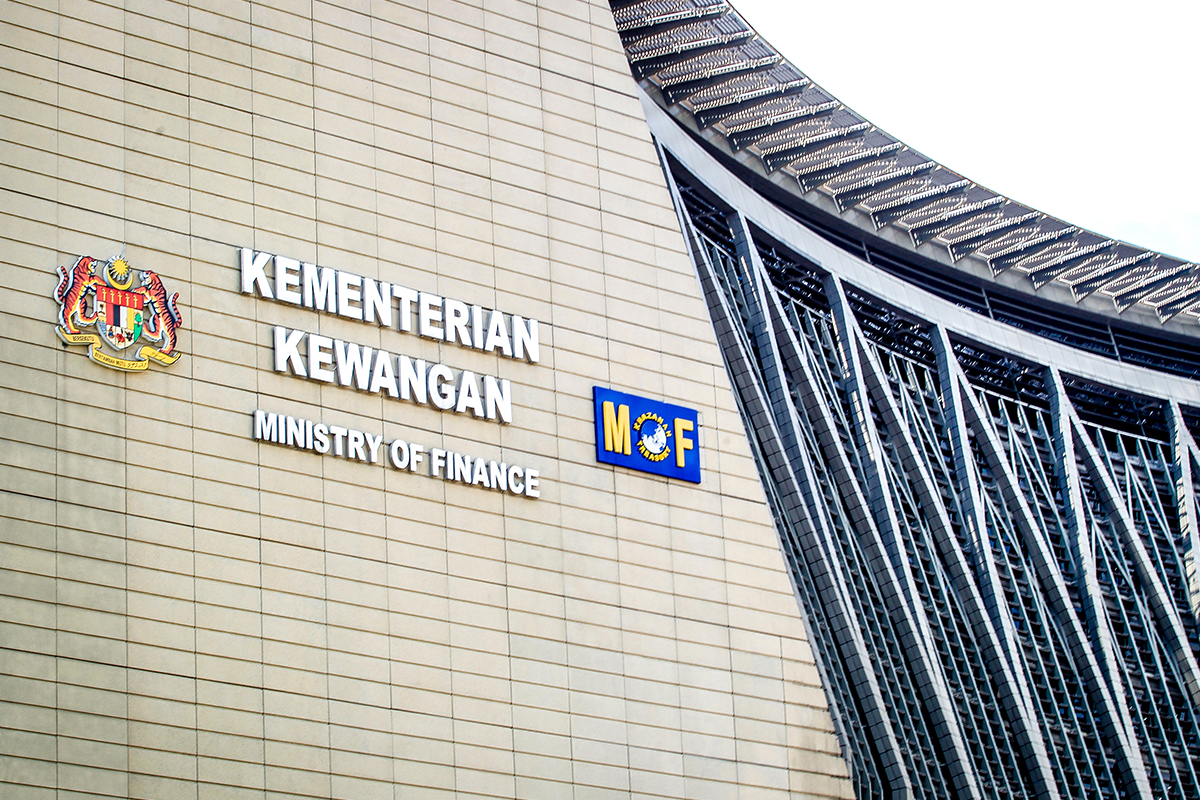
KUALA LUMPUR (Oct 10): Malaysia’s debt ratio could surge to almost 97% of gross domestic product (GDP) if government-linked guarantees materialise, according to stress tests in the Ministry of Finance’s (MOF) Fiscal Outlook 2026 report, although baseline projections show a gradual improvement in the country’s debt trajectory.
Under the baseline scenario, the Debt Sustainability Analysis (DSA) projects the federal government’s debt-to-GDP ratio easing from 65.8% in 2026 to about 60% by 2030, taking into account fiscal consolidation and the implementation of the Public Finance and Fiscal Responsibility Act 2023 (Act 850).
The forecast assumes stable economic growth, moderate inflation and adherence to fiscal rules that cap overall debt below 60% of GDP and the fiscal deficit at 3% over the medium term.
However, the ministry’s stress tests show that Malaysia’s fiscal position would weaken significantly under adverse shocks. A contingent-liability shock, reflecting the crystallisation of government guarantees or other off-budget obligations, could push the debt ratio to 96.7% of GDP in 2027.
“This skyrocketing ratio reflects the debt-scarring effect of additional borrowings to fulfil these obligations,” the report stated.
Meanwhile, a combined macroeconomic and fiscal shock — assuming a scenario similar to the pandemic period, when growth contracted sharply and fiscal support was expanded — could raise the debt ratio to around 88% of GDP.
The report noted that such a scenario could “amplify financial and macroeconomic pressures, as well as accelerate debt accumulation.”
“Without adequate fiscal space, well-targeted and coordinated mitigation measures, such an adverse path would present significant risks to fiscal and economic stability,” it added.
The MOF said these scenarios underscore the importance of decisive government action, where efforts to strengthen fiscal discipline and enhance debt management serve as safeguards in containing this risk and maintaining overall debt sustainability.
As at June 2025, public-sector debt rose 4.2% to RM1.73 trillion, or 85.8% of GDP, compared with RM1.66 trillion, or 85.6% of GDP, at the end of 2024. Public-sector debt comprises federal government debt, government guarantees and borrowings by non-financial public corporations.
The report also cited the International Monetary Fund (IMF)’s 2025 Article IV consultation, which assessed Malaysia’s risk of sovereign stress as “moderate”.
The IMF noted that while fiscal reforms and a deep domestic market support stability, vulnerabilities are amplified by large contingent liabilities, particularly those stemming from government guarantees, state-owned enterprises and public-private partnerships.
To mitigate these risks, the MOF said the government will continue to implement fiscal reforms initiatives to provide adequate fiscal space as well as enhance effective debt management and borrowing strategies to achieve long-term debt sustainability.
It added that maintaining debt sustainability will depend on enhancing fiscal buffers, improving transparency of liability commitments and strengthening the resilience of domestic capital markets.