

KUALA LUMPUR (Oct 10): The government is making a big cut to its agriculture allocation, as it shifts development focus to areas with higher economic impact. Allocations are also cut for education and training, albeit at smaller degrees, as well as security.
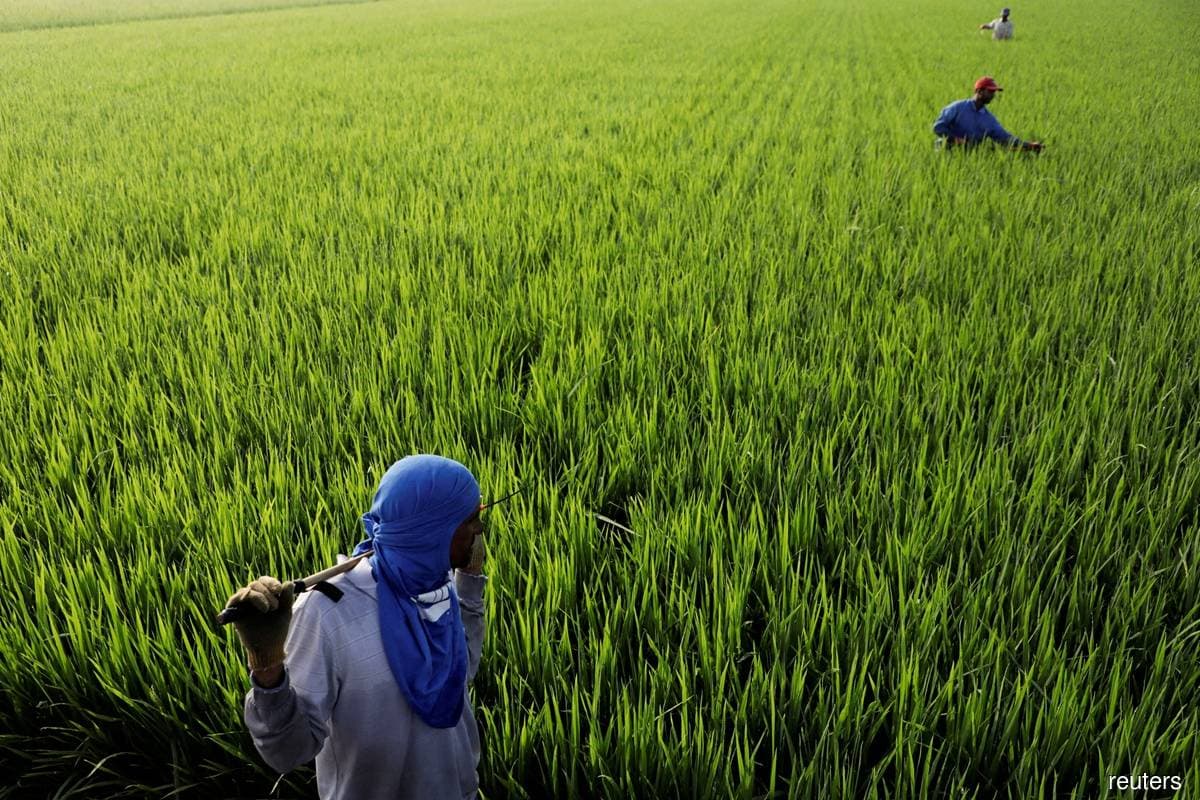
According to the Fiscal Outlook and Federal Government Revenue Estimates report, development expenditure (devex) for the agriculture sector will see a sharp 81.3% fall to just RM551 million for 2026, down from a revised estimate of RM2.94 billion in 2025.
This is the lowest allocation for agriculture and the steepest annual decline for the sub-sector over at least the last 11 years, based on data compiled by The Edge.
The education and training sector is estimated to have its allocation trimmed by 1.7% to RM14.45 billion in 2026, from a revised forecast of RM14.71 billion for this year. Allocation for 2025 was 16.8% higher from 2024’s RM12.59 billion.

Meanwhile, the security sector’s devex allocation will ease 1% to RM11.74 billion next year, from RM11.86 billion this year.
Despite these spending cuts, total devex for 2026 stands at RM81 billion, up 1.8% from the revised RM80 billion projected this year. But as a share of gross domestic product (GDP), devex will fall to 3.8% from 4% in 2025.
“As stipulated under the Fiscal Responsibility Act 2003, the government is steadfast in providing sufficient resources of at least 3% of GDP to support development infrastructure, with priorities given to initiatives that generate high economic impact, sustain economic growth momentum and enhance quality of life,” the MOF said.
Priority areas
The government is prioritising development spending next year on the transport, trade and industry, energy and public utilities, environment, and housing sub-sectors.

Transport continues to account for the largest share in allocation at RM17.53 billion, up 7.1% from this year, to boost nationwide connectivity and alleviate traffic congestion, the MOF said.
“New projects include road construction from Kalabakan to Simanggaris, connecting Malaysia and Indonesia borders; development of the Air Traffic Control Centre in Kota Kinabalu, Sabah; and construction of two interchanges on the North-South Expressway in Nilai, Negeri Sembilan and Kerian, Perak,” it added.
Trade and industry will see its allocation rise 15.9% to RM3.03 billion to support strategic initiatives including the flagship project in the special tourism investment zone, Prosper Growth Financing Programme, and High Impact Project Fund.
“In addition, financial resources will be directed towards infrastructure developments, such as the Perak Halal Industrial Park, as well as the air cargo logistics and industry warehouse hub in Pulau Pinang.”
As for the environment sub-sector, its allocation is projected to see a 27.1% rise to RM3.82 billion. Included in this are funds for flood mitigation projects in, among others, Kubang Pasu, Kedah, Kuala Nerus, Terengganu, and Segamat, Johor, as well as a new drainage system in Kota Bharu, Kelantan.
Housing, meanwhile, will have its allocation increased by 10.5% to RM1.46 billion to finance existing and new projects, including projects under Program Bantuan Rumah and Program Mesra Rakyat.
Allocation for energy and public utilities will rise 12.9% to RM2.79 billion.