

PUTRAJAYA (Oct 9): The appellate court has upheld that income earned as a company's independent non-executive director is to be taxed as business income, and not employment income.
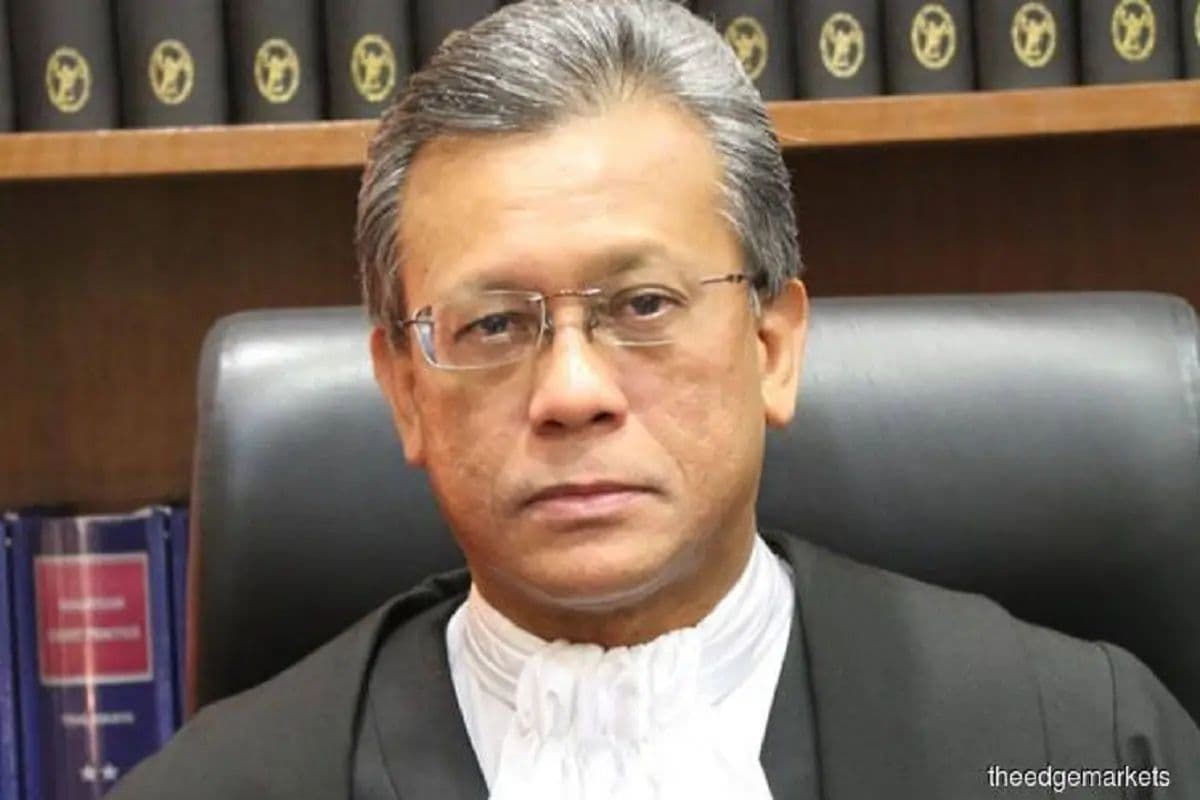
In unanimously dismissing the Inland Revenue Board (IRB)'s appeal against Datuk Oh Chong Peng, a three-member Court of Appeal (COA) panel led by judge Datuk Collin Lawrence Sequerah said that as the law stands, there is a clear demarcation between an executive director and an independent non-executive director, and that the independent director's fees should be treated as a business income.
The other members on the panel were COA judges Datuk Seri Mohd Firuz Jaffril and Datuk Nadzarin Wok Nordin.
IRB's appeal on Thursday was over a sum of RM398,374 as additional taxes, for the assessment years from 2002 to 2012. In gist, Oh had paid his taxes, but the IRB contended that the remuneration fell under a different category and therefore was subjected to a higher tax rate.
During this period, Oh, a chartered accountant by training, had served on the board of 17 companies, some of which included Alliance Financial Group Berhad, AmBank Berhad, British American Tobacco (Malaysia) Berhad, IJM Corporation Berhad, Malayan Flour Mills Berhad and UEM Land Berhad.
Oh had reported this income as gains from a business, as he had transferred his independent director's remuneration to two management companies — OCP Holding Sdn Bhd and Garzania Sdn Bhd.
Thursday's appeal came after the High Court in February 2024 reversed the Special Commissioners of Income Tax (SCIT)'s decision in Oh's case. The SCIT is an independent body which hears tax-related appeals.
Among others, presiding High Court judge Datuk Ahmad Kamal Shahid had said that the SCIT had erred when it concluded that the definition of “independent director” set by Bursa Malaysia was mere guideline, and that Oh came under the category of "employee" under the Income Tax Act (ITA) 1967.
The High Court also ruled that a mere disagreement over which category the tax would fall under did not mean that there was negligence on Oh's part. The court found that the IRB had failed to show a legal or factual basis to impose any penalty on Oh.
IRB asks how is being a director a business, lawyer points out directors may not be remunerated
Thursday's proceedings saw a lively discussion between the panel judges and Senior Revenue Counsel (SRC) Ahmad Isyak Mohd Hassan, who appeared for IRB, and Oh's lead counsel S Saravana Kumar.
Ahmad Isyak argued that in general, an independent director is not an employee of a company; however, according to the ITA, he/she would be subjected to taxation by virtue of the "employment income".
He went on to ask how the independent directors' remuneration falls under "business income", when being a director is not a business.
"The remuneration was paid to him for his own services. He transferred the income from the 17 companies to two management companies. He declared it as business income, which was subjected to a much lower rate.
"That is a personal arrangement. The question is whether [the monies] were the income of the company?
"Can a company have a business of providing a directorship? That is very peculiar. A director is appointed by the company in his personal capacity. A company can hold shares, but it cannot become a director," Ahmad Isyak argued.
Saravana however rebutted that as with his client's previous testimony, Oh had been declaring the remuneration as business income and it had been accepted by the IRB.
He also said that Oh had been an independent director of some companies that fell under the purview of the Finance Ministry. Saravana said that his client would surely be vetted for these roles, and anything amiss would have been flagged.
He added that there are cases where non-executive directors may not be remunerated as it was subject to approval during the company's Annual General Meeting (AGM). He also added that the remunerations were “gains” and therefore ought to be taxed as gains and profits from business.
Ahmad Isyak was assisted by SRC Marina Ibrahim, while Saravana was assisted by Felicia Wong.
On Thursday, the court also made an order for the IRB to provide Oh with a refund for the additional taxes that Oh had paid — within three months of this ruling.