

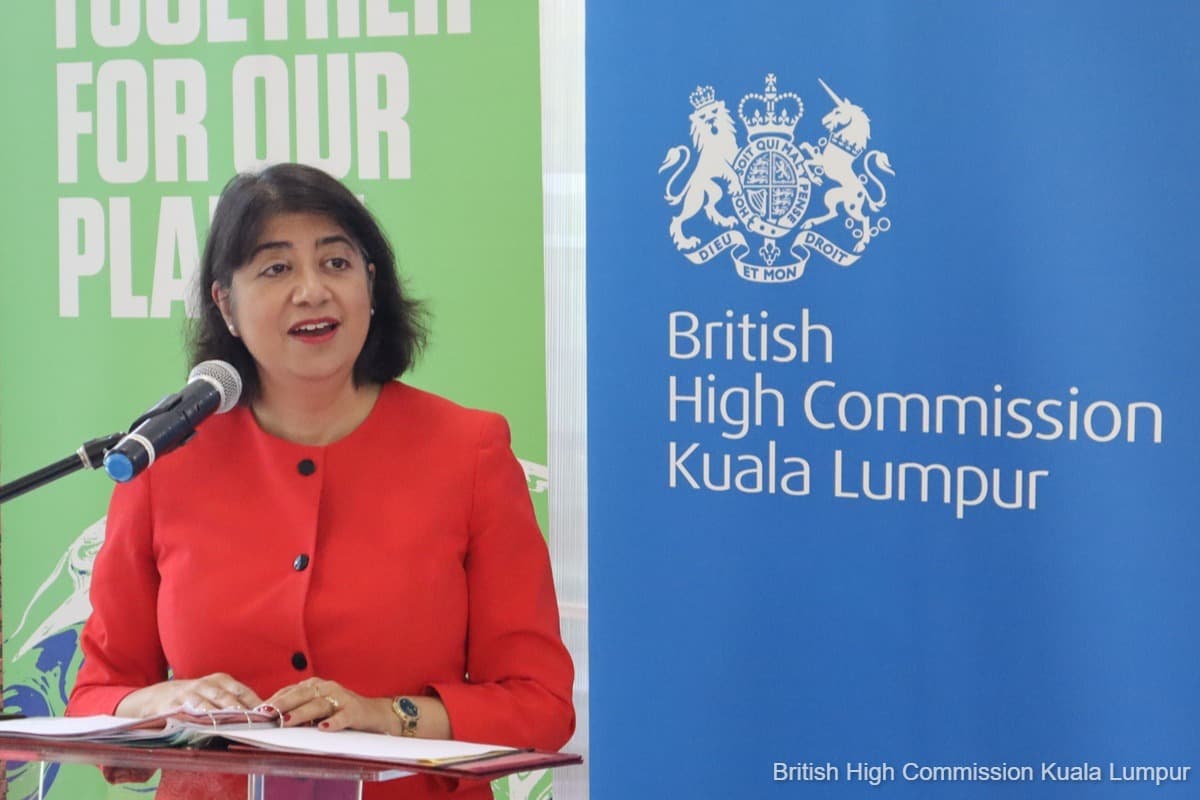
KUALA LUMPUR (Oct 7): The United Kingdom Minister for the Indo Pacific Seema Malhotra launched two new climate adaptation initiatives that the UK is funding in Malaysia on Monday (Oct 6).
The two initiatives, led by the United Nations Development Programme (UNDP) Malaysia and Monash University Malaysia, will promote investments and finance into climate-related projects and help local authorities in Selangor make informed decisions about water, energy and food consumption.
This UK-Malaysia partnership is part of the UK’s commitment to support climate resilience across Asia under its Climate Action for a Resilient Asia (Cara) programme.
“Our countries have a long history of working together on the climate and the environment, and today, we are taking that partnership further, whether it’s [to address] heavier floods, longer droughts, or the impacts of climate change and extreme weather, which is increasing in its intensity and frequency with each passing year,” said Malhotra at the launch event held at the Forest Learning Centre in Kuala Lumpur.
“These projects show what adaptation really means, [which is] not just building infrastructure, but empowering people with the knowledge, tools and resources that they need to thrive,” she said.
UNDP Malaysia head of sustainable finance and innovation Chong Yin Wei highlighted that around RM300 billion is needed in Malaysia over the next 50 years to adapt to climate change, and public finance cannot fill this gap. Private capital is needed. However, this is hampered by challenges to measure impact and collect relevant data.
UNDP Malaysia’s project addresses this problem by setting up a technical assistance facility for financial institutions and corporates to issue green, social and sustainability bonds or sukuk, or other types of instruments that can bring financing into adaptation projects, said Chong.
“The support includes framework designs, project selection, and alignment of standards, as well as post-issuance reporting.”
The project by Monash University Malaysia, meanwhile, aims to build climate-resilient communities through an integrated water-energy-food-environment (Wefe) model, done in collaboration with the Selangor Climate Adaptation Centre.
The model is meant to help local authorities understand how changes in one sector will impact others, and identify the most effective interventions.
“For example, if we’re looking to increase food production, then we need to start thinking about how much water and energy we will need, and also, the potential green areas that need to be cleared to make way for more agricultural land, and its environmental impacts,” said Izni Zahidi, senior lecturer at Monash University Malaysia.