

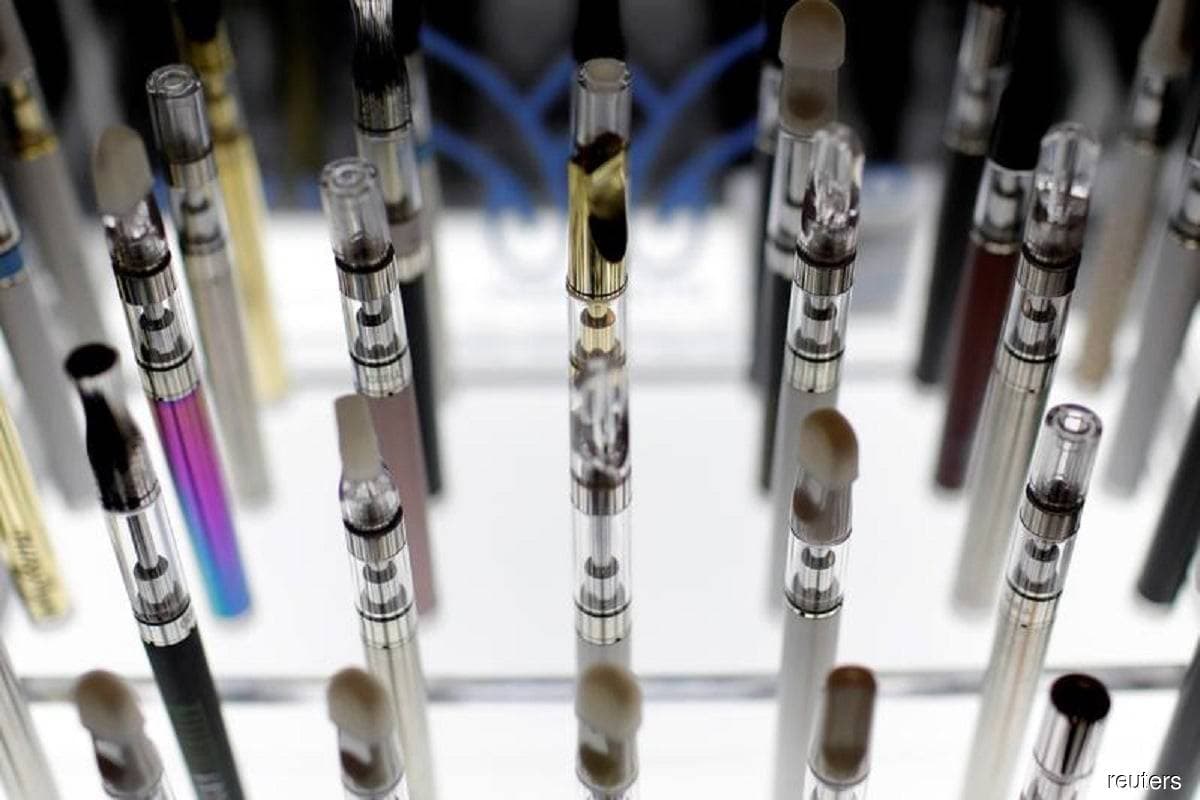
KUALA LUMPUR (Oct 7): The Ministry of Health (MOH) is proposing to raise the excise duty on vape liquids from 40 sen to RM4 per millilitre (ml), in what could amount to a tenfold tax increase ahead of the government’s plan to fully ban electronic cigarettes and vaping products nationwide.
Deputy Health Minister Lukanisman Awang Sauni told the Dewan Rakyat that the proposal has been submitted to the Ministry of Finance (MOF) for consideration, just days before Budget 2026 is tabled this Friday.
“This is the ministry’s recommendation to the MOF for review and approval,” he said during the Dewan Rakyat’s oral question-and-answer session on Tuesday.
Explaining the rationale, Lukanisman said one millilitre of vape liquid produces about 100 puffs, while a standard pack of 20 cigarettes is equivalent to 200 puffs. Currently, both nicotine and non-nicotine vape liquids are taxed at 40 sen per ml, far below the RM8 excise per cigarette pack (or 40 sen per stick).
“We are recommending that the vape excise rate be raised from 40 sen to RM4 per ml,” he said.
Currently, a 10% ad valorem excise duty also applies to electronic and non-electronic smoking devices, effective since January 2021 for non-nicotine liquids and extended to nicotine liquids in May 2023.
The disparity, he noted, means that vape users pay significantly less tax per milligramme of nicotine compared to cigarette smokers.
Lukanisman was responding to Datuk Wan Saifulruddin Wan Jan (PN–Tasek Gelugor), who argued that the gap in taxation encourages smokers to switch to vaping rather than quit altogether.
“Currently, one pack of cigarettes equals about 2ml of vape liquid, but the tax on vape nicotine is only around 10% of cigarette tax. This disparity creates a large price gap,” Wan Saiful said, also urging the government to introduce a price floor for vape products similar to conventional cigarettes.
The proposed tax hike forms part of a broader “pro-health tax” framework under the 13th Malaysia Plan (13MP), which aims to extend higher excise duties to tobacco, vape, and alcohol products. The pro-health tax, originally applied to sugary drinks, is intended to discourage unhealthy consumption and curb rising healthcare costs.
According to Lukanisman, in 2024 alone, the government collected RM111 million in vape-related excise revenue, but treatment costs for vaping-related illnesses (including EVALI) reached RM223 million.

“If this trend continues, treatment costs are expected to exceed RM300 million to RM400 million by 2030,” he said, citing a Regulatory Impact Analysis (RIA) study conducted by MOH.
Industry pushes back: 'RM4 per ml unrealistic'
The proposed tax increase, however, has drawn concern from industry players, who argue that a tenfold hike could hurt legitimate operators while failing to curb illicit trade.
Malaysian Vape Chamber of Commerce (MVCC) secretary-general Ridhwan Rosli told The Edge Malaysia that the industry is proposing for a maximum rate of 80 sen per ml, which is five times lower than MOH's proposal of RM4, to ensure compliance and sustainability.
"A single-fold tax hike is already drastic in many ways. A tenfold is just sweeping the real issue under the rug," he said. "It seems like they are changing their policy every year while the previous policy is just about to take place".
Ridhwan also warned that extreme taxation could backfire, citing Singapore as an example where vaping prevalence rose from 3.9% to 5.2% between 2021 and 2023 despite an outright ban.
“As currently we are faced with a lot of new costs when it comes to going through the legal process of registration etc, it is sad that the legal industry players are being punished for the wrongs of illicit products,” he said.
"We’ve struggled to control drug abuse for decades, and now drugs are being used in vape devices. Making regulations is easy — can it be enforced?”
Nationwide ban
Lukanisman reiterated that the MOH is moving towards a complete prohibition on electronic cigarettes and vape products, with a policy paper to be presented to the Cabinet later this year for approval.
“The Health Ministry is now moving towards a full ban on e-cigarettes and vape products. The proposal will be tabled to the Cabinet this year for policy endorsement,” he said. “The prohibition will be implemented in phases through enforcement, education, and community support.”
The proposal to ban vaping entirely is not new as it was first mooted under the Generational Endgame (GEG) initiative, which sought to prohibit the sale and use of tobacco and vape products to those born on or after Jan 1, 2007, creating a “tobacco-free generation”.
However, the GEG provision was dropped from the final Control of Smoking Products for Public Health Act 2024 (Act 852) due to constitutional concerns and legal challenges over age-based discrimination.
Lukanisman noted that Act 852, which came into force on Oct 1, 2025, now serves as the government’s comprehensive legal framework to regulate tobacco and vaping products.
“Although the Generational Endgame policy was not included, we are moving forward with Act 852, which takes a more aggressive approach, particularly in enforcement,” he said.
The Act covers registration, advertising, sale, packaging, labelling, price control, and the removal of all smoking-related products, including electronic cigarettes and vape liquids.
For more Parliament stories, click here.