

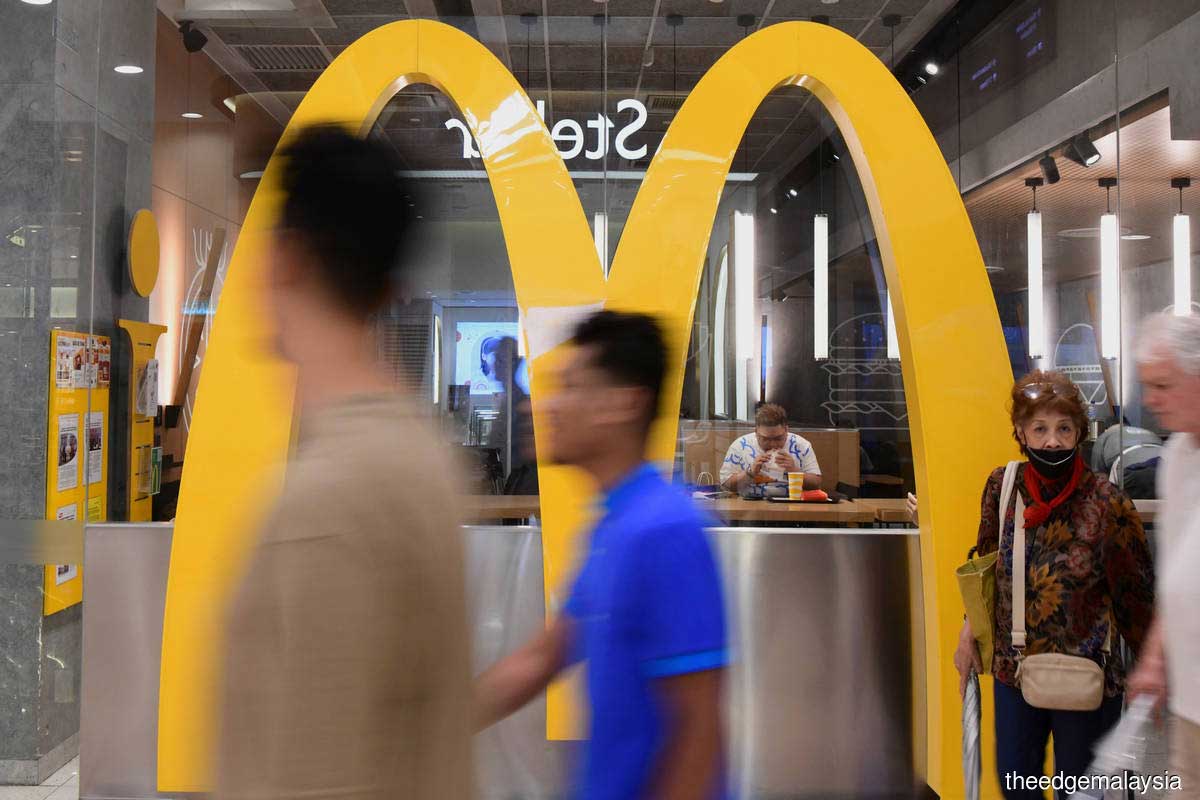
McDonald’s was seeking to set aside the Registrar of Trademarks’ decision on Feb 28, which had dismissed its opposition against the trademark registration for “Mc Curry” by Mc Spicy Curry House.
KUALA LUMPUR (Oct 7): The High Court on Tuesday has allowed the appeal by fast food chain McDonald’s Corporation to deregister the trademark obtained by Mc Spicy Curry House to have “Mc Curry” as its trademark.
Judicial Commissioner Datuk Edwin Paramjothy Michael Muniandy said the Registrar of Trademarks had fallen into an error of law by allowing the registration of the “Mc Curry” trademark.
“The Registrar of Trademarks had acted wrongly to allow the dismissal of McDonald’s Corporation’s opposition on a technicality, and this appeal ought to be allowed as the registrar fell into an error of the law.
“The registrar had applied a narrow test and allowed the trade in general (goods or products which may be similar) of the parties. Consequently, Section 14 and 19 of the Trademarks Act cannot be sustained as (Mc Curry) could deceive and cause confusion. The appeal by McDonald’s is allowed and the registration of the trademark number for Mc Spicy is refused registration,” Edwin Paramjothy said in proceedings online.
Section 14 of the Trademarks Act concerns the registration of trademarks, while Section 19 concerns the classification of goods and services.
Mc Spicy counsel Dr Shamsher Singh Thind opposed McDonald’s’ counsel Indran Shanmuganathan of Messrs Shearne Delamore, who sought costs of RM30,000 from Mc Spicy.
Shamsher, who only offered RM1,000 for costs, cited that his client is not likely to appeal, and that the fault lies on the Trademark Registrar, and his client should not be penalised for it.
However, Indran said courts have been allowing RM20,000 to RM30,000 costs in trademark disputes, and said Mc Spicy should not have opposed the suit.
In the end, Edwin Paramjothy ordered Mc Spicy to pay costs of RM10,000.
This trademark suit is different from the 2009 case between McDonald’s and McCurry Restaurant, in which the international fast food chain lost all the way to the Federal Court, as that case had concerned passing off.
“Passing off” is a common law tort where one party allegedly misrepresents their goods or services as belonging to another, while this latest case concerns trademark.
Suit filed in May
According to a file search conducted by The Edge, McDonald’s had filed the suit on May 27 this year, where it named B Awtar Singh Balwant Singh — trading as Mc Spicy Curry House — for the Mc Curry trademark.
McDonald’s was seeking to set aside the Registrar of Trademarks’ decision on Feb 28 this year, which had dismissed the McDonald’s opposition against the registration of Mc Spicy’s trademark application No. 03005153.
It also wanted the trademark application No. 03005153 to be refused registration, and for costs of the action.
According to the affidavit in support by McDonald’s’ senior director of legal & franchising at Gerbang Alaf Restaurants Sdn Bhd, the local licensee of the fast food chain claimed that the Mc Spicy trademark application was made in 2003, and was gazetted on May 10, 2007, and upon publication, McDonald’s had opposed the impending registration.
The grounds for its opposition was that the fast food chain had been operating 30,000 restaurants in more than 100 countries and the use of the prefix Mc or Mac are used in its products and services. It claimed that it had obtained trademark registrations in Malaysia and internationally for the use of Mc or Mac.
Malaysia opened its first McDonald’s outlet in 1982 and claimed to have a renowned and favourable reputation in this country and internationally. The fast-food chain said it had also obtained numerous decisions in various jurisdictions upholding its rights and the McDonald’s family of marks (a group of trademarks that are connected by a shared common element).
McDonald’s said Mc Spicy’s use of the prefix Mc as a food descriptor in the defendant’s trademark on anchovy, preserve beans, butter, potato chips, coconut, corn oil, dates, edible bird’s nests, edible oils, edible fats, fish fillets, frozen fruits, jams, soups meat, tofu and others, are likely to cause confusion or deceive members of the public that somehow the defendant’s product are associated with the fast-food chain (McDonald’s).
In reply, Awtar Singh denied that the prefix Mc would cause confusion and said that if McDonald’s had the exclusive rights of the prefix Mc or Mac, it should not need to register every trademark employing the prefix Mc.
He further contended that its products would be marketed in supermarkets and retail markets, and not restaurants, and hence there is no confusion to McDonald’s’ products.
Read also:
Counsel: McDonald’s tussle with McCurry