

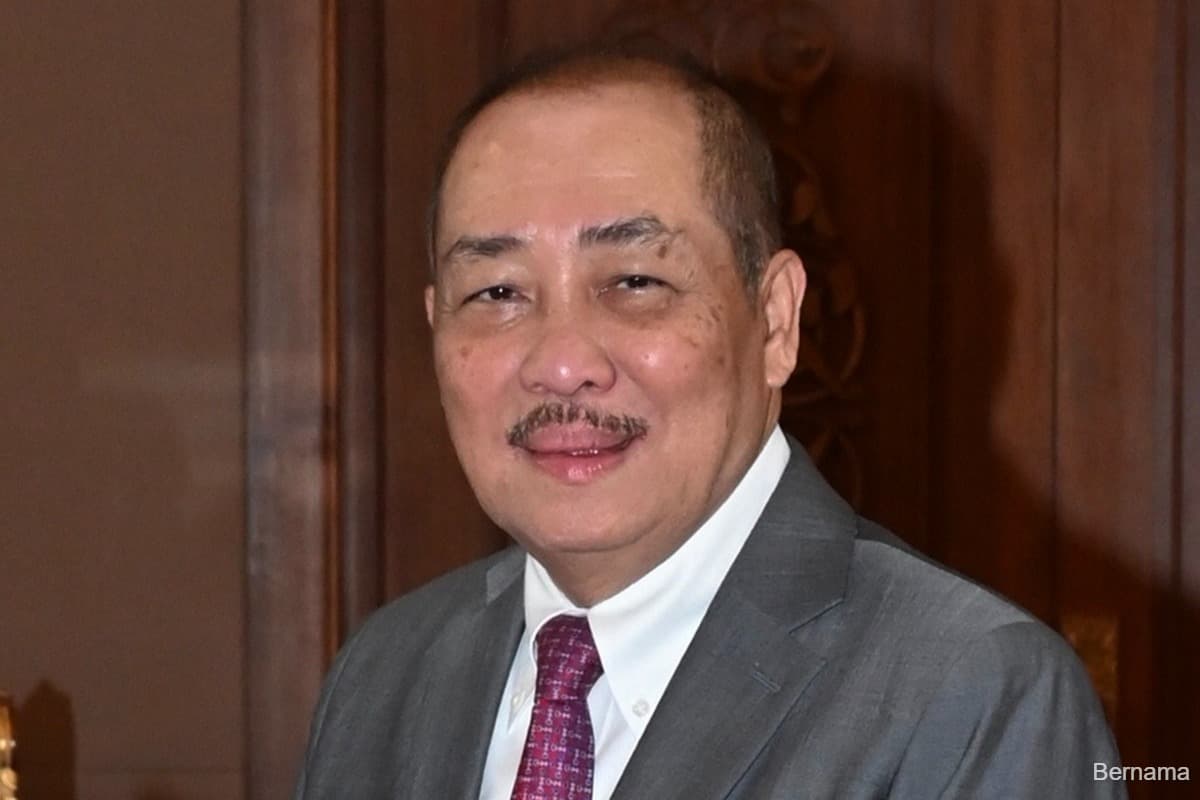
KUALA LUMPUR (Oct 6): The 16th Sabah state assembly was dissolved on Monday, said Chief Minister Datuk Seri Hajiji Noor at a televised press conference in Kota Kinabalu.
Hajiji said he met Sabah governor Tun Musa Aman on Monday morning, who in turn advised for the dissolution as the current state assembly nears the end of its five-year term, said Hajiji.
The dissolution will pave the way for the 17th Sabah state election to appoint 73 state assembly members, to be held within 60 days by Dec 5.
Hajiji, who has said this could be his last election, leads the ruling Gabungan Rakyat Sabah (GRS) coalition, which is in government alongside Pakatan Harapan (PH).
The upcoming election is expected to be another messy round of multi-cornered fights, extending the significant political manoeuvres seen over the past five years in one of the more politically unpredictable states in the country.
Changing sides
The last state election, held on Sept 26, 2020, saw GRS, together with Perikatan Nasional (PN) and Barisan Nasional (BN), win 38 of 73 seats to defeat the incumbent Warisan-PH government.

Hajiji, initially from PN’s Parti Pribumi Bersatu Malaysia (Bersatu), was sworn in as chief minister three days later.
When PN failed to retain its position as the federal government after the 2022 general election, Hajiji led Bersatu leaders in the state to quit the party and become direct members of GRS, with Bersatu formally expelled from the coalition.
Hajiji maintained his position as GRS received support from both BN and PH.
However, in January 2023, BN withdrew support for GRS in what was known as the ‘Kinabalu Move’, although the crisis, seen as an attempt to take down the state government, was thwarted following approval of anti-hopping law at state level four months later in May.
While Hajiji has affirmed that GRS and PH will maintain their electoral pact come the state election, BN’s Umno has expressed intentions to contest against GRS in certain seats.
Today, GRS comprises Parti Gagasan Rakyat Sabah (PGRS), Parti Bersatu Sabah (PBS), United Sabah National Organisation (USNO), Parti Cinta Sabah (PCS), Parti Harapan Rakyat Sabah (PHRS) and the Liberal Democratic Party (LDP).
Ahead of the dissolution, Parti Solidariti Tanah Airku (STAR) and Sabah Progressive Party (SAPP) announced their exit from GRS. Both parties have insisted on contesting under their own logos, potentially placing them in direct competition with PH.
However, the state's main opposition bloc Warisan, under president Datuk Seri Shafie Apdal, will go it alone, rejecting speculation about potential alliances or “third force” collaborations.
Meanwhile, PN, which includes Bersatu and PAS and seen as a peninsula-led coalition, has yet to reveal its Sabahan chief minister candidate.
Prior to the dissolution, the ruling coalition held 65 of the 79 seats in the state assembly. GRS controlled 35 seats, PH seven, Barisan Nasional 12, STAR six, KDM one, SAPP one, and PAS one, while Warisan has 14 seats and two seats are currently vacant. In Sabah, six of the 79 assemblypersons can be appointed by the governor.
Hajiji pledges ‘to guide Sabah through its next phase’
Analysts are closely watching the contest, noting that the outcome could have implications for the federal government, at a time when the narrative is growing for a stronger political unity in East Malaysia, in pursuit of what has been described as a fairer sharing of national resources with the peninsula. Sabah, one of Malaysia's most scenic states and rich in oil and gas, has been playing catch-up with other regions in terms of economic growth.
The election also comes amid a corruption scandal implicating GRS, linked to alleged bribery over mineral exploration licences. Earlier in July, Sabah Assistant Industrial Development and Entrepreneurship Minister Andi Suryady Bandy and Sindumin assemblyman Dr Yusof Yacob were charged with receiving bribes related to mineral prospecting licence applications. Both have pleaded not guilty and will face trial.
In Monday's press conference, Hajiji said his administration under GRS has devoted itself to advancing development across Sabah, pointing to the Sabah Maju Jaya initiative as a cornerstone of its efforts.
He noted that the state government has implemented concrete measures to address long-standing issues, particularly in critical infrastructure, water supply, and electricity provision.
Hajiji also said Sabah’s economy has strengthened over the past five years, with foreign investments generating job opportunities, while his administration has worked to improve the social wellbeing of all communities.
“While we have made significant strides, much remains to be done. Emerging challenges call for decisive action, and we are prepared to guide Sabah through its next phase,” he said.
“It is my sincere hope that the outcome of the election will amplify the people’s voice, safeguard stability and security, and ensure continued progress for our beloved Sabah,” he added.
With the dissolution, the Election Commission is expected to convene soon to decide on the nomination and polling dates.