

This article first appeared in City & Country, The Edge Malaysia Weekly on October 6, 2025 - October 12, 2025
It seems only fitting that a journey to explore Bukit Jalil begins at the iconic Bukit Jalil National Stadium. On a sunny Saturday afternoon, the stadium’s grounds are bursting with activity, with scores of people in matching gear preparing for a fun run scheduled for later in the day. While sports events are the primary draw, the stadium is also a venue of choice for major concerts and entertainment shows.
Bukit Jalil’s transformation began when the nation was chosen to host the 1998 Commonwealth Games. Back then, the area was largely undeveloped and covered with rubber plantations. Today, it is a testament to long-term planning and catalytic infrastructure investment.
“As part of the preparations [for the 1998 Commonwealth Games], Bukit Jalil was chosen as the site for the National Sports Complex, the largest of its kind in Southeast Asia. This monumental project included the construction of the Bukit Jalil National Stadium, Putra Indoor Stadium (now known as the Axiata Arena), National Aquatic Centre, National Hockey Stadium and other world-class sports facilities,” says Laurelcap Sdn Bhd executive director Stanley Toh.
To support this development, significant infrastructure projects were introduced to improve the area’s accessibility, he adds. “The Sri Petaling LRT Line was extended to serve Bukit Jalil, while the construction of highways such as the Bukit Jalil Highway and Maju Expressway (MEX), and improved access to the Shah Alam Expressway (Kesas), further enhanced connectivity.”
Bukit Jalil has continued to evolve since. In 2017, the National Sports Complex was rebranded as KL Sports City, with Malaysian Resources Corp Bhd (KL:MRCB) as the master developer. The complex underwent several rounds of rejuvenation to coincide with the Southeast Asian Games that year.
The rejuvenation was expected to cost RM1.6 billion. In return, the government would repay MRCB with three parcels of leasehold land totalling 30.8 ha (308,840 sq m) near the sports complex.
The first parcel, measuring 97,720 sq m, is a recreational park while the other two, measuring 37,320 sq m and 173,800 sq m, are vacant land. These parcels are to be used for the Bukit Jalil Sentral project. Valued at RM21 billion, the project will be spearheaded by MRCB, which in early September this year acquired the Employees Provident Fund’s 80% stake in the project, ending the joint venture.
The project was initially envisioned as a mixed-use development comprising office towers, hotels, retail shops, serviced apartments and residential towers, but plans stalled due to Covid 19-related disruptions and cost escalations.
MRCB said in a media statement in early September that with the buyout, it would reassess the project by conducting feasibility and environmental studies. The site could serve as an enlarged hub for MRANTI Park, which is located 1.9km away, or possibly house data centres.
“These changes effectively integrated Bukit Jalil into Greater Kuala Lumpur, triggering its transformation from a peripheral location to a nationally significant zone,” says Toh.

Catalysing growth
The presence of world-class infrastructure naturally spurred a wave of commercial and residential developments. One of the earliest was Vista Komanwel condominiums, initially built as athletes’ accommodation for the Commonwealth Games. Today, the condominiums are home to many students of the nearby IMU University and Asia Pacific University of Technology & Innovation (APU).
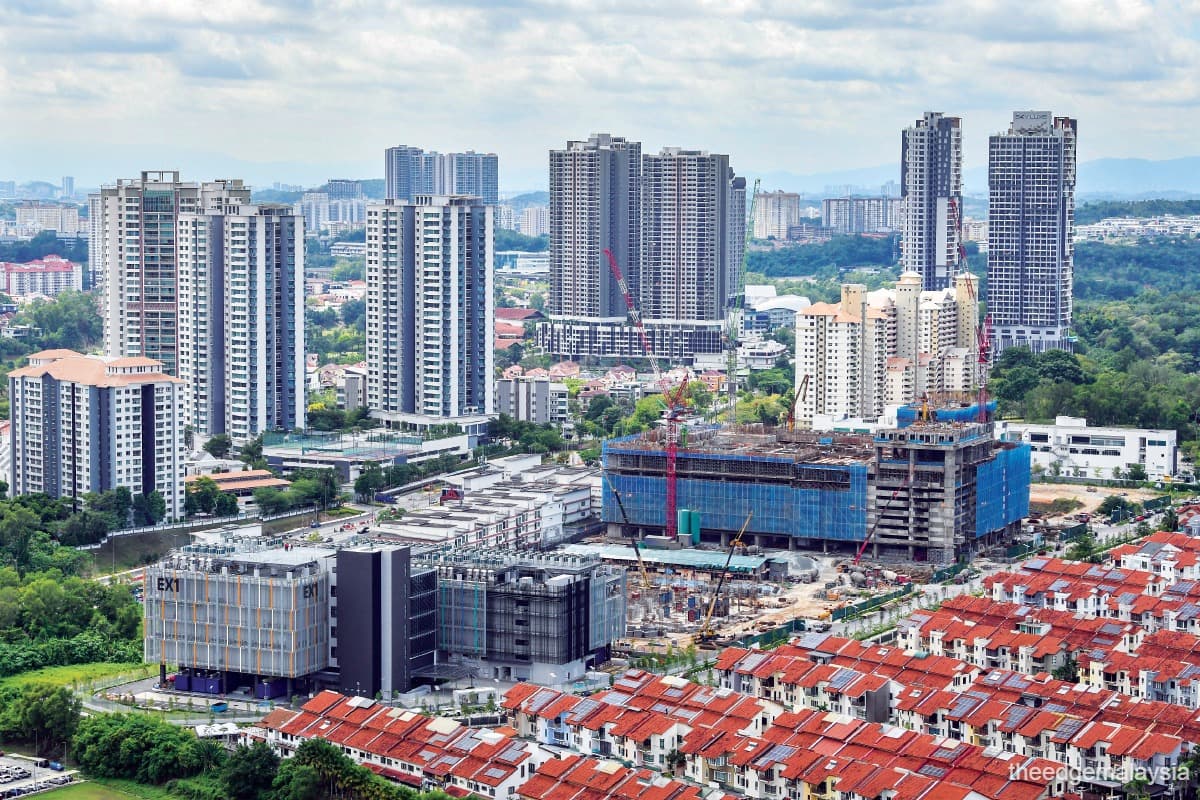
Following the development of Vista Komanwel, other housing estates and high-rise projects were built in Bukit Jalil. They included The Z Residence by Trinity Group in 2014, The Rainz by Exsim Group in 2015 and The Park Sky Residence by Malton Bhd (KL:MALTON) in 2019, which catered to the growing population of middle-class professionals and young families.
“There is also the 50-acre integrated Bukit Jalil City development spearheaded by Malton. Launched in 2015, the project featured a blend of residential and commercial spaces, including the prominent Pavilion Bukit Jalil mall, which further contributed to the vibrancy of the area,” says Henry Butcher Malaysia director of corporate real estate Long Shi Chuen.
In April this year, Malton launched high-rise serviced residence development Park Green Pavilion Bukit Jalil, marking the final phase of Bukit Jalil City.
“Today, Bukit Jalil has grown to become a thriving community popular with the middle class and young professionals, thanks to the wide range of amenities available and the modern infrastructure serving the area. The ongoing developments, which are of a higher quality, have further elevated Bukit Jalil’s popularity and status as a major urban centre on the outskirts of Kuala Lumpur,” says Long.

Retail development has also been central to Bukit Jalil’s rise. “In recent years, the completion of Pavilion Bukit Jalil and the shoplots around the shopping mall has attracted numerous business operators too. The mall has now become a popular destination for [people in] the locality as well as the neighbouring Sri Petaling, Overseas Union Garden (OUG), Puchong and Seri Kembangan,” he adds.
“This mall introduced luxury retail, dining and entertainment experiences to the township, drawing both local and regional visitors. Adjacent to the mall, mixed-use developments such as Bukit Jalil City, The Park Sky Residence and various serviced apartments introduced a new paradigm of urban living. These projects offered integrated environments combining residential, commercial and leisure elements. As a result, Bukit Jalil evolved into a self-sustaining urban centre within Kuala Lumpur.”
Besides that, the establishment of Technology Park Malaysia (TPM) has positioned Bukit Jalil as a hub for technology and innovation. Established in 1996 as a science park, TPM serves as a hub for start-ups, research institutions and tech-related companies focused on software development, engineering, green technology and biotechnology.
In 2021, TPM was rebranded as MRANTI Park. “Recent government efforts to reposition MRANTI Park as a digital innovation hub under the Malaysia Digital Economy Blueprint (MyDIGITAL) are expected to attract even more players in the tech ecosystem. This has led to a growing demand for office space, R&D labs, co-working hubs and digital services in the area,” says Toh.
“The spillover from MRANTI Park into Bukit Jalil supports the growth of IT firms, digital marketers, software developers and support services to create a tech-friendly environment within a suburban setting.”
Education continues to play a vital role in the community, contributing to an influx of students into the area. In addition to IMU University, APU has a campus in MRANTI Park, while several international schools, including Tzu Chi International School and Stellaire International, are located in Bukit Jalil.

Standing apart from its neighbours
Compared with neighbouring townships such as Sri Petaling and OUG, which were developed in the 1970s and 1980s, Bukit Jalil has a more modern and integrated urban environment.
“One of the defining elements of Bukit Jalil’s identity is its role as Malaysia’s national sports and events hub. No other surrounding township shares this scale or variety of recreational and event infrastructure,” says Toh.
“The presence of such venues keeps Bukit Jalil in the national spotlight and continually generates economic activity and visitor traffic, benefiting local businesses and enhancing its vibrancy.”
Another key differentiator is its green space. “In a city where green spaces are becoming increasingly rare, Bukit Jalil offers the expansive Bukit Jalil Recreational Park. Spanning more than 80 acres, the park is a haven for joggers, families and nature lovers, featuring themed gardens, lakes and outdoor facilities,” he says, adding that neighbouring areas such as Seri Kembangan and Bandar Kinrara, while pleasant to live in, do not offer the same scale of public amenities.
“The integration of both Bukit Jalil Golf & Country Resort and public parks gives Bukit Jalil a unique blend of exclusivity and community accessibility,” he adds.
Long-time resident Emily S, who has lived in the area for 12 years, appreciates the convenience. “I have been renting here since my student days. Plus, there are many eateries and places for me to do my grocery shopping here. There’s even a free shuttle bus to Pavilion Bukit Jalil from the Awan Besar LRT station. So yes, it’s a convenient place to live,” she says.
“There have been more residential high-rise developments over the years and this has improved the walkability of the area where I live. I have noticed more people bringing their pets out for walks too.”

Property market trends
Bukit Jalil’s property market has grown steadily.
“The residential market in Bukit Jalil has shown consistent performance, with subsale prices of high-rise units rising from RM550-RM650 psf in 2015-2017 to RM700-RM850 psf by 2023. Some premium offerings such as The Park Sky Residence exceed RM900 psf. Landed properties in gated and guarded enclaves or the golf resort are now transacting above RM2.5 million,” says Toh.
“Rental yields for condominium units typically range between 3.5% and 5%, driven by demand from university students, professionals and short-stay guests attending events at the sports complex. However, recent launches have added supply to the market, putting some downward pressure on rents and increasing vacancy periods, especially for newer, higher-end units.”
According to Toh, commercial developments such as Jalil Link and Aurora Place drew strong interest for shoplots and office spaces in the early 2010s.
However, the segment softened post-pandemic due to high supply and changing retail trends. He notes that many retail lots near Pavilion Bukit Jalil remain in the early stage of tenancy take-up while office units have been affected by the co-working and hybrid work models.
“As for rental rates, ground floor retail units range from RM5 to RM12 psf, depending on the location, while the upper-floor spaces have asking rents of RM2.50 to RM4.50 psf,” notes Toh.
Traffic and urban challenges
Rapid growth has come with drawbacks, chief among which is traffic congestion.
“One of the most pressing challenges in Bukit Jalil is the increasing traffic congestion, particularly during peak hours and on weekends. Major roads such as Jalan Jalil Perkasa and the Bukit Jalil Highway experience regular bottlenecks, worsened by limited alternative routes and rising private vehicle ownership,” says Toh.
Even though the area is served by the LRT Sri Petaling Line, connectivity to the train station remains limited due to issues such as last-mile connectivity, insufficient feeder services and low walkability in the vicinity, he says. As such, people prefer driving to taking public transport.
Long concurs, noting that rapid urbanisation in Bukit Jalil, along with the growing population, exacerbates the congestion issue. “The increase in vehicular traffic due to the development of high-rise residential areas strains the existing transport infrastructure.”
Oversupply is another concern. “The influx of new residential projects over the last five to seven years has introduced a volume of supply that has led to greater competition in the rental market. This has placed downward pressure on yields and resulted in longer vacancy periods for landlords,” says Toh.
Commercial oversupply presents its own set of problems. “While flagship retail spaces like Pavilion Bukit Jalil continue to see footfall and tenant interest, other commercial hubs such as Aurora Place and Jalil Link face challenges with occupancy and rental rates due to competition and evolving consumer preferences,” says Toh.
“Other contributing factors include limited parking and competition from online retail. As a result, certain parts of the township exhibit signs of underutilisation with vacant shoplots and fragmented commercial activity.”
There are also environmental pressures. “Urban expansion has led to the degradation of green spaces and increased pressure on resources such as water and air quality,” says Long.
“Rapid development has impacted local ecosystems. The local council and developers will need to work together to ensure the sustainability of the area is maintained.”

Outlook for Bukit Jalil
Despite these hurdles, both consultants remain optimistic about the area.
“The outlook for Bukit Jalil remains positive as new developments will take place, especially in the area of KL Wellness City, Bukit Jalil Sentral and MRANTI Park. Pavilion Bukit Jalil as a shopping destination is relatively new and, with the right promotion and enhancement of the tenant mix, will become a regional destination,” says Long.
KL Wellness City by KL Wellness City Sdn Bhd is a 26.5-acre healthcare-themed mixed-use project with a gross development value of about RM11 billion. It will feature medical, wellness, business and retail suites, tertiary hospitals, laboratories, and clinical research and development facilities, among others.
KL Wellness City was 50% completed as at March this year. Its key components — KL International Hospital and The Nobel Healthcare Park — are expected to be ready by 2Q2026.
Concurring with Long, Toh believes Bukit Jalil’s potential is far from exhausted. Many opportunities, from mobility and smart infrastructure to wellness tourism and inclusive housing, remain unlocked.
“Improving pedestrian access, shaded walkways and dedicated cycling paths could significantly enhance mobility in the township. Transit-oriented developments can be further optimised with better feeder bus services and park-and-ride facilities,” he says.
“With MRANTI Park at its doorstep, Bukit Jalil is well positioned to become a smart city showcase. Investments in 5G, IoT (Internet of Things), green building certifications and digital infrastructure could attract more tech-driven businesses,” Toh adds.
Healthcare is another promising sector. “The presence of IMU, Columbia Asia Hospital and the growing interest in wellness-focused living present opportunities to position Bukit Jalil as a healthcare and wellness hub,” he says.
Toh also advocates greater community engagement. “Initiatives such as weekend markets, art festivals, outdoor concerts and placemaking projects can increase local engagement and strengthen Bukit Jalil’s sense of place. As affordability and gentrification become increasingly important topics, diversified housing options will be key.
“The township will benefit from more diverse housing offerings, including affordable housing schemes, co-living spaces and retirement-friendly developments, to ensure inclusivity and long-term sustainability,” he says.
With the right offerings, Bukit Jalil is poised for continued and sustainable growth.
Save by subscribing to us for your print and/or digital copy.
P/S: The Edge is also available on Apple's App Store and Android's Google Play.