

PUTRAJAYA (Oct 2): Malaysia is on the right trajectory to strengthen its position in the global semiconductor industry, with ongoing policy support and industry efforts to build design and innovation capabilities, according to American multinational semiconductor company Analog Devices Inc (ADI).
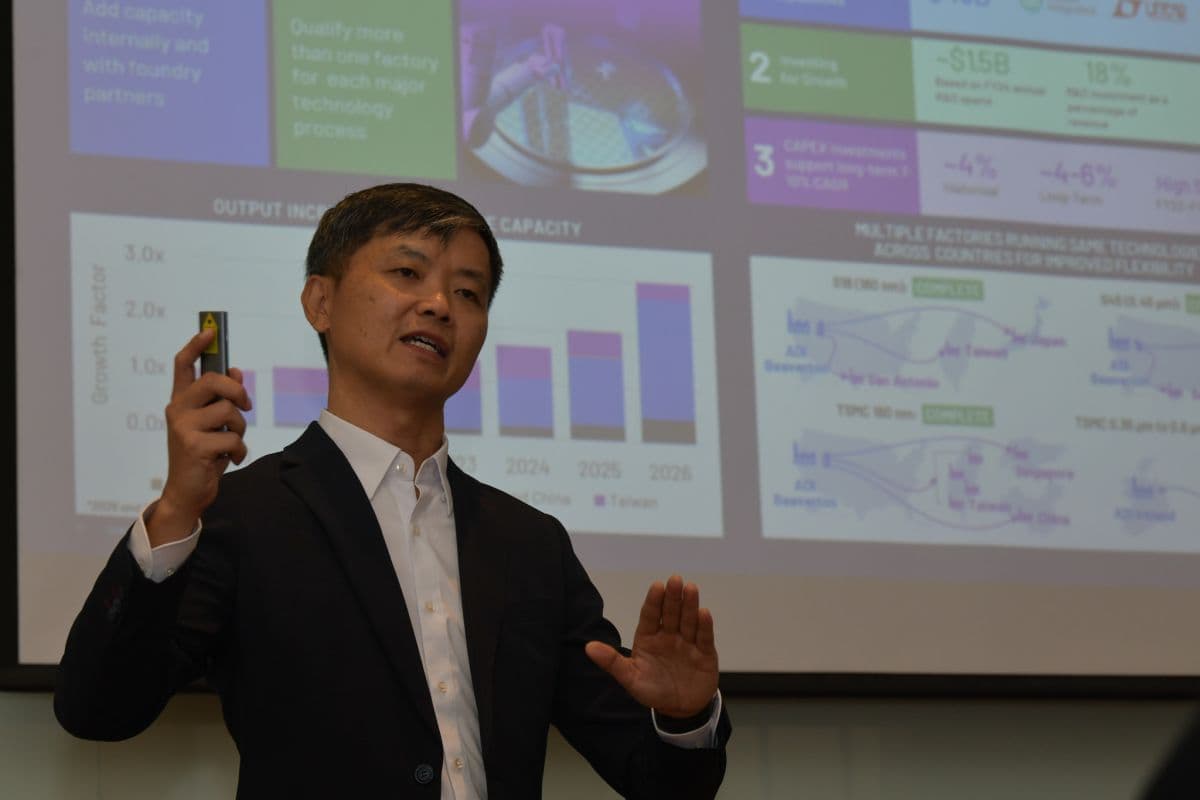
“Malaysia is making all the right moves,” said George Chia, Asean regional business director of ADI, during a media roundtable on Thursday. “Penang has traditionally been a driving force in backend operations, and now Malaysia is trying to really move up the stack into integrated circuit (IC) design and innovation.”
He noted that Malaysia enjoys a head start over other regional peers, with a stronger ecosystem and government push to develop local expertise.
“Other countries are still initiating efforts to understand the semiconductor landscape. Malaysia has already made significant progress,” he added.
Chia said ADI, which is a company listed on Nasdaq, is expanding its presence in Penang, where the group has set up a new building to prepare for further growth. He stressed that the company is investing in people, highlighting that its factory workforce in Penang is made up predominantly of locals.
“We are investing in people. Talent is the key question everywhere, especially in semiconductors and electronics,” he said.
“Every country is competing for semiconductor and IC design engineers, and Malaysia is no different. That is why we are working hard to build a strong talent pipeline through Science, Technology, Engineering, and Mathematics (STEM) awareness and education.”
He added that multinational companies, local firms and policymakers must work together to ensure a strong pipeline of skilled workers for the industry.
Collaboration with Mimos to boost design capability
Earlier on Thursday, ADI signed a Memorandum of Understanding with the Malaysian Institute of Microelectronic Systems Bhd (Mimos), the country's national applied research agency, to advance Malaysia’s IC design capabilities and strengthen the ecosystem for small and medium-sized enterprises (SMEs).
Under the collaboration, ADI will provide technical expertise and guidance on circuit design, solution development and best practices, while Mimos will contribute its localisation knowledge and industry insights.
“Our collaboration with Mimos is really about sharing our technology and solutions with their ecosystem of local companies,” Chia said. “Mimos is already engaging SMEs with applied research. By combining that with ADI’s technology, we can enable more local firms to move up the value chain.”
He pointed to the recent milestone of Malaysia’s first locally designed AI chip, MARS1000 by SkyeChip, as a sign of progress, noting that such breakthroughs could spur other firms to innovate and compete at higher levels.
Chia stressed that Malaysia’s next phase must focus on board-level and analog design, rather than relying only on assembly and testing.
“We need to elevate the design capability to really have ‘made by Malaysia’ companies,” he said.
Read also: