

This article first appeared in The Edge Malaysia Weekly on October 6, 2025 - October 12, 2025
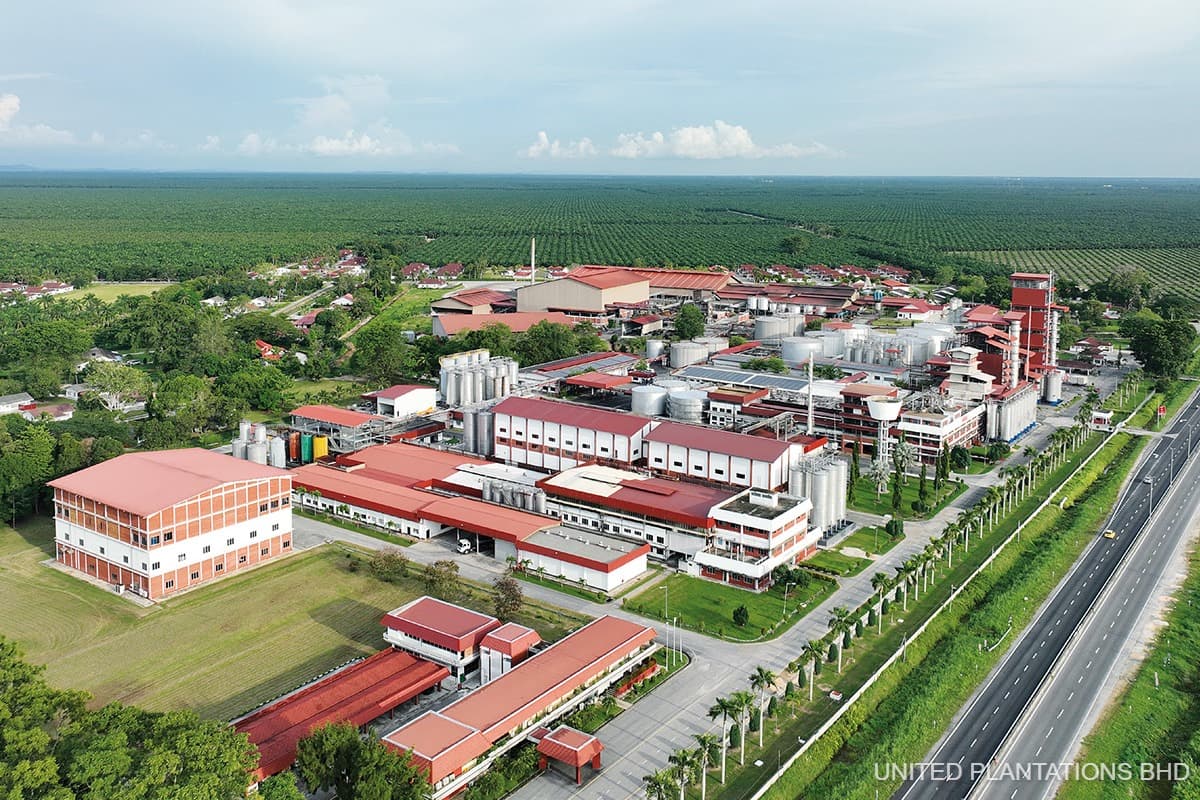
UNITED PLANTATIONS BHD
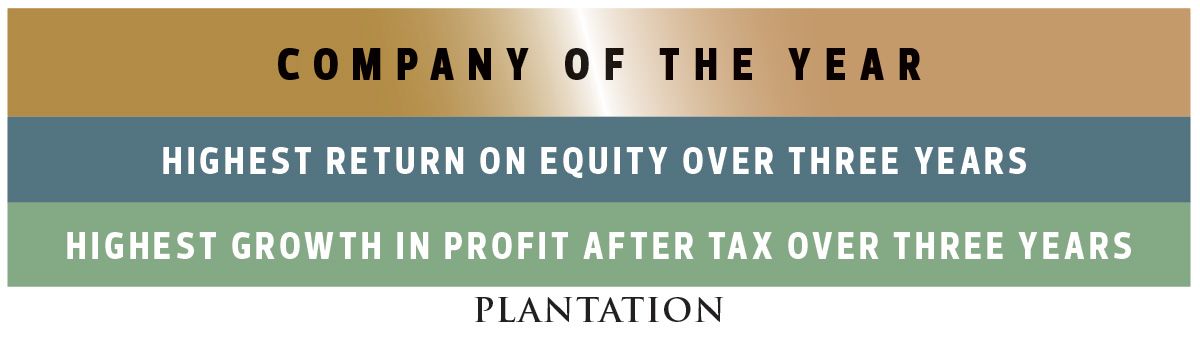
United Plantations Bhd (KL:UTDPLT) or UP, a frequent winner at The Edge Billion Ringgit Club (BRC) Awards with seven corporate awards since the BRC started in 2010, returns this year — not surprisingly — as Company of the Year.
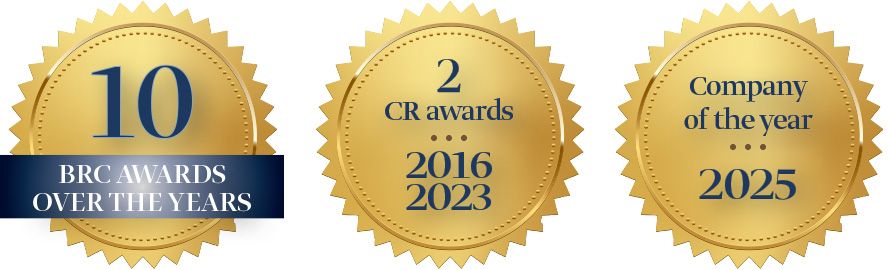
The plantation company has added three more BRC awards this year — highest return on equity (ROE) over three years and highest returns to shareholders over three years in the plantation sector and the coveted Company of the Year award — bringing its tally of BRC corporate award trophies to 10. UP has also won two BRC corporate responsibility (CR) awards.
This is the first time that a palm oil producer has clinched the Company of the Year prize. It is certainly the oldest, tracing its origins to the early 20th century.
UP’s storied history dates back to 1906 when Danish engineer Aage Westenholz founded the Jendarata Rubber Estates on 809ha of land in Teluk Intan, then known as Telok Anson, in Perak. The Jendarata Rubber Company then merged with the Corner, Raja Una and Westenholz Brothers coconut estates to become United Plantations Limited in 1917. In 1966, United Plantations Ltd and Bernam Oil Palms Ltd were amalgamated into United Plantations Bhd. In 1981, one third of UP’s shares were sold to state-owned Food Industries of Malaysia Bhd (FIMA) under the New Economic Policy and Malaysianisation process. Danish shareholders retained 25% of the company.
Where the takeover of foreign majority-owned plantation companies by Malaysian-owned entities often led to the colonial-era owners leaving the scene, it was a different story for UP. Its senior executive director then, the late Tan Sri Børge Bek-Nielsen, handed over the chairmanship of the company to FIMA’s executive director, the late Datuk Basir Ismail, setting the foundation for continued cooperation between European and Malaysian expertise in oil palm planting and palm oil production. For over two decades, the two men collaborated whilst expanding UP’s landbank, building on the principles laid down by its founders and their successors — emphasising staff welfare, hands-on leadership in field and mill operations, and a razor-sharp focus on research and development (R&D).
One of the strategic moves undertaken in the 1980s and 1990s was the alliance Unitata Bhd — UP’s refining unit — struck with Scandinavian oils and fats specialist Aarhus Oliefabrik (now AAK). As detailed in Susan Martin’s book The UP Saga, the move was necessary because of the overcapacity within Malaysia’s refining market in the late 1970s and 1980s, leaving it with only one option — “to diversify geographically and develop fresh premium-price niche markets in Europe”.
The European tradition continues today with Børge’s sons, Datuk Carl and Martin, who now serve as UP’s vice-chairman and chief executive director (CED), and executive director, respectively. Carl was appointed to his position as CED on Jan 1, 2013, and as vice-chairman on March 8, 2002. Meanwhile, Martin was appointed to the board on Aug 29, 2000.
From its start in rubber, UP ventured into planting coconut, oil palm, pineapple, cocoa, banana and even tea. Today, its main crops are oil palm (90%) and coconut (10%), cultivated on a land bank measuring about 62,500ha, of which 51,000ha are in Malaysia (83%) and Indonesia (17%). It also operates four mills and two refineries — Unitata and UniFuji (a joint venture with FujiOil).
It is worth noting that UP is the only plantation in Malaysia with an extensive light rail network — measuring 645km — between its estates and mills. It is used primarily to transport fresh fruit bunches (FFB) to the mills. This ensures that the FFB harvested is transported to the mill quickly, resulting in high-quality crude palm oil (CPO). The light rail network is one of the legacies of founder Westenholz, who had established a tramway system in Bangkok in the late 19th century before venturing into rubber planting with Jenderata Rubber Estates.
Long before ESG (environmental, social and governance) became de rigueur in corporate circles, UP had prioritised its surroundings and people. In 1930, it had set up its first conservation area, Grut Sanctuary, named after one of UP’s pioneers Commander William Lennart Grut. In 1928, a hospital was established in UP’s Jenderata Estate to serve its employees and local community.
In 1989, it adopted a zero-burn policy, followed by the implementation of a no-primary-forest-clearing policy in 1990. In 2006, it introduced methane-capturing facilities, which reduces greenhouse gas emissions while mitigating the environmental impact of palm oil mill effluent (POME). It is also a source of renewable energy that in turn powers the mill.

UP was one of the earliest planters to become a member of the Roundtable on Sustainable Palm Oil (RSPO). In 2008, it became the world’s first RSPO-certified palm oil producer.
It has also adopted both the Malaysian Sustainable Palm Oil and Indonesian Sustainable Palm Oil certifications.
In 2024, UP improved its ranking in the Zoological Society of London in its Sustainable Palm Oil Transparency Toolkit (SPOTT) assessment — which evaluates 100 palm oil producers, processors and traders globally on their ESG disclosures — from number three the year before to number two.
R&D has been a cornerstone of UP’s culture and identity. In the 1950s, it set up a research office to work on plant breeding. The UP Research Department was established in 1962 at Jenderata Estate, with the objective of ensuring that only the best planting materials would be used for the replanting of rubber plantations with oil palms. Given the scarcity of land, the use of advanced and high-yield planting materials is vital.
The research department’s work includes research in crop improvement and crop production, advisory services and the production of quality planting materials. Its tissue culture laboratory focuses on the cloning of elite materials to produce bi-clonal seeds with the combined advantages of uniform growth and high yield.
Meanwhile, UP’s commitment to replanting also goes a long way in maintaining CPO yield per hectare that is consistently higher than the Malaysian average since the 1980s.
“The UP Group’s long-term replanting policy remains a high priority, both in times of low as well as high commodity prices. Failure to implement this critical aspect of plantation management will inevitably lead to stagnating yields and declining production, thereby losing the competitive advantage,” said Carl in UP’s 2024 annual report.

Over the last decade, UP has replanted 15,600ha of oil palms, equivalent to 42% of the total area under oil palms. “This is absolutely necessary if we are to further improve the age profile of our established plantations and with that our average yields, which is of special importance in maintaining a favourable cost structure,” he added.
The strategic moves undertaken by UP in the last 119 years have borne fruit as evidenced by its strong financial performance, as well as field and mill operating statistics.
In 2024, UP achieved FFB yield of 28.1 tonnes per hectare, oil extraction rate (OER) of 21.11% and CPO yield of 5.93 tonnes per hectare. The CPO yield for its Malaysian estates of 6.22 tonnes per hectare was higher than the Malaysian average of 3.28 tonnes per hectare.
The OER and CPO yield were lower than the year before due to adverse weather as well as labour shortage in its Malaysian estates.
Despite the challenges, UP posted a record net profit of RM715.08 million for the financial year ended Dec 31, 2024 (FY2024), which was 1.03% higher than the RM707.77 million achieved the year before. Meanwhile, revenue increased by 9.1% to RM2.2 billion due to higher commodity prices supported by sales from its downstream refinery division.
For FY2024, UP paid a total dividend per share of 171 sen (pre-bonus), equivalent to RM709 million or 99% of its net profit.
It is worth noting that UP undertook a bonus issue of one share for every two existing UP shares that traded ex-bonus on Feb 26 this year. The corporate exercise was aimed at rewarding shareholders and enhancing market liquidity.
UP’s net profit had risen from RM518.34 million in FY2021 to RM715.08 million in FY2024, reflecting a three-year compound annual growth rate (CAGR) of 11.32%. That helped improve ROE from 21.62% in FY2022 to 25.31% in FY2024, with a three-year weighted average of 24.38%, according to the BRC awards methodology.
Reflecting better profits, its share price has risen from RM7.752 as at March 31, 2022, to RM22.46 as at March 28, 2025, making UP the planter with the highest shareholder return at a three-year CAGR of 42.43%.
UP’s impressive performance earns it the title of BRC 2025’s Company of the Year — a fitting tribute to the group’s enduring foundation in science and engineering, discipline, teamwork and an unwavering commitment to excellence, guided by its credo of being “second to none”.
Save by subscribing to us for your print and/or digital copy.
P/S: The Edge is also available on Apple's App Store and Android's Google Play.