

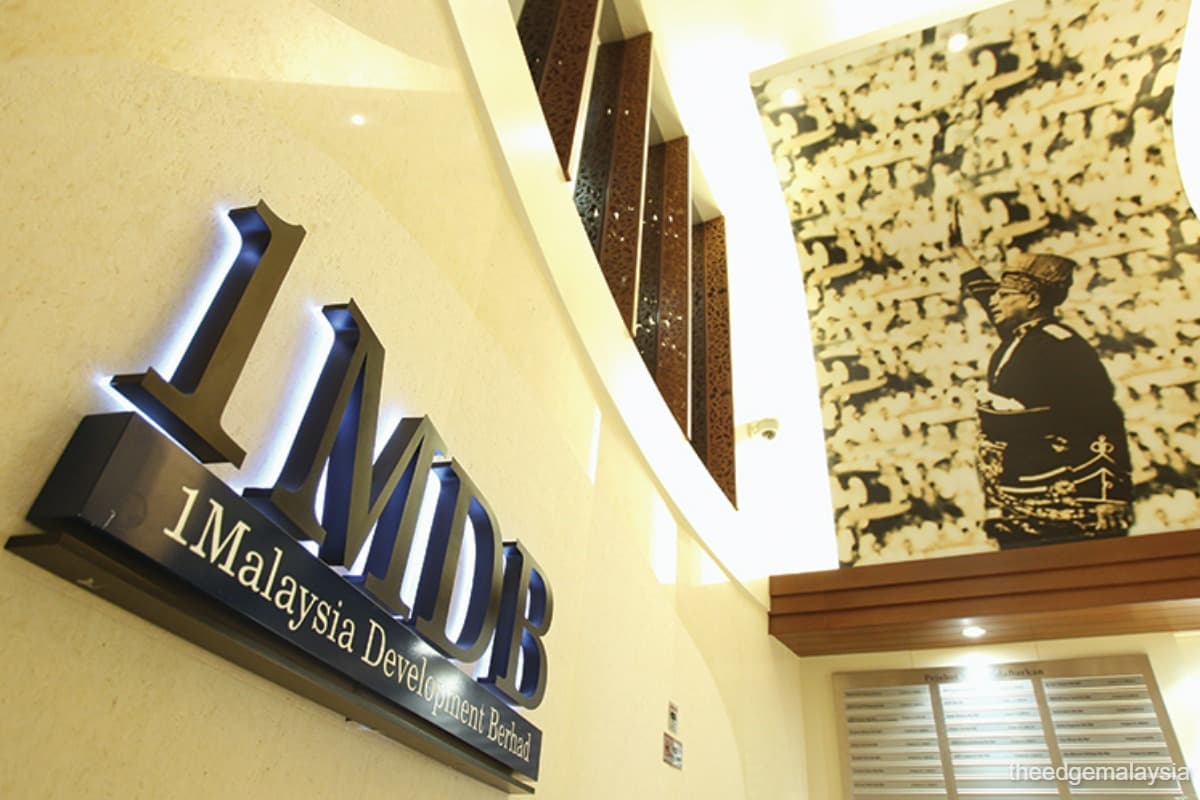
KUALA LUMPUR (Oct 1): A Singapore court has ruled that foreign liquidators cannot sue Standard Chartered Bank and BSI Bank over 1Malaysia Development Bhd (1MDB)-linked transactions that happened before 2018 — the year Singapore’s cross-border insolvency law came into effect.
As reported by The Straits Times, the liquidators of Blackstone Asia Real Estate Partners and Brazen Sky, both tied to the 1MDB scandal, tried to recover assets they said were wrongly moved. They used avoidance claims, a legal tool to undo suspicious transactions.
However, High Court judge Aidan Xu pointed to Article 23(9) of Singapore’s Insolvency, Restructuring and Dissolution Act, which blocks such claims for deals made before the law was introduced in 2018. The transactions in question took place before that date.
This clause is unique to Singapore and not part of the broader United Nations model law on cross-border insolvency. Xu described the transactions as “apparently dubious” but said the law clearly limits what the court can do. He noted that any changes must come from Parliament, not the courts.
The liquidators argued that another part of the law, Article 21, gives the court power to allow claims over past fraud. They warned that, without this, wrongdoers could escape liability, and foreign liquidators would be forced to file costly new lawsuits in Singapore.
But the banks countered that Article 23(9) was intentionally added by Parliament to protect the finality of past transactions. Xu agreed with the banks, saying Article 21 cannot override the clear limits set by Article 23(9).
The ruling limits what foreign liquidators can do under the model law on cross-border insolvency but doesn’t stop them from suing through regular court processes — which are slower and more complex.
Brazen Sky has already launched separate legal action against BSI Bank and some bankers, accusing them of dishonest assistance in the same transactions.
In an email to The Edge Malaysia, joint liquidator of Blackstone Asia Real Estate Partners Ltd, Angela Barkhouse, said they respect Xu's decision, but pointed out that the judge himself acknowledged in paragraph 53 of the ruling that the outcome may conflict with the spirit of the United Nations Commission on Internationak Trade Law Model Law.
She added that, as the judgement also mentions, there may be alternative legal routes, which they are currently exploring with their legal team - including the possiblity of an appeal.
"We remain undeterred in our mission to seek recovery from those who are responsible/facilitated the fraud to maximise recoveries for Malaysia," she said.