

This article first appeared in The Edge Malaysia Weekly on September 29, 2025 - October 5, 2025
When businesses and policymakers think about managing their waste, they should prioritise the top of the waste management hierarchy — focusing on reducing waste generation and reuse — before recycling and recovery of waste, say several industry observers who spoke to ESG.
This is in contrast to current waste management practices that tend to focus on recycling and waste-to-energy (WTE) plants.
A low-hanging fruit to reduce waste is avoiding over-packaging and substituting single-use materials, which are strategies that should be prioritised over the use of recyclable materials.
“For example, if you go to a restaurant, you can choose a single-use plate to put your chili sauce or a sturdy plastic plate that can be reused many times. You can think through the whole pyramid first before you get to recycling,” says Tobias Mangelmann, managing director of Lasaju Consulting Sdn Bhd, who has worked with many organisations on these projects.
He also brings up examples of food manufacturers that are reducing “headspace” — the empty space in product packaging — in their products.
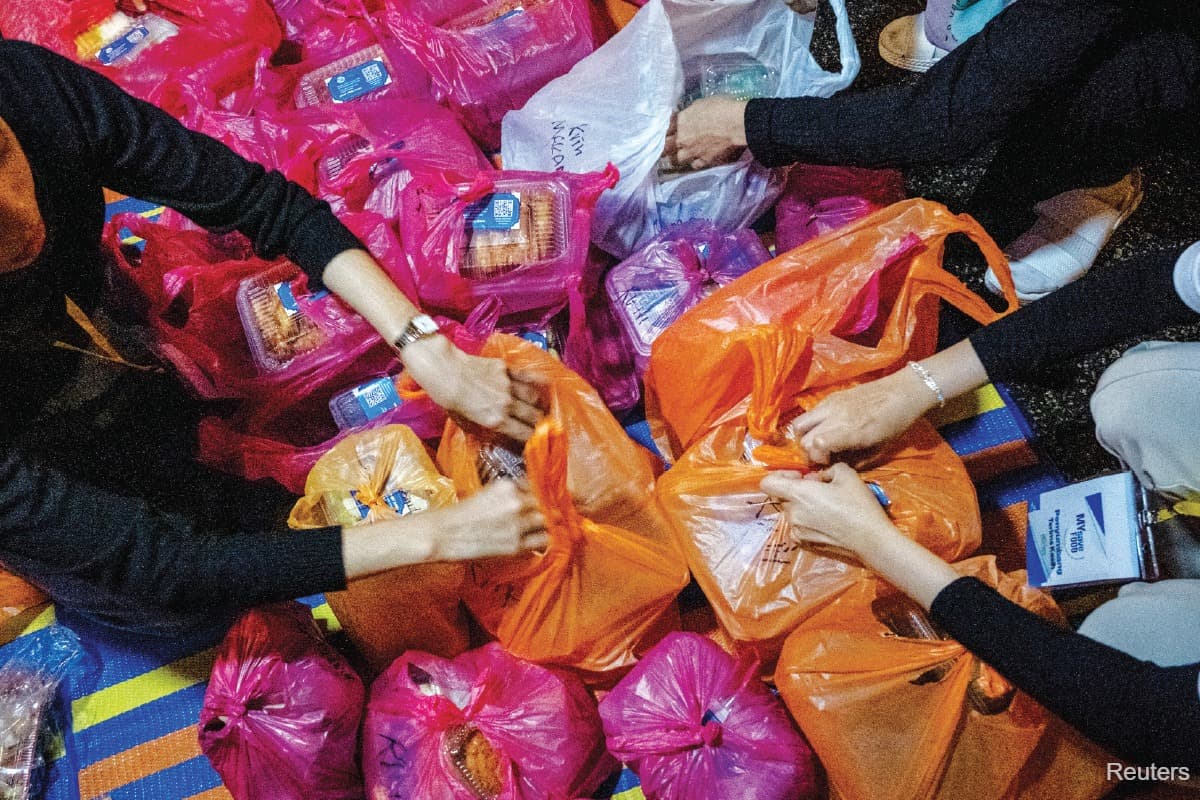
Refill and reuse models, which encourage customers to use their own containers to refill products like detergent, for instance, or return the packaging to the manufacturer so it can be reused, are also increasingly popular. Several zero waste stores in Malaysia already offer this service.
“Globally, there is the PR3 (global alliance to advance reuse), which we are a part of. We already have the first global standard for reuse systems, and we hope that Malaysia can look into this issue,” says Khor Sue Yee, co-founder and director of Zero Waste Malaysia.
Even with recycling, there are many things that Malaysian businesses should improve on to ensure their products can actually be recycled into new products. Multi-layer packaging that incorporates different materials, for instance, is difficult to recycle. So are products that use different types of plastic.
“Nowadays, most of the plastic bottles are made of PET (polyethylene terephthalate), the cap is PP (polypropylene), while the label is either LDPE (low-density polyethylene) or PET. If we can turn them all into the same plastic, it [would be] easier to collect and identify,” explains Khor.
Another example, says Mangelmann, is that some food manufacturers are using mono-plastic materials to package cereals, instead of the regular bag made of aluminium and plastic that is not recyclable.
He adds, “The Sprite bottle used to be green, but now it’s clear. If it’s a coloured plastic, you cannot make it a clear bottle again.”
The last level of the waste management hierarchy is recovery, which is where WTE comes in. But this has to be done properly, otherwise it fails to achieve the purpose of zero waste and the circular economy, where all waste is turned into useful materials again.
WTE done without waste segregation means valuable materials that can still be recycled or reused are also burned, thus requiring virgin materials to be mined to produce more new materials.
It is also an energy-intensive process. “The energy produced is actually not much. If we don’t segregate our waste and burn our recyclables, it cannot justify the amount of energy used to power the WTE process. You already use a lot of resources to create the product. It doesn’t justify the lifecycle assessment,” says Khor.
Another challenge with WTE is dealing with organic waste, which is moist and does not burn well. According to Malaysia’s Solid Waste Management and Public Cleansing Corporation, 30.6% of Malaysia’s waste is from food.
“There is so much that we can do to compost our food waste into fertiliser, which we can sell to organic farmers … If we want to make the organic waste management infrastructure work, we need to have a disposal fee. There is no shortcut to waste management,” says Khor.
The positioning of WTE as a solution must also not supersede Malaysia’s plans for a circular economy, which requires effective waste segregation.
“The way that some ministries and waste management companies are positioning it now is that it’s a way to avoid landfilling by just burning it all. That is wrong … [In Europe, they were building WTE facilities] but then the recycling systems came in, and all the households separated paper and plastic. The moisture content of the waste became high, and calorific value was so low that the waste didn’t burn anymore,” says Mangelmann.
“That’s where I think the government needs to be very careful now. If you plan a WTE plant based on today’s waste, and if the EPR (extended producer responsibility) system comes in, then more plastic and paper [will be gone from the waste stream] and the calorific value will go down.”
EPR system needed in Malaysia
Before any of these solutions can be implemented, the price of disposing waste has to be higher to incentivise the right behaviour in Malaysia.
This is where the EPR system and pay-as-you-throw (PAYT) policies, where entities that produce more unrecyclable waste have to pay more, are needed.
“Germany has EPR for industrial and commercial sectors, and a PAYT scheme. You have to pay a standardised tax based on your local area, which supports the logistics and collection costs of waste,” says Khor.
Meanwhile, an EPR system, which is already implemented in the European Union, South Korea, Vietnam and Japan, ensures that manufacturers are responsible for the waste produced. It can target specific materials like plastic packaging or paper packs, whereby manufacturers and companies that use these products are obligated to invest in infrastructure to collect and recycle them.

They could set up recycling systems to collect the material or pay a fee to a producer responsibility organisation (PRO) to do so. Companies that use more recyclable or renewable materials and avoid plastic packaging will have fewer obligations.
“In an EPR system, you can include eco-modulation, meaning that you [can] make unwanted materials expensive. Through an EPR, you can push design changes upwards to the manufacturer,” says Mangelmann.
The EPR is mentioned in the Ministry of Local Government and Housing’s (KPKT) Circular Economy Blueprint, and the framework is currently being prepared to kick-start the voluntary phase by 2026.
A private sector-led effort to promote the EPR in Malaysia is the Malaysian Recycling Alliance (Marea), which has 13 main contributors, many of whom are multinational fast-moving consumer goods (FMCG) corporations, including Nestlé Malaysia, Coca-Cola Malaysia and Unilever Malaysia.
“Malaysia is very new to the EPR concept, and we are hoping to grow the awareness. We try to educate people on what the EPR is, and how it will affect every level of the society, from the manufacturers to the people who process the packaging and the waste generators. The EPR system sits on the understanding that polluters pay,” says Alex Lim, project manager at Marea.
Marea is currently focused on plastic packaging as it is one of the more challenging waste streams to tackle in Malaysia. But this must be done progressively, so that it does not unfairly impact small retailers.
“While a major source of plastic packaging comes from the FMCG corporations, another significant contributor includes retailers with their own brands and non-branded packaging commonly used by SMEs and the cottage industry,” says Lim.
“Those have to be accounted for to ensure free-ridership is adequately addressed. While we cannot expect mom-and-pop stores and pasar malam sellers to take up the EPR cost, identifying the appropriate obliged company remains a key policy challenge.”
An EPR scheme would ensure that recyclable materials are collected. This also addresses a challenge faced by recyclers: insufficient feedstock that is clean and consistent.
With a PAYT and EPR scheme, individuals and businesses are incentivised to separate their waste at source, and send recyclables to the right waste processors, while manufacturers are rewarded for using less unrecyclable packaging.
This would have to be done with proper enforcement and convenience, which Mangelmann says is more effective in shifting consumer behaviour.
He suggests that an effective EPR can be combined with product design standards, which many large FMCG corporations already have. They include requirements on the proper labelling of what can or cannot be recycled.
Save by subscribing to us for your print and/or digital copy.
P/S: The Edge is also available on Apple's App Store and Android's Google Play.