

This article first appeared in The Edge Malaysia Weekly on September 29, 2025 - October 5, 2025
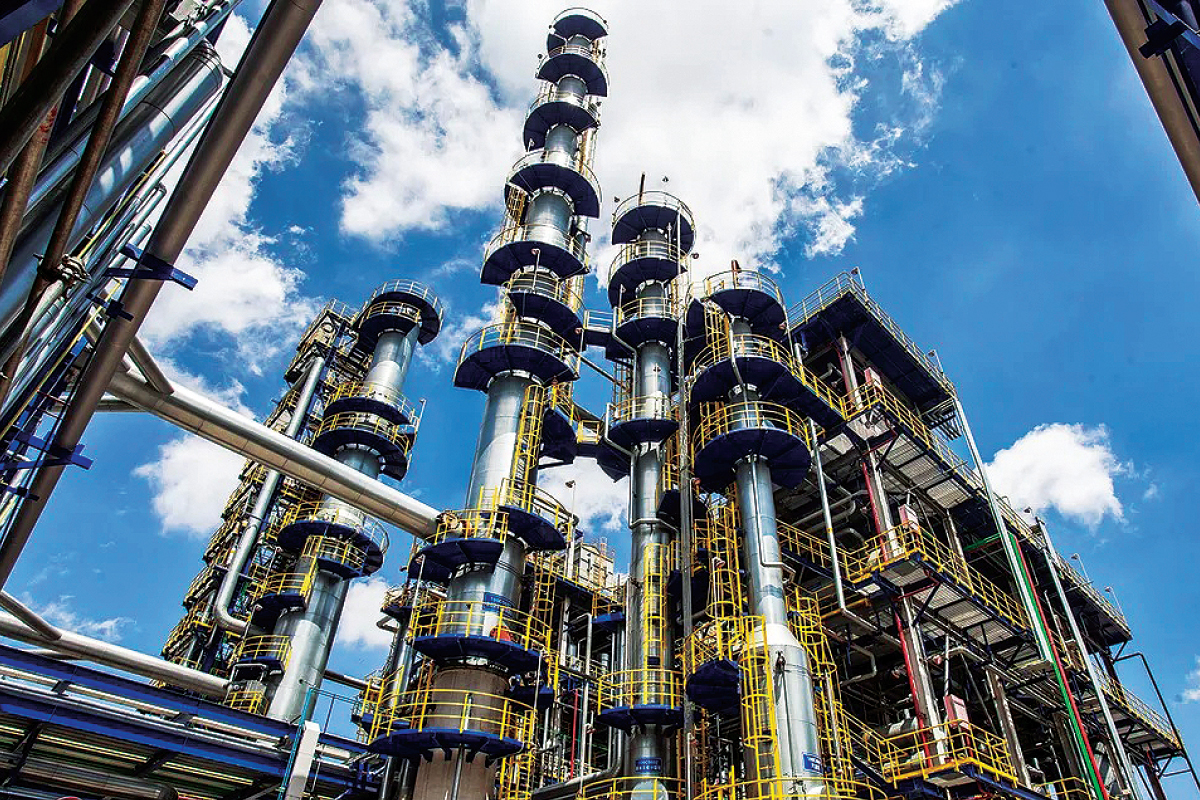
Malaysia is set to begin its first domestic production of sustainable aviation fuel (SAF) by end-2025 at its first biofuel refinery in Johor.
The facility will convert feedstocks such as used cooking oil (UCO) and palm oil mill effluent (POME) into SAF, bio-naphtha and hydrotreated vegetable oils (HVOs) — positioning the country as a regional SAF hub through EcoCeres Inc and its Malaysian subsidiary, EcoCeres Renewable Fuels Sdn Bhd.
EcoCeres CEO Matti Lievonen says: “EcoCeres is the second-biggest SAF producer in the world and Malaysia has a plan to produce SAF. We source feedstocks such as UCO and POME locally and produce SAF that can be supplied to major airports, including the Kuala Lumpur International Airport.”
In 2023, EcoCeres announced a substantial investment in a new biofuel production facility in Pasir Gudang, Johor, to serve as a major production hub for HVO, SAF and bio-naphtha, with an initial capacity target of 350,000 tonnes annually.

According to the company’s 2024 sustainability report, the plant — the first in Malaysia to produce SAF — is now expected to reach 420,000 tonnes per year, effectively doubling its overall output.
Two years after the initial announcement, EcoCeres has revised its target upward, with 85% of production dedicated to SAF, says Lievonen.
The plant features dedicated pipelines connected to port storage tanks, establishing an efficient logistics system and enhancing product yield efficiency.

For instance, Lievonen says, the company is constantly looking at new technologies to improve yield and quality of yield.
“With the current plant, we can produce more than 300,000 tonnes of SAF using our own technology. We are not buying technology from outside — we have an integrated technology and R&D team,” he adds.
Still, the path to scaling SAF production in Malaysia is not without its challenges. The National Energy Transition Roadmap highlights ongoing debates about the suitability of oil palm as SAF feedstock, particularly given the negative perception among European buyers due to deforestation concerns.
To address this issue, Lievonen says diversification is key. “Other than UCO, we are looking at alternative feedstocks like animal fat, fish fat and agricultural waste. That’s where the opportunity lies.
“Of course, we are actively advocating for the acceptance of palm oil waste such as POME.”
He believes broadening the feedstock mix is crucial because promoting the use of palm oil by-products such as POME positions Malaysia to leverage its oil palm industry, promoting circular economy principles.

The spillover effect
The 10.6ha site in Pasir Gudang was chosen for its direct pipeline access to a berth jetty and its connection to Dialog Group Bhd’s Terminal Langsat 3 (DTL3) via rundown pipelines in Tanjung Langsat. According to news reports, the SAF and renewable fuels produced at the Johor plant will be stored in dedicated tanks at DTL3.
“We chose Johor because of its strong chemical industry, skilled workforce and solid infrastructure. It has a good jetty for exports and everything you need to support operations — that’s what matters,” says Lievonen.
In addition, the establishment of the new biofuel production facility has created job opportunities for the local community.
“We are directly hiring more than 300 people for the plant. Indirectly, with all the contractors, suppliers and logistics providers, it is about 1,000 people,” he says.
EcoCeres’ shareholders include Bain Capital, Towngas and Kerogen Capita. The company was incubated in 2008 by Towngas (Hong Kong and China Gas Co Ltd), one of the largest energy suppliers in Hong Kong. EcoCeres became an independent company in 2021. The following year, the company secured more than US$700 million in investment from Bain Capital.
“The US$700 million was invested to scale the company globally, and our first expansion was in Malaysia. In 2021, EcoCeres was like a start-up — profitable, but with real growth ambitions in SAF. That’s what attracted the investment,” says Lievonen.
“We’ve invested hundreds of millions [in the Johor plant]. Our focus now is on achieving stable production and supporting the local workforce by providing a safe, well-run environment. That’s our goal for now — getting the plant up and running in the best and safest way possible.”
Save by subscribing to us for your print and/or digital copy.
P/S: The Edge is also available on Apple's App Store and Android's Google Play.