

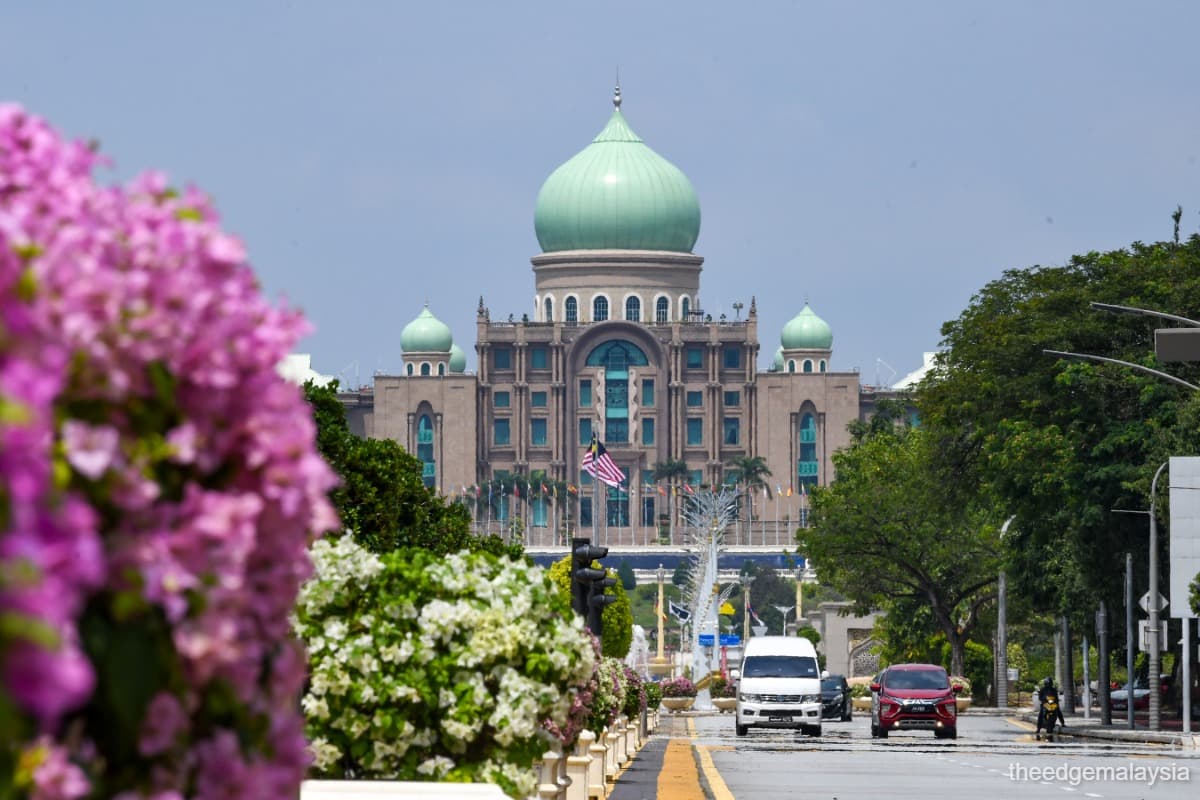
This article first appeared in The Edge Malaysia Weekly on September 29, 2025 - October 5, 2025
BUDGET 2026 will be an important one for the Madani government, given that the next general election must take place by November 2027. Even now, there is speculation that the incumbent government could call for a general election before the end of the full term.
With the next general election on the horizon, the Madani government does have something to show. Recent data shows that the country’s fiscal position has improved compared to a year or two ago.
It has also started to implement long-promised reforms, including diesel subsidy rationalisation, electricity tariff adjustments and, most recently, petrol subsidy rationalisation.
Granted, the extent and impact of these reforms remain open to debate.
According to the Ministry of Finance’s latest quarterly fiscal report, federal government revenue increased 6.1% in the first half of 2025 (1H2025) from the same period last year. At RM147.6 billion of total revenue, it makes up 43.5% of the target set in Budget 2025.
The overall increase in revenue is attributed to a 12.1% rise in tax revenue in 1H2025 to RM119.1 billion due to a higher corporate tax collection as well as more sales and service tax (SST) contributions.

Notably, revenue derived from SST rose significantly in 1H2025 to RM25.6 billion compared with RM19.7 billion in 1H2024. The start of 2Q2025 marks a full year since the service tax was increased to 8% for all services except food and beverage, telecommunications, parking and logistics.
There should be more upside for tax revenue in 2H2025 with the expanded SST scope, which kicked in on July 1, 2025, leading some to believe that federal government tax revenue could top the budget estimate of RM259 billion for 2025.
“Revenue collection needs to rise 3.5% y-o-y (year on year) in 2H2025 for the government to meet its full-year target, based on original budget estimates. However, tax revenue will likely play a bigger part in 2H2025 compared with the budget estimate. The government expanded the scope of SST on July 1 to include a wider array of consumer and luxury goods and 30 previously untaxed services, which could give tax collection a second wind,” notes OCBC Research in a recent report.
The overall fiscal balance has also improved this year, prompting economists to believe that Malaysia is on track to achieve its 3.8% fiscal deficit-to-gross domestic product (GDP) target for 2025.
The fiscal deficit in 1H2025 narrowed to RM40.5 billion, compared with RM51.6 billion with total government expenditure contracting 1.3% y-o-y on the back of a revenue increase of 6.1% y-o-y.
While the fiscal position looks better despite external headwinds this year, UOB senior economist Julia Goh says an area of spending that bears watching is public sector wages and pension payments.
“These will rise further due to the second salary raise for 1.7 million civil servants and higher pension for about 900,000 pensioners, which was pre-announced in late-2024. This is the largest operating liability for the government, comprising 44% of total operating expenditure budgeted for 2025,” she says.
In 1H2025, emoluments as well as pension and gratuity amounted to RM51 billion and RM19.5 billion respectively.
Fiscal outlook for 2026
Generally, economists expect federal government revenue to rise between 3% and 6% in 2026. At the low end are CGS International Research and UOB with a forecast of 3% growth in revenue to RM350 billion.
CGS expects the drag on revenue growth to come from a lower Pertoliam Nasional Bhd dividend (non-tax revenue) of between RM20 billion and RM25 billion compared with RM32 billion this year, on account of weaker oil prices. It believes, however, that the higher SST collection as a result of the expanded scope with effect from July 1, 2025, should lend some support to revenue growth.
Meanwhile, OCBC’s senior Asean economist Lavanya Vankateswaran has forecast revenue growth of between 6% and 7% y-o-y in 2026, supported mainly by the tax revenue collection. “Revenue growth will likely be supported by reforms enacted so far, including the broadening of the SST base and full adoption of e-invoicing across all companies and continued efforts in digitalisation and efficiency improvements to bolster revenue collection,” she says.
By July 1, 2026, all taxpayers should come under the e-invoicing system, where the last phase of the implementation includes taxpayers with an annual revenue of up to RM1 million.
The government had earlier indicated that the expanded SST scope could yield RM10 billion in revenue in 2026. CIMB Research in its report says the additional RM10 billion, on top of e-invoicing measures, will provide the government with a greater “fiscal cushion” and should more than offset the incremental spending on RON95 adjustment to RM1.99 per litre.
CIMB Research sees federal government revenue expanding 4% y-o-y to RM353.3 billion in 2026.
In terms of expenditure, economists expect only a modest rise in operating expenditure as a result of the subsidy rationalisation measures undertaken while development expenditure is expected to come in at RM86 billion to RM87 billion, in line with the government’s RM430 billion five-year target in the 13th Malaysia Plan.
“Overall, the fiscal framework balances consolidation with targeted spending while preserving fiscal space for strategic investments to support medium-term growth,” says CIMB Research.

Economists opine that the government will continue on the track of fiscal consolidation in Budget 2026 to reduce the fiscal deficit to between 3.4% and 3.6% of GDP amid moderate growth prospects.
UOB’s Goh, who estimates a fiscal deficit of 3.6% of GDP in 2026, says gradual fiscal consolidation can be achieved if there is continuity of fiscal reforms amid stable economic growth. She projects a GDP growth range of 4.5% to 5.5% for 2026.
Meanwhile, CGS says with the projected improvement in the fiscal balance, it expects government debt to fall to 63% of GDP in 2026. The ratio projected for 2025 is 64%.
Under the Public Finance and Fiscal Responsibility Act 2023, the government is mandated to gradually reduce its debt burden to less than 60% of GDP in the medium term.
Without a doubt, economists generally expect to see more people-centric and business-friendly measures being rolled out, based on the pre-budget statement released by the Ministry of Finance recently.
One of the pillars highlighted in the pre-budget statement relates to raising the living standard floor. Economists widely expect an increase in cash handouts under the Sumbangan Tunai Rahmah (STR) programme this year — unsurprising, given the government’s efforts to ease the cost-of-living pressures on the country’s most vulnerable.
CIMB Research projects the STR and Sumbangan Asas Rahmah (SARA) allocation to increase to RM17 billion in 2026, reflecting the government’s strategy of reallocating savings from subsidy rationalisation to cash transfers to boost consumption among lower- to middle-income households.
“Over the last four years, overall subsidies have declined due to rationalisation while cash transfer allocations have risen steadily, underscoring how fiscal space created by rationalisation is being used for more targeted household support,” says the CIMB Research report.
AllianceDBS Research Sdn Bhd economist Quah He Wei believes the government’s subsidy rationalisation measures are a more sustainable policy for better fiscal resilience that will allow more fiscal space for the government to implement various initiatives to improve the rakyat’s quality of life.
“In terms of the progress of subsidy rationalisation, we believe the government has been moving in the right direction. The Madani government has certainly made notable strides in subsidy reforms, successfully implementing diesel subsidy rationalisation and electricity tariff liberalisation. A phased and gradual approach in the right direction will be more important in building a solid foundational framework for fiscal resilience,” he says.
CGS says in its report that with much of the “heavy-lifting” measures announced over the last few years, it expects to see the focus steer towards fine-tuning policies, adding that the government is likely to ride these reforms for fiscal consolidation efforts.
“While the government has implemented several measures to address the high subsidy bill, we think it needs to do more to further lower this spending. We estimate subsidy spending to fall next year to RM50 billion from RM60 billion in 2025, which is still high compared with the historical range of RM20 billion to RM40 billion in the last 10 years,” it says.
The research house expects to see the drive for subsidy rationalisation to continue by addressing issues such as diesel subsidy rationalisation, which has yet to be expanded to Sabah and Sarawak. Diesel price continues to be maintained at a subsidised rate of RM2.15 per litre.
A large proportion of the driver population in Sabah and Sarawak relies on diesel-powered vehicles, owing largely to the terrain and road conditions, resulting in the exemption from subsidy rationalisation in these two states.
“One way we think this [rationalisation] could happen is by emulating the use of MyKad to access subsidised diesel, similar to the plan for RON95,” it adds.
CGS also believes other areas that could see further reforms include plugging the diesel allocation leakages in the fishery sector. Currently, fishermen are allowed to purchase diesel at a subsidised price of RM1.65 per litre compared with the market price of RM2.90.
“Given the large price difference, leakages tend to be rampant, especially in the border areas. As a result, the government is planning to roll out a new mobile application and a facial recognition system to replace the current outdated personal digital assistant devices, aiming to enhance security and prevent misappropriation,” it says.
As for RON95 subsidy reforms, which were recently announced after a long wait, RHB Research notes in a recent report that it does not discount the possibility of future refinement to limit subsidies to certain income groups.
“The projected savings — up to RM4 billion — are lower than earlier estimates of RM8 billion, which assumed rationalisation targeting foreigners and the ultra-rich. The reduced savings may also reflect lower oil retail prices, with the RON95 price having been adjusted from RM2.05 to RM1.99 per litre, resulting in additional subsidy disbursements,” it says.
See also ‘Why data makes it smart to start RON95 subsidy targeting with 300-litre quota’
Read also :
Malaysia’s fiscal standing among Asean peers
Save by subscribing to us for your print and/or digital copy.
P/S: The Edge is also available on Apple's App Store and Android's Google Play.