

This article first appeared in The Edge Malaysia Weekly on September 29, 2025 - October 5, 2025
In its journey to net-zero carbon emissions, Malaysia faces rising electricity demand due to the government’s plans to attract data centres and high-value industries into the country. This means Malaysia must look beyond conventional renewables and fossil fuels to ensure long-term energy security.
At present, more than 80% of Malaysia’s electricity comes from fossil fuels, with coal alone accounting for about half of the generation availability (as at Sept 23, only for Peninsular Malaysia), according to Grid System Operator. The government has announced plans to phase out coal, which currently supplies around 9GWh, but this raises a crucial question: what will replace it?
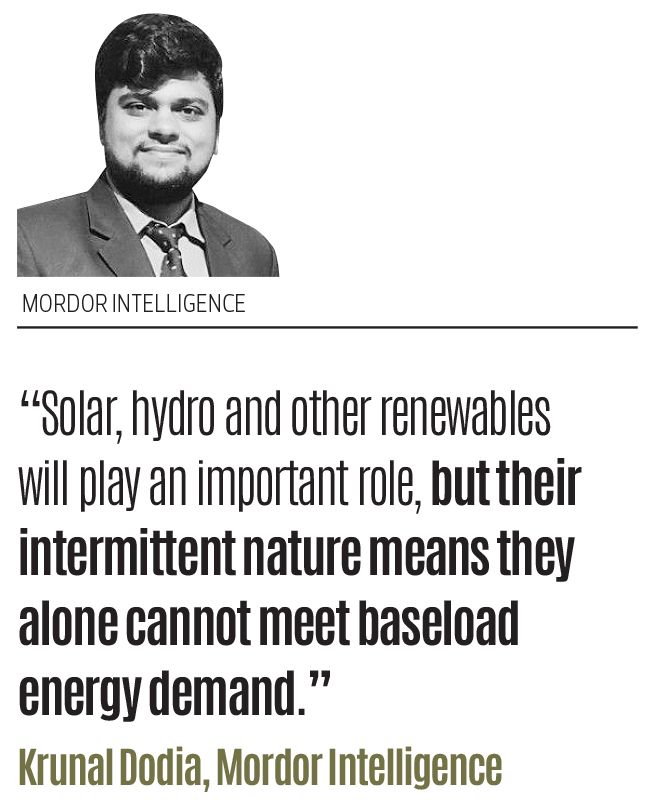
Project lead Krunal Dodia of the energy and power department of the research firm Mordor Intelligence Pte Ltd, says: “Solar, hydro and other renewables will play an important role, but their intermittent nature means they cannot meet baseload energy demand on their own.”
As a result, the country is pursuing alternative sources — chiefly nuclear and hydrogen — to support and stabilise its renewable energy mix.
Nuclear power as a stable power source
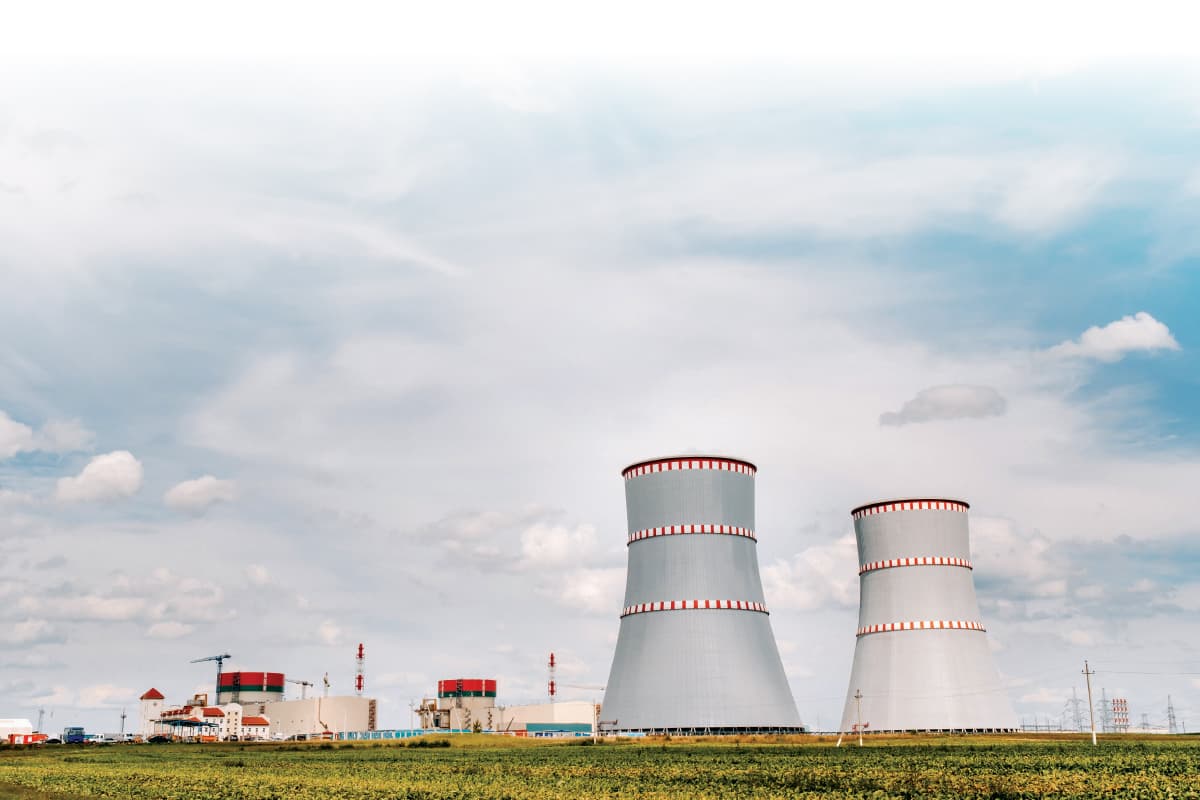
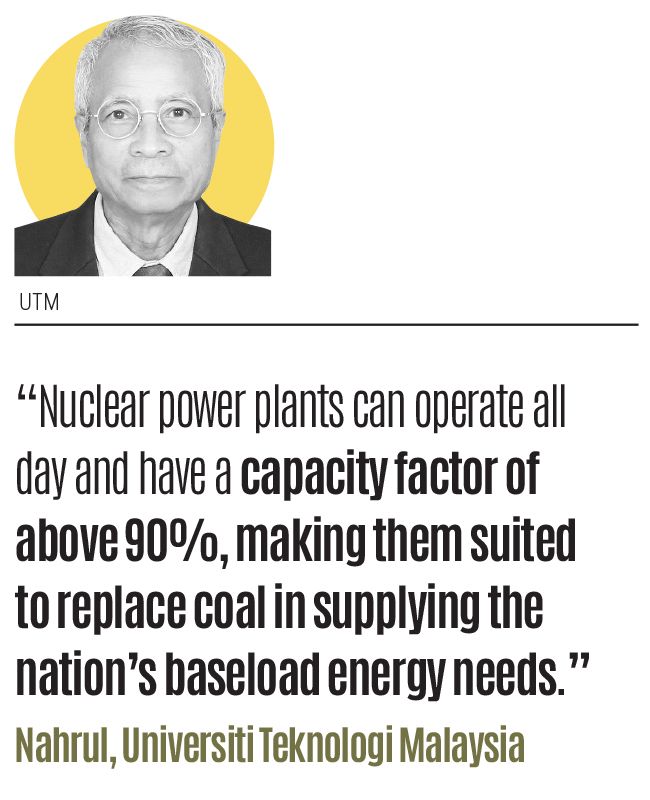
For Professor Nahrul Khair Alang Md Rashid, head of the nuclear engineering programme at Universiti Teknologi Malaysia, nuclear energy offers Malaysia the most practical replacement for coal. “Nuclear power plants can operate all day and have a capacity factor of above 90%, making them suited to replace coal in supplying the nation’s baseload energy needs.”
He adds that advancements in safety technologies should assuage public concern. “Nuclear reactor safety has advanced significantly, with inherent and passive safety systems playing key roles.”
“Inherent safety systems use the plant’s natural tendency to stabilise or shut down under abnormal conditions, while passive safety relies on automatic, equipment-free actions to mitigate accidents. So, it is safe.”
Still, the barriers are formidable. Nuclear programmes require not just long-term policy commitment but also robust regulatory institutions, financing frameworks and public acceptance.
“Once this foundation is in place, the necessary financial aspect, human capital and infrastructure development will follow,” Nahrul stresses.
The government has revived nuclear energy feasibility studies through the Ministry of Energy Transition and Water Transformation, with some policymakers eyeing Small Modular Reactors (SMRs) as a pathway. “For Malaysia, SMRs in the range of 300 MWe (megawatts electric) to 470 MWe could match industrial and city demand while fitting into our current grid. Designs such as NuScale VOYGR, SMART and BWRX-300 are worth monitoring,” he says, noting that Poland, the Czech Republic and China are already moving ahead with deployment.
SMRs remain largely unproven, however, and have yet to be commercialised. If cost were not an issue, he argues, Malaysia might even be better off with conventional large reactors, which produce about 1,100 MWe each, the equivalent of three SMR units.
Waste management is another critical hurdle. Nahrul stresses the need for end-to-end waste classification, interim storage and long-term disposal, backed by independent regulation and community trust. “Transparency and public trust can be built through early stakeholder engagement, open publication of data and reviews, community benefit programmes, and independent oversight,” he says.
For now, nuclear is considered a long-term option. According to Himanshu, the French model, which delivers 70% of electricity from nuclear through sustained political support, highlights three success factors that Malaysia must replicate: strong government commitment, upfront investment and systemic workforce development.
Finding a viable hydrogen infrastructure
If nuclear represents the backbone of baseload power, hydrogen is increasingly viewed as the versatile fuel of the future, particularly for heavy transport, industrial feedstocks and refining.
Sarawak has been building momentum for hydrogen for several years, driven by the Sarawak Economic Development Corp (SEDC).
One of the more visible early initiatives is the integrated hydrogen production plant and refuelling station in Kuching. Launched in 2019, it produces hydrogen via electrolysis, with a refuelling station that services fuel-cell electric buses and vehicles.
The facility produces about 130kg of hydrogen daily at purities of up to 99.999%, supporting initial hydrogen mobility experiments.
SEDC has positioned Sarawak at the centre of Malaysia’s hydrogen ambitions. The state has rolled out hydrogen-powered buses, a refuelling station ecosystem and the Rembus hydrogen plant, as well as the Sarawak Green Hydrogen Hub, which aims to produce 90,000 tonnes of clean hydrogen annually.
More recent are the flagship projects known as H2biscus and H2ornbill. Under H2biscus, a partnership between SEDC, Sarawak Energy, Lotte Chemical, Samsung Engineering and KNOC, the plan is to produce about 7,000 tonnes of green hydrogen annually for domestic use, with the rest converted into ammonia and methanol for export, especially to South Korea.
But challenges remain. The H2biscus and H2ornbill projects are large in scale and require significant capital investment, technical partnerships and stable regulatory and economic environments.
Scaling up to hundreds of thousands of tonnes per year of hydrogen and its derivatives such as ammonia and methanol for export involves complex logistics, feedstock procurement and cost management.
In addition, the costs remain daunting: hydrogen production represents just 15% of the total, with logistics and storage comprising the largest share.
Dr Rezal Khairi Ahmad, CEO of NanoMalaysia Bhd, believes the answer lies in breaking away from old economic models. “People copy and paste the oil and gas industry economic model to hydrogen. There is over-centralisation of production, storage, logistics and distribution. Every segment of those activities involves the cost and losses in terms of energy and efficiency.”
Instead, he advocates for decentralisation, producing hydrogen closer to demand centres.
“When you decentralise them, you remove logistics and long-term storage, and you have hydrogen on demand. So, this innovative game-changing approach will enable us to leapfrog a 30-year trajectory to make hydrogen affordable.”
This decentralised model could prove crucial for Malaysia, given the high costs of scaling hydrogen. It also dovetails with Sarawak’s abundant hydropower, which can be tapped to generate green hydrogen closer to usage points.
Key barriers to overcome
Despite the promise of these alternative sources of energy, systemic challenges remain — chief of which is policy uncertainty.
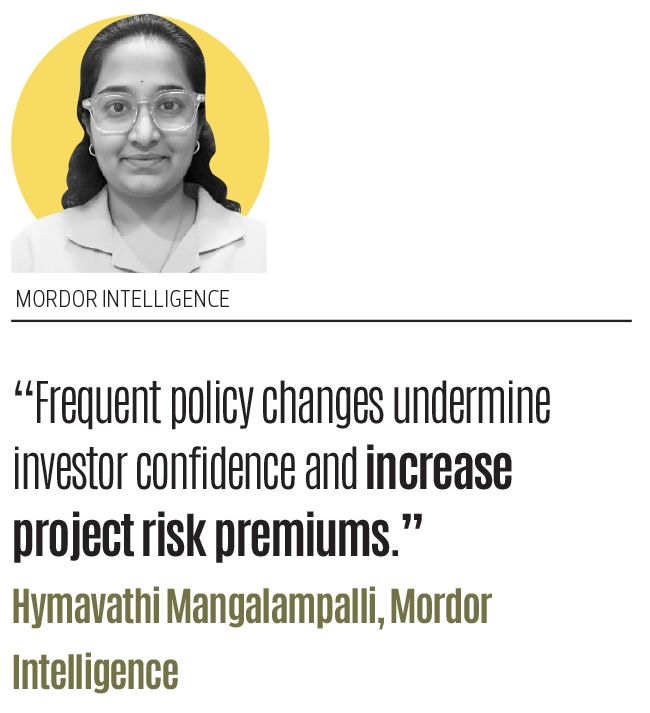
“Frequent policy changes undermine investor confidence and increase project risk premiums,” Hymavathi warns. This is particularly critical for capital-intensive ventures such as nuclear and hydrogen, where high initial capital outlays are required and returns are realised over decades.
Financing remains another barrier, especially for SMRs and hydrogen infrastructure. Both technologies carry first-of-a-kind risks, requiring governments and investors to shoulder significant financial exposure before costs can be reduced.
Ultimately, Malaysia’s success in tapping alternative energy sources will depend on long-term vision and trust-building. As Nahrul emphasises, public buy-in is crucial for nuclear,and Rezal highlights the need for a mindset shift in hydrogen economics.
If the government can set a clear policy direction, build robust institutions and mobilise financing, Malaysia could unlock the untapped potential of alternative energy sources such as nuclear and hydrogen, he adds.
Save by subscribing to us for your print and/or digital copy.
P/S: The Edge is also available on Apple's App Store and Android's Google Play.