

This article first appeared in The Edge Malaysia Weekly on September 29, 2025 - October 5, 2025
THE country’s green energy projects have continued to see highly competitive pricing in recent bids by facility developers as the long-term price trend heads downwards for key equipment such as solar panels and batteries, thanks partly to maturing technologies.
At the same time, facility developers have to contend with various uncertainties, including unexpected fluctuations in the prices of key commodities essential to the sector.
Cheaper bids for solar and battery projects help keep electricity tariffs low. This also means that those looking for projects are not given the sweetheart deals seen in the early days of the liberalisation of the power sector. This was when the private sector first developed thermal power plants in the 1990s, and about two decades later, the first large-scale solar plants in the 2010s.
But developers that win projects by submitting low bids sometimes end up unable to execute them successfully as the prices are simply unsustainable and cannot cover the costs.
Concerns about “the race to the bottom” spilled over into the recently concluded request for proposal (RFP) for four grid-scale battery energy storage system (BESS) facilities in Peninsular Malaysia.

The Energy Commission, which is managing the RFP, says in a reply to questions from The Edge that it is “unable to comment at the moment as the bidding is ongoing”.
“Any clarifications related to tender terms can only be addressed through the official channels provided for bidders,” it says.
Concerns about the RFP for the BESS facilities are not unfounded, given previous experiences with large-scale solar (LSS) facilities.
Unsustainably low prices affected previous LSS bidding rounds, including LSS4, which saw power purchase agreement (PPA) extensions for those that won bids at low prices, as solar panel prices spiked during the Covid-19 pandemic in the early 2020s.
In this BESS RFP, some bidders have highlighted the bidding mechanism, which allows players to submit very low bids to increase their chance of winning the project, even at the risk of being unable to recoup their costs if utilisation is low.
What is worse is that even at the same low price, consumers could end up having to pay more — not less — should utilisation be high.
Illusion of low price
In Peninsular Malaysia’s electricity industry, an entity called the Single Buyer buys electricity from all the power plants and sells it to end users through Tenaga Nasional Bhd’s (KL:TENAGA) grid.
Power plants sell the electricity to Single Buyer at different prices — some lower, some higher, depending on their PPA.
Naturally, consumers would want the power plants to charge less to push down the average electricity price.
So, how does a BESS bidder create the illusion of a low bid price, but charge more when utilisation picks up?
To stretch over 15 years, BESS projects are paid through two components — a capacity payment and a service payment.
A capacity payment is a fixed payment that the BESS gets just for the facility to be there, and to guarantee it can operate when needed. It is to ensure the developer’s cost recovery.
A service payment is what the BESS gets every time it gets charged or discharged — meaning when it is actually utilised.

Confusion reigns when the two payments are consolidated into a single bid price in the RFP for bid evaluation purposes, with 90% weightage on the fixed capacity payment and just 10% on the variable service payment.
“Evaluation based on the consolidated bid price alone would be flawed because a lower consolidated bid price does not necessarily mean lower annual payment by Tenaga,” says a bidder.
A high service payment (of 10 sen/kWh) with just 10% weightage, coupled with a low fixed payment (of 20 sen/kWh per day) with 90% weightage results in a consolidated bid price of 19 sen — but the BESS charges the grid over RM52 million a year, assuming one full cycle a day, calculations show.
This compares with about RM40 million per annum, based on a service payment of two sen/kWh and capacity payment of 28 sen/kWh per day, which brings the consolidated bid price to 25.4 sen.
In the above scenario, the bid price is 25% lower but the annual payment is 28% higher.
“It is basically about who can meet the requirement at the most competitive price,” says a second bidder. “We don’t fully know the system requirement.”
That said, the large weightage and the cost recovery purpose of the fixed capacity charge itself should be enough guidance to what the bidding evaluation will prioritise, the second bidder says.
“Leaning too much into the variable charge means opting for risk-taking that is not in line with the signals in the RFP document,” the second bidder says. “We are more conservative.”
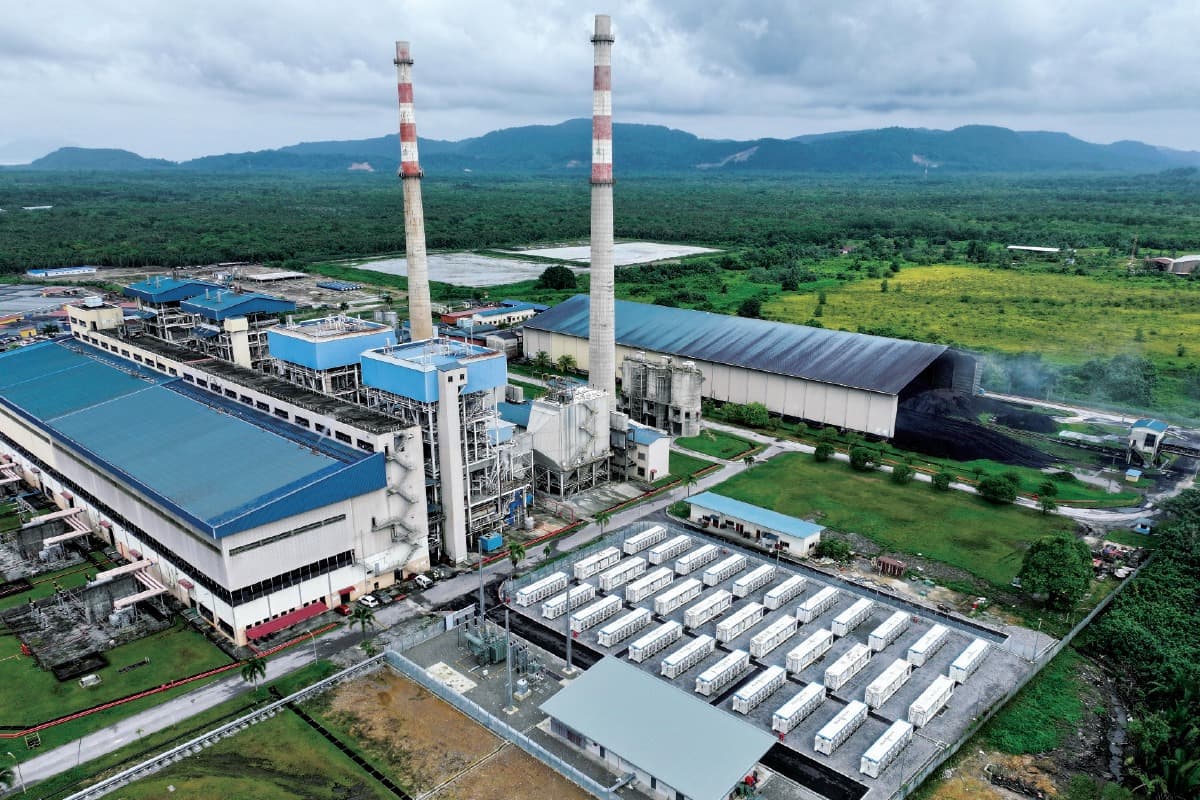
Each BESS will have a capacity of 100mw/400MWh or the ability to supply up to 100mw every hour for four hours. Each project is estimated to cost around RM320 million to construct.
Players have to carefully consider both the capacity and service payment components for two reasons.
If a developer puts a high capacity payment (which is guaranteed every day) and lowers the service payment (which is not guaranteed and based on utilisation only), the overall bid price becomes too high and uncompetitive.
Whereas if the developer puts a lower capacity payment and jacks up the service payment, the price becomes attractive but there is no guarantee that they will get paid. The RFP requires the battery to be able to handle one full cycle of charge and discharge per day, but does not guarantee any utilisation rate.
Listed bidders include those linked to Tenaga, YTL Power International Bhd (KL:YTLPOWR), Malakoff Corp Bhd (KL:MALAKOF), Gamuda Bhd (KL:GAMUDA), Petronas Gas Bhd (KL:PETGAS) and Mega First Corp Bhd (KL:MFCB).
Meanwhile, Solarvest Holdings Bhd (KL:SLVEST), Samaiden Group Bhd (KL:SAMAIDEN) and Seal Incorporated Bhd are said to be looking at opportunities as construction partners.
Malaysia already has a 100mw/400MWh battery storage system located in Lahad Datu, Sabah — currently the largest in operation in Asean — which was completed at record time with around nine months of construction. Sarawak, too, has a smaller 60mw/82MWh BESS in Kuching.
Prices rebound
Looking at previous awards, the LSS4 solar projects had their PPAs extended to 25 years from 21 after solar panel prices jumped by at least 30% in 2022, from the levels when the bids were first submitted in 2020.
Early this month, the government announced 13 winners for the latest LSS bidding round called LSS5+. Sources reveal that tariffs were below 14sen/kWh at the lowest, and slightly above 17 sen/kWh at the highest.
Since the closing of the bidding round at the end of February, solar panel prices have changed little, but the prices of polysilicon — a key material in solar panel manufacturing — are up 33%, leaving the product susceptible to price fluctuations.
In the battery storage space, prices for utility-scale systems climbed 40% between March and July this year, according to data compiled by California-based solar equipment supplier Anza RE LLC.
“The government has to take its cue from past experience in LSS, and practice prudence in the bid evaluation process to ensure winners can deliver at the most competitive price without the need to bail out anyone when things get tough,” another BESS bidder says.
The BESS RFP, the first for this infrastructure in Malaysia and planned mainly for energy shifting from day to night peak load, attracted more than two dozen players. The Edge is given to understand that the BESS RFP winners will be announced as early as October this year.
In the future, solar project bids could be more exciting, and more competitive, if battery storage is bundled together as a requirement, in order to reduce grid fluctuations between daytime when the sun shines and nighttime when solar energy drops to zero.
However, when the next LSS awards — dubbed LSS6 — will be rolled out will depend on future energy requirements, Deputy Prime Minister Datuk Seri Fadillah Yusof, who is also minister of Energy Transition and Water Transformation, has said.
Also this month, Malaysia closed the RFP for the PPA extension of existing gas-fired power plants as well as for new gas plants meant to meet capacity demand of nearly 6.9gw in the 2026 to 2028 period.
The first RFP round for thermal power plants in a decade, however, is also clouded by a shortage of gas turbines, with a backlog of three years or more, according to reports.
As electricity demand grows and the power sector supply chain becomes more complex, regulators and project developers must find the right balance between price affordability and supply reliability to ensure the best outcome in future power project developments.
Save by subscribing to us for your print and/or digital copy.
P/S: The Edge is also available on Apple's App Store and Android's Google Play.