

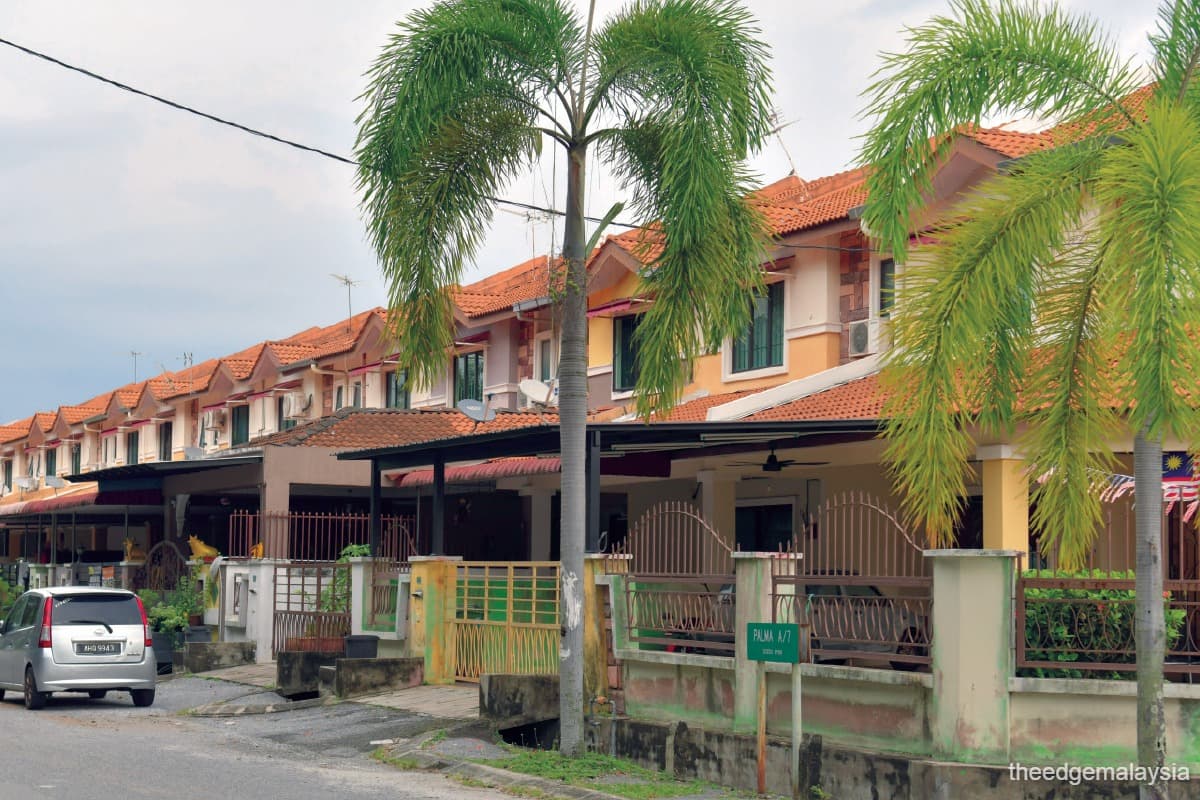
This article first appeared in City & Country, The Edge Malaysia Weekly on September 29, 2025 - October 5, 2025

Malaysian developers are approaching 2H2025 and 1H2026 with greater caution, following a challenging first half of the year marked by fewer launches, weaker sales, financing constraints and rising costs driven by the expanded sales and service tax (SST) from July 1.
These findings were revealed in the results of two surveys conducted concurrently by Rehda Institute between June and August this year, titled “Property Industry Sentiment Survey for 1H2025” and “Property Industry Survey for 1H2025”.
The first survey, Property Industry Sentiment Survey for 1H2025, assessed market performance in 1H2025 and gauged outlooks for 2H2025 and 1H2026, while capturing sentiment among CEOs and top management of Real Estate and Housing Developers’ Association (Rehda) Malaysia member companies. A total of 137 members from Peninsular Malaysia participated in the survey.
The second survey, Property Industry Survey for 1H2025, sought to evaluate market performance for 1H2025 and the outlook for 2H2025 and 1H2026. A total of 187 Rehda members from Peninsular Malaysia participated in this survey.
Rehda Malaysia president Datuk Ho Hon Sang presented the results at a media briefing held on Sept 19 at Wisma Rehda in Petaling Jaya.

Property Industry Sentiment Survey for 1H2025
This survey found 40% of participants reported no change in sales performance, while 32% saw a decline and 28% reported an improvement.
“Among the 28% who saw better performance, 21% said their sales had improved by more than 20%. Meanwhile, of the 32% who reported worse performance, half reported a drop of more than 20%,” said Ho.
In line with these findings, the survey also indicated rising pessimism about the property market and sales outlook for 2H2025 and 1H2026.

Pessimism in the property market has increased, with negative sentiment rising from 13% in 1H2025 to 26% in 2H2025 and 25% in 1H2026. Similarly, the outlook on property sales performance has deteriorated, with pessimism increasing from 11% in 1H2025 to 25% in 2H2025 and 29% in 1H2026.
This cautious outlook is also reflected in the developers’ operational decisions. About 73% of survey participants said they did not plan to expand their workforce over the next 12 months, opting instead to freeze hiring to manage costs. Only 38% indicated plans to expand their land bank within the same period.
Regarding capital expenditure (capex) excluding land, 52% expected an increase in the next 12 months, while 33% foresaw no change and 15% anticipated a decrease.
“Most likely, the 52% expecting higher capex have already had their plans approved and have no choice but to launch their product,” Ho commented on the data.
The survey also asked participants to identify the most significant trend currently shaping Malaysia’s property development sector. About 41% pointed to residential developments as the dominant trend, followed by mixed-use and transit-oriented developments (26%), industrial developments (22%) and commercial developments (11%).

Property Industry Survey for 1H2025
According to this study, only 12,938 residential units were launched during the period — a 26% decline from 17,404 units in 2H2024. Sales performance also weakened, with a take-up rate of just 24% (3,125 units sold), compared to 55% (9,487 units sold) in 2H2024.
By property type, 2- to 3-storey terraced houses recorded the highest take-up rate at 34%, followed closely by serviced residential units (33%) and single-storey terraced houses (32%).
Commenting on the data, Ho noted that demand remained strong for terraced homes, with 1,735 units sold across single- to 3-storey categories — significantly higher than the 588 serviced residential units sold.
Most launches in 1H2025 were in the mid-market segment, with 57% of units priced between RM300,001 and RM700,000. Meanwhile, 14% were priced below RM300,000, 16% between RM700,001 and RM1 million, 12% between RM1 million and RM2.5 million, and just 1% above RM2.5 million.
At least 52% of participants reported having completed but unsold units as at June 30. The largest share of unsold open-market units was priced above RM1 million. In the bumiputera quota segment, unsold stock was most concentrated in the RM500,001-to-RM700,000 range. Serviced residences accounted for 32% of total unsold units.
The survey also found that 71% of developers faced financial challenges in 1H2025. Of these, 64% cited end-financing loan rejections by potential buyers, 5% struggled to secure bridging loans, and 31% faced difficulties with both — particularly in projects involving price-controlled housing, for which banks imposed stricter documentation requirements and drawdown conditions.
Loan rejections were most prevalent for homes priced between RM300,001 and RM500,000, with rejection rates of 16% to 30%.

The survey also explored three key aspects of business operations in 1H2025: cost of doing business, construction challenges and economic scenarios.
Rising operational costs emerged as a major concern, with 74% of developers reporting cost increases ranging between 3% and 6%.
Construction challenges were cited by 59% of participants, particularly around building materials and labour. For materials, developers pointed to rising prices and inconsistent or insufficient supply. Labour-related issues included shortages, lack of skilled workers and high wages.
In terms of economic conditions, 51% of developers reported being affected in 1H2025, prompting cost-cutting measures across both operations and project execution.
On the operational side, developers reduced staff benefits and perks, froze recruitment and, in some cases, carried out retrenchments. For production and delivery, responses included deferring or rescheduling launches, delaying projects due to weak demand and downsizing the scope of new launches.
In addition, the expansion of the SST is expected to further increase costs. At least 62% of participants foresee a significant impact on their projects and operations, while 73% anticipate adjusting property prices, with most expecting price increases of between 3% and 5%.
Participants suggested several improvements to the SST, including clearer and updated guidelines specific to the construction and property sector, measures to prevent double taxation, and exemptions or reduced rates for key materials and eco-friendly products. They also recommended allowing input tax credits or speeding up refunds to ease cash flow, simplifying and adjusting SST rates with lower or tiered options, and enhancing processes through digital systems and closer collaboration with customs and authorities.

Future launches and outlook for 2H2025
Looking ahead to 2H2025, the Property Industry Survey for 1H2025 found that 41% of participants plan to launch new projects, while 59% have decided against launching because of delays in approvals, unfavourable market conditions, business constraints and weak buyer demand.
Of the units expected to launch, 7,608 will be landed properties and 16,819 will be high-rise stratified units.
The survey also detailed the price range of future launches across Peninsular Malaysia. In Kedah, Terengganu, Pahang, Negeri Sembilan and Penang, most units will be priced between RM300,001 and RM500,000. Meanwhile, Kuala Lumpur, Selangor, Melaka and Johor will predominantly see launches in the RM500,001-to-RM700,000 range. Notably, Kelantan and Perlis reported no planned launches for the period.
“So, in the central region, we have the ability to command higher prices. In Johor, there are many launches because of the current feel-good factor,” said Ho.
The Property Industry Survey for 1H2025 also gauged sentiment on the economic and business outlook, covering the domestic economy, organisational prospects, consumer purchasing power and residential sector growth.
Pessimism about the domestic economic environment edged up slightly to 27% in 2H2025, from 22% in 1H2025. Optimism regarding organisations’ business prospects dipped to 16%, from 21% over the same period.
Pessimism about consumer purchasing power rose to 34% in 2H2025, up from 24% in 1H2025, which Ho attributes to the impact of the SST expansion. Similarly, pessimism around residential sector growth increased to 22% in 2H2025, more than doubling from 9% in 1H2025.
Save by subscribing to us for your print and/or digital copy.
P/S: The Edge is also available on Apple's App Store and Android's Google Play.