

This article first appeared in The Edge Malaysia Weekly on September 22, 2025 - September 28, 2025
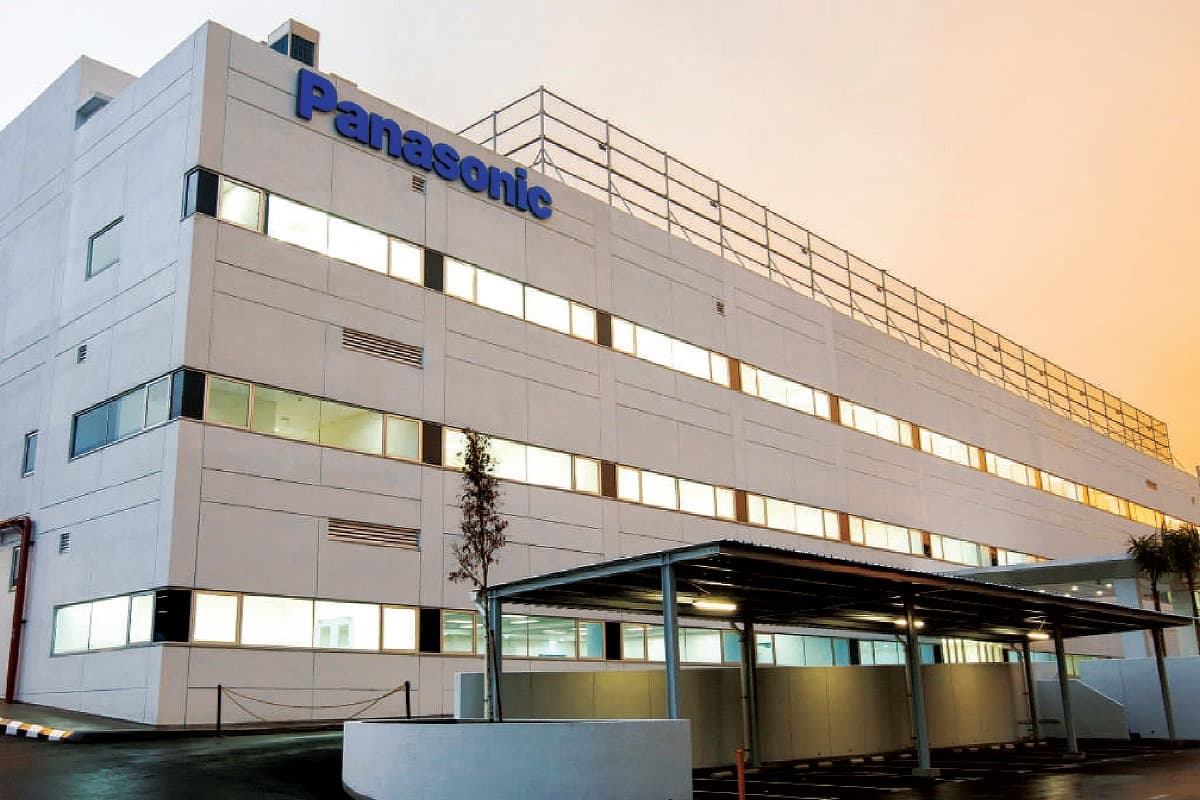
PANASONIC’s local unit, Panasonic Manufacturing Malaysia Bhd (KL:PANAMY) is at a global crossroads. Profitability has compressed and its share price has slid to fresh lows — as steep competition, particularly from China-based brands, meets softer export demand amid a domestic recovery that is still wanting — even after an internal restructuring.
For the first quarter ended June 30, 2025 (1QFY2026), the electrical appliances maker posted a net profit of RM7.8 million, a steep 67.4% drop from RM17.79 million during the same period last year, on 18.7% lower revenue of RM179.7 million.
The Main Market-listed company says in a recent Bursa Malaysia filing that revenue fell as fan and vacuum cleaner sales weakened while vacuum cleaner exports stayed soft, particularly in the Middle East. Fan sales were hit by a surge of Chinese imports while key export markets such as Iraq, Vietnam and Hong Kong also recorded softer demand.
Management cautioned that margins will stay under pressure even as it focuses on cost and product mix, signalling a tougher backdrop for FY2026. Group net profit margin, which stood at 11.12% in FY2020, sank to 5.6% in FY2025. (See profitability chart.)
The company’s share price reflects the bruising. Once the darling of the consumer industry, the counter, which hit record highs at the RM40 level during good times in 2018 and 2019, fell sharply from RM17 after the 3QFY2025 results on Feb 28 to RM8.39 last Thursday, recording a 52% plunge year to date.

As at June 30, Panasonic Manufacturing was controlled by Panasonic Management Malaysia Sdn Bhd with a 47.45% stake, followed by the Employees Provident Fund (10.71%) and Retirement Fund Inc (KWAP) (5.69%). However, the local institutional funds have since reduced their stakes to 10.69% and 5.33%, respectively, in the last two weeks.
Once an icon in the 1980s, the 107-year-old Osaka-based conglomerate has been overtaken by rivals that have reinvented themselves and surged while its own value stagnates.
According to a Financial Times, report, the company reportedly supplies 70% of the world’s in-flight entertainment systems, its facial recognition technology is being used to measure brain health and its electric vehicle battery plants are among the world’s most efficient. Yet the company has fallen behind other aggressive players such as Apple, Samsung and Huawei which have come to dominate consumer electronics.
Panasonic’s electric vehicle battery partnership with Tesla is facing challenges as the latter diversified to other suppliers and started producing its own batteries in-house. Meanwhile, the Japanese electrical multinational’s US$7.1 billion acquisition of supply chain software provider Blue Yonder in 2021 has underdelivered as an anticipated listing has gone quiet.
Seeding growth in new water solutions business
In Malaysia, Panasonic Manufacturing operates two business segments: its living appliances and solutions company (LASC) division and its heating and ventilation A/C company (HVAC) products segment, which contributed 18.4% and 81.57%, respectively, to FY2025’s group revenue.
Vacuum cleaners, electric irons and reverse osmosis water purifiers (ROWP) come under the LASC segment while ceiling, electric and ventilating fans, as well as home showers and entry-point water purification systems, fall under the HVAC category.

According to its 2025 annual report, Panasonic Manufacturing’s customers span both domestic and international markets, with the former contributing 39.3% to the financial year ended March 31, 2025 (FY2025). Asia (excluding Malaysia and Japan) accounted for 31.4%, with regional sales coming mainly from Vietnam, Thailand and Singapore, whereas the Middle East remained a key export destination as it contributed 21.06% to total sales. Japan, Europe and other international markets contributed 3.2%, 0.4% and 4.1%, respectively.
In terms of strategy, Panasonic Manufacturing had begun a pruning of underperformers and reallocated capital, terminating its kitchen appliances business and incurring restructuring costs amounting to RM13.3 million in 2022 for the discontinuation of rice cooker products and certain kitchen appliances. The group said the former had not been profitable in recent years due to high material costs.
In FY2023, Panasonic Corp notified the Malaysian entity of its decision to terminate the small kitchen appliances businesses effective from March 31, 2023, and agreed to bear all restructuring costs totalling RM14.4 million, which had been made as a claim to the global entity to be recognised as other operating income received during the financial year. The claims made and received were done in FY2023 and FY2024.
As part of the streamlining, the group explored new solutions to meet consumer needs within its core product categories and expanded into the water solutions market in 2024. It launched products such as the cordless stick vacuum cleaner in targeted markets in Asia and a three-blade remote control ceiling fan in Malaysia. For water solution products, the group launched its first ROWP in Vietnam, a water purification system in Indonesia, a new manual water bidet in Malaysia and a new series of instant home showers across Asia.
Consumer analysts and industry players tell The Edge they are given to understand that these launches take time to move the needle but are, nevertheless, a strong pivot towards categories where the brand can deliver on quality, safety and regulation rather than price alone.
“How do you match the low prices of Chinese products? They are infiltrating markets around the world but users who prioritise safety and quality over pricing would still be loyal to a reputable brand like Panasonic,” remarks a marketing director of another foreign manufacturer of electrical consumer products, who does not want to be named.
For FY2025, the company paid out a total dividend per share (DPS) of 62 sen, comprising a proposed final dividend of 47 sen and an interim dividend of 15 sen already paid.
Known for its handsome dividend payouts, the group dished out a total DPS of RM2.48 when the group achieved a record revenue of RM1.2 billion in FY2018. From the company’s incorporation in Malaysia in December 1966 to FY2025, it has paid out dividends totalling RM2.1 billion.
The dividend payouts dwindled to RM1.63 per share in FY2021, 83 sen in FY2022, RM1.22 in FY2023 and RM1.36 in FY2024. Based on HLIB’s expected dividend per share of 51.6 sen for FY2026 forecast and Panasonic Manufacturing’s last price of RM8.39 last Wednesday, its indicative dividend yield works out to 6.15%.
According to a May 29 report by Hong Leong Investment Bank (HLIB) research analyst Syifaa’ Mahsuri Ismail, who is the only analyst on Bloomberg covering the stock, no near-term catalysts are observed, only structural headwinds for the short to medium term.
In the report, HLIB reduced its target price for the counter to RM10.77 from RM14 when the share price was at RM13.54, taking into account Panasonic Manufacturing’s reduced price-earnings ratio of 10 times from 13 times applied to FY2026 earnings per share, reflecting the research house’s more cautious stance amid continued earnings pressure and a more challenging operating environment faced by the electrical products maker. HLIB further reduced the TP to RM6.88 on Aug 27.
Syifaa’ tells The Edge that the company continues to grapple with sub-optimal plant utilisation following the exit from the kitchen appliances segment. While management expects the new water-related products to gradually fill the vacant capacity, it will likely take three to five years to achieve meaningful scale, depending on market demand.
“We believe this venture may not be able to fill the vacuum from the discontinued kitchen appliances business, given the group’s lack of a first-mover advantage in the water-related products market. Unless the parent company launches a major restructuring, I don’t foresee a recovery in the near term,” she observes.
The group’s cash and cash equivalents stood at RM480.9 million as at June 30, 2025, after dividend payments of RM82.6 million and capital expenditure totalling RM24.2 million during the year. The group does not have borrowings. It had retained earnings of RM724 million.
“In Malaysia, the home appliances sector remained fiercely competitive. We, like many established players, faced an influx of lower-cost imports, particularly from China, which drove price competition and market fragmentation. Meanwhile, rising operating costs and a tightening labour market further challenged domestic manufacturers’ cost structures and productivity. In response, PMMA (polymethyl methacrylate) remained anchored to a focused strategy aimed at strengthening core product lines, diversifying growth levers and accelerating factory modernisation. We continued to leverage in-house research and development, die and mould expertise, and parts manufacturing to improve our speed-to-market and adapt to shifting consumer needs with greater precision,” the company says.
Without a bold parent-led reset, it appears that the local unit will likely remain in a grind, defending market share where quality and safety still carry a premium while waiting for new categories to scale.
For investors, the inflection must come from the top. Until it does, Panasonic Malaysia’s picture will mirror the global condition.
Save by subscribing to us for your print and/or digital copy.
P/S: The Edge is also available on Apple's App Store and Android's Google Play.