

This article first appeared in Digital Edge, The Edge Malaysia Weekly on September 8, 2025 - September 14, 2025
Game development, animation and other creative industries are fast becoming pillars of Malaysia’s digital economy. To capitalise on this momentum, the Malaysia Digital Economy Corporation (MDEC) expects to launch the Digital Creative Ecosystem (DICE) Roadmap 2026-2030 in the final quarter of the year.
Covering sectors from game development to animation, the road map aims to position Malaysia as a global hub for digital creativity by 2030, with a focus on establishing the nation as a leader in high-quality intellectual property (IP) creation and nurturing world-class creative talent.
“Our goal is to produce global champions in animation and digital games by driving high-impact initiatives. These include strengthening local IP, empowering creative talent, improving access to funding, expanding into international markets and attracting strategic investments into Malaysia,” MDEC CEO Anuar Fariz Fadzil tells Digital Edge.

“We envision Malaysia becoming a global leader in original game IPs, with studios that own, scale and export globally. The focus is on building franchise-ready IPs supported by a robust ecosystem of talent, funding and international partnerships.”
These strategies are closely aligned with national policies such as Madani Economy, the 13th Malaysia Plan and Malaysia Digital Economy Blueprint, which identify creative content as a strategic growth sector.
According to MDEC, the upcoming road map will place the corporation at the centre of efforts to enable and accelerate the entire life cycle of creative IP development in Malaysia, from ideation and funding to production, commercialisation and export. MDEC is expected to serve as the lead implementing agency and ecosystem builder, introducing structured and strategic interventions to support IP creators at every stage.
Among the road map’s initiatives is a dedicated incubator and accelerator programme to strengthen studio capabilities, offering expert mentorship, market entry facilitation, matching grants and investor access to help local IPs scale globally.
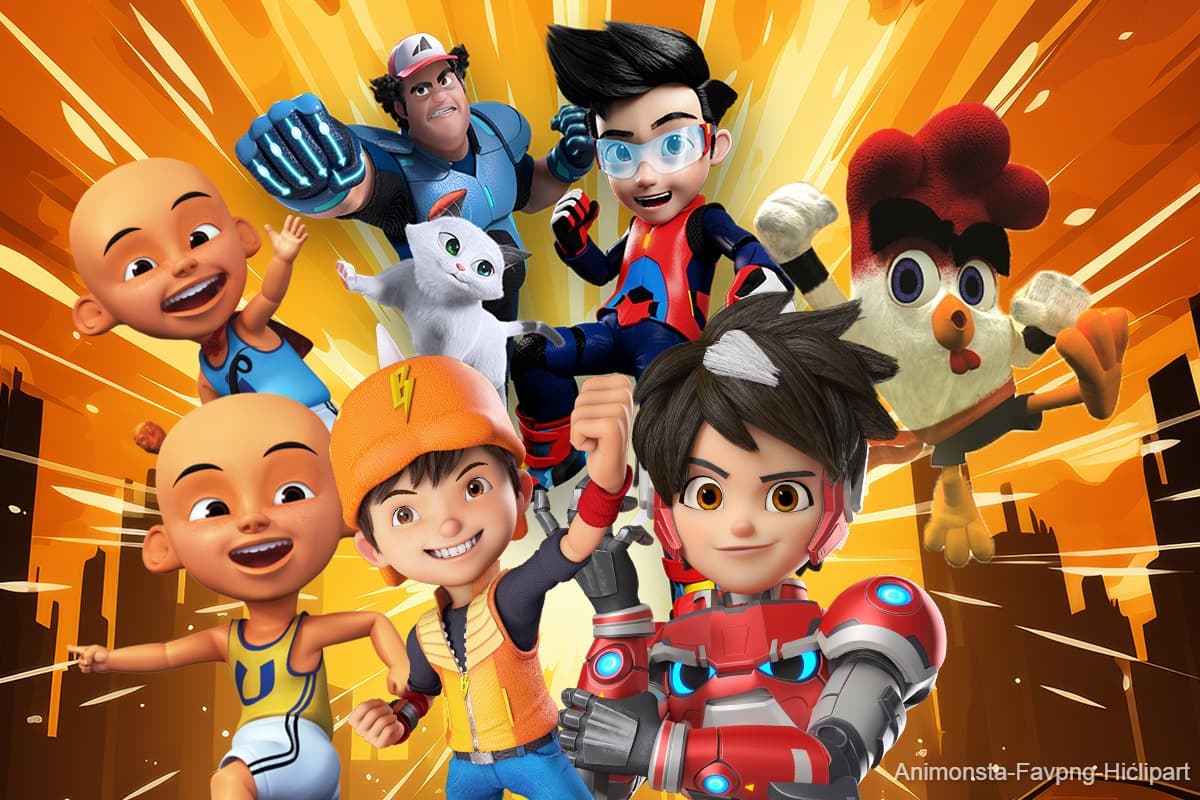
These efforts build on Malaysia’s track record of successful IPs in animation and game development, with franchises such as Ejen Ali, Mechamato and Upin & Ipin developed and commercialised locally while achieving international syndication, merchandising and licensing success.
On the video gaming front, titles such as No Straight Roads, Simulacra, Rhythm Doctor and GigaBash have found success abroad. The number of game development studios has risen from around 30 a decade ago to more than 80 today, including international players from the US, Belgium and Japan.
This trend reflects steady growth in the industry. Since 2011, Malaysia’s digital content sector has generated more than RM87 billion in revenue, contributed more than RM11 billion in export value and created more than 10,000 jobs.
Anuar says the shift towards developing, owning and monetising Malaysian IPs marks a departure from earlier models, in which local studios mainly served international clients.
“Success also means having an ecosystem where IPs can evolve across multiple formats and reach global audiences meaningfully, reflecting a mature and sustainable industry,” he adds.
While several Malaysian animation IPs have gained strong traction locally, scaling them into globally recognised franchises remains a major challenge, says Anuar. Many studios face barriers in accessing international distribution channels, securing long-term licensing and merchandising deals, and attracting private investment to expand their IP ecosystem.
Malaysia’s local IPs often struggle to maintain visibility and commercial value beyond their home market because of insufficient support in global market fit, brand localisation and cross-media monetisation strategies, Anuar explains.
“But it also presents significant opportunities for Malaysian studios to showcase their creativity and cultural uniqueness,” he says. “With the right support, strategic partnerships and focus on high-quality IP development, local animation creators are increasingly well positioned to break into international markets.”
According to Anuar, leveraging Malaysia’s rich storytelling heritage, growing talent pool and government-backed initiatives will allow local IPs to stand out and thrive on the global stage.
MDEC also recognises that digital game IPs are strategic digital assets that can elevate Malaysia’s position in the global digital economy.
“Creative IPs in digital games are economic multipliers that generate revenue through direct sales, licensing, merchandising and exports, while also creating high-value jobs and attracting foreign investment,” he says.
Tackling IP commercialisation challenges
MDEC is working to connect local IP owners with global buyers, streamers and distributors through content expos and business matching programmes, but challenges remain.
A key hurdle is the lack of structured support across the full IP life cycle, particularly in the early and middle stages of ideation, development and commercialisation. Anuar says early-stage IPs often struggle to secure development capital and remain heavily reliant on government incentives.
With constrained federal allocation, support for early-stage IP development and commercialisation remains selective, while private funding is also limited, he says. “Malaysia’s digital content ecosystem lacks sufficient funding and acceleration infrastructure to bring IPs to global markets. The industry is navigating limitations in public sector funding, which affects the scale and speed of support for emerging creative IPs.”
Moreover, the industry is faced with a limited global storytelling perspective. Anuar explains that stories may be culturally rich but lack universal appeal or adaptation potential for over-the-top (OTT) platforms, streaming or game publishers.
This often results in commercialisation bottlenecks. He says that even after developing their IPs, many creators struggle to monetise them because of limited business skills and restricted market access, particularly in areas such as licensing, distribution and scaling into sustainable ventures.
“Many local IPs show strong creative potential but require further development to meet international market expectations. Areas such as localisation, IP protection and exposure to global buyers need to be strengthened to enhance export viability.”
There is also a common misconception that IP itself equals commercialisation. IP refers to the legal rights over a work, whether a storyline, gameplay, music or logo, whereas commercialisation is the process of turning that IP into economic value.
For example, the character Mario (originally introduced as Jumpman in Donkey Kong) is an IP. Commercialisation occurs when the character is transformed into products that generate income, such as the Super Mario Bros and Mario Kart games, merchandise and other spin-offs.
Associate professor Dr Tan Chin Ike, head of the School of Computing at Asia Pacific University of Technology & Innovation (APU), says some universities are now exploring ways to support the commercialisation of video games and help students turn their IP into tangible, commercially viable products.

“Some universities waive their IP rights to students, allowing them to develop it further. Similarly, at APU, the IP belongs to the institution, but if the students want to commercialise their IP, we will explore avenues of co-production, incubation or collaboration for a small equity in the project,” he says.
“Our core business is not commercialisation, but education. At the end of the day, collectively, we take a small equity or royalty — up to 4% — and the money is then used to incubate more student projects in a safe and secure environment.”
APU has launched an incubation unit where students receive guidance from staff with industry experience in areas such as technical development, grant applications, publishing and monetisation. The university also engages professionals from game studios, including CEOs, founders and senior leaders, to offer their expertise in company building, cash flow and project management.
Tan adds that the university is exploring an agreement under which projects would pay royalties once games reach specific revenue milestones, with the university’s share capped at less than 5% and ending once the threshold is reached.
Dr Ng Yiing Y’ng, senior lecturer at University of Wollongong (UOW) Malaysia, who led the university’s first commercialisation project — which ran from 2020 to early 2024— says many students keen to commercialise their video game IPs often misunderstand the process, assuming it is no different from developing a final-year portfolio project.
“There’s usually a longer investment phase when wanting to commercialise, and students often have to learn everything from scratch, such as IP rights, setting up their own company, managing the production pipeline, securing funding, handling business operations, marketing and negotiating publishing deals,” she says.
“Understandably, since they have no prior experience, students expect a lot of guidance and hand-holding from the lecturers. But this can be very taxing over time.”
Ng adds that not all lecturers have commercialisation experience, making it vital to involve industry professionals or appoint dedicated staff to oversee such projects. As students are new to this venture, they will need ongoing guidance — though the question remains how long they can sustain it.

“Funding is important, but then comes another challenge when these students start to realise the burden of setting up the company, which takes valuable time away from development. And if they also have to handle operational tasks, it becomes even harder to concentrate on the development itself. This causes the project to be prolonged,” she explains.
“Even if they manage to secure grant funding, they still face challenges in managing the funds and sustaining them as they set up. If the project becomes drawn-out and development progress slows, they will get demotivated and many end up leaving, either because they see their peers working and earning a salary at other game development companies, because they are offered positions elsewhere, or because they wish to move on with other things in life.”
Nevertheless, both APU’s Tan and UOW’s Ng are confident that the next generation of game developers will be well equipped with knowledge, passion and technical skills.
In response to the growing interest among prospective students, universities such as APU and UOW are taking steps to nurture the next generation of game developers.
Tan believes the number of game development companies in Malaysia will continue to increase. The country currently hosts 12 international studios and more than 75 local ones, with the prospect of more global players entering the market.
While the industry has made notable strides and gained international traction, this growth has also introduced new challenges in talent retention. Previously, concerns focused on skills development; now, experienced developers are leaving for better opportunities in game hubs in neighbouring countries.
“The ecosystem still lacks sufficient technical, business and marketing skill development opportunities, making it difficult for studios to build well-rounded teams capable of creating and sustaining high-quality, exportable IPs,” says MDEC’s Anuar.
Talent output and studio growth in the games industry have been substantial, he says, with local developers trained in fee-for-service firms now starting their own IP-driven studios. Still, the growth of independent or original IP studios may plateau, if talent retention is not actively incentivised.
“Highly skilled game developers may seek out more competitive salaries or opportunities for career advancement in other jurisdictions,” says Anuar. “Although MDEC’s grant programmes cover the full [spectrum,] from concept to commercialisation, there is limited guidance on how to navigate the steps in between. Creators often struggle during transitions, such as moving from concept to development, owing to challenges in securing technical talent or identifying financing options.”

Local developers craft next-gen games with original IPs for longevity
Five to 10 years ago, Malaysian studios were chasing video game trends, but developers have since realised that lasting success depends on developing strong intellectual property (IP). Chasing trends soon proves futile, says Shahrizar Roslan, CEO and creative director at Kaigan Games.
“Those who wanted to make a game and capitalise on a trend would have spent another two years making a game, by which time, something else would be trending,” he says.
“Things change fast and we’ve seen studios spend millions, [only] to shut down the game once it’s released because there was no traction, which is when developers realised investing in their own IP made better sense,” he says.
Games emerging from Malaysia today are largely driven by founders intent on developing their own IP. This is also where local flavour comes through, says Shahrizar, though developing a game that reflects a unified Malaysian identity is challenging, given the country’s diversity.
“We see it in foreign games because some of them have a mono-cultural feel. But Malaysia is not like that and our strength is in our diversity, thus our games are also diverse. Instead of having games with unifying factors, we have games where elements of Malaysia peek through, but with a unifying message.”
For Wan Hazmer Wan Abdul Halim, co-founder, CEO and game director of Metronomik, IP ownership is very important and holds personal significance. Some may opt to sell the IP to a publisher, which can be worth a lot, but it depends on the developer’s goals.
“If you sell your IP to a publisher, you get a bigger cut of the royalty from sales. A simple example is if you hold the IP, the cut with the publisher is 50:50. But if you sell the IP to the publisher, the cut is 70:30, with you getting the 70%,” says Wan Hazmer.

“Some may choose to sell their IP to fund the development of the next IP, but we don’t do that. We know the IP is super important because when we come up with it, we also look at the bigger picture of how to grow it. Basically, we are very attached to our product, and passing it on to a non-Malaysian company means that some of the cultural identity could be lost.”
He believes game developers should infuse their identity into their games, though he acknowledges that few companies currently do. He says showcasing Malaysia’s diversity through games is essential for the country to gain global relevance.
Context matters when incorporating Malaysian elements, Wan Hazmer says. As lead game designer at Square Enix, he included roti canai, teh tarik and satay in Final Fantasy XV, believing it would be interesting to weave familiar Malaysian staples into a global title.
“But if you want to feature Malaysian food in a game that has nothing to do with food, it wouldn’t make sense. People don’t play games to see other cultures; they play it to experience different worlds or socialise with friends,” he says.
“Culture cannot be the primary focus of the game, but games can be a vehicle to spread culture. The idea is to inject it creatively into the games we make.”
This is seen in Metronomik’s No Straight Roads (NSR), a rhythm-infused action-adventure game featuring vibrant art styles and a unique premise. It incorporates elements distinctive to Malaysia such as a kopitiam, mamak stall, colonial buildings found in Chinatown, dikir barat (Malay choral ensemble) and wayang kulit (shadow puppetry).
The company announced that it would be releasing NSR 2 in 2026 and is already working on another Malaysian game.
Kaigan’s Shahrizar cites South Korean movie Parasite, whose setting and actors are local but the social message is universal. While everyone around the world understands what the story is about, it is thematically a Korean movie.

“We should make games like that — global themes with local flavour. We did that with our Simulacra games, where the first game was about online dating, but we used local actors [and it was set in a local context].”
“Even at the end, there is a location revealed to the players and it’s a jungle in Pahang, and many are surprised to see this and realise it’s a game made by Malaysians.”
The next step is monetising IP. Shahrizar explains that with Simulacra, the IP grew to a point where foreign publishers were willing to pay for localised adaptations. To meet regional requirements, Kaigan had to modify certain elements — such as censoring blood and gore.
With IP scaleability in mind, the team is currently developing two additional titles — Deadly Rehearsal and Nullspace — to ensure long-term viability.
“For example, with Deadly Rehearsal, we’re trying to build a universe that could later expand into Deadly Trip or other variations,” he explains.
“Nullspace can be turned into a board game with tiny ships (table-top miniatures) or developed into collectables. This is how we see it growing.”
Deadly Rehearsal is an adventure role-playing game where players take on the role of Dodger, a disgraced stage manager hired by a prestigious director to stage a cursed play. As the rehearsal unfolds, the theatre is plagued by gruesome accidents and nightmarish visions. To save the cast — and yourself — you must master the art of stagecraft and confront the dark forces behind the curse.
Nullspace is an epic space battle game set in a retro-futuristic universe, where real-time strategy drives the story. Players can command massive fleets across the battlefield or take direct control of individual squadrons, leading their forces to victory through intense, visceral space combat.

Animators making a name globally
With BoBoiBoy making waves in Indonesia and its prequel Mechamato gaining traction in Japan, Malaysian animation IPs are proving their staying power on the international stage. Both series were created and produced by home-grown Animonsta (now Monsta) Studios. For such longevity, says its CEO Mohd Nizam Abd Razak, an intellectual property (IP) must begin with a distinctive concept, carry global appeal and be anchored by strong, meaningful values.

“BoBoiBoy is about elemental powers whereas Mechamato is about mechanisation and fighting robots. These concepts are universal and there are pop culture elements that people can resonate with as well,” says Mohd Nizam.
For Animasia, maintaining global visibility was a long-term strategy for the local studio. Its managing director Edmund Chan says that, for the past two decades, Animasia has consistently participated in international trade shows such as Kidscreen in the US, MIPCOM in France, and the Asia TV Forum in Singapore to stay visible to buyers.
“We have been doing this exhibition cycle every year. This is where buyers start tracking our projects for acquisition. We meet them at least three to four times a year just to keep the discussion going,” says Chan.
In line with its focus on commercial clarity, Animasia developed Bola Kampung as a strategically crafted IP for the Southeast Asian market. As the studio expanded its portfolio with titles such as Chuck Chicken and Harry & Bunnie, each was produced with a specific target market in mind — positioning the shows for global distribution from the outset.

“Bola Kampung is for Southeast Asia, but Chuck Chicken was created for China and did quite well in the global market when it was moved to global platforms like Netflix and Disney Channel,” says Chan.
Harry & Bunnie premiered on Disney Channel before being moved to Netflix and eventually being licensed to Malaysia’s Media Prima as a second window in 2017. Licensing titles also helped build trust with international clients, reinforcing confidence in the studio’s quality.
“When we render production services for clients abroad, they know we can meet the standard because of where our own shows have aired. That helps a lot,” says Chan.
Looking at the animation industry today, Mohd Nizam says it is filled with passionate talent and he has no doubt about the quality — especially in writing — but, overall, industry stability remains a concern.
“The industry has churned out a lot of good talent, but can we hire them? Can we pay them enough so that they make a living?” he wonders aloud, adding that many studios, especially smaller or independent ones, are struggling financially post-Covid, while large, international studios operating in Malaysia are downsizing.
Sustaining an IP can also be extremely expensive. While merchandising can help with churning revenue, a show would need a large and consistent volume of content to support product sales.
“You will need 100 or 200 episodes of content to continue to have a presence online and on air, so that your retailers can capitalise on selling the products. So, this is where capital is the most crucial part for a long-term IP,” says Chan.
Regional competition, particularly from Indonesia, will be tight as well, says Mohd Nizam, and Malaysian studios will have to not only sustain local talent but also compete with neighbouring countries that are producing high-quality content that reach wider audiences.
Save by subscribing to us for your print and/or digital copy.
P/S: The Edge is also available on Apple's App Store and Android's Google Play.