

This article first appeared in Digital Edge, The Edge Malaysia Weekly on September 8, 2025 - September 14, 2025
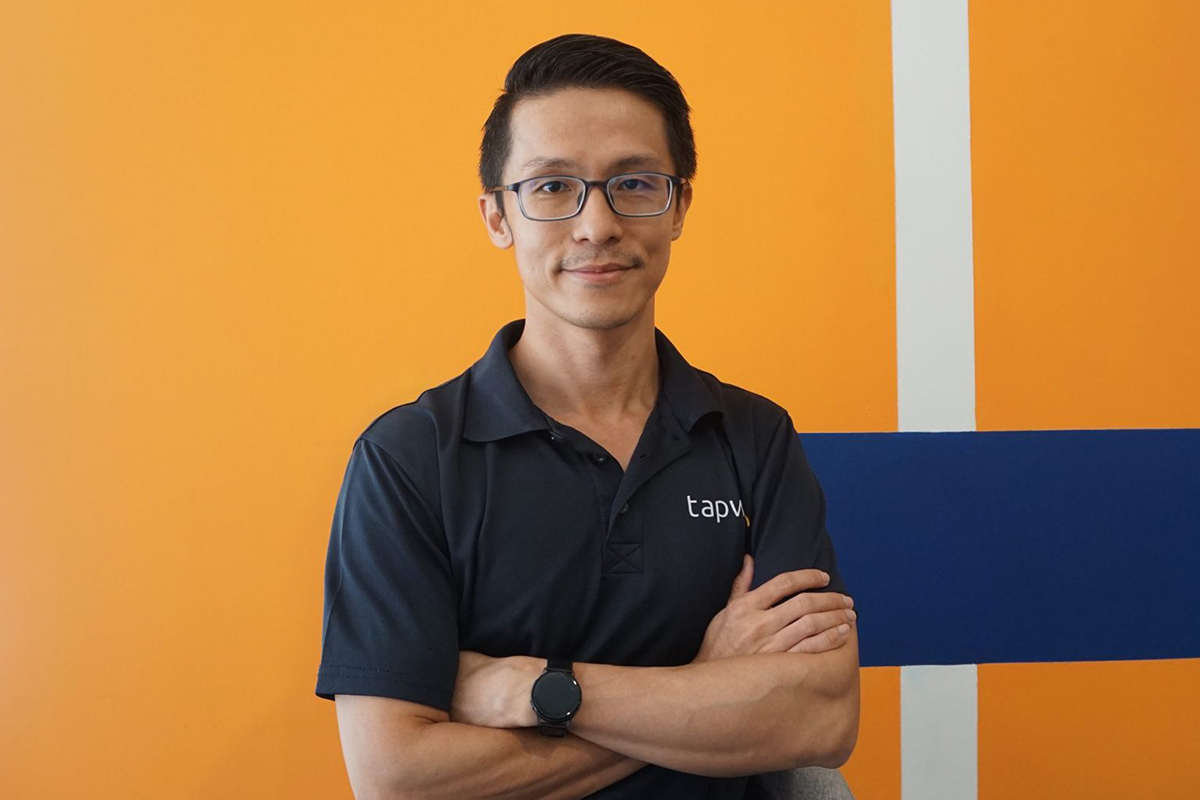
Lim Chee How set out in 2014 to make physical retail stores “smarter”, convinced that bricks-and-mortar outlets could offer more than a lacklustre shopping experience and deliver the same customisation and intelligence as e-commerce platforms.
He founded Tapway Sdn Bhd with chief operating officer Justin Shye Kang Loh.
Over the years, Tapway evolved from tracking customer behaviour in malls to building a no-code platform that enables industries as diverse as manufacturing, logistics, agriculture and retail to harness the power of AI-driven video analytics.
Today, the home-grown tech company is taking its vision artificial intelligence (AI) platform beyond Malaysia, Singapore and the Philippines with its no-code solution, SamurAI, and has entered Thailand and Indonesia.
Vision AI combines cameras with AI, enabling systems to detect, classify and analyse what they see in real time. SamurAI allows businesses to plug into existing CCTV systems and train customisable models without extensive coding knowledge, offering both off-the-shelf and tailored solutions. It is already deployed in more than 2,000 sites regionally, with the company targeting to double this number in the near future.

Reflecting on the early years of convincing sceptical retailers that AI could transform their stores, Lim says the regional push reflects a journey of persistence, reinvention and calculated risks. “The goal [of Tapway] was figuring out how we could bring technologies to make physical locations smarter in a way that you can optimise operations, enhance efficiency, improve customer service and so on.”
His idea for Tapway was born from his fascination with e-commerce’s ability to track and personalise shopping experiences. He felt that physical stores offered customers little beyond generic service.
In its earliest iteration, Tapway relied on Wi-Fi technology to detect signals from mobile devices, tracking customer movements within a store. The insights were useful, but the approach faltered when Apple and Google restricted third-party access to such data.
Undeterred, Lim quickly changed tack. By 2016, Tapway had pivoted to vision technology, using CCTV cameras to capture customer behaviour. With its first product, PeopleTrack, the company applied AI models to analyse crowd flow and shopper engagement. The data helped retailers to measure customer journeys and improve store layouts in real time.
In 2017, Tapway branched out from retail into infrastructure, developing a product called VehicleTrack for highway operators. It enabled automated vehicle recognition based on licence plates and shape, which set the foundation for Lim’s broader ambitions.
“We started off doing that. In 2017 or 2018, we had the opportunity to work with highway operators to start models related to vehicles … that’s when we branched out, and we started a product called VehicleTrack,” says Lim.
The next turning point came during the Covid-19 pandemic, as businesses sought smarter ways to automate processes and reduce reliance on manual labour: SamurAI was launched in 2021.
Lim says it was a natural evolution because it is a no-code platform that allows customers to build their own Vision AI solutions without needing in-house AI expertise. “We thought of how we already had the capability to train AI models and to run AI models in real-time for large customers. So why didn’t we just build a platform that can train anything for any industry?”
Now anchoring Tapway’s offerings, SamurAI enables users to connect multiple cameras, train AI models for specific tasks and deploy them across industries.
In manufacturing, SamurAI can spot defects on production lines. In agriculture, it grades fruit. In logistics, it tracks warehouse safety and efficiency. In retail and food service, it helps ensure compliance with safety standards.
“And I think one of the things that is emerging these days is back to retail and F&B, not so much on footfall or the marketing side of things, but a lot more on operation and security and safety. Safety is an emerging trend these days in our requirements, or the demand that we get from customers, not just in Malaysia, but also from Indonesia, Thailand and Singapore,” says Lim.
When asked why the platform is called SamurAI, Lim laughs. He shares that previously, all of Tapway’s products had “track” at the end, like PeopleTrack and VehicleTrack.
When it came to developing their no-code AI platform, their first name for it was VisionTrack, but Lim found it dull and not catchy.
“So, we did a poll among the team, all of us brainstorming on a new name. We decided the name should contain ‘AI’ and had to be catchy so people could remember it. ‘SamurAI’ won the poll, so we stuck with it.”
Although the name originally had no real meaning beyond sounding catchy and a little punny, over time, Lim found the name to be a strong fit, as it invoked the image of a samurai: someone fearless, able to tackle problems head-on.
“That’s the kind of image we want the product to have as well. If you have a tricky vision use case, you can tackle it with our platform,” says Lim.
Partnerships paving the way for growth
Lim also understood early on that simply offering quality inspection — the common use case for vision AI in manufacturing — would not set the company apart from its competitors. Instead, SamurAI was designed to be highly adaptable.
He points out that many factories rely on just a handful of safety officers to oversee hundreds of workers. SamurAI enhances existing CCTVs, spotting risks such as workers not wearing proper gear or entering hazardous areas, and alerts supervisors in real time. The same system can measure productivity by tracking how long workers spend at their posts and flagging inefficiencies.
This adaptability is what has made SamurAI scalable across industries. Warehouse operators use it to track inventory flow and detect accidents. Manufacturers rely on it to maintain safety compliance. For retailers and food businesses, it ensures service and hygiene standards.
“At this moment, [we serve mostly] larger enterprises; we do have some SMEs (small and medium enterprises), but maybe they are more medium than small. I think the problem with small companies is that while they are fascinated with AI, they have no budget [or real use cases] for it,” says Lim.
That pragmatism has allowed him to focus resources on clients with the scale to deploy his solutions widely, while still keeping the platform accessible to new industries that may embrace AI in the future.
Tapway’s growth in Malaysia has been steady, with clients such as Pavilion Kuala Lumpur, SD Guthrie Bhd and Penang Port Sdn Bhd. But Lim knew early on that competing against larger multinational players would require partnerships.
One of the most important has been the one with Amazon Web Services (AWS). With AWS expanding its regional data centre presence in Thailand, Indonesia, Malaysia and Singapore, demand for AI solutions with data sovereignty guarantees has grown.
“That opened up a lot of opportunities for us. So, we have partners like AWS who open doors for us by introducing our solution to their partners, so that helps us expand to other countries,” says Lim.
The Malaysia Digital Economy Corporation has also played a role, particularly through its DTEX CONNEX programme, which connects local firms to potential overseas partners and facilitates collaborations through memorandums of understanding. Such connections have been vital in levelling the playing field for Tapway, which would otherwise struggle to compete directly with bigger names.
The company’s latest step into Indonesia, through partnerships with ICS Compute, Metrodata and Syspex, reflects this strategy. These collaborations allow Tapway to establish a presence quickly in new markets without needing to build everything from scratch. By plugging into existing networks, Tapway gains access to clients who may not have encountered a relatively small Malaysian firm otherwise.
For Lim, the focus is on creating products that are easy to use and deploy, allowing partners to roll out solutions without Tapway’s direct involvement.
“That way, all we need to do is just enhance our product based on feedback from them or their customers, and continue to expand our offerings,” he says.
With a foothold in Thailand and Indonesia, Tapway’s sights are set on Vietnam and the Philippines. Lim is cognisant of the challenges of scaling across diverse regulatory environments, but sees opportunity in Southeast Asia’s rapid digitalisation.
The region’s manufacturing base, its growing logistics sector and the steady rebound of retail and food services all present fertile ground for Vision AI adoption. Safety, productivity and compliance remain universal challenges across industries, regardless of country.
Lim also firmly believes timing matters. Advances in generative AI are broadening the range of use cases, making Vision AI more attractive to sectors previously hesitant to adopt it.
The task is to keep refining SamurAI so that it remains simple, flexible and cost-effective, allowing businesses to experiment without prohibitive investment.
While expansion brings opportunity, it also brings risks. Larger multinational players dominate the space, with more resources and established client bases, says Lim.
This, he points out, is why Tapway’s edge lies in its agility and its capacity to rapidly tailor solutions. Lim knows that the company’s survival depends on maintaining that responsiveness — a principle reflected in its journey from Wi-Fi tracking in malls, to vehicle recognition on highways and, now, to no-code AI for factories and farms.
Each pivot, he adds, has been driven by a willingness to listen to clients and adapt swiftly.
Save by subscribing to us for your print and/or digital copy.
P/S: The Edge is also available on Apple's App Store and Android's Google Play.