

KUALA LUMPUR (Sept 3): The federal government is committed to engaging with state governments on the development of Malaysia's rare earth elements (REEs) industry through the National Mineral Council, and a key topic is a potential revenue-sharing mechanism.
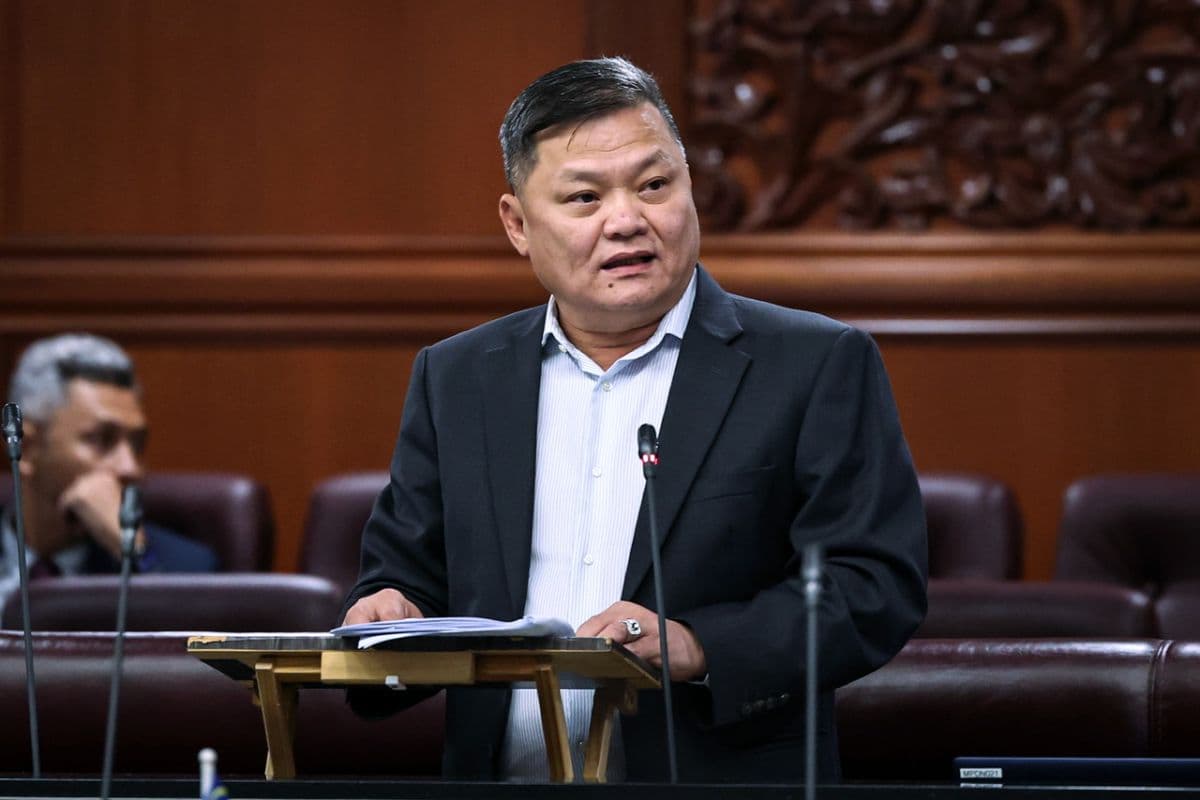
Such an initiative would require careful consideration and thorough consultation with all state governments to safeguard their interests, according to Deputy Natural Resources and Environmental Sustainability Minister Datuk Seri Huang Tiong Sii.
“The ministry will always respect the state governments’ jurisdiction over land and minerals as provided under the Federal Constitution,” Huang said in a written parliamentary reply to Senator Robert Lau on Tuesday.
Earlier, during a debate on the 13th Malaysia Plan, Lau described REE as another “goose that can lay the golden eggs”, with an estimated value of RM1 trillion. He also cautioned against repeating past mistakes made in the oil and gas sector, claiming Sabah and Sarawak's resources were extracted with minimal compensation and opaque practices.
Huang countered by stating that unlike petroleum resources, which fall under federal jurisdiction, land and mineral matters are under the purview of state governments.
He also reiterated that the government has no plans to set up a single entity or introduce a specific law to regulate the country’s REE industry, following objections from several states that viewed such proposals as an attempt to nationalise mineral resources.
“At present, the development of the mineral industry is regulated under the Mineral Development Act 1994, which covers all types of minerals, including REEs. In addition, State Mineral Enactments, the Sarawak Mineral Ordinance and the Sabah Mining Ordinance govern the issuance of mineral tenements as well as the determination of royalties and financial obligations at the state level,” Huang added.
Interest in Malaysia’s REE industry has grown, with the Mineral and Geoscience Department identifying 16.1 million tonnes of non-radioactive REEs across several states.
Since 2023, the government has banned the export of raw rare earth materials to prevent exploitation and resource loss.
During the tabling of the Mid-Term Review of the 12th Malaysia Plan (2021–2025) in 2023, Prime Minister Datuk Seri Anwar Ibrahim announced that a detailed mapping exercise and a comprehensive business model — integrating upstream, midstream and downstream industries — would be developed to maintain REEs' value chain within the country.
At the time, Anwar also said a new National Mineral Policy will be developed to provide a holistic guide for the mineral industry, including REEs, and will address principles of sustainability, responsible mining and environmental protection. It is intended to be a framework for mining activities in sensitive areas like forest reserves and to provide clarity for investors.
For more Parliament stories, click here.