

This article first appeared in The Edge Malaysia Weekly on September 1, 2025 - September 7, 2025
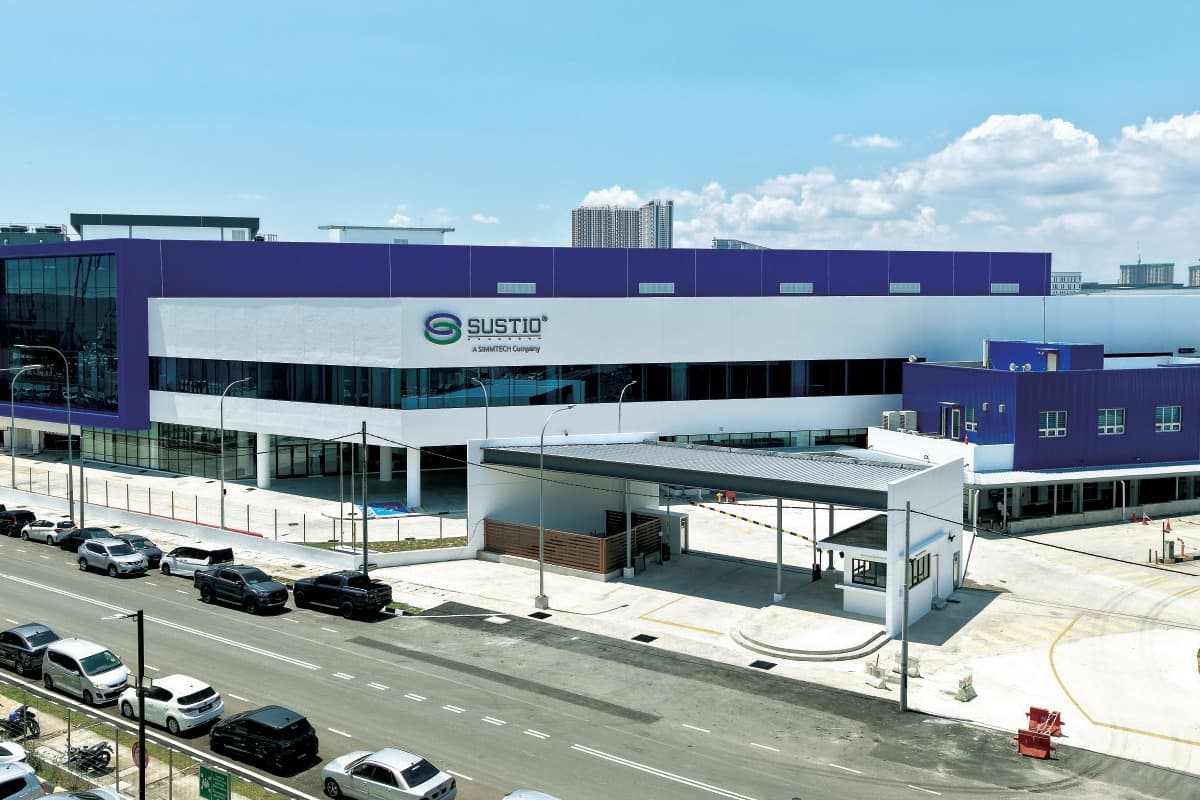
SOUTH Korea-based semiconductor company Simmtech Group is sharpening its focus on Malaysia, with its Penang unit Sustio Sdn Bhd expected to play a larger role in the group’s growth road map.
Simmtech Co Ltd CEO Jeffery Chun shares that Sustio, which has so far invested RM750 million in its operations in Batu Kawan, Penang, is anticipated to account for more than a fifth of the group’s turnover in three to five years (2028-2030) compared with its single-digit share now.
He says Sustio’s ongoing and future expansion plans reflect Malaysia’s growing role in the global semiconductor supply chain as the chip industry shifts towards artificial intelligence (AI)-driven demand.
“Simmtech is nurturing its Malaysian subsidiary to be a key hub that will lead our group’s long-term growth strategy. With the expansion of the second factory, the company has further strengthened its production capacity and technological competitiveness,” Chun tells The Edge in a virtual interview.
Chun, who is also a board member of Sustio, expects its contribution to the group to steadily expand in line with the growth of global semiconductor demand. “Specifically, we aim to have Sustio contributing more than 20% of the group’s sales [in] the next three to five years — with the initial goal being over 10% — up from about 6% of total sales as of July this year.
“This will position Malaysia as a strategic production hub and a core axis driving Simmtech’s mid- to long-term growth within the global supply chain,” he says.
Chun adds that the higher sales contribution from Penang will be achieved not only through capacity expansion, but also by strengthening Simmtech’s global customer base and increasing high-value product output. “Malaysia will remain a core driver of Simmtech’s global growth strategy.”

Founded in 1987, Simmtech has been one of the global leaders in semiconductor packaging. It was, notably, the first company in South Korea to supply key components for dynamic random-access memory (DRAM) and NAND flash.
DRAM is a type of temporary memory that stores data only when a device is powered on, while NAND flash is permanent storage that retains data even when the device is switched off. DRAM is widely used in digital electronics where low-cost and high-capacity memory is required, such as computers and graphic cards.
Devices such as digital cameras, USB flash drives, smartphones and solid-state drives (SSDs) utilise NAND flash memory for storage.
Headquartered in Cheongju, South Korea, Simmtech also runs manufacturing as well as research and development facilities in China, Japan and Penang. It has regional sales offices in the US, Taiwan and Singapore.
Notably, Simmtech is one of the world’s largest players in printed circuit board (PCB) and packaging substrate for the semiconductor industry.
The group currently accounts for about 30% of the global memory module and SSD PCB market. At the same time, it also remains one of the top 10 suppliers in the non-memory segment.
To put things into perspective, one in three electronic devices — be it a laptop, phone or digital camera — comes with a Simmtech product.
“Our strong position is expected to expand further, particularly in high-performance server and AI-related PCBs (printed circuit boards),” says Chun.
Currently, about 70% of Simmtech’s revenue comes from memory products such as personal computer (PC) DRAM, server DRAM and graphic DRAM. The remaining 30% is from non-memory or system integrated circuit (IC) products such as system in package (SiP), automotive, and consumer system on a chip (SoC).
“To ensure revenue stability, we are working to reduce our dependency on the volatile memory business and expand the non-memory sector,” Chun explains.
Some of Simmtech’s clients include major players in the global memory IC, global assembly and packaging, as well as global system IC sectors.
Phase 3 and Phase 4 on the cards
Back in July 2021, Simmtech chose an 18-acre site at Batu Kawan Industrial Park for its first large-scale factory in Southeast Asia.
Since starting operations there, Simmtech has — via Sustio — invested a total of RM750 million, including RM326 million for its second phase expansion. These investments created 1,400 high-value jobs, making the Penang operations a key part of Simmtech’s global network.
Now, with the completion of its second plant in April this year, Simmtech will be doubling Sustio’s production of advanced, high-performance circuit boards, also known as high-density interconnection (HDI) PCBs, that are used in smartphones and data centres.
Interestingly, Simmtech produces only substrates in Japan and only HDI in China, while its plants in Cheongju and Penang manufacture both.
Going forward, says Chun, Sustio plans for further growth focused on AI applications. It is designing a third building in Batu Kawan and has bought land for a fourth.
“The Phase 3 and 4 projects are currently under design and planning review. Their scale and timing remain flexible, depending on market conditions and technological developments.
“We will pursue phased and organic expansion in line with customer growth strategies and industry trends. These facilities will further strengthen Malaysia’s role as a critical part of Simmtech’s global supply chain, serving both existing and potentially new customers,” he elaborates.
Chun points out that Simmtech has been steadily expanding collaboration with the Malaysian equipment and material suppliers. “Some key materials are already being sourced locally. Given the high-quality and reliability requirements in our industry, localisation will progress step by step. Over the long term, we aim to raise the localisation ratio significantly by enhancing our local partners’ technical capabilities,” he says.
Sustio is fully owned by Simmtech Holdings Co Ltd, which also holds a majority stake in Simmtech Co. Simmtech Holdings and Simmtech Co are both listed on Kosdaq, the trading board of Korea Exchange.
Year to date, Simmtech Co’s shares have gained 136% to close at KRW25,800 on Aug 27, giving the company a market capitalisation of KRW837.77 billion (about RM2.54 billion).
Simmtech Holdings’ shares also advanced over that period, by 42.5%, to settle at KRW1,502, for a market capitalisation of KRW75.65 billion.
“While our stock price is influenced by the global market environment, we believe our technological competitiveness and long-term growth prospects will continue to support value creation,” Chun comments.
Sustio to break even in ‘near future’
A search with the Companies Commission of Malaysia found that Sustio is still in the red.
Despite having generated lower revenue in its financial year ended Dec 31, 2024 (FY2024), the company managed to narrow its net loss to RM260.65 million from RM424.31 million in FY2023. Its top line in FY2024 stood at RM136.5 million, a 25% drop from RM181.29 million the year before.
Chun acknowledges that Sustio’s current financial losses are mainly due to initial investments and lower utilisation rates from weak demand amid the global semiconductor downturn.
“This is driven more by external industry-wide factors rather than internal operational issues. As global demand recovers and productivity normalises, we expect to achieve break-even in the near future. We remain fully confident in Sustio’s long-term growth potential,” he remarks.
While some competitors are slowing down investments, Chun says Simmtech sees downturns as the best time to invest in capacity.
“Phases 3 and 4 will be pursued under this principle. This will provide us with a stronger position when demand rebounds, though the scale and timing remain flexible depending on market dynamics,” he notes.
When asked about the intensified US-China trade war in recent months, Chun says Simmtech has not made any notable changes to its strategies as the group has diversified sourcing and manufacturing operations across South Korea, China, Malaysia and Japan, with each site playing a distinct role.
“Malaysia in particular serves as a strategic alternative production base that reduces geopolitical risk and enhances supply stability for our global customers,” he says.
Chun adds that the US-China tensions represent both risk and opportunity.
“While multiregional operations add complexity, they also bring significant opportunities as customers diversify away from China. By leveraging each site’s strengths and implementing efficient operating systems, we are confident that the opportunities outweigh the risks in the long run,” he predicts.
Chun goes on to say a potential relocation of Simmtech’s major US customer in Penang is “highly unlikely” as the American firm continues to view Malaysia as a strategic hub.
“While policy changes in the US may pose uncertainties, Simmtech’s diversified global network and Malaysia’s strategic importance mitigate potential risks,” he says.
Chun admits that policy uncertainties will always exist, but Simmtech will be working closely with its customers to ensure supply stability. “We believe Malaysia’s role in our network is determined more by long-term industry trends than by short-term political factors.”
Chun opines that while the semiconductor industry remains volatile, AI, cloud computing and automotive electronics will continue to drive the demand. “As such, Simmtech’s next leap will be in server, AI, Edge AI, and eventually AGI (artificial general intelligence) PCBs. We are determined to secure leadership in these areas.
“Key growth drivers for Simmtech include AI infrastructure, cloud data centres, and automotive electronics including EVs and autonomous driving. These sectors are expected to significantly boost demand for next-generation PCBs,” he says.
Save by subscribing to us for your print and/or digital copy.
P/S: The Edge is also available on Apple's App Store and Android's Google Play.