

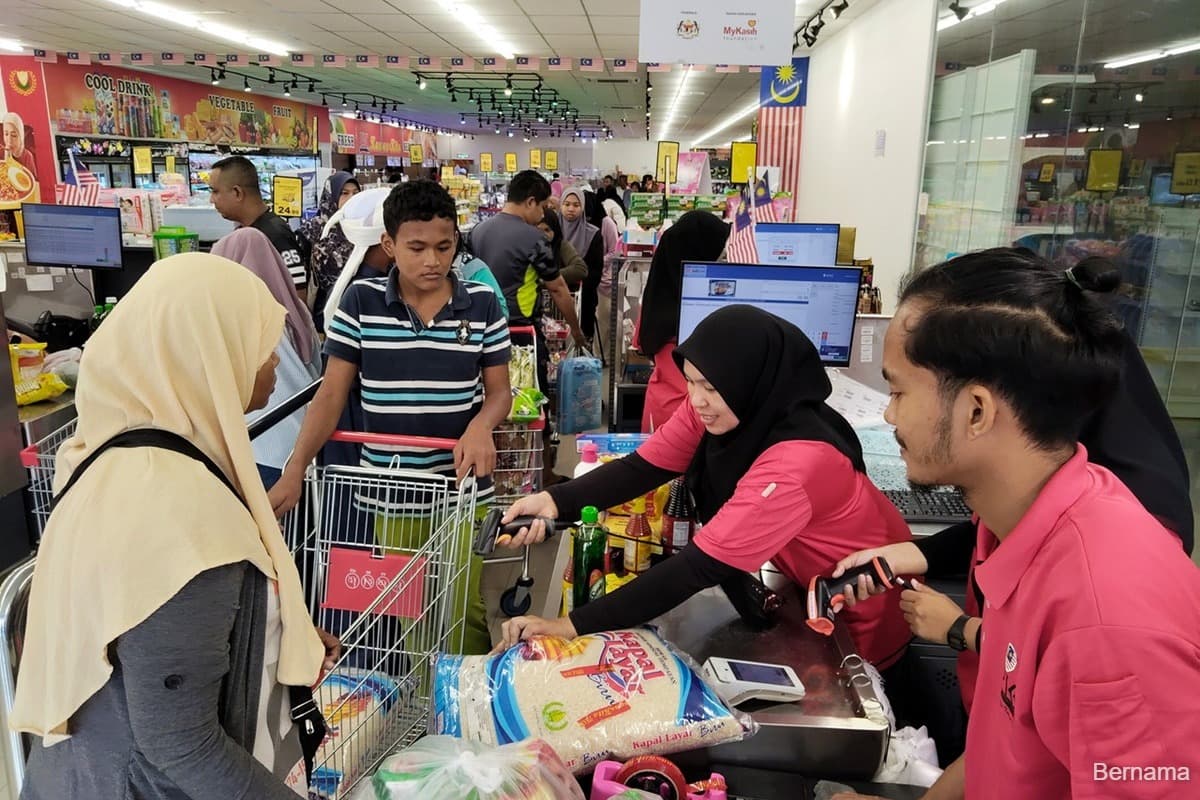
KUALA LUMPUR (Sept 2): The Social & Economic Research Initiative (Seri) has outlined several recommendations to strengthen the implementation of Sumbangan Asas Rahmah (Sara), following technical glitches reported on the first day of the programme’s rollout.
The one-off RM100 Sara aid — distributed to all Malaysian adults aged 18 and above in conjunction with National Day 2025 — allows recipients to purchase essential goods via their MyKad.
Local media reported an overwhelming response for the programme since it was launched on Sunday (Aug 31), with more than RM50 million spent on the first day alone.
However, the surge in transactions caused significant network slowdowns at several locations.
In a statement on Tuesday, Seri proposed measures including:
•Staggered launches by state or ID number with proper load-testing to avoid system overload;
•Public dashboards for system uptime, incident reports, and recovery times, along with enforceable service-level objectives for providers;
•Retailer readiness, including onboarding small/community retailers (particularly in rural Sabah and Sarawak), with mobile point-of-sale (POS) kits;
•Clear branding and FAQs (frequently asked questions) across all major languages;
•Fallback options such as secure e-vouchers during outages;
•Stronger anti-scam measures, coordinated with telcos and platforms;
•Independent post-mortems after each major rollout.
The think tank welcomed the government’s continued commitment to easing household burdens but stressed that execution must match ambition.
“Relief must feel reliable. When essential-goods aid fails at the checkout, good feelings turn sour — and trust suffers,” said Seri managing director Rashaad Ali.
Seri also noted several strengths worth preserving, including MyKad’s simple redemption process, broader item categories that reflect household needs, and a growing merchant network.
At the same time, it highlighted concerns over mixed public messaging around “Sara for all” versus targeted monthly aid, as well as a spike in scam links, which created confusion and anxiety for both beneficiaries and frontline staff.
“Digital social protection is the right direction,” said Seri chairman Helmy Haja Mydin. “But to make it durable, we must engineer trust by design: robust systems, transparent communication, strong merchant networks, and visible accountability,” he added.