

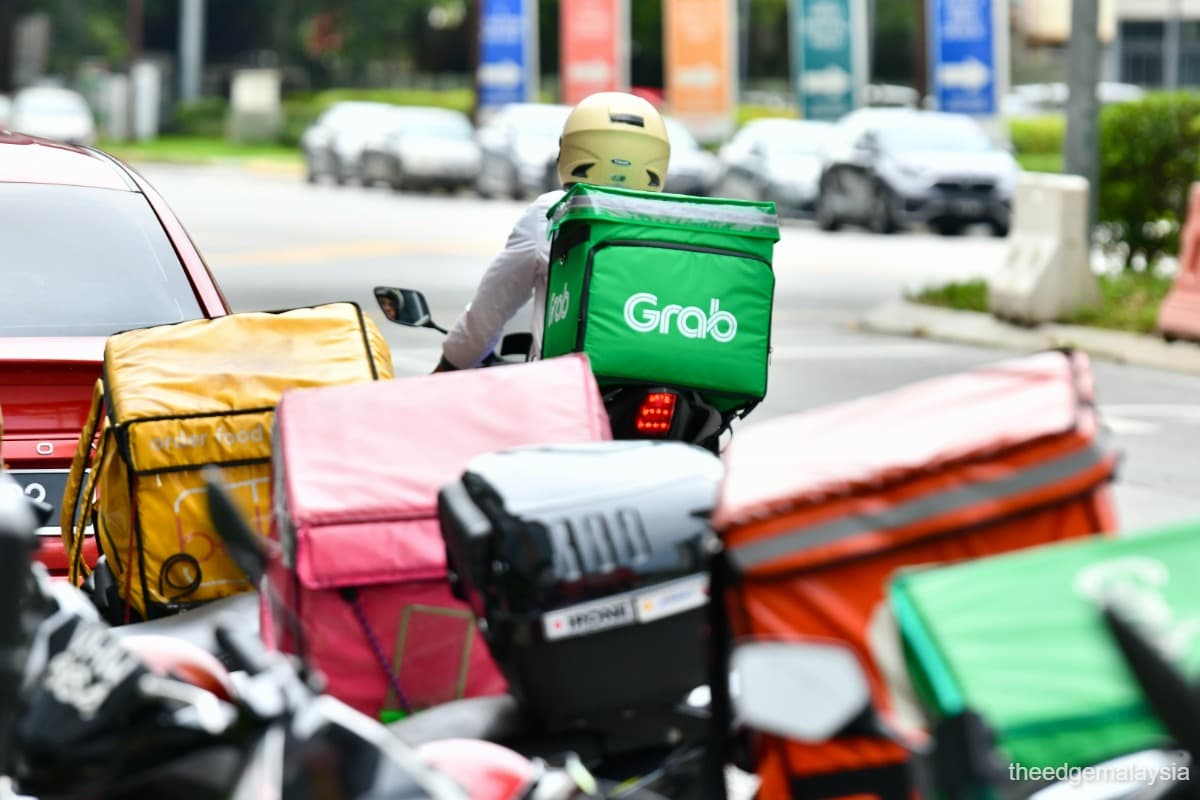
KUALA LUMPUR (Aug 28): Parliament on Thursday passed the landmark Gig Workers Bill 2025, which is expected to benefit about 1.2 million individuals engaged in Malaysia's gig economy.
The new law formally recognises gig workers as a distinct category of the labour force, neither employees under traditional contracts of service nor independent contractors, while introducing statutory safeguards through written service agreements with contracting entities.
Human Resources Minister Steven Sim Chee Keong, in his winding-up speech, described the law as a long-overdue mechanism to address the “kelompangan” (gaps) in labour protection for gig workers.
“For too long, 1.2 million Malaysians in the gig sector have worked daily without proper labour protection, as if their contributions to the economy did not deserve recognition. This bill ends that injustice,” Sim told the House. These include workers from e-hailing and p-hailing drivers to freelancers and digital content creators.
The new legislation will see all contracting entities — including digital platforms such as Grab and FoodPanda — sign written service agreements with gig workers. These agreements must stipulate minimum standards regarding payment terms, working arrangements, insurance coverage and termination procedures.

The bill also prohibits unfair practices such as unilateral rate changes, arbitrary deactivation of workers, and restrictions on working across multiple platforms. Under the bill, a Gig Workers Tribunal will be formed to adjudicate disputes for people in the industry, with powers to order compensation, reinstatement or payment of outstanding wages.
Workers are now entitled to be heard before any suspension, and if found not at fault, will be compensated with 50% of their average daily pay. Previously, gig workers had no legal recourse against such actions.
Social protection via Socso first, EPF to be considered later
For social protection, gig workers will be covered under the Self-Employment Social Security Act 2017 (Act 789), with contributions channelled through the Social Security Organisation or Socso. A 1.25% deduction per ride or delivery will be allocated to this fund, providing gig workers with benefits ranging from accident coverage to disability protection.
Sim acknowledged calls from MPs such as Datuk Mohd Isam Mohd Isa (BN-Tampin) and Syed Saddiq Syed Abdul Rahman (Muda-Muar) for mandatory Employees Provident Fund (EPF) contributions. However, he stressed that this would be considered in a later phase, with the current bill prioritising Socso protection as the first safeguard.
Syed Saddiq, a former Cabinet member, earlier argued during the debate that "we must continue to push to safeguard the future of gig workers through savings accounts via the EPF. Without this, workers remain exposed to uncertainty". He highlighted the model in Singapore, where gig workers and platform companies both make monthly contributions to their Central Provident Fund (CPF) accounts to ensure retirement savings.
Meanwhile, Mohd Isam suggested a minimum income guarantee that is aligned with the national minimum wage, which is now at RM1,700, should be considered.
In place of a statutory minimum wage, a tripartite council for gig workers will be created under the new law, where representatives of workers, platforms and government can negotiate pay structures, commission rates and algorithm-related concerns.
“This is not about turning gig workers into traditional employees. They remain freelancers with flexibility. But, for the first time, they will have a recognised forum to negotiate rates on equal footing with platforms,” Sim explained.
The law establishes a registrar of gig workers under the Human Resources Ministry to oversee registrations of both platforms and workers. Gig workers will also have the right to form associations, which can represent them in dispute resolution, tribunal proceedings and collective negotiations.
Ahead of its second reading, the proposed law received backing from industry bodies such as the Malaysian Trades Union Congress or MTUC, the Film Workers’ Association of Malaysia, and the Malaysian Sign Language Interpreters and Translators National Organisation, which together represent 1.42 million workers.
“This law ensures that Malaysia’s digital economy remains competitive, while upholding justice for workers who have too long been left without protection,” Sim said, calling the bill’s passage a “historic milestone” in building a fairer labour market.
The Gig Workers Bill, which contains 112 clauses across 10 parts, was passed after debate by 23 MPs and approved by majority voice vote in Dewan Rakyat.
For more Parliament stories, click here.