

This article first appeared in The Edge Malaysia Weekly on August 25, 2025 - August 31, 2025
ASSET tokenisation is still at an early stage of development in Malaysia, even though it has been a number of years since digital assets went mainstream. Local regulators are looking to narrow the gap and are exploring opportunities in this space with a view to creating greater market value.
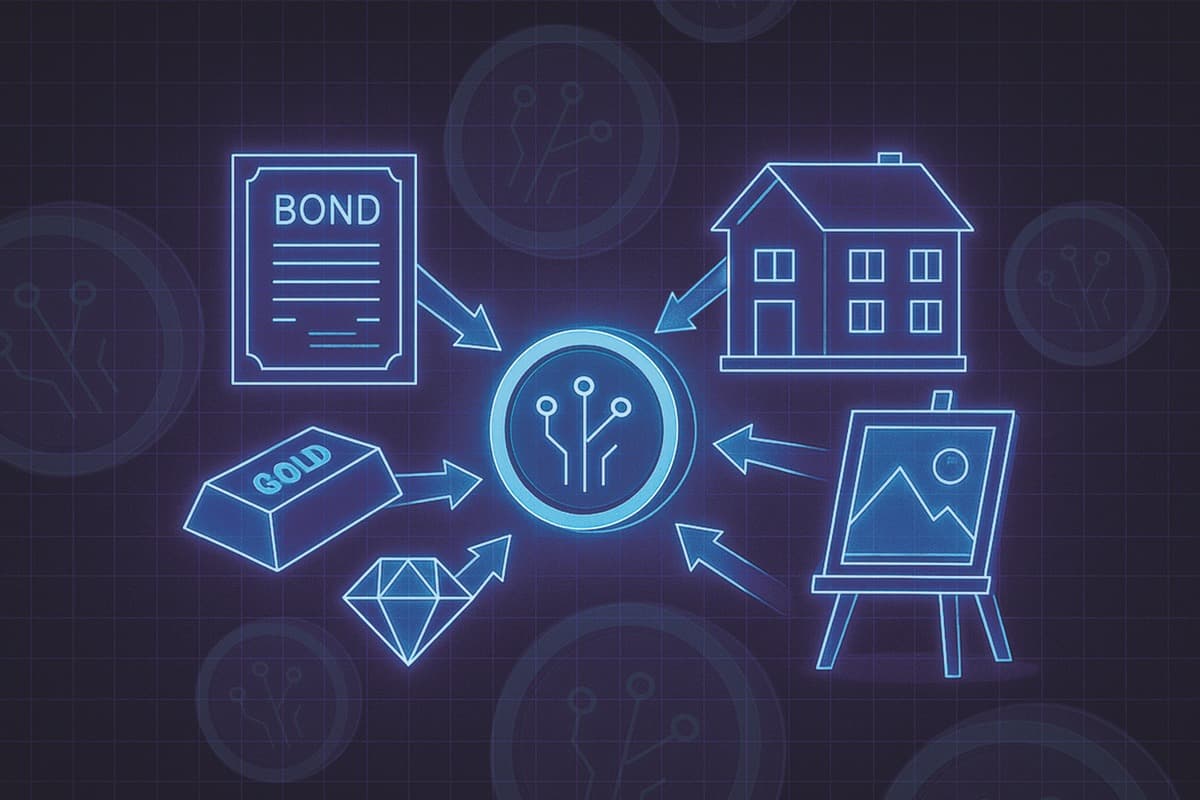
Tokenisation is the process of creating a unique digital representation of an asset on a blockchain network. It is able to combine different applications and features to create new systems, while all legs of the transactions — such as payments and the transfer of ownership — are executed simultaneously.
Consulting firm McKinsey & Co forecasts in a report that the total market capitalisation of tokenised assets — excluding cryptocurrencies such as Bitcoin and stablecoins like Tether — could reach US$2 trillion (RM8.4 trillion) by 2030, driven by its use in bonds and exchange-traded notes, loans and securitisation, as well as mutual funds and alternative funds.
McKinsey notes that asset classes with a larger market value, higher friction along the value chain, less mature traditional infrastructure or lower liquidity are more likely to achieve outsized gains from tokenisation. For instance, the feasibility of tokenisation is believed to be highest for asset classes that come with lower technical complexities and regulatory considerations.
In Malaysia, the potential value of tokenised assets is anticipated to reach US$43 billion by 2030, according to a white paper, titled “Project Juara: Malaysia’s Asset Tokenisation Opportunity”, published by Kenanga Investment Bank Bhd (KL:KENANGA) and jointly authored by Saison Capital Pte Ltd, Helicap Labs Pte Ltd and Satori Research Ltd.

This estimate represents a 72% jump from the tokenised asset market size of US$25 billion as at Aug 7 this year, suggesting tremendous growth potential. In 2020, the tokenised asset market value stood at only US$50 million.
The white paper looks at potential assets in Malaysia that could be tokenised, such as corporate bonds (US$13.5 billion), government bonds (US$10.9 billion), Islamic financial products (US$9 billion), unit trusts/mutual funds (US$6 billion) and commercial real estate (US$2 billion).
“In Malaysia, tokenisation is expected to follow a similar trajectory, catalysed by a supportive regulatory environment, high smartphone and internet penetration, and strong institutional interest in capital market innovation. Based on scenario modelling and extrapolation of industry trends, Malaysia’s tokenised asset market could reach US$43 billion by 2030, spanning regulated products such as unit trusts, corporate bonds, private credit funds and digital sukuk. This estimate suggests substantial opportunities for early movers to define the standards, partnerships and infrastructure of the domestic market,” say the authors of the white paper.
The adoption of asset tokenisation is expected to unfold in stages, with financial institutions — particularly banks, fund managers and securities firms — likely to lead the initial wave by introducing trusted, regulated tokenised products. This will be followed by a second wave involving asset owners, such as real estate developers, private credit originators and fund managers, who will work alongside financial institutions to bring a wider array of assets on-chain.
“This collaboration will help demonstrate the scalability and practical benefits of tokenisation across sectors. Institutional and accredited investors will gradually expand their allocations to tokenised products, particularly as liquidity improves and regulatory frameworks mature. Over time, retail investor participation may increase through regulated investment platforms and tokenised mutual fund structures that offer improved access and efficiency,” they added.
In May, the Securities Commission Malaysia (SC) published a consultation paper seeking public feedback on a proposed framework for tokenised capital market products, following growing interest among capital market participants seeking to offer such products or undertake regulated activities related to these products.
The proposed framework seeks to enable the broader exploration of distributed ledger technology (DLT) in capital markets, particularly use cases that enable programmable assets, fractional ownership, improved transparency and efficient record keeping, while ensuring investor protection. DLT is a digital system for recording data without the need for a single centralised authority.
The feedback from the public consultation on the proposed framework, which ended on June 16, was encouraging. There were responses from a wide range of local and regional players, including traditional financial institutions, digital asset ecosystem players and blockchain service providers, reflecting the growing interest in the adoption of blockchain technology, says the SC.
“Overall, the respondents were largely supportive of the tokenisation approach, recognising the benefits of tokenisation and expressing strong support for the development of tokenisation guidelines for regulatory clarity. We have also observed varying levels of familiarity with tokenisation and blockchain technology, as well as their applications,” the regulator tells The Edge.
Challenges faced by local players
The SC says many local players highlighted challenges in developing blockchain-related talent and expertise, alongside the need to build up their blockchain capabilities and deepen their understanding of the technology, operations and business use cases.
In contrast, the respondents from outside Malaysia, including industry players with foreign headquarters or international exposure, generally demonstrated greater familiarity, likely due to their experience in other jurisdictions.
Having said that, the SC stresses that the domestic market shows promise in engaging with tokenisation in a meaningful way, despite the varying levels of familiarity and experience among local players. Specifically, the regulator says understanding practical use cases is key to meaningful adoption in Malaysia, whereby blockchain technology offers decentralised data recordkeeping, which can reduce manual reconciliation among intermediaries and improve operational efficiency.
In addition, features like smart contracts and asset programmability enable innovations such as automated corporate actions. And globally, financial institutions are leveraging tokenisation to streamline settlement processes, automate interest payments and enhance distribution through fractionalisation for improved retail access, it says.
After considering the feedback received from the public consultation, the SC plans to release its Guidelines for Tokenised Capital Market Products by the end of the year, with the aim of providing clear regulatory expectations for issuers and intermediaries involved in tokenised securities.
In a brief reply to The Edge’s queries, Bank Negara Malaysia says it views asset tokenisation as a promising enabler of innovation in the financial sector, with potential applications beyond the capital markets. “Our focus is on exploring the potential benefits and implications of tokenising real-world assets in financial services, particularly in use cases with tangible benefits to the financial sector and Malaysia’s economy.”
The central bank says the discussion paper, which is set to be released later this year, will outline its proposed co-creation approach, guidance on developing tokenisation use cases and safeguards to support responsible exploration and adoption.
A LinkedIn post by Bank Negara shows that an industry engagement session, with 40 representatives from financial institutions, was held two months ago to explore the potential of asset tokenisation in the local financial sector. Chaired by the central bank’s assistant governor Suhaimi Ali, the session focused on key enablers, regulatory considerations and collaborative opportunities to support the development of exploratory projects on asset tokenisation in Malaysia.
When releasing its annual report in March, Bank Negara said there was potential for tokenised deposits to serve as credible on-chain settlement assets to complement a wholesale central bank digital currency (CBDC).
“Like traditional commercial bank deposits, tokenised deposits issued by regulated financial institutions are a claim against an issuing bank. These banks would still be subject to Bank Negara’s prudential requirements on liquidity and capital. As such, tokenised deposits allow commercial bank money to benefit from programmability and atomic settlement, while preserving trust in the existing financial system,” it said.

Multi-pronged regulatory approach
On regulating tokenised securities, the SC says it will adopt a technology-neutral approach, meaning that tokenised securities — being digital representations of securities on a blockchain — will be subject to the same regulatory framework as their underlying instruments. For example, a bond token will be regulated in the same way as a bond.
“While tokenisation offers significant potential benefits, it is equally important to address the associated risks, namely technological, operational and legal. A balanced and well-considered approach is therefore essential to support responsible adoption,” says the regulator.
Towards this end, a multi-pronged regulatory approach will be used, including facilitating innovation through experimentation, providing regulatory clarity and phased implementation. For instance, the SC’s regulatory sandbox will enable the testing of new business models, including those leveraging blockchain technology, in a controlled environment.
Elaborating on the phased implementation, the regulator says that it begins with a “digital twin” model to allow the market to develop familiarity with tokenisation. This is consistent with the approach used in other jurisdictions, such as Hong Kong. “This will also support a deeper understanding of the ‘digital native’ model at the same time,” it adds.
Notably, capital market products may be represented digitally by digital twin representation token, which enables a product in its traditional form to be represented as a digital copy on a distributed ledger. Alternatively, they could be represented by native tokens, whereby the tokens themselves are the capital market product.
See also “Riding the tokenisation wave” on Pages 6 and 7 of our Wealth pullout
Save by subscribing to us for your print and/or digital copy.
P/S: The Edge is also available on Apple's App Store and Android's Google Play.