

This article first appeared in Forum, The Edge Malaysia Weekly on August 25, 2025 - August 31, 2025
The world around us is at a point of inflexion. New political configurations will emerge as the old understandings, alliances and organisations of the old order break down. Economic activity in both the US and China will slow soon: What is now a relatively benign world economy will give way to a more troubled one. Realising that the global political and economic order is changing permanently, policymakers, corporate strategists and financial investors will speed up their adjustments. Asian nations need to be proactive in shaping the new order that is emerging.
In coming months, the feared downsides will become real
In recent months, we have witnessed trade wars, a destabilising America rather than a stabilising one, a Chinese economy that cannot shake off its malaise and horrific violence in Ukraine, the Middle East and Africa dominate the headlines. Yet, the economic numbers seemed to hold up and equity markets kept recording new highs.
That benign world is now coming to an end as we explain below.
The US to enter a period of stagflation and political dissension
The signals from recent data are becoming clearer that the American economy is at risk of stagflation. First, businesses and consumers will react to the damage caused by tariffs; the sharp reductions in government payrolls; reduced labour supply because of the harsh crackdown on immigrants; and the weakening of institutions. This is why labour demand has suddenly cooled, core capital goods orders are now falling, purchasing manager surveys are signalling much slower growth and home builder confidence has fallen.
Yes, a massive burst of investment related to artificial intelligence (AI) has helped to support the economy but that pace of expansion cannot be sustained, especially as more firms are now questioning the benefits of such investment. In addition, falling oil prices have led shale producers to slash output and cut capital spending. The economy is likely to slow further from the roughly 1.2% pace in the first half of the year, coming close to flat growth or worse by the last quarter of the year.
Second, expect higher core inflation. Until now, companies have avoided passing on tariff costs to consumers — they have accepted lower profit margins or relied on stuff imported before the tariffs kicked in or have persuaded their foreign suppliers to reduce their prices for now. This will not last. The surveys suggest that more of the cost will be passed on to American consumers in coming months. Overall inflation may be helped by lower oil prices but the core measure that excludes food and energy prices will still rise — and that is what is what the US Federal Reserve will focus on. Consumers will also not like the prices they will soon pay for everyday consumer goods.
Third, the central bank will be faced with bad options as the economy endures stagflation. If it cuts rates, inflation — which is already running ahead of its target — may pick up. If it does not cut rates, the slowdown could turn into a recession. In all likelihood, the Fed will cut rates a couple of times this year. But bond markets will still worry about inflation, which could mean higher bond yields that will hurt borrowing costs for companies and home buyers.
Fourth, there is a growing likelihood that the country will soon be mired in dissension. As deteriorating economic conditions undercut his popularity, President Donald Trump’s opponents will regain confidence and the political pushback against him will intensify. There will be more protests, more state governments finding ways to stymie the federal government’s initiatives, and more court cases that go against Trump. Many in his own Republican party will find the courage to resist his policies.
Fifth, this will place the US dollar under a cloud. As Trump’s budget is implemented, it will become clear that the generous tax cuts will not be so easily funded by tariff revenues as the administration claims. Concerns over the American fiscal position will grow. The political dissension will also be dollar-negative.
No early end to China’s economic struggles
The numbers describing the Chinese economy in July were a shocker. They leave little doubt that the Chinese economy is in great difficulty:
• Even before the major hit from the trade war was felt, and even with the impact of government stimulus programmes, consumer spending and investment contracted in July compared with June while industrial production slowed.
• Deflationary pressures persist: Consumer prices were flat in July while producer prices kept on falling — down 3.6% in July over July 2024. Property prices also continued to fall.
• Monetary conditions remained unsteady: The quantum of new loans fell for the first time in 20 years as people preferred to repay loans rather than take on new borrowings.
• Consumer confidence is low: The People’s Bank of China’s employment sentiments index fell to a historic low while the income sentiments index continued to fall from already depressed levels similar to the worst times during the Covid-19 pandemic.
Second, policy makers remain averse to a high-powered stimulus despite the bad news. If stimulus is increased at all, it will be done incrementally. In fact, some policy moves are actually proving to be a drag on the economy — such as the limits placed on civil servants’ entertainment. That leaves the economy in a fragile position.
Third, it appears that China will seek to export its way out. That means more surges of Chinese exports to markets in both developed and emerging economies, with the risk of a protectionist backlash against Chinese exports.
Thus, the global economy is not in a good place. There are some pieces of good news but the question is whether those will be enough to offset the negatives. For example, oil prices are set to fall further as oil producers reverse their previous production cuts. But the likely sanctions on Russian oil will limit how far oil prices will fall. Another positive is that new technologies will accelerate. Even if the AI excitement peaks, advances in other segments of infotech as well as in biomedical and renewable energy will spur investment and create new and exciting products. But, with both the big economic powers slowing simultaneously, we doubt that these tailwinds will be enough to help the world economy.
No good news on trade and geopolitical risks
Finally, the geopolitical ferment will persist. The results of the Trump administration’s trade war are now clear even if agreements with some major trading partners such as China are pending — it will be a world of greater protectionism, more inward-oriented policies and arbitrary deal-making replacing carefully considered economic partnership agreements.
At the political level, America’s whimsical commitment to treaties, agreements and alliances plus its trade wars has shaken the foundations of the international system. The administration’s rough treatment of India, in particular, was a wake-up call for many. While the US has tried to bring peace to Ukraine and arbitrated agreements to disputes in areas such as the Caucasus and Central Africa, it is not clear if the unconventional approaches the administration uses will work or produce undesirable outcomes.
The result: a reconfiguration of the political and economic system
Policymakers, corporate strategists and financial investors will conclude from the above that the adverse changes in geopolitics and international trade are permanent. They will speed up their adjustments, which will reshape the global landscape.
First, expect governments to reconfigure their relationships with allies and foes. Arrangements pursued by previous American administrations such as the AUKUS agreement with the UK and Australia and the Quad agreement between Australia, India, Japan and the US are likely to wither, given the current administration’s uncertain commitment to them.
Other nations are seeking new mechanisms to help them cope with a more turbulent world. The BRICS movement has been expanded beyond the initial membership of just Brazil, Russia, India, China and South Africa to embrace a much wider range of members and associates, including Indonesia.
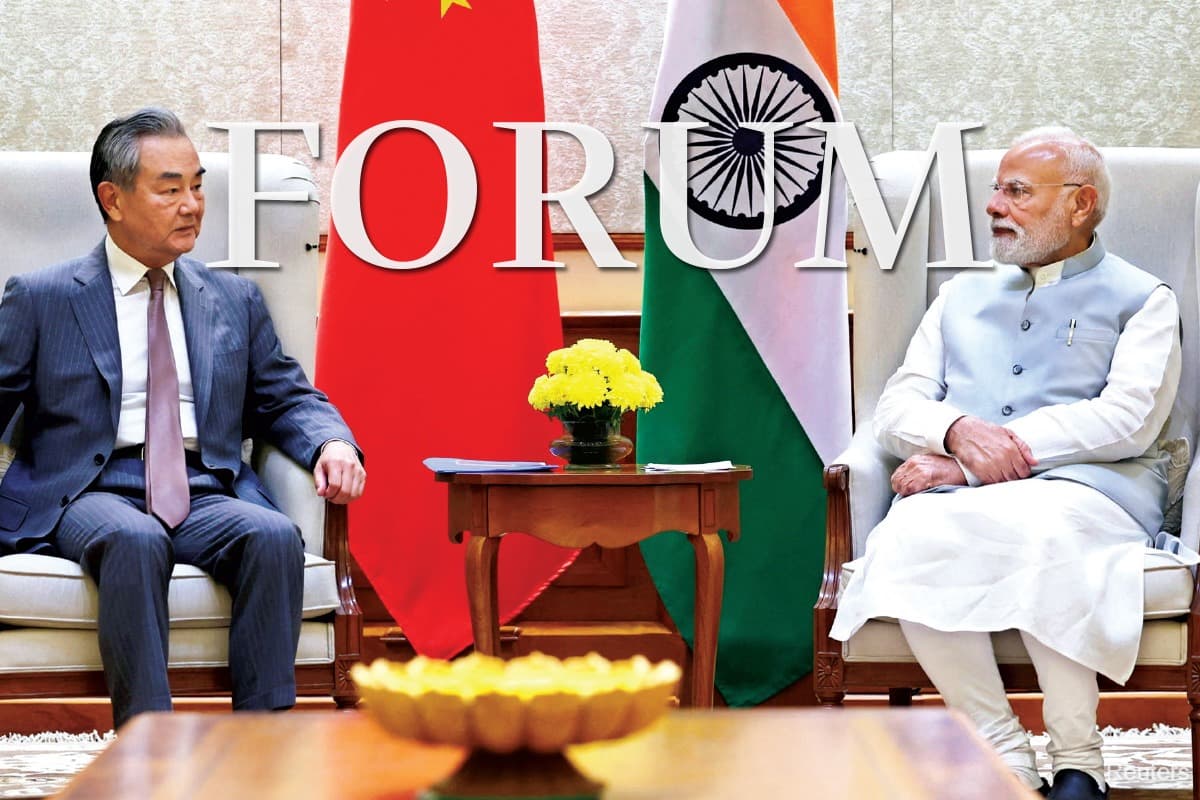
Separately, countries are also casting aside old feuds and seeking better relationships even with rivals. An example is China and India, which have a serious and occasionally violent border dispute. An unfriendly America has persuaded the two Asian giants to set aside their differences for now and forge an understanding of sorts. Progress was made in last week’s visit to New Delhi by Chinese Foreign Minister Wang Yi, so India’s Prime Minister Narendra Modi will soon visit President Xi Jinping in Beijing.
Second, economic models will also be reconfigured:
• Now that there is some clarity on Trump’s tariffs, global companies will be able to adjust their strategy on production locations. Given the poor relations between the US and its allies with China, and the higher tariffs on China compared with other emerging economies, the case for relocating production out of China to other production bases remains. Some of this might involve reshoring, that is, bringing production back to the US. But so far, such reshoring has been limited. Unless it is a sector such as electric vehicles or chemicals or equipment manufacturing where China is dominant, a shift of production to economies such as those in Southeast Asia makes sense.
• An increased emphasis on resilience to external threats and shocks will probably result in more efforts at self-reliance and increased diversification of economic and security dependencies. Industrial policies will be increasingly favoured to promote home-grown winners. There will have to be more research and development (R&D) spending as well, as ambitious countries realise that they need to promote innovation at home.
• Increased defence spending is virtually certain in most parts of the world, including Asia. But, all this will require more spending. Defence, industrial policies and R&D are not cheap. Given the competing demands on the exchequer, the fiscal authorities will seek new revenue sources through higher tax rates, wider tax bases and new revenue mechanisms. We are already seeing this search for new revenue sources in many countries. In the US, the Trump administration has required tech companies to hand over a share of revenues from exports of sensitive goods to China. In many other jurisdictions, tax loopholes are being tightened. Even in lightly taxed Singapore, the fiscal authorities are aggressively raising property taxes. Businesses and high-net-worth individuals will have to plan for more of this.
Third, financial investors will also have to make some changes as well. The parameters of the asset pricing regime have now changed — we are into a world of lower growth and possibly higher inflation. The political, economic and fiscal policy changes in the US have weakened confidence in America. Bond yields could be higher on average over the next 10 years compared with the last decade. If, as we expect, American inflation picks up while the damage from higher tariffs causes lower growth and lower inflation elsewhere, there will be implications for how investors rate the US dollar relative to its competitors such as the euro.
In this riskier and more uncertain world, there will be a search for alternative safe havens to the US and the US dollar. With rapid advances in payments technology, and more governments open to experimenting with the likes of stablecoins, we can expect an acceleration of financial innovations.
Conclusion
It does not seem likely that existing organisations such as Asean can work out the consensuses needed to be active participants in reshaping the global order. So, the most likely way forward will be for smaller coalitions of the willing to work together to jointly advance their interests.
Within Asean, for instance, it is Vietnam, Malaysia and Singapore which are comfortable with open economies and ways should be found to increase cooperation within this group. Another option might be for the countries to push for a stronger collaboration between the European Union and the Comprehensive and Progressive Trans-Pacific Partnership.
Whatever the precise mechanisms chosen, there is a need for Asian nations to work together more effectively.
Manu Bhaskaran is CEO of Centennial Asia Advisors
Save by subscribing to us for your print and/or digital copy.
P/S: The Edge is also available on Apple's App Store and Android's Google Play.