

PUTRAJAYA (Aug 19): The Court of Appeal (COA) on Tuesday ruled that defining online remarks as “offensive” and made with the intent to “annoy” cannot constitute a criminal offence under Section 233 of the Communications and Multimedia Act 1998 (CMA).
Federal Court judge Datuk Lee Swee Seng, chairing a three-judge panel, declared these terms unconstitutional as they violate the protection for freedom of speech under Articles 10(1)(a) and 10(2)(a) of the Federal Constitution.
“We find the impugned words ‘offensive’ and ‘annoy’ in Section 233 constituting an offence to be violative of Article 10(2)(a) of the Federal Constitution read with Article 8.
“It is not a permissible restriction to freedom of speech under our Federal Constitution,” he said while reading the judgment in court.
He said that Section 233 lacked an objective standard for what qualifies as “offensive” or an “intention to annoy”.
He said that without such clarity, the provision risks arbitrary enforcement and could criminalise truthful speech simply because it provokes discomfort.
“To silence speech that is true just because some may find it offensive and annoying would be to use a sledgehammer to kill a fly,” the court observed.
Lee further affirmed the primacy of truth, stating:
“A premium should be given to truth, and the fact that some truths may be unpalatable does not justify criminalising the messenger merely because certain groups do not like the message,” he said.
However, the bench also ruled that its decision was made to take effect only prospectively — meaning the effect of the ruling would apply to current and future cases, but not those already concluded.
“This court’s declaration is therefore to be applied prospectively so that concluded cases are not to be reopened, while pending and future cases will take guidance from this judgment.”
He explained that if it were to be applied “retrospectively”, it would open the “floodgates” of those wanting to challenge past cases.
“If the declaration were to be applied retrospectively, it would open the floodgates to challenge all concluded cases, thereby disturbing the finality of decisions already rendered. The law leans in favour of finality of decisions and certainty of the law. Thus, the declaration is to apply prospectively, binding on pending and future cases.”
The ruling came after activist Heidy Quah challenged her 2021 charge under Section 233(1)(a) of the CMA.
She had been accused of making an “offensive” Facebook post about conditions in an immigration detention centre during the Covid-19 pandemic.
Although the Sessions Court later granted her a discharge not amounting to an acquittal (DNAA), Quah pressed ahead with a constitutional challenge.
The High Court had dismissed her application in 2023, but the Court of Appeal reversed that finding on Tuesday.
In explaining, Lee said that the words “offensive” and “annoy” were overly broad.
“All it takes is for a person or a group of persons to make a police report that the words communicated through some social media platform are offensive to them and that they had been annoyed by the words used. An investigation paper would have to be opened, and depending on the pressure exerted… the person making that communication may well be slapped with a charge under Section 233 of the CMA,” he said.
COA judges Datuk Hashim Hamzah and Datuk Azman Abdullah were the two other judges on the panel.
Senior federal counsel Liew Horng Bin, who represented the government, said after the judgment that he will await instructions on whether he will appeal this COA decision.
Lee, on the other hand, said Section 233 continues to cover communications that are obscene, false, menacing, or made with intent to harass, abuse or threaten.
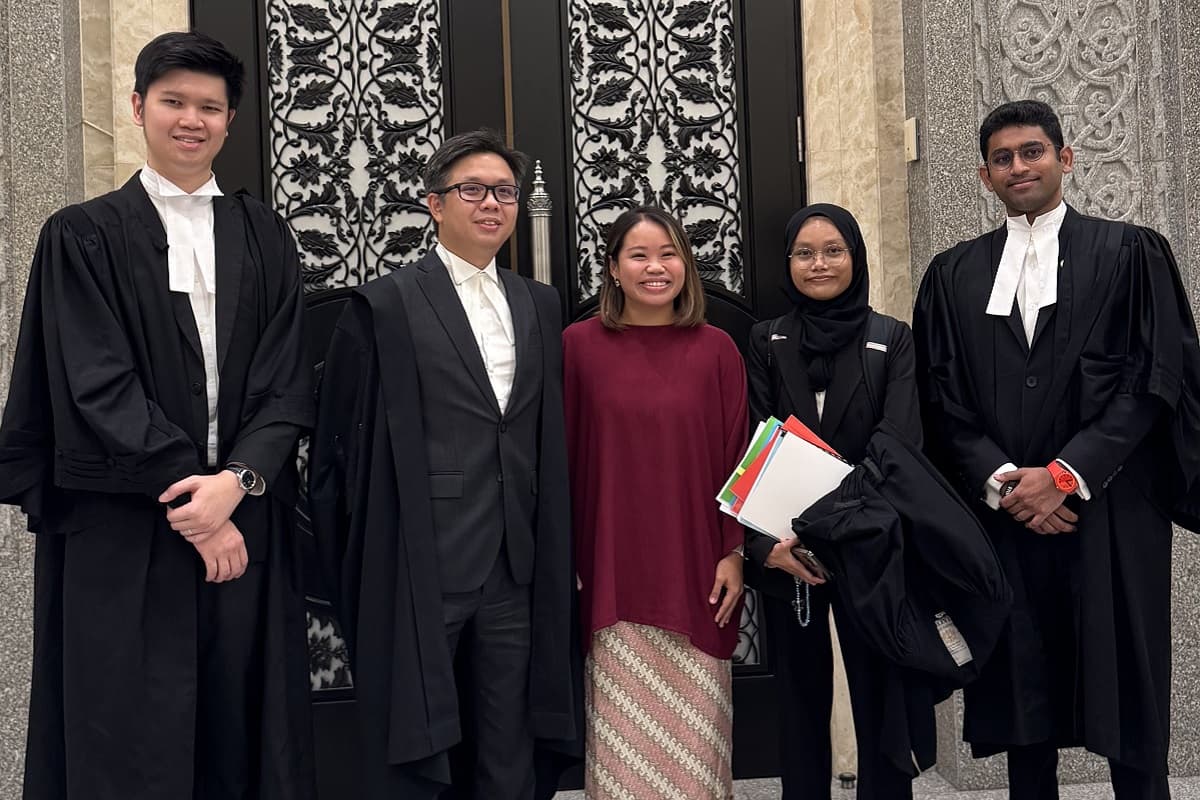
Lawyers Datuk Malik Imtiaz Sarwar, Surendra Ananth, New Sin Yew and Nur Izni Syazwani represented activist Heidy Quah in her successful constitutional challenge on Tuesday.
Lawyer Kee Hui Yee held a watching brief for the Malaysian Bar, while lawyers Lim Wei Jiet and Nevyn Vinosh Venudran represented Clooney Foundation for Justice and Suara Rakyat Malaysia in assisting the COA as amicus curiae.