

This article first appeared in The Edge Malaysia Weekly on August 18, 2025 - August 24, 2025
FM Global Logistics Holdings Bhd’s (KL:FM) push into international markets is starting to pay off, as the integrated freight and logistics provider reaps the benefits of a diversified market presence amid global trade uncertainties.
To mitigate the impact of cyclical downturns and supply chain disruptions, FM has broadened its footprint across nine countries, namely Malaysia, Singapore, Indonesia, Thailand, the Philippines, Vietnam, Australia, India and the US.
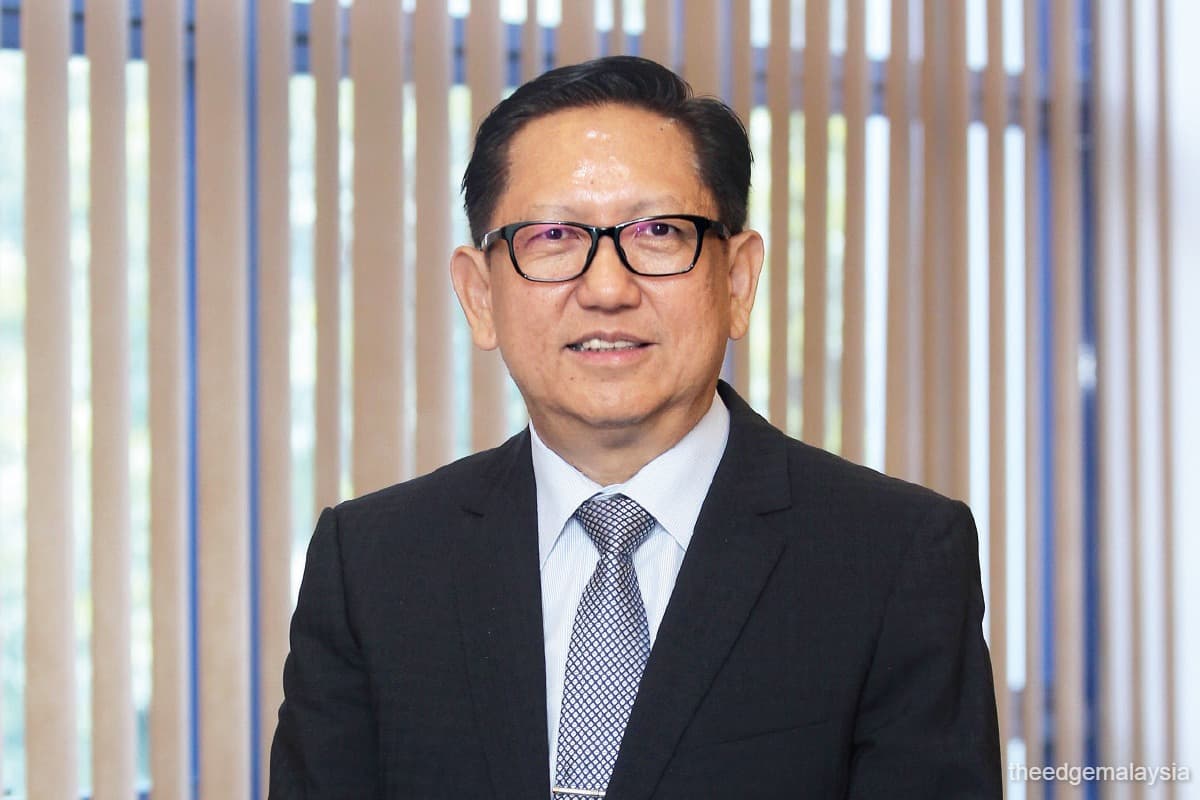
“We’ve come a long way in building our overseas presence. Today, our international operations account for between 30% and 35% of both gross profit and revenue, with the balance coming from our domestic market,” says co-founder and group managing director Chew Chong Keat, 63, in an interview with The Edge.
“This diversification is an important move for the group. Operating across multiple countries offers clear advantages in terms of business resilience and growth potential.”
Chew acknowledges that operating in multiple markets is a double-edged sword. “While we can capitalise on the upside in each market, we’re also exposed to local headwinds. But having that geographical spread remains crucial — that’s the key point I want to emphasise.”
Still, he is clear that expansion is never pursued for its own sake. “The question is always whether a country can generate business and be profitable. There’s no point in opening an international office if it remains unprofitable and ends up draining resources and hurting the group’s overall performance,” he explains.

A look at FM’s current international offices in the latest quarter ended March 31, 2025 (3QFY2025) shows that all, except Singapore, have turned profitable.
Firm still on the lookout for new markets
FM continues to strengthen its overseas operations through potential acquisitions, according to Chew. “If an opportunity arises in a market where we see strategic value, we will definitely consider establishing a presence. That said, I believe we are close to achieving coverage in the key markets at this stage.”
Notably, the group has opted to stay out of more developed Asian economies such as Hong Kong, South Korea and China. “These are highly mature markets for logistics and less-than-container load (LCL) consolidation business,” Chew says, adding that penetrating these markets is challenging due to intense competition, particularly in China.
Despite its Southeast Asian focus, FM’s regional footprint remains incomplete.
“We’re not yet in Myanmar, Cambodia, or Laos. Again, this comes down to market opportunities. We prefer to enter markets where we already see contribution from our existing international offices into that country — that gives us a base to build on.
“But once you have the base, you also need to develop the local business. We don’t rely solely on inbound volumes from other markets. That’s how we evaluate where it makes sense for us to expand,” he adds.
Chew also emphasises FM’s disciplined approach to business expansion. “We’ve been strategic in setting up overseas offices for the last 20 years and we have done that quite successfully to be able to move the group from just Malaysian-centric revenue.”
The group is also not afraid to exit a venture if it doesn’t perform, having previously divested from businesses such as tug and barge operations, shipyard-related activities and e-fulfilment solutions that failed to generate meaningful returns.
“We must uphold our core strategies to stay lean and productive. Let’s say if something’s not working, we cut losses quickly rather than let that continue to drain resources.
“Still, we’re constantly on the lookout for good opportunities — whether in third-party logistics or elsewhere — that can drive revenue. That would justify further investment. But for now, there’s nothing on the immediate horizon,” says Chew.
On the group’s performance, he describes the financial year ending June 30, 2025 (FY2025) as “quite satisfactory”, despite various headwinds and unforeseen events.
For the nine months ended March 31, 2025 (9MFY2025), FM’s net profit declined 4.9% year on year to RM23 million from RM24.2 million due to higher-than-expected operating expenses, while revenue rose 21.2% to RM722.3 million. The group is set to announce its 4QFY2025 results later this month.
Chew notes that the third quarter of FM’s financial year tends to be seasonally soft due to major festivities such as Chinese New Year and Hari Raya. “Generally speaking, the fourth quarter tends to reflect stronger performance,” he adds.
Analysts forecast that FM will post a higher net profit of RM32.3 million in FY2025 from RM30.9 million in FY2024, rising to RM35 million in FY2026.
As at end-March 2025, FM’s cash and bank balances stood at RM88.8 million, while total borrowings amounted to RM228.4 million, resulting in a net debt position of RM139.6 million and a gearing ratio of 0.33 times.
Dividends remain a consistent theme, although the group has no formal policy in place.
“We’re comfortable with our gearing. It’s at a level where we could either raise or reduce it, depending on the opportunity. Our cash flow generation is strong — just look at our dividend payout. We have maintained an average payout ratio of 20% to 50% of net profit over the years. To maintain that while still growing gives you a sense of how robust our cash flows are,” Chew says, adding that FM is known as a dividend-paying company.
Challenges loom ahead
While macroeconomic uncertainties like the US tariffs remain a concern, Chew believes the global market is slowly adjusting. “FY2025 caught many off guard with sudden tariff changes. But you can see some reality setting in, even from China’s side. The extreme rates — 150%, 200% — have started to normalise somewhat.”
On its part, FM’s limited exposure to the US market offers some insulation, he says. “If, say, 70% to 80% of our customers were focused on the US, then yes, we’d be very concerned. Tariffs can reshape trade dynamics overnight, often with a snap of a finger by a world leader. But for us, exposure to the US market is in the low teens, so the direct impact is manageable.”
Still, Chew is mindful that broader disruptions in global trade flows could affect FM’s customers. “Even if our customers aren’t heavily reliant on the US, changes in trade policy can trigger shifts in demand, dumping, or pricing competition, particularly for small and medium enterprises. It takes time to find new markets, and this creates ripple effects across the supply chain, including for us.”
FM currently operates about 880,000 sq ft of warehouse space, of which around 760,000 sq ft is owned, with the remainder leased.
When asked whether he is concerned about the deluge of warehousing supply coming on stream, leading to a moderation in overall prices and rents, Chew responds that FM is “not a landlord”. “Our model is built on supporting customers with our integrated third-party logistics and distribution services,” he stresses.
On capital expenditure (capex), Chew says most of the group’s major property investments were made in previous years. “The new 200,000 sq ft warehouse at Port Klang is already operational, so most of that capex would have been recorded earlier. In FY2025, our capex of about RM20 million will be largely focused on fleet renewal.”
FM’s capex remains flexible, with larger outlays occurring opportunistically. “We’ve paid for land in earlier years, but lumpy investments like that depend on timing and strategic needs,” he adds.
International offices to take off in FY2026
Chew is optimistic about FM’s outlook for FY2026, supported by internal restructuring, stronger cost controls, and momentum in both domestic and international operations.
“FY2026 will definitely be built on a stronger platform. We’ve streamlined areas that weren’t generating profits and merged some operations to improve efficiency. That process is still ongoing, but it puts us in a better position,” he says.
FM sees its international offices — the result of years of investment — gaining traction in FY2026. “It’s not just the international segment; even our Malaysian operations have been strategically aligned for a stronger performance,” he adds.
On performance drivers, he expects both domestic and international freight services to drive the group’s growth in FY2026.
“We can’t grow just one segment. Even though it may appear we’re expanding domestically with more trucks and warehouse space, our model is built on supporting exporters and importers end to end.
“We can’t afford to just build warehouses and hope customers come. Everything we do must be backed by customer acquisition and, ideally, those customers support multiple services from trucking and warehousing to freight forwarding and customs clearance,” he explains.
That full-spectrum logistics model has been central to FM’s strategy. “We’ve always aimed to provide total supply chain solutions. Today’s customers don’t just want freight. They expect clearance, trucking, warehousing … everything. That’s why we’ve invested in our own fleet and manpower. We even manage our own customs clearance operations nationwide.”
Chew says FM still relies on third-party vendors for certain routes, such as the East Coast of Peninsular Malaysia, but strives to handle as much in-house as possible to maintain service quality and control.
Asked about the outlook for container shipping rates, Chew says the environment remains too volatile to make accurate forecasts.
“To be honest, no one can really tell. Even our discussions with shipping lines are now based on short-term rates. The market’s too fluid,” he says. “That’s why we continue to diversify — by segment, by geography, and by service — to spread risk and serve the customer across the supply chain.”
As at Aug 7, Drewry’s World Container Index, which tracks the freight rates on eight major shipping lanes, had declined 56% year on year to US$2,424 per 40ft container.
Shares of FM have fallen 7% year to date. According to Bloomberg, the two analysts covering FM have “neutral” calls, with a consensus target price of 57 sen, representing a potential upside of 6% to Aug 14’s closing price of 54 sen.
Save by subscribing to us for your print and/or digital copy.
P/S: The Edge is also available on Apple's App Store and Android's Google Play.