

This article first appeared in The Edge Malaysia Weekly on August 18, 2025 - August 24, 2025
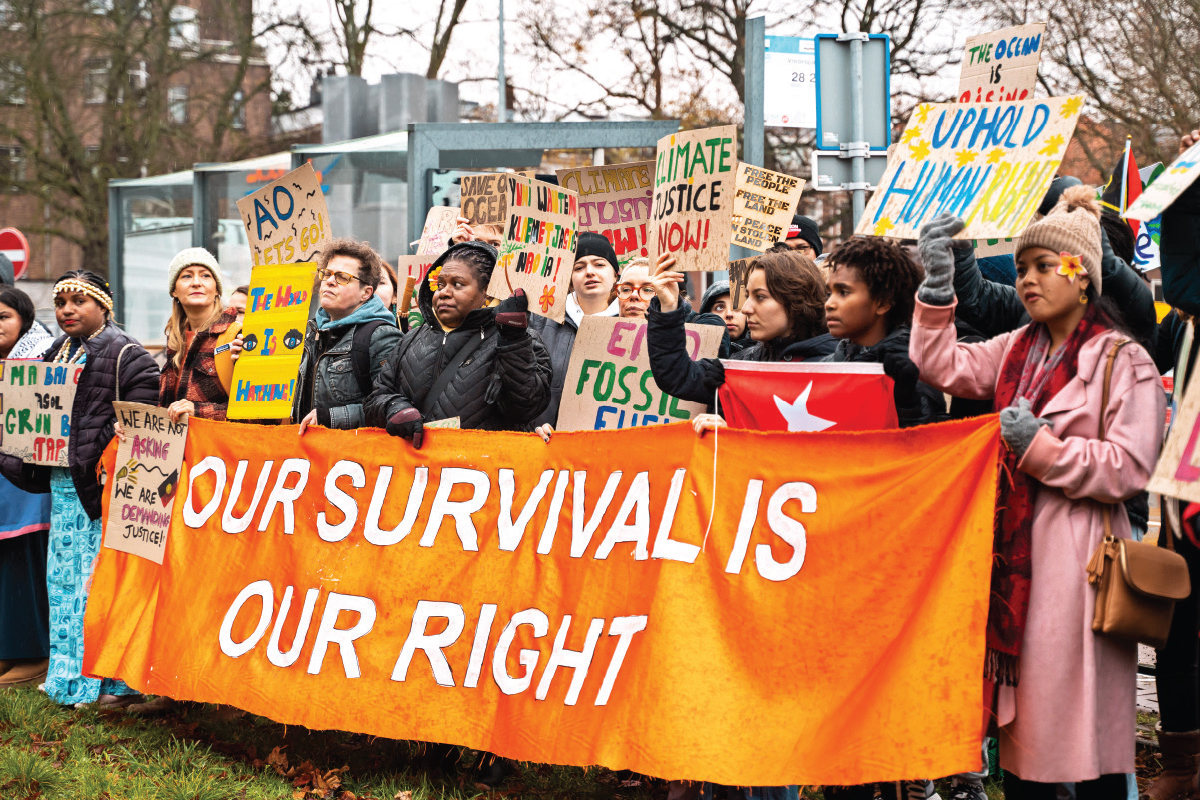
Late last month, the International Court of Justice (ICJ) issued a landmark advisory opinion that all countries are obligated under international law to protect the people and planet from the impacts of climate change.
The court went further to conclude countries’ legal obligations also extend to reducing greenhouse gas (GHG) emissions through effective regulations, and to limit new fossil fuel production and subsidies. Countries that breach these obligations can, in principle, face liability for climate harms, which means impacted parties could demand reparations.
The ICJ’s opinion is not legally binding, and only states can bring up cases in the ICJ, which is the principal judicial organ of the United Nations (UN).
However, this strongly worded opinion is still significant for a few reasons. For one, the way in which this opinion was produced, says Kiu Jia Yaw, partner of Kiu & Co, a sustainable development law firm, shows there is strong support for this agenda.
It started in 2019, when a group of students from the Pacific Islands — a region already suffering from sea level rise — gained the support of global youth organisations and the government of Vanuatu, to ask the ICJ to provide its opinion on two questions. One, whether states are legally obliged to protect the climate system, and two, the consequences if they fail to do so.
They brought this resolution to the UN General Assembly, and this was backed by 105 sponsor countries, not including Malaysia.

Along the way, the ICJ received statements from countries — again, not including Malaysia — and international groups. The international court said this was the highest level of participation in a proceeding that they had received. After seven months of deliberation, the court delivered this opinion. This was only the fifth time it has ever given a unanimous result, after 88 years in operation.
“In that sense, the legitimacy is very high, and it’s as good as it gets for international law. While it’s not legally binding, it has been requested by the UN General Assembly with backing from so many governments around the world,” says Kiu.
The reasoning and evidence given by the ICJ, using existing scientific studies and laws, were also convincing and sound, he adds. This provides legal clarity on questions like who can be held responsible for failing to take action on mitigating climate change, and links the impacts of climate change back to the cause, such as the release of GHG by human activities.
Already, governments are being sued for failing to take adequate action to tackle climate change. Columbia Law School’s Sabin Centre for Climate Change Law has tracked 245 lawsuits against governments, just on greenhouse gas emissions reduction and trading.
One example is a case in June 2025, where Lawyers for Climate Action NZ Inc and the Environmental Law Initiative filed judicial review proceedings against the New Zealand minister of climate change, challenging the lawfulness of the country’s emissions reduction plans.
The other well-known case was when ClientEarth sued the UK government for having an inadequate net zero strategy, which breaches its Climate Change Act. ClientEarth won the case in 2022, and sued the government again in 2024 when it failed to take proper action. The non-governmental organisation (NGO) won the case, and the current UK government has until October this year to produce a revised plan.
This ICJ opinion could provide more support for groups to take such action. A country that is particularly vulnerable to climate change impacts, such as the Pacific Islands, could potentially sue developed countries with high emissions, and ask for reparations for the damage. It could also be used within country borders.
“For example, when we see the Climate Change Act [in Malaysia] pass to become law, an NGO could see that the adaptation [plans] do not mention women, children and other marginalised groups, and find it inadequate according to UN’s climate legislations or recommendations,” says Kiu.
“What they can do, as a citizen, is [bring this to] the Malaysian court … Any Malaysian, under the constitution, can file a judicial review to challenge the law.”
One way of interpreting this is whether the Climate Change Act fails to protect children’s right to life, which is covered under Article 5(1) of the federal constitution, adds Kiu.
“This [advisory opinion] invites the Malaysian judiciary to develop upon previous decisions, which have held that the right to life includes the right to a clean and healthy environment, which are necessary conditions for life and the enjoyment of other fundamental rights,” he says.
“We can refer to Commonwealth jurisprudence like in India’s Supreme Court case in 2024 that held that the right to be safe against the adverse impacts of climate change is the other side of the same coin as the right to life, and a clean, healthy and safe environment. I should be safe from flash floods, landslides and heatwaves, right?”
On the other hand, as an oil and gas (O&G) producing country, Malaysia may be under even more scrutiny going forward. Under the Paris Agreement, there was a divide between developed and developing countries; this ICJ opinion, while respecting that, also underscores the responsibility of countries that are O&G producers.
“This is a governance question. Are you governing these activities adequately when it comes to granting licences for new O&G exploration? Or when it comes to subsidies?” says Kiu.
Even if Malaysia does not become a target for climate litigation, this ICJ opinion highlights the need for the government to become more forthcoming on its trajectory for decarbonisation, and for taking the lead on climate action, Kiu believes.
The immediate reaction might be to disregard the ICJ opinion, which is not legally binding.
“But I think [we would] fail to appreciate the greater shift in the world … I think we need to lead as an O&G producing country. How can we lead on climate action and climate governance?” says Kiu.
“If we take this leadership [role] strategically, we can immediately play a different game, as opposed to those who continue to stick their heads in the sand and play full defence.”
Save by subscribing to us for your print and/or digital copy.
P/S: The Edge is also available on Apple's App Store and Android's Google Play.