

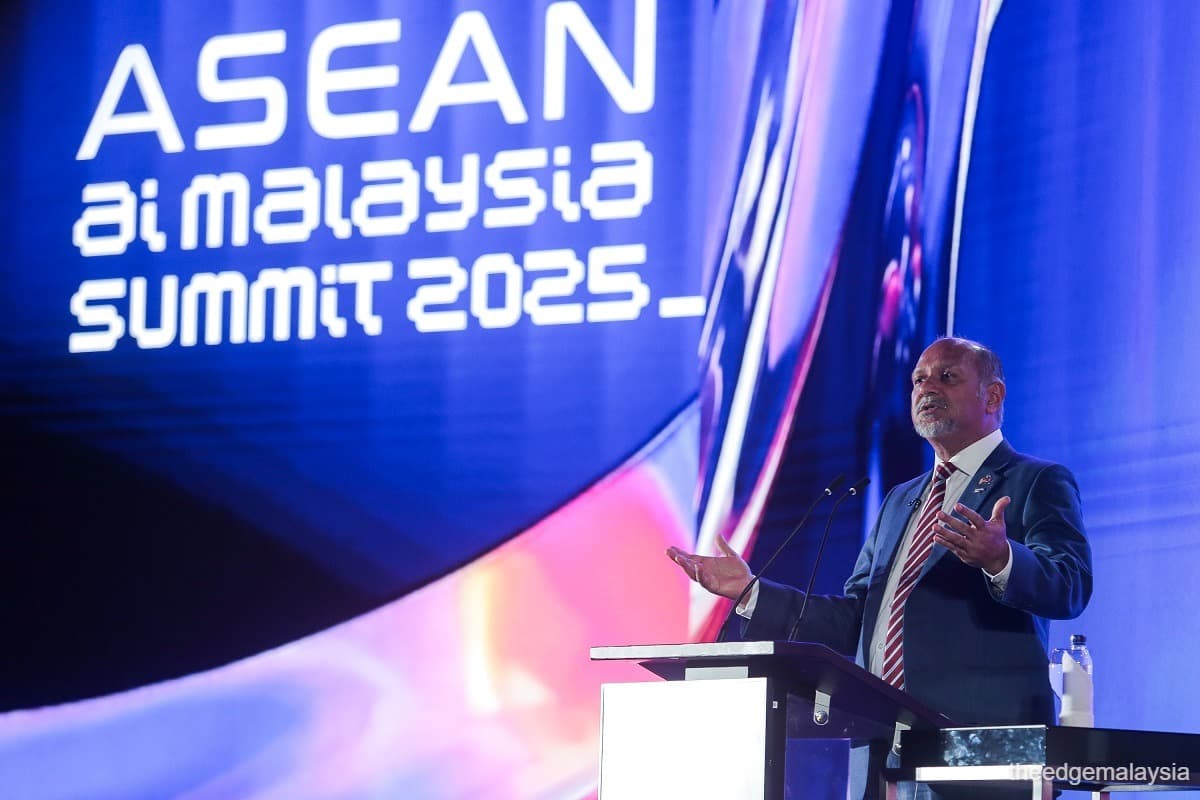
KUALA LUMPUR (Aug 12): Tech heavyweights including Google LLC, Advanced Micro Devices Inc (AMD), Huawei Technologies Co Ltd and Phison-backed MaiStorage Technology Sdn Bhd on Tuesday announced artificial intelligence (AI) initiatives at the Asean AI Malaysia Summit 2025, aimed at advancing skills, research and innovation across Southeast Asia.
The Asean Foundation, backed by Google, introduced AI Class Asean, a free learning platform to equip communities with the skills to thrive in the AI era. The programme will train 800,000 local leaders across all 10 Asean member states, ultimately benefiting 5.5 million people, including 400,000 Malaysians, with practical AI literacy.
US-based chip maker AMD rolled out the AMD Developer Cloud in Malaysia, offering 100,000 graphics processing unit (GPU) hours to local researchers and developers, giving access to AMD’s central processing units, GPUs and open-source ROCm platform to accelerate AI research and nurture local talent.
China's Huawei, meanwhile, introduced the Apac AI Ecosystem Initiative, a three-year plan to make Malaysia a regional hub for AI excellence, targeting the training of 30,000 AI professionals and supporting 200 local partners in creating innovative solutions.
Malaysia-based MaiStorage, a subsidiary of Taiwan’s Phison Electronics Corp, unveiled an AI computing-at-the-edge solution powered by aiDAPTIV+, Intel® Core® Ultra Processors, and Intel® Arc™ Graphics to bring AI capabilities to laptops, PCs and community devices without the need for expensive servers or complex cloud systems.
Opening the summit, Digital Minister Gobind Singh Deo said Asean’s AI future hinges on collective effort.
“The challenges and opportunities of AI are too great for any one nation to navigate alone. But together, Asean can chart a path that reflects our values and aspirations,” he told the over 5,000 participants, 50 speakers and 100 exhibitors gathered at the Malaysia International Trade and Exhibition Centre.
Gobind stressed that Malaysia’s approach rests on three pillars — infrastructure, security and skills.
“You can have the best infrastructure, the most secure of infrastructure, but you need people who know how to use it,” he noted, urging Asean countries to leverage each other’s strengths to grow into an “economic powerhouse that will truly represent the force of digital transformation”.