

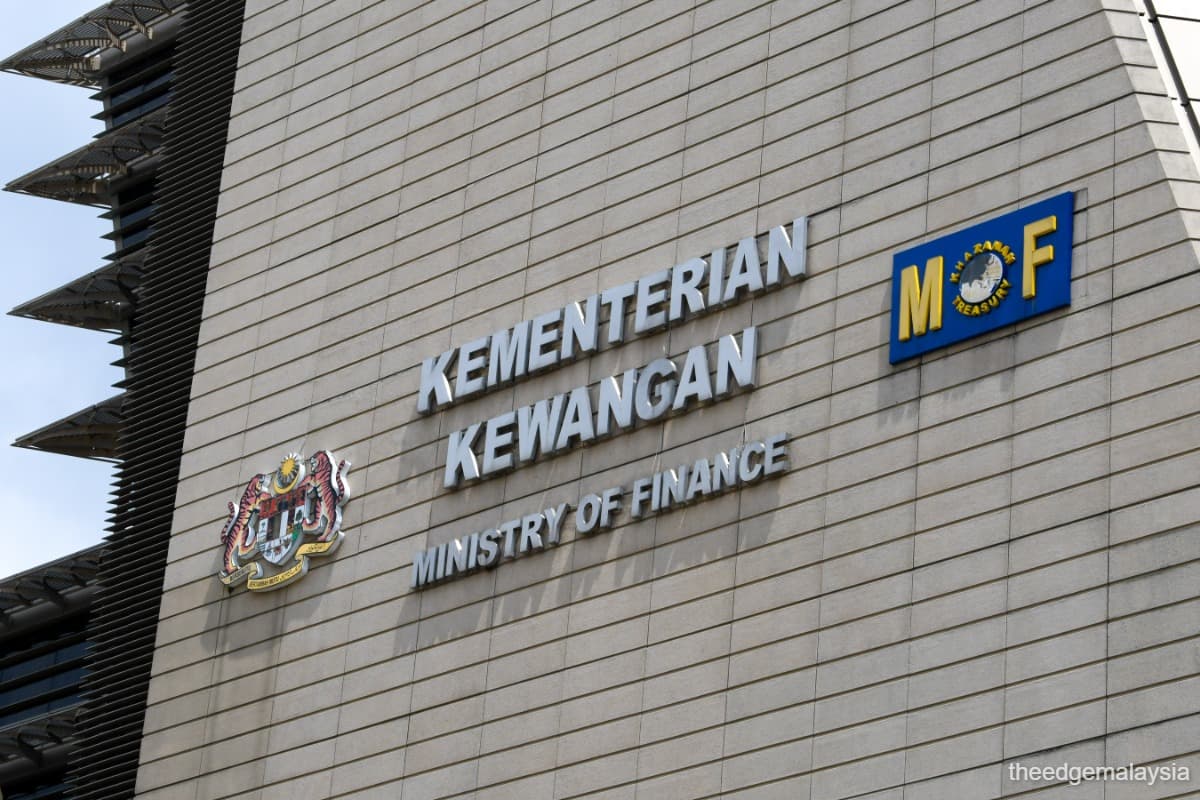
KUALA LUMPUR (Aug 8): Budget 2026, to be tabled on Oct 10, will focus on targeted subsidies, structural reforms and attracting high-value investments, as the government launches the 13th Malaysia Plan to boost competitiveness and improve quality of life.
In its pre-Budget 2026 statement, the Ministry of Finance (MOF) outlined three key focus areas: strengthening public sector governance, transforming the economy into a high-income and high-value system, and narrowing socio-economic disparities.
Strengthening governance and public sector reform
The government will introduce key legislation to improve transparency and accountability, including the Government Procurement Act, Ombudsman Act, and Freedom of Information Act.
To enhance efficiency, the MOF said public financial management will be modernised through digitalisation, artificial intelligence (AI), and big data analytics — particularly to curb tax leakages and improve service delivery.
Transitioning to a high-income, high-value economy
Budget 2026 will double down on attracting investments into high-growth, high-value (HGHV) sectors, including semiconductors, advanced manufacturing, AI-driven services, renewable energy, and digital technology.
A New Investment Incentive Framework is set to launch in the third quarter of 2025, aiming to streamline approvals, reduce red tape, and better align investment incentives with national economic goals.
The government also plans to strengthen small and medium enterprise growth, Islamic finance, tourism, and regional development, with dedicated support for local businesses and innovation.
Improving quality of life, targeting subsidies and inclusive growth
To ensure better fiscal efficiency, the government will continue its transition from blanket subsidies to targeted assistance, helping those most in need while reducing wastage and leakages.
In healthcare, Budget 2026 will address rising private healthcare costs through:
- Greater protection for vulnerable groups
- Expanded access to affordable medicine
- Improved rural healthcare
- Wider use of telemedicine and electronic health records, and
- Greater system readiness for future public health challenges.
In education, reforms will be led by the newly established National Education Council, aimed at enhancing learning outcomes, bridging achievement gaps, and preparing talent for HGHV industries. The government will maintain momentum in science, technology, engineering and mathematics (STEM), technical and vocational education and training (TVET), and lifelong learning, aligned with workforce demands.
Labour market reform will focus on sustainable wage growth, career progression, and employment structure reform to support economic resilience and equitable growth.
Infrastructure development — particularly in rural areas of Sabah and Sarawak — remains a priority, with emphasis on basic amenities such as roads, clean water, electricity, and internet access.
Budget 2026 will also expand programmes to uplift underserved communities, including:
- Youth (TVET, entrepreneurship support, digital platforms)
- Women (childcare infrastructure, flexible work arrangements)
- Elderly (social protection, sustainable aged care)
- OKU (persons with disabilities) (inclusive education, public accessibility)
- Orang Asli and indigenous groups (better access to healthcare, education, infrastructure), and
- Bumiputera communities (broader participation in strategic sectors).
The MOF said it is currently collecting feedback from the public and stakeholders ahead of the Budget 2026 announcement. Malaysians are encouraged to submit their suggestions via the official portal at https://belanjawan.mof.gov.my.
Click here for more stories on Budget 2026.