

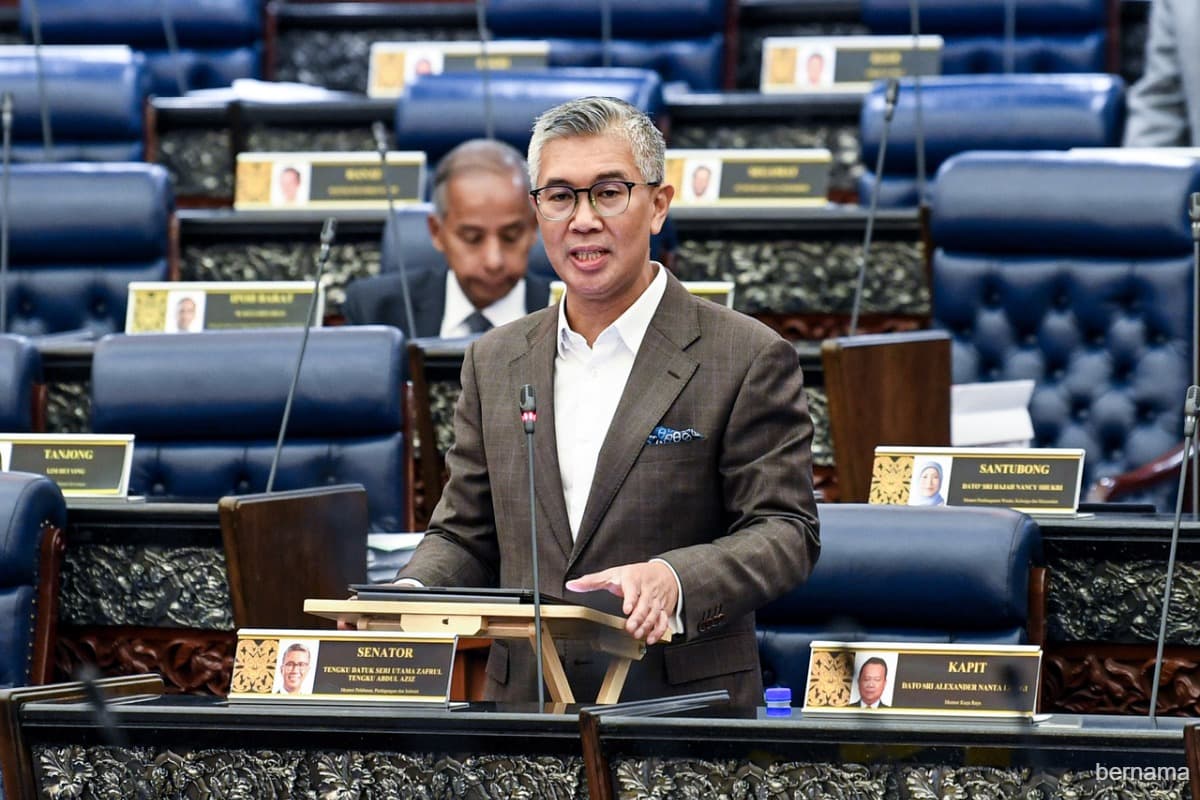
KUALA LUMPUR (Aug 7): Malaysia has asked the US for details on its plan to impose a 100% tariff on semiconductor chips made in countries without US-based manufacturing.
Investment, Trade and Industry Minister Tengku Datuk Seri Zafrul Abdul Aziz said the ministry has contacted the US Trade Representative and the Department of Commerce to understand how the tariff would be implemented.
“We hope that any policy changes and exclusion criteria can be communicated and negotiated early, so that Malaysia’s role as a strategic trading partner can continue to be preserved,” Zafrul told Parliament during ministerial question time on Thursday.
On Wednesday, US President Donald Trump reportedly said the US would impose a tariff of about 100% on imported semiconductor chips, and that the new tariff rate would apply to "all chips and semiconductors coming into the United States”.
However, Trump said the tariff would not apply to companies that had already committed to manufacturing in the US or were in the process of doing so.
Addressing the latest remarks by Trump in the House, Zafrul stressed that since there has been no formal tariff announcement yet, semiconductor products exported from Malaysia to the US remain exempt from the 19% reciprocal tariff set to take effect on Aug 8, 2025.
Nevertheless, he acknowledged that the exemption for semiconductor products is still subject to an ongoing investigation by the US Department of Commerce under Section 232 of the Trade Expansion Act 1962 — and that tariffs could potentially be imposed depending on the outcome.
He noted that in 2024, Malaysia exported nearly RM120 billion worth of electrical and electronic (E&E) products to the US, which accounted for about 20% of the country’s total E&E exports. Of that, semiconductor products alone made up RM60.6 billion.
In addition, the semiconductor sector plays a significant role in the domestic economy, involving 72,000 skilled workers and 7,200 local suppliers — including small and medium enterprises.
“Should semiconductor products be subjected to tariffs in the future, the impact on Malaysia will be significant. We risk losing access to the US market as our products would become less competitive due to the tariff,” Zafrul said.
To mitigate the impact, Zafrul said the ministry will conduct outreach sessions with exporters and industry players across the supply chain. It will also encourage the industry to diversify its export markets.
For more Parliament stories, click here.